
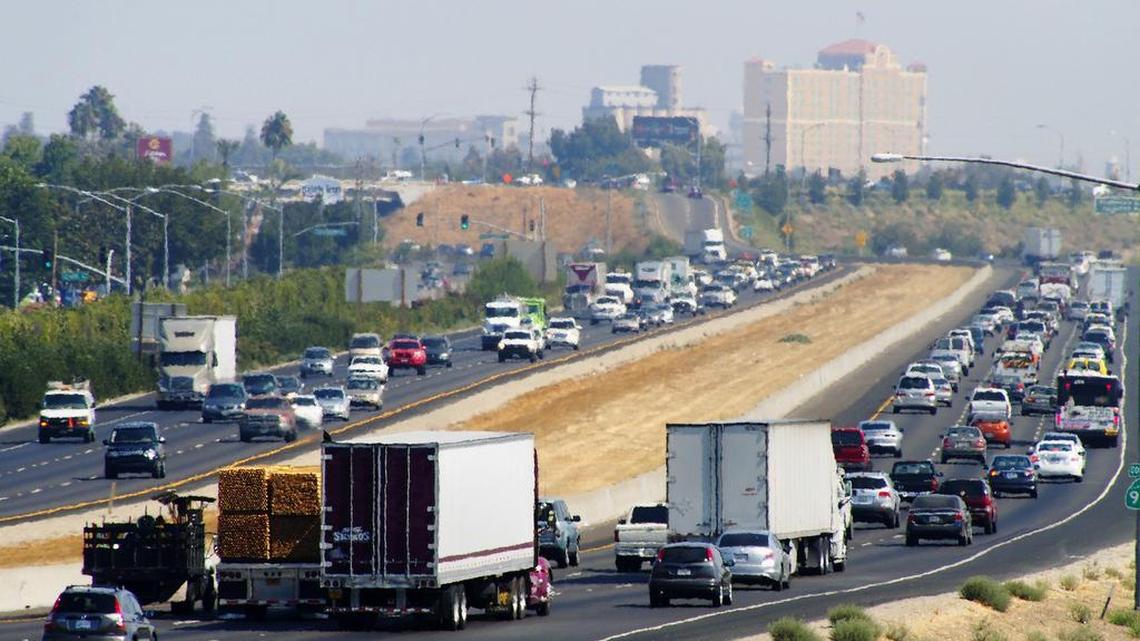
Emissions from cars, trucks and other sources contribute to smog and particle pollution, making symptoms worse for people with asthma. Cleaning up transportation in California, especially the San Joaquin Valley, reduces asthma, heart disease and costly ER visits while easing household expenses.
The Modesto Bee
In the San Joaquin Valley, air pollution isn’t just a health concern — it’s an often overlooked piece of the affordability conversation.
Despite ongoing progress to clean the air, the Fresno area ranks among the top five worst in the nation for all three major air pollution measures in the American Lung Association’s “State of the Air” report. Families here are paying the price in asthma attacks, heart disease, missed school days and costly emergency room visits.
California lawmakers in Sacramento now face a choice: continue leading on clean transportation to protect public health and lower health costs, or allow preventable pollution to drive both higher. The stakes could not be higher for the greater Central Valley.
At a time when 80% of Californians say they are concerned about health care costs and gas prices are spiking again, cleaning up our air is one of the most direct ways to reduce financial strain on families.
In the Valley, a single emergency room visit for a child suffering a pollution-induced asthma attack can cost more than $5,000, according to UC Merced research. For many households, that far exceeds monthly rent. These are preventable costs often driven by preventable pollution from vehicles that burn gasoline and diesel.
In my nearly two decades working on clean air issues in California, I’ve spoken with hundreds of doctors and nurses across our state. They see firsthand how air pollution drives patients into their emergency rooms — children gasping for breath during asthma attacks, seniors struggling with heart and lung disease and families struggling to balance the costs of prescriptions and paying other bills.
They understand that pollution isn’t just harming lungs; it is straining household budgets.
While local air pollution controls are yielding important gains, federal actions are now threatening to reverse decades of clean air progress. The U.S. Environmental Protection Agency is dismantling crucial clean air protections. Among the more notable was the repeal of the Endangerment Finding — the long-standing scientific determination that greenhouse gases endanger public health — and the elimination of federal standards that cut pollution from new cars and trucks.
For Valley families, that means more asthma attacks, more heart and lung disease and higher medical costs, stressing households.
What lawmakers must do
Lawmakers should approve the $200 million electric vehicle purchase incentive proposed by Gov. Gavin Newsom that would replace the now-expired national $7,500 tax credit. These funds must be designed to ensure low- and moderate-income families can afford cleaner new or used vehicles that cost less to operate and don’t pollute the air their children breathe. We have seen the benefits of these programs in the Valley and elsewhere and should build from that success.
Similarly, there is a clear need for the legislature to continue to invest in accelerating the transition to zero-emission trucks and charging infrastructure to curb exposure to toxic diesel exhaust.
Second, the Legislature should pass Assembly Bill 1777, the California Clean Skies Act, to codify the state’s authority to curb pollution at freight hotspots, like warehouses that attract heavy traffic from diesel vehicles, which burden Valley communities. A statewide level of health protection at sites that indirectly generate heavy pollution will improve health and help to reduce medical costs.
Local air districts, including the San Joaquin Valley Air Pollution Control District, also need sustained funding to continue incentive programs that replace older, high-polluting vehicles, agricultural equipment and other pollution sources. The budget must reflect the need to continue successful programs that have driven critical clean air success — especially knowing the challenges are only growing.
Cut pollution driving preventable medical bills
Cars and trucks are among the largest sources of the smog and soot threatening health in the region. Heavy-duty trucks make up just 6% of vehicles on California roads but generate 35% of smog-forming pollution and a major share of deadly diesel particulate matter.
Diesel pollution is linked to asthma, heart disease, lung cancer, premature death and harm to children’s developing lungs and brains. Even pollution levels considered “safe” under federal standards have been shown to harm health.
The human toll is devastating — and expensive.
Air pollution drives billions of dollars in avoidable healthcare costs each year. Cutting tailpipe and diesel emissions means fewer emergency room visits, hospitalizations and missed workdays as well as lower long-term medical expenses.
When families save on fuel, avoid costly repairs and prevent pollution-related medical emergencies, that is real relief in a time of rising costs.
Clean transportation is not abstract pollution policy for the Central Valley. It is preventive care that must be factored into policymakers’ affordability priorities.
Will Barrett is the assistant vice president for Nationwide Clean Air Policy at the American Lung Association.
Related Stories from Fresno Bee