
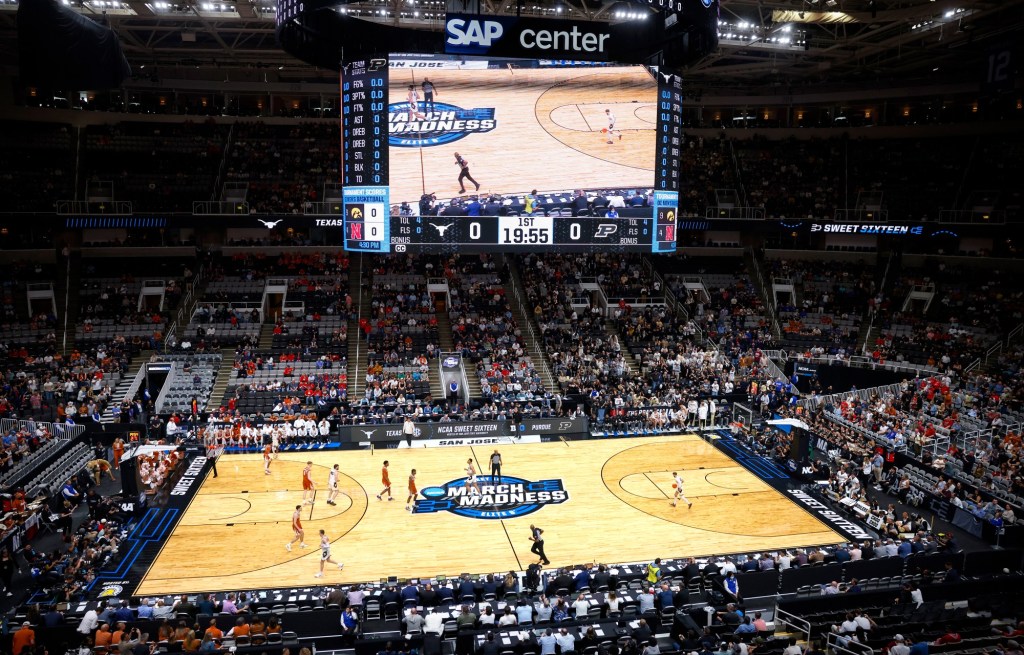
SAN JOSE — Where are the fans at the NCAA West Regional?
It’s a question that’s been on the minds of observers both inside and outside SAP Center since the college basketball world descended on the venerable San Jose arena for the Sweet 16 on Thursday afternoon.
Attendance, which was limited early for the session’s thrilling first game between Texas and Purdue, picked up toward the end of that game as numerous Arizona fans came filing in for the night matchup between the top-seeded Wildcats and Arkansas.
But for some, the lasting visual was rows of empty seats sitting starkly barren. The announced attendance was 15,431, though that covered tickets sold and not necessarily scanned.
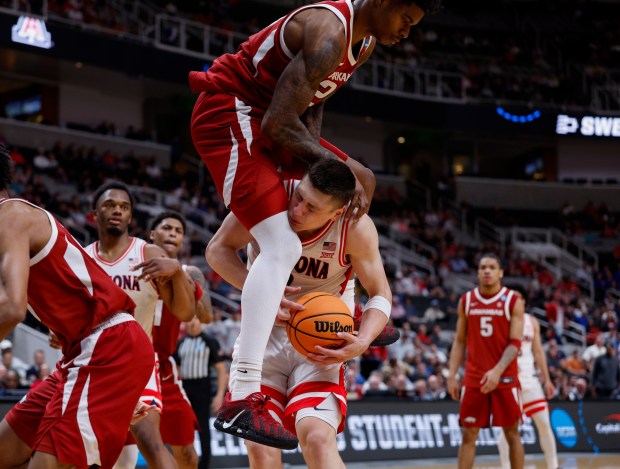 Arkansas Razorbacks’ Nick Pringle (23) fouls Arizona Wildcats’ Ivan Kharchenkov (8) in the second half at the 2026 NCAA Division I West Regional Semifinal game at the SAP Center in San Jose, Calif., on Thursday, March 26, 2026. (Nhat V. Meyer/Bay Area News Group)
SAP Center’s listed capacity for basketball is 18,500.
A variety of factors are responsible. Arizona is easily the closest team to San Jose, and Tucson sits almost 1,000 miles away from the Bay Area.
Texas, Arkansas and Purdue are significantly farther. And while the former and the latter have substantial alumni bases in Northern California, they’re not the same draw a local team would be.
Some teams in the West region, like Gonzaga and BYU, had the potential to bring in substantial traveling parties but were eliminated prior to the Sweet 16.
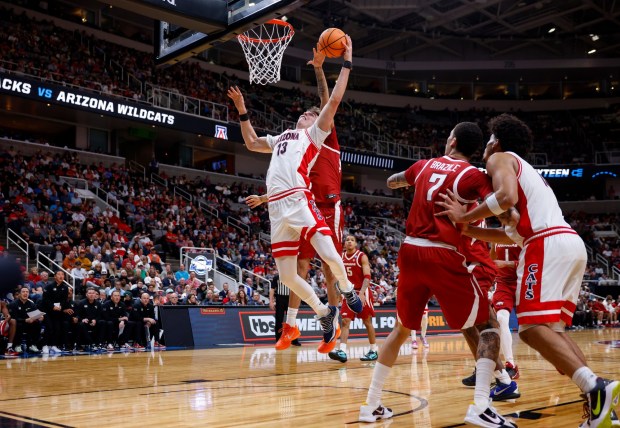 Arizona Wildcats’ Motiejus Krivas (13) takes a shot against Arkansas Razorbacks’ Malique Ewin (12) in the second half at the 2026 NCAA Division I West Regional Semifinal game at the SAP Center in San Jose, Calif., on Thursday, March 26, 2026. (Nhat V. Meyer/Bay Area News Group)
“I was happy with 15,000,” San Jose Sports Authority Executive Director John Poch told the Bay Area News Group. “The NCAA gives zero comps. Every ticket is paid for. Even the participating teams have to buy their tickets. So that’s a real number.
“Would I love to sell out? 100%. Should we sell out? Absolutely. But you gotta look at the price of the tickets, and it’s just a factor today, right? Everything’s more expensive.”
On the official March Madness ticket page on Ticketmaster, as of early Saturday morning, tickets for the Elite Eight on Saturday in San Jose start at $130.80 and escalate up to over $2,000.
At the South regional in Houston on Thursday, attendance at Toyota Center was 17,307 in a building that holds 18,000. This was despite hometown Houston playing Illinois and Nebraska, which has had rabid crowds following its first-ever run to the Sweet 16, facing off against Iowa.
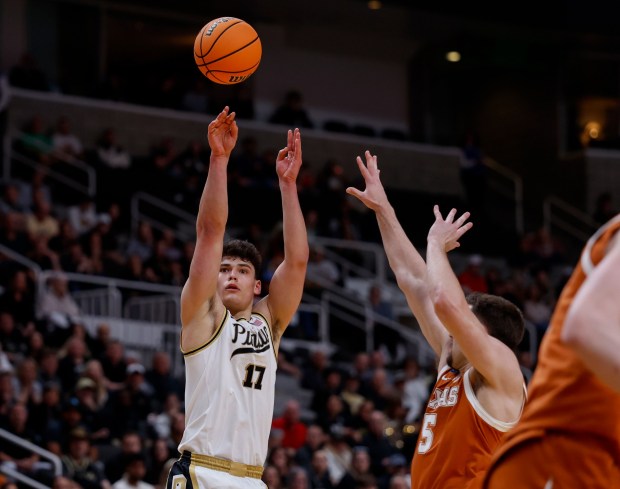 Purdue Boilermakers’ Omer Mayer (17) takes a shot against Texas Longhorns’ Camden Heide (5) in the first half at the 2026 NCAA Division I West Regional Semifinal game at the SAP Center in San Jose, Calif., on Thursday, March 26, 2026. (Nhat V. Meyer/Bay Area News Group)
The East regional at Capital One Arena in Washington brought in an announced crowd of 19,445 fans Friday night for a packed slate that included blue bloods Michigan State, UConn and Duke, plus a resurgent St. John’s team under Hall of Fame coach Rick Pitino.
The Midwest regional at United Center in Chicago claimed 21,508 fans for matchups including regional top seed Michigan against Alabama and Tennessee against Iowa State.
So what could San Jose do to boost attendance?
The NCAA controls ticket prices, and the tickets are distributed with the help of a local host school, in this case San Jose State.
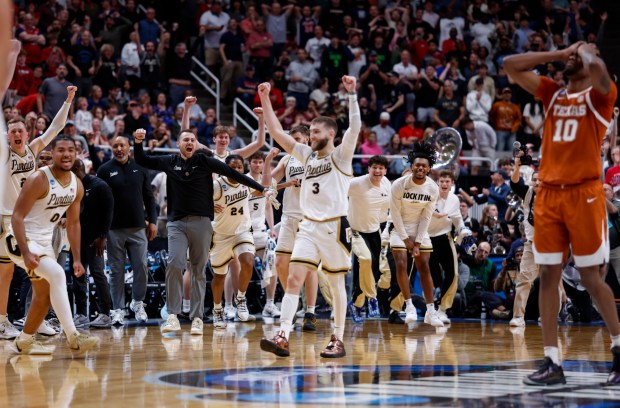 The Purdue Boilermakers celebrate their 79-77 win over the Texas Longhorns for their 2026 NCAA Division I West Regional Semifinal game at the SAP Center in San Jose, Calif., on Thursday, March 26, 2026. (Nhat V. Meyer/Bay Area News Group)
But the Spartans and their partners at the Sports Authority can’t do much except try to get the word out. And they have tried, SJSU athletic director Jeff Konya said.
“In terms of how successful this one has been, hopefully it’s going to lead to future opportunities to bring events like this of this scale to the city,” Konya told this news organization. “Everybody prospers from that in terms of the economics for the city and the surrounding communities. And certainly memories from a sports standpoint, of some of the biggest events right here in our own backyard. So hopefully this one’s successful, and it just leads to even more success in future events.”
San Jose getting a regional was considered a coup by some, with SAP Center primarily being a hockey arena and due for a large-scale renovation after opening in 1993.
Poch said San Jose bids to host the NCAA Tournament every year, and getting a regional is the Sports Authority’s top choice.
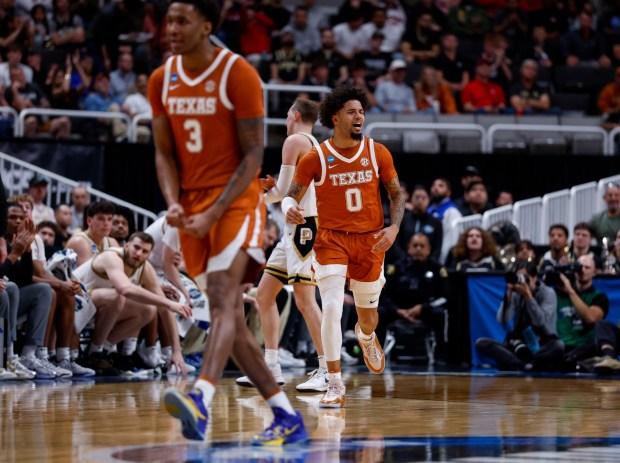 Texas Longhorns’ Jordan Pope (0) celebrates his three-point basket against the Purdue Boilermakers in the first half at the 2026 NCAA Division I West Regional Semifinal game at the SAP Center in San Jose, Calif., on Thursday, March 26, 2026. (Nhat V. Meyer/Bay Area News Group)
“It’s so hard to get this event,” Poch said. “We’ve had it now eight times. These are four-year rotations, moving to a three-year rotation. There’s 12 West Coast cities trying to get the same event.
“I’m not surprised we got a regional. It’s a better fit for us over the first and second round.”
When Chase Center hosted the West regional last March, there were empty seats visible among the announced below-capacity crowds of 16,417 for the Sweet Sixteen and 16,778 for the Elite Eight.
So this is not an issue specific to SAP or the Bay Area. It’s a front in an ongoing battle between leagues and fans to maximize revenue while still packing arenas as full as possible.
And San Jose is determined to ensure it remains in the fray in the years to come.
“Every West Coast city, you can name them, from Seattle to Arizona, Nevada, they all want NCAA basketball men’s, women’s first and second rounds and regionals,” Poch said. “It’s a hard event to get. It’s incredible to have in your building.”