
San Diego is home to some remarkable firsts, and Birch Aquarium just added one more to the list. For what experts believe is the first time ever, the team there has successfully raised Red Octopuses (Octopus rubescens) from hatchlings all the way through to full settlement in aquarium care.
This milestone has been turning heads in the scientific community – and for good reason. Octopus settlement remains one of the most mysterious phases in a cephalopod’s life, and very few facilities have ever documented it in this level of detail.
From “Tiny Aliens” to Real-Deal Octopuses
It all started when Senior Aquarist Maddy Tracewell discovered a female Red Octopus guarding thousands of eggs behind the scenes last summer. What followed was an intensive, months-long deep dive into the little-known world of cephalopod development.
More than 15 of these Red Octopuses have now officially settled, completing the transition from free-swimming paralarvae to a bottom-dwelling lifestyle. “When they first hatched, they looked like tiny aliens,” Tracewell said. “Now they finally look like a real octopus, and I’m so excited and amazed!”
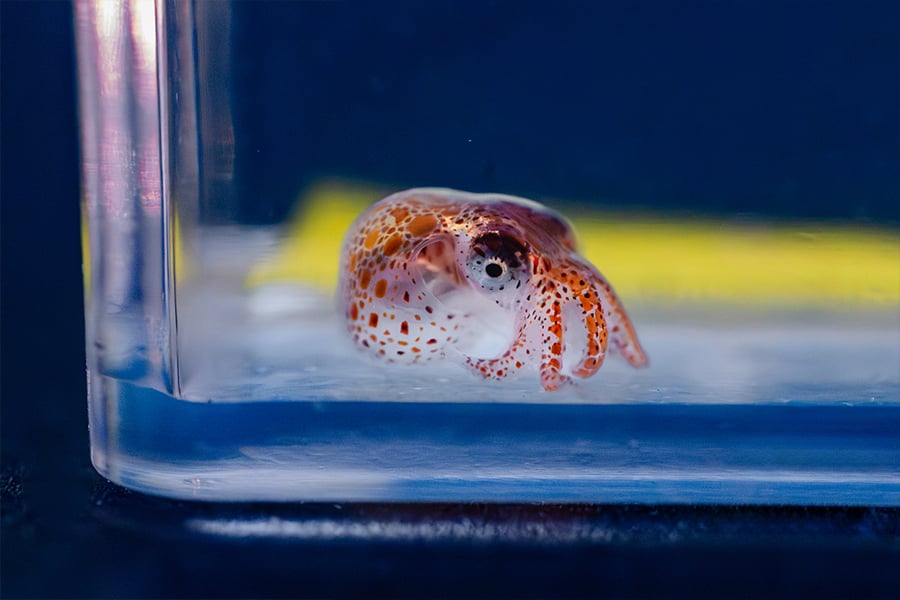
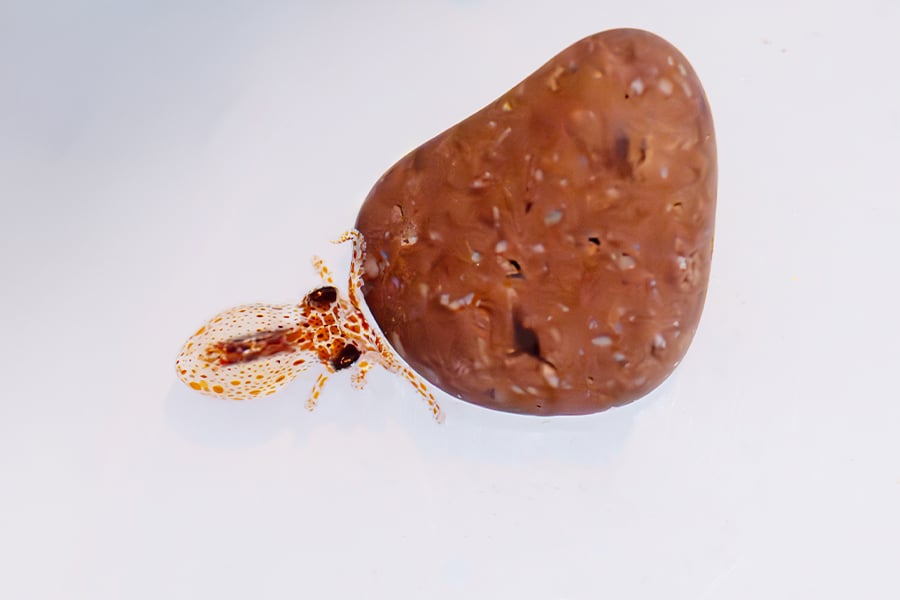
Why Raising This Species Is Such a Challenge
Red Octopuses are a “small-egg” species, meaning they hatch as paralarvae and spend weeks drifting with ocean currents before settling – a planktonic stage that’s notoriously difficult to replicate in captivity.
To tackle this, Tracewell built a custom upwelling system, guided by Dr. Dan Shigeki, a leading octopus paralarvae expert at Tokyo University of Marine Science and Technology.
Feeding the babies was its own puzzle. After Brine Shrimp and Mysid Shrimp both fell short, the team started culturing Grass Shrimp – which turned out to be exactly the right size, speed, and nutritional fit for the paralarvae.
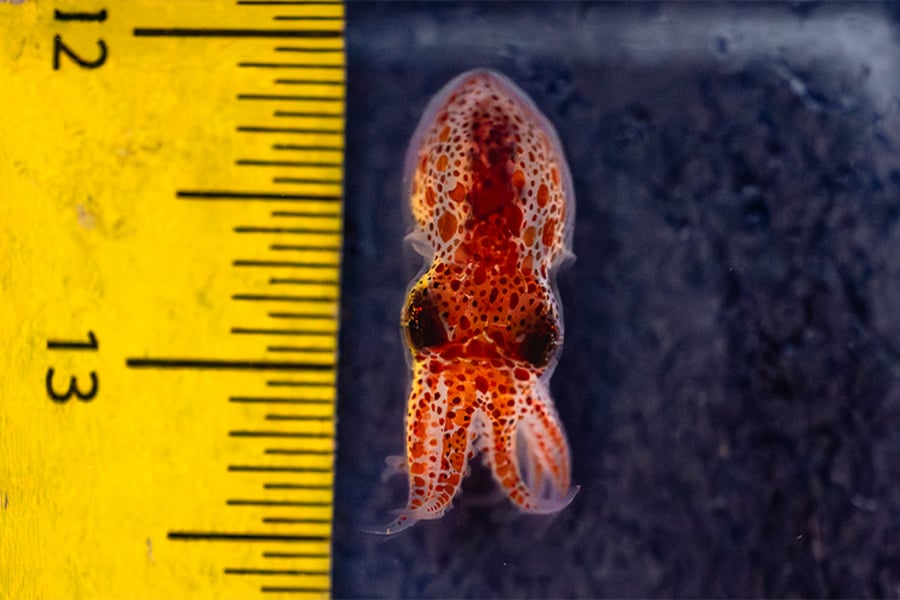
Documenting Every Stage of Settlement
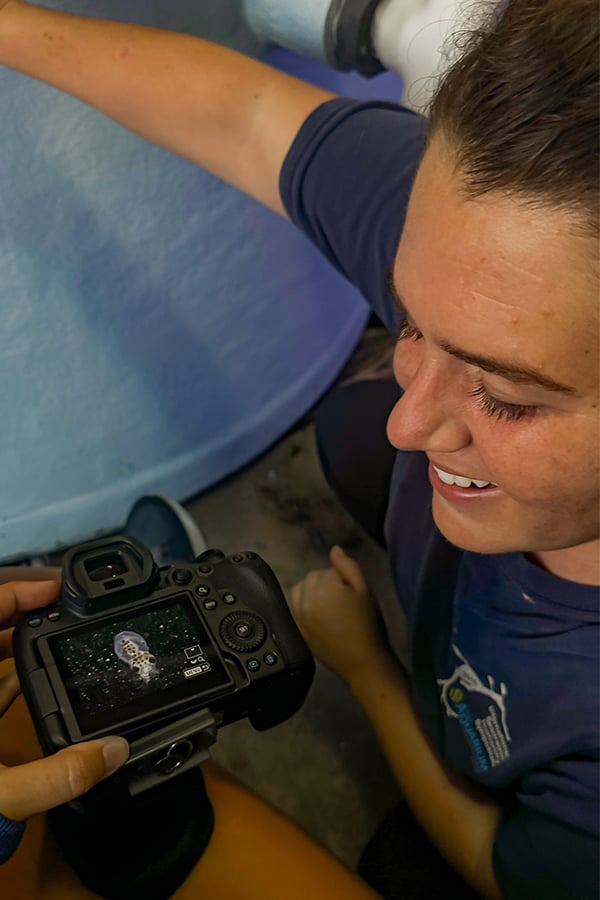
Octopus settlement progresses through three distinct phases: a pre-settlement “tactile” phase, a “hiding” phase, and a post-settlement “ninja” phase. Weekly photoshoots gave the team a detailed record of every stage, since the animals are essentially microscopic and impossible to measure with the naked eye.
Those images have since been shared with octopus researchers worldwide, offering rare new insights into Red Octopus development. “Not many places have had the opportunity to document this life cycle in such detail,” Tracewell said. “We wanted to show just how incredible this transformation is from start to finish.”
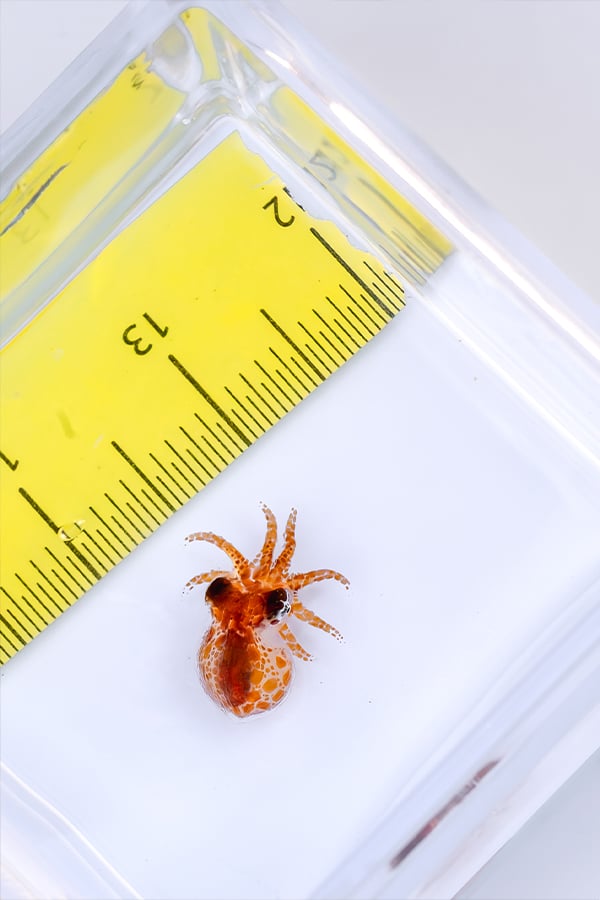
What’s Next for These Little Guys
The full settlement process took about five months, and the octopuses are still growing before they’re ready for public display. For now, they’re continuing their development behind the scenes at the aquarium.
Worth noting: these are Red Octopuses (Octopus rubescens) – a local Pacific Coast species found from Central Alaska to Northern Mexico – not the Giant Pacific Octopus (Enteroctopus dofleini). Similar-sounding names, but two entirely different animals.
See you there!
Keep an eye on Birch Aquarium for when these remarkable little animals make their public debut – this is one you won’t want to miss.
📍 2300 Expedition Way, La Jolla
ℹ️ Visit the website here for updates
See you there, San Diego!