
Matt Mahan explains why he should be California’s next governor | California Politics 360
Matt Mayhan, thank you so much for making time for us. Thanks for having me. This is *** hard time and *** really hard job. Why do you want to be governor now? I’m worried about the direction the state’s going in. I think Sacramento is working great for special interests and not so great for the people of California, and I want to take the work we’ve done in San Jose to make our streets safer, reduce unsheltered homelessness, build housing, bring down energy costs, and pursue that agenda statewide, not just for the residents of San Jose, but for all Californians. We deserve better. We keep asking people to give more and. are not holding our government accountable for doing better with the resources we have. You mentioned giving more moving forward. The state is facing multi-year money problems, and right now at this point, according to the legislative experts, the options are either cut programs or raise taxes. Which options do you see yourself choosing? Well, actually, to some extent, I think it’s *** false choice when the state has managed to increase spending by 75% in the last 6 years and nothing’s gotten better. We still have the highest housing costs, 2nd highest energy costs, highest unemployment rate, over 40% of the country’s unsheltered homelessness rate, public schools that are not doing as good of *** job of educating low income students as Mississippi and Louisiana, at some point we have to demand that Sacramento do better before we ask people to give more. We know that there is *** lot of waste. There’s even outright fraud. Your own reporting has showed tens of billions of dollars of fraud. Now we’ve got an emerging story around fraudulent hospice claims. And look, at the end of the day, I just think the people of California are not getting the value they deserve in terms of the basics safe neighborhoods, affordable housing, affordable energy, good public schools. We’re paying an awful lot and at some point. We’ve got to put our foot down and demand that Sacramento focus on delivering for the people of California because it’s doing *** really good job right now of listening to the highly organized interests here. But we’re not building condos because the trial lawyers would rather have regulations that allow you to sue 10 years after the condo is built because the paint has faded. We’re, you know, we, we’ve had *** fight over whether or not we should teach phonics in our schools because the teachers union doesn’t want any interference in the classroom. This is not how to run *** state. It’s not how to deliver for people and that’s why I’m running to take on the special interest cartel in Sacramento and deliver for the people of California. So I’m getting you won’t raise taxes, but would you cut programs, cut some of that spending that you’re referring to. Right now I think we need to take the resources we have and use them better. What I’ve done as mayor of San Jose is set goals, post them publicly so we can be held accountable by the residents we serve, not by the highly organized interests that fund campaigns and, and sit in places like Sacramento writing ghostwriting legislation. Uh, I’ve set public facing goals and said we’re gonna take the dollars we have as ***, as *** given, as *** constraint. We’re not gonna ask people for more. We have X amount of money to address homelessness. We’re going to now examine how we spend every single dollar, every program, every hour of staff time. Is it actually helping us make progress toward the goal on homelessness, the truth is what we were doing wasn’t working. We were spending upwards of $100 million *** year on the slowest, most expensive solution while leaving thousands of people to live and die on our streets. I came into office and said we’re going to change how we spend this money. And the money didn’t go up. We didn’t suddenly have more revenue. In fact, we had *** little bit less because this particular revenue source actually declined *** bit, but we got dramatically different outcomes because we started buying prefabricated modular units and putting them out on publicly owned land faster and cheaper than ever before. We bought old motels and. Converted them, we set up safe parking and safe sleeping sites. We used common sense to create safe, dignified alternatives to the streets quickly and cost effectively and when they’re available, we require people to use them. We’ve reduced unsheltered homelessness in San Jose. By nearly 1/3 in the last 4 years, faster than any other city in the state without raising taxes. Speaking of program effectiveness, one expensive program, at least that we know of in the healthcare space here in California, is providing Medi-Cal to undocumented people. Uh, what would you do about that program? Would you keep it in place? Would you expand it? Would you cut it? Look, I think stripping people of basic healthcare is cruel and ineffective, so I would absolutely support continuing to provide healthcare to everyone who’s in California. I think it’s, it’s not only *** basic need, but if we do it right, it saves us money in the long run because it means fewer people showing up to our emergency rooms, less chronic illness, but I’m not convinced we’re spending the money as effectively as we could be. Today we tend to treat symptoms in our healthcare system, not get upstream of the causes of illness, and this is *** major failing of American healthcare in general. We need to be incentivizing care providers to stick with that person over the course of their life. And be rewarded for making them healthier, not just how many fees they can generate on the back end once the person is chronically ill, prescribing more drugs, more tests, more studies, I mean, we’ve got it backwards and California has the purchasing power. The clout, the innovation to really do *** better job of this, more clinics, fewer emergency room visits, expanded role for nurse practitioners who are much less expensive than highly trained specialized doctors. Let them practice at the top of their license and provide care, particularly public health education and preventative care on the front end so we have less. Obesity, less diabetes, less chronic illness. We’re spending *** lot of money and not getting great health outcomes, so I would change how we spend the money, but I wouldn’t start taking care away from people who eventually are going to end up in the emergency room, even if you’re only looking at the fiscal aspect of this. The program isn’t allowing new undocumented people to get on it. I mean, would you keep it that way for now, the way that it is? Look, as you get into issues of immigration and our undocumented residents, I think that. On the one hand, we should have *** secure border and not create incentives for people to come to the country illegally, and that’s *** failure of Republicans and Democrats and frankly, *** complacency for decades in which employers and both parties were very happy to have *** steady supply of low-cost labor. So yes, let’s have *** secure border. Let’s not incentivize more immigration that is not lawful, all for that. That being said, now that we have families in California, many of whom have been here for decades, many of whom have children who are US citizens, we’re gonna have to deal with the situation we’re in as it is and treat people as human beings. That means providing education, health care, higher quality care that is more preventative, as I just mentioned. And then let’s create *** pathway to legal status. Maybe that isn’t citizenship, but at least *** green card and the ability to stay here raising children who are US citizens and an opportunity to work and create *** better future, which is what brought people here in the first place. And let’s not get too high and mighty about people breaking the law. For 50 years, both parties have been completely complicit, and many of our employers in construction, agriculture were all too happy to have *** low cost source of labor that kept prices for Americans down. So look, is our immigration system broken? Absolutely it has been for decades. Both parties have been complicit and benefited in their own ways, and it’s time. To just fix the problem, but I don’t think an answer to the problem is to take away health care from people in our communities who are going to be sicker as *** result, less likely to work, less likely to contribute to the tax base. They’re going to end up in our emergency room needing life saving care eventually anyway, which is the most expensive and least ethical way to handle the problem. You mentioned education. In that answer, uh, I mean, nearly half of the state’s budget goes toward public education. We’re seeing these teacher strikes that are driven by one of the labor groups that you acknowledged earlier, um, and then there’s also some classroom performance issues with students in California struggling to do math, to read, to do science. How would you fix that? Actually, I’m *** former public school teacher. Education changed my life. I grew up in *** small farming town on the Central Coast. My mom was *** teacher. Getting *** work study scholarship to *** college prep Catholic school for high school changed my life. I understand the power of *** high-quality education. The sad truth is far too few of our children, particularly in low income and rural communities, communities of color, have access to high quality education. This is another case where we need to demand that our government and our public services do better before we ask people to pay more. We are now in the top 10 for spending. We have ramped up spending on public education, healthcare, virtually every other area of life in California over the last decade. We’ve doubled our spending, but the outcomes aren’t better. At some point, we need to stop funding failure and demand accountability. When it comes to education, we aren’t doing the basic things that would deliver better outcomes for our kids. We’ve had *** long and unnecessary fight over the science of reading. Should we be teaching phonics and other evidence-based curriculum? The answer is yes, we should. We also need to create real accountability for educational outcomes at the state level by doing what Governor Newsom has proposed, which is actually aligning the Department of Education with the school, with the, the state education board all the way up to the governor’s office. The governor should be where the buck stops on education, so streamlining that authority, pushing the dollars and the accountability down to the district level. I, I also have *** real problem with this last in, first out mindset that we have in education where you can be the best teacher in the world, but if the budget is tight, if you were the most recent person hired, you’re the first one fired. We need to be able to reward merit. The teachers whose students show the most learning growth as compared to other students of *** similar cohort in terms of language acquisition and income, say other students in the district ought to be rewarded as master teachers. They ought to have *** faster career ladder. They ought to be turned into our expert coaches for teachers who need more training. But are some of these teachers priced out? I mean, sometimes these teachers have to leave their districts because they can’t afford to live there. We should be paying younger teachers. We should be paying them more, frankly, we have an incredible amount of overhead cost and inefficiency. We have 1000 school districts. We have *** massive state bureaucracy that’s not creating outcomes, and I think the pay also needs to be more merit-based. We need to acknowledge when teachers come in and do it are stellar teachers and their kids learn faster, they should be rewarded for that. One other idea I’ll give you that would not be that expensive, we’re actually doing this in San Jose and we’re getting great results, is. Paying local college students to become reading tutors to younger students who are falling behind. We spent *** lot of money later on counseling, mental health issues. All of you talked about behavioral issues, lack of attendance. We have *** whole dysfunction in the system. That I can tell you as *** former public school teacher largely comes about when kids are made to feel like they can’t succeed in public education when they start feeling like failures in the classroom is when they’re most likely to act out or not show up and in San Jose we are funding college students to come in and do one on one tutoring, but the magic of it isn’t just the instruction. It improves attendance because younger students now have *** mentor, someone they look up to who isn’t too old, who’s *** little bit older than them, and they show up. Attendance rates go up, learning increases, they start closing those learning gaps, they start to feel loved and appreciated and successful, and then they want to be there. And they’re more engaged and by the way, we’ve then set up *** pipeline of future teachers from those college students who just got an experience of transforming *** kid’s life in the classroom. So these are better, smarter ways to spend our limited dollars to address some of our, our education issues. Speaking of limited dollars, just folks in California are feeling strapped for cash themselves. How would you make life in this state more affordable? I’ve proposed that right now, there’s something very concrete we can do to provide people with immediate relief, which is to temporarily suspend our gas tax. We have the highest gas prices in the country, higher than Hawaii, which is in ***, *** series of islands in the middle of the Pacific Ocean that has to import in all of its gas. We have the highest energy costs because we have the highest gas taxes. So let’s give people relief at the pump. Put some money back in their pockets so they’re not making an impossible decision between rent, food, and gas in the car. Let’s also, while we’re at it, bring back the high paying jobs around refineries that were the cleanest in the country. We are now spending more importing, importing dirtier gas from farther away, and we lost all the high paying jobs and tax base that came along with those refineries. So if we really wanna help working people. And I’m *** proud member of the, of the Democratic Party. I grew up in *** working class community, union household. I’m *** member of the party because at our best, we look out for the little guy. We look out for working people. If we’re serious about that, let’s put our money where our mouth is in *** budget of $350 billion that has gone up 75% in the last 6. Years you can’t tell me that we have to choose between helping people have *** slightly have *** little more room in their budget by bringing down gas costs and paving the roads. On the other end, we can find the money to pave our roads and give *** much needed break to working families. So on that note then, I mean just on the topic of oil and gas, should California push back its climate goals that seek to Get rid of essentially the use of oil and gas. I don’t think so. I don’t think we have to, but I think I think oil and gas should be phased out naturally over *** 20 year period by investing in innovation and infrastructure, and that’s essentially what I think we’re doing well in San Jose is we’re using our purchasing power to buy new power supplies that are solar, wind, paired with storage, and there’s *** lot more the state can be doing to invest in innovation. We could, we should have and, and still can do more to incentivize vehicle to grid charging. We should be paying EV owners. We have the largest fleet of electric vehicles in the country. We should be paying EV owners to charge in the middle of the day when we have such abundant solar on most days that the price of power drops almost to zero. Sometimes we’re paying Arizona to take our excess power. We should be charging our EVs in the middle of the day, plugging them in at night to power the grid, and people should be getting paid for that. And we should have been incentivizing that and partnering with industry to set that up years ago. This technology has existed for quite *** few years now. So the way to not have to make an impossible choice between affordable energy for working families and *** cleaner environment is to invest in innovation, infrastructure, *** smarter grid, but do it in *** way that doesn’t punish. Working families because right now we’re losing people, we’re losing families with kids. Our schools have declining enrollment because families are leaving. If not for the Central Valley, they’re going to Texas, Arizona, Colorado because they can’t afford housing and energy, right? I mean, most people can’t afford an EV right now. I mean, the overwhelming majority of cars registered in the state are gas powered. That’s right. I want to ask you though, I mean just based on. Who’s funding your campaign based you live in San Jose which is *** more affluent part of the state. I mean how would you respond to working class Californians who who might worry that you might not totally see them that you might not have their backs? Listen, I grew up in the very communities you’re talking about. I grew up in, in Watsonville, which is *** very working-class community. My neighbors were people who plowed fields, worked on construction crews, paved roads, did manual labor. Uh, my dad was *** letter carrier who got up early every morning, 6 days *** week until he was 73 years old to make sure we could make ends meet. My mom was *** teacher. I remember when their voices would get quiet at the dinner table when they’d talk about how to pay the mortgage. I mean, the topic of how to, how to literally balance our household budget every month was, I remember it all the time. We had old cars that constantly broke down. It’s what drives me and the reason I jumped in this race is I’m worried that our political culture in California. Has become one of thinking that the answer to every problem is another tax, another bond we just, we just, we just have *** little more money, we’ll solve it and I just don’t buy that we have to demand that our government do better before we ask people to give more. It starts with accountability. I’ve led as mayor of San Jose in *** very different way from many of the members of my party. We have not asked people to pay more. We have set goals. We’ve created. Dashboards, I know it’s *** little nerdy. That’s, that’s the Silicon Valley side of, of this, I guess, but we’ve, we’ve publicly said, here’s what we’re going, here’s what you can hold us accountable for. We’re going to reduce crime. We’re going to reduce homelessness. We’ll clean up your neighborhoods. We’ll speed up permitting and make it easier to build housing, and we’ll reduce our fees. We make everything we’re doing explicit. We show people where every dollar is going, our programs, our policies, and every 90 days, we reflect on our actual measurable performance. Because I want to be accountable to the people I serve, not to the highly organized interests that walk the halls of whether it’s City Hall in any city in the state, or it’s the Capitol building, who have an army of consultants and lobbyists doing their bidding, and the incentives are all wrong in California. Well, who’s doing the checking though? You’re saying every 90 days as governor you would get *** check on these programs. Who would be doing that for you? I think we, we should be using an independent auditor slash inspector general-like function to do that. In San Jose, we have ***, *** very active auditor. We do external surveying of the public. We hire an outside firm to go survey the community on how clean is your neighborhood, how responsive are city services. We also have measures that are very objective. Our crime stats, where crime in San Jose is down over 20%, we’ve become the safest big city in the country. We’re the only big city in the country that has solved 100% of homicides for nearly 4 years running. And those are objective measures we need to be setting goals that are objectively measurable and then holding ourselves accountable to using the dollars we have to deliver those outcomes you just mentioned crime, one measurable thing in San Jose, there’s *** tug of war right now in California between this court order that the state is under to stabilize its prison population following overcrowding in the early 2000s. But also calls from people in the state to ensure that criminals are being held accountable. How will you balance that? Look, I don’t think the right way to manage public safety is to set an arbitrary target on how many people should or shouldn’t be in jail. We need to respond to crime and we need to do it in the most effective way. And the goal should be as much as possible to intervene and get people the help they need to rehabilitate and choose *** different path, but we also should not subject our communities to repeat criminal behavior without real intervention and real consequences. So there’s *** very small number of folks who. Need to be incarcerated in some cases really violent repeat offenders for *** very long time, potentially for the rest of their lives, but that is the smallest number of people. For the vast majority of people. Who are committing crime. Even that is not *** huge number of people, but we see *** lot of repeat criminal behavior. And our failure has been that we set an arbitrary goal of just reducing the number of people in the carceral system without investing in an alternative intervention model that’s really working. We need to get people into treatment, to mental health care, and create accountability for getting better, for using those services. Will that cost money though? It does, but it’s actually in the long run, I think, cheaper than the carceral system. So keep in mind. Keeping one person in the state prison system for 1 year costs over $130,000. It is the most expensive. Solution, if you want to call it that. And in most cases, frankly, we’re not rehabilitating people and setting them up for success. Now again, if you’re *** violent, if you, if you’re someone who’s been *** violent offender, that may be the appropriate placement for you. I’m not, I’m not arguing that, but what concerns me is the endless cycling of people that we see in so many of our cities between the straits. The emergency room, the county jail, someone being arrested 1015, 20 times. Talk about cost, the cost that that imposes on the public, on small business owners. California leads the nation with 8. billion dollars *** year in retail theft. We’re all paying that price. If we broke that cycle and got people help, and especially if we could reintegrate them into society and help those individuals become productive contributing members of society, we would save billions in the long run. So I don’t think it’s either or. There’s not an easy answer to criminal justice. I don’t think that our jails should be our de facto mental health hospitals, but I also don’t think our streets should be. I think we need to get people into treatment, job training, and create accountability for using services to turn your life around, and we’ve really left so many of our communities just to be exposed to repeat criminal offense and sort of said, sorry, there’s not our hands are tied. I don’t accept that we have to do better on the topic of streets. I mean this last governor had *** lot of ambitious goals to tackle homelessness that have not quite come to fruition yet. What will you do to affect meaningful and and provide results to people on homelessness? Yeah, I mean, again, it’s, it’s all about demanding better outcomes before we ask people to pay more. In San Jose, as I mentioned earlier, we didn’t increase spending, we changed how we were spending, and we’ve led the state in reducing the number of people living outside. We have moved thousands of people indoors. There are better ways to do this build basic dignified shelter when it’s available, require that people come indoors. Invest in short duration prevention where if someone is about to be evicted. Or otherwise fall into homelessness. Intervene and stabilize them with short-term rental subsidy and pair them with *** case manager who helps them bridge to *** more sustainable outcome, which may mean overcoming *** health issue. Uh, combining households with *** family member, reconnecting with loved ones, uh, overcoming *** layoff and getting *** new job, catching people before they become homeless is so much more humane and cost effective. And in the case where what underlies homelessness is *** behavioral health, *** mental health issue. We have to rebuild our mental health system and get people indoors, and not everyone is in *** position to make *** rational decision about their own self-care. It pains me to say that, but I have *** cousin who spent *** couple of years on the streets due to severe addiction. And the only thing that saved his life was real intervention. My family, my aunt and uncle getting out there and, and, you know, basically physically getting him off of the streets. And I just, *** lot of people don’t have *** family, don’t have the family members who are willing to chase him down and do that. And the state, on behalf of the community has to be willing to intervene and get people into care. I’m not Talking about going back to an era where we build massive mental health hospitals and lock people up and throw away the key, but we do need some additional mental health hospitals for the most severe cases. But what we mostly need is residential and lower acuity treatment placements. Well, Governor Newsom tried to, I mean, he’s tried to do that. We’ve got Prop 1. Trying to fund these mental health campuses, the governor, uh, carried Care Court, which is some counties are struggling to implement, others are doing better, and then there were changes to California’s conservatorship law. So do you think more will you carry this work? Will you continue those programs, or does, do other things need to happen? I will build on what Governor Newsom has done there and I was supportive of all three of those. So expanding conservatorship, creating care courts, and using more of our mental health dollars to build inpatient treatment. Those are the right ideas, but the execution hasn’t been there. And the problem is we’re conflicted in terms of what we want. The governor’s pushing in the right direction on these issues. But when it comes to implementation, many of the counties are not implementing, and philosophically, Frankly, *** lot of the staff we have implementing doesn’t believe in *** more hands-on approach. We’ve, we’ve got CareCorp, but nobody’s going through it. We’ve made it too restrictive. The state has not given enough guidance. There is not enough accountability. When I talk about demanding that we do better before we ask people to pay more, this is what I’m talking about. As governor, I would appoint. Folks to run state agencies who would be held accountable, meaning if they don’t do it, I will find someone else who does for going down to the local level, working with counties and cities to implement new state laws to build treatment capacity and get people into treatment directionally. The governor’s right, but the implementation at the city and county level has not been there, and we need to use the power of the state to compel cities and counties to follow through on this note. What grade would you give Governor Gavin Newsom *** through F? You used to be *** teacher. Oh, come on, uh, look, I, it’s not my job to grade, to grade the governor. There are many things, you won’t grade him. There are many things I have agreed with him on. We’ve also had some public, we didn’t agree on Prop 36. As you know, I was the first Democratic mayor in the state to come out for Prop 36. We didn’t agree on recovery housing. What I will say is this. I think the governor has pushed forward the programs and policies he believes in, and he and I have agreed on *** lot. Care Court and Prop One, for example. I’ve also been willing to publicly disagree because when I don’t agree that his solution is the right one, because that’s the kind of politics that Californians deserve. Not, no offense, but not *** yes, no or *** letter grade or something like that. I mean, ultimately, our job is to take each issue and offer the best possible solution. And be willing to disagree with members of our own party if we think they’ve got the wrong idea. That’s the kind of adult mature politics our state needs. I worry the problem we have is *** sort of groupthink where everybody’s in the same club and is not willing to publicly disagree on matters of substance. So I don’t know. On some issues I’d give them an ***. On others, we very much disagreed and I’d give them *** D. I don’t know. I mean it just depends on the issue, frankly. I really, I, I don’t, I don’t know what the composite grade is. I’ll leave that to you, but I’m just going to keep calling it. Like I see it on *** given issue, if I think we can do better, I’ll say it, and I think the people of California need someone who’s going to fight for our values nationally against an administration in Washington that is violating people’s civil liberties, does not really understand what makes America great, is dividing people and scaring *** lot of people, but will also fight to fix our problems, and it’s our failure in California. To follow through and fix our biggest problems that is giving ammunition to this MAGA movement. And if we want to fight for our for our values, we’ve got to show that they work in practice here in California where Democrats can’t blame anybody else. We have *** supermajority. We control every statewide office and have for 15 years. We need to start delivering. And on that note, what are three words, this is my final question for you. What are three words you would use to describe California under your leadership? Accountable for results. All right, Ma Mayhan, thank you for your time. Thanks, Ashley.
Matt Mahan explains why he should be California’s next governor | California Politics 360

Updated: 8:25 AM PDT Mar 29, 2026
Matt Mahan sat down for an interview with California Politics 360 for a wide-ranging conversation on his run to be the state’s next governor.The San Jose Mayor is running as a Democrat in the race to replace Gavin Newsom. “I’m worried about the direction the state’s going in,” Mahan said in the interview. “I think Sacramento is working great for special interests and not so great for the people of California. I want to take the work we’ve done in San Jose to make our streets safer, reduce unsheltered homelessness, bring down energy costs, and pursue that agenda statewide.”Central to Mahan’s campaign is the promise that if he’s elected the governor, the state will be smarter with the hundreds of billions of taxpayer dollars that make up the state’s budget. He said he would not raise taxes and regularly audit programs and survey voters. “The state has increased spending 75% in the last six years and nothing has gotten better,” Mahan said. “We’re not going to ask people for more. Mahan was a public-school teacher before he started working in tech.When asked how he would fix the state’s public education issues that include statewide teacher strikes coupled with students struggling to read, do math and science, Mahan noted California now ranks among the top ten states for spending on education. “At some point, we have to stop funding failure,” he said. Mahan said the state should ensure teachers are using evidence-based learning methods and that students are being taught phonics. He also noted he agrees with Gov. Newsom’s proposal to have the Department of Education be overseen by the governor’s administration instead of the Superintendent of Public Instruction. “The governor should be where the buck stops on education,” Mahan said. When asked how he would make life more affordable for Californians, Mahan said he would suspend the state’s 61 cent gas tax. “Let’s put our money where our mouth is, with a budget of $350 billion that has gone up 75%, you can’t tell me we have to choose between helping people have a little more room in their budget by bringing down gas costs and paving roads,” Mahan said. “We can find money to pave our roads and give a much-needed break to working families.”On the environment, Mahan said he does not think California needs to change or push back its climate goals to phase out the use of oil and gas by 2045. On healthcare, Mahan said he would continue the program that provides insurance to undocumented people in California. On housing, Mahan said he would change state law to fast-track the building and permitting process. On homelessness, he said he would build basic shelter and invest in short-term homelessness prevention programs including rental assistance. He also said he would build on Gov. Newsom’s work to address people who are severely struggling with mental illness including programs known as CARE Court, efforts to establish mental health campuses, and changes in the state’s conservatorship laws. “Those are the right ideas but the execution hasn’t been there,” Mahan said. “The governor is pushing in the right direction but when it comes to implementation, many of the counties are not implementing.”When asked to give Newsom a grade, Mahan at first said, “oh come on, it’s not my job to grade the governor.””Our job is to take each issue and offer the best possible solution and be willing to disagree with members of our own party,” Mahan continued. “On some issues I’d give him an A on others I’d give him a D. It just depends on the issue, frankly.”What three words would he use to describe California under his leadership? “Accountable for results.”KCRA 3 Political Director Ashley Zavala reports in-depth coverage of top California politics and policy issues. She is also the host of “California Politics 360.” Get informed each Sunday at 8:30 a.m. on KCRA 3.
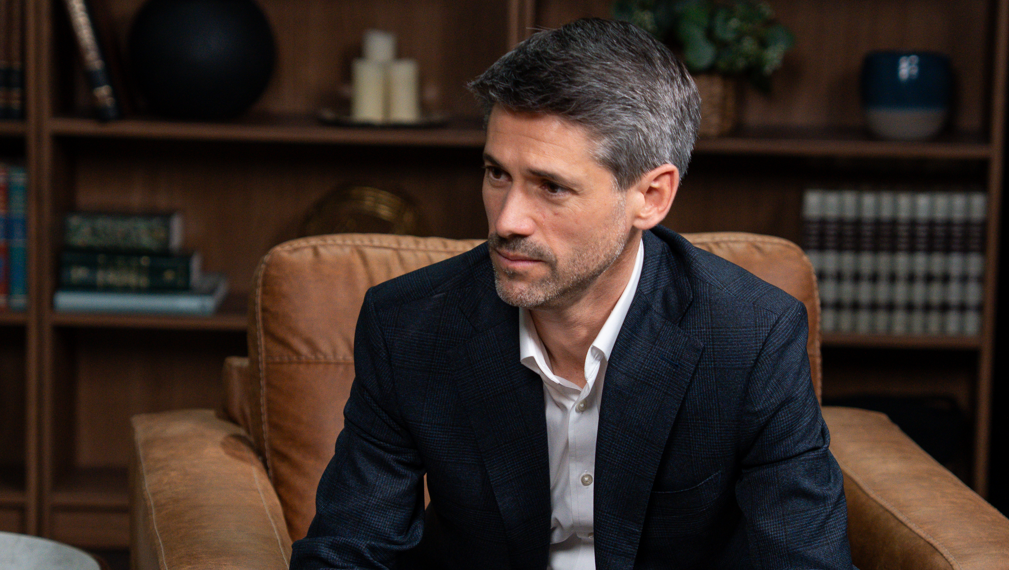
Matt Mahan sat down for an interview with California Politics 360 for a wide-ranging conversation on his run to be the state’s next governor.
The San Jose Mayor is running as a Democrat in the race to replace Gavin Newsom.
“I’m worried about the direction the state’s going in,” Mahan said in the interview. “I think Sacramento is working great for special interests and not so great for the people of California. I want to take the work we’ve done in San Jose to make our streets safer, reduce unsheltered homelessness, bring down energy costs, and pursue that agenda statewide.”
Central to Mahan’s campaign is the promise that if he’s elected the governor, the state will be smarter with the hundreds of billions of taxpayer dollars that make up the state’s budget. He said he would not raise taxes and regularly audit programs and survey voters.
“The state has increased spending 75% in the last six years and nothing has gotten better,” Mahan said. “We’re not going to ask people for more.
Mahan was a public-school teacher before he started working in tech.
When asked how he would fix the state’s public education issues that include statewide teacher strikes coupled with students struggling to read, do math and science, Mahan noted California now ranks among the top ten states for spending on education.
“At some point, we have to stop funding failure,” he said.
Mahan said the state should ensure teachers are using evidence-based learning methods and that students are being taught phonics. He also noted he agrees with Gov. Newsom’s proposal to have the Department of Education be overseen by the governor’s administration instead of the Superintendent of Public Instruction.
“The governor should be where the buck stops on education,” Mahan said.
When asked how he would make life more affordable for Californians, Mahan said he would suspend the state’s 61 cent gas tax.
“Let’s put our money where our mouth is, with a budget of $350 billion that has gone up 75%, you can’t tell me we have to choose between helping people have a little more room in their budget by bringing down gas costs and paving roads,” Mahan said. “We can find money to pave our roads and give a much-needed break to working families.”
On the environment, Mahan said he does not think California needs to change or push back its climate goals to phase out the use of oil and gas by 2045.
On healthcare, Mahan said he would continue the program that provides insurance to undocumented people in California.
On housing, Mahan said he would change state law to fast-track the building and permitting process. On homelessness, he said he would build basic shelter and invest in short-term homelessness prevention programs including rental assistance. He also said he would build on Gov. Newsom’s work to address people who are severely struggling with mental illness including programs known as CARE Court, efforts to establish mental health campuses, and changes in the state’s conservatorship laws.
“Those are the right ideas but the execution hasn’t been there,” Mahan said. “The governor is pushing in the right direction but when it comes to implementation, many of the counties are not implementing.”
When asked to give Newsom a grade, Mahan at first said, “oh come on, it’s not my job to grade the governor.”
“Our job is to take each issue and offer the best possible solution and be willing to disagree with members of our own party,” Mahan continued. “On some issues I’d give him an A on others I’d give him a D. It just depends on the issue, frankly.”
What three words would he use to describe California under his leadership?
“Accountable for results.”
KCRA 3 Political Director Ashley Zavala reports in-depth coverage of top California politics and policy issues. She is also the host of “California Politics 360.” Get informed each Sunday at 8:30 a.m. on KCRA 3.