
A huge, mall-shaped cake was created to celebrate Vallco Fashion Park’s grand opening in 1976. Beyond the actual edible structure itself, the footprint of the gigantic cake also included surrounding lawns and roads. Back then, the Cupertino shopping center was lush and fountain-filled. Inside, it featured a handful of themed “parks” honoring the city’s history, including “De Anza Park, Orchard Park, and the futuristic Electronics Park, each planted with trees to bring a slice of nature indoors,” as one mall blog described it.
Some of the storefronts inside the former Vallco mall.
Vallco Shopping Mall/Yelp

In the 1980s, a typical trip to the Vallco mall could include lunch at Wolfe Creek Cafe or spending your allowance at King Norman’s toy store — before it became KB Toys.
Article continues below this ad
But times changed. Shifts in consumer behavior led to the mall being largely demolished in 2018. Developers now hope to use the space to create a town center for Cupertino, which doesn’t have a real downtown.
The Vallco shopping mall resembles a ghost town in Cupertino, Calif., on Wednesday, Feb. 14, 2018.
Paul Chinn/SF Chronicle via Getty Images
A long-awaited and controversial multibillion-dollar revamp of the once-beloved, now-flagging shopping center is slated to include more housing, nearly 2,700 units total, but 60% fewer lower-income ones than originally expected. This is a blow to the city of roughly 60,000, which was relying on the redevelopment to fulfill a significant portion of its state-mandated affordable housing goals.
Now it’s falling short of those goals.
Article continues below this ad
On Feb. 27, city staff gave Sand Hill Property Company, which owns the nearly 51-acre Vallco site, permission to decrease the number of lower- and moderate-income units from 890 to 356 in the project. Situated between Interstate 280 and Stevens Creek Boulevard and on both sides of North Wolfe Road, the 4.8 million-square-foot mixed-used development is a mile from Apple’s headquarters. In addition to housing, including buildings that rise to up to 85 feet tall, it is also set to feature parklands, office space, a Hyatt hotel and retail shops. The old mall topped out at three stories with the opening of an AMC Theatres in 2007.
‘A bait and switch’
Once a vibrant shopping hub, Vallco now is a dying mall clinging to life: It houses only an ice rink, Benihana and a bowling alley.
Article continues below this ad
Today, the Vallco property is home to an ice rink, Benihana and a bowling alley.
Google Maps
The project, known as The Rise, qualifies for streamlined approvals under Senate Bill 35 — a 2017 law that requires cities to greenlight changes to projects that include affordable housing units, so long as they fulfill certain parameters. These include maintaining a set percentage of affordable units and using union labor for construction. Residents could move into housing units, built by Eden Housing, as soon as late 2028, according to Sand Hill Managing Director Reed Moulds.
Make SFGATE a preferred source so your search results prioritize writing by actual people, not AI.
Add Preferred Source
“You could call it a bait and switch,” Mayor Kitty Moore said in a phone call with SFGATE. Sand Hill made the requested changes back in November. “Each year, as we watch the housing bills come through, the prices in Cupertino have not gone down at all … It isn’t working. They’re [developers] getting out of building the affordable units that they don’t really want to do because that doesn’t make them money.”
Article continues below this ad
At a Dec. 1 meeting to discuss the changes, then-Cupertino Mayor Liang Chao said the staff had little time to review them since the holidays were coming up and the changes were “very conveniently timed … to screw us.”
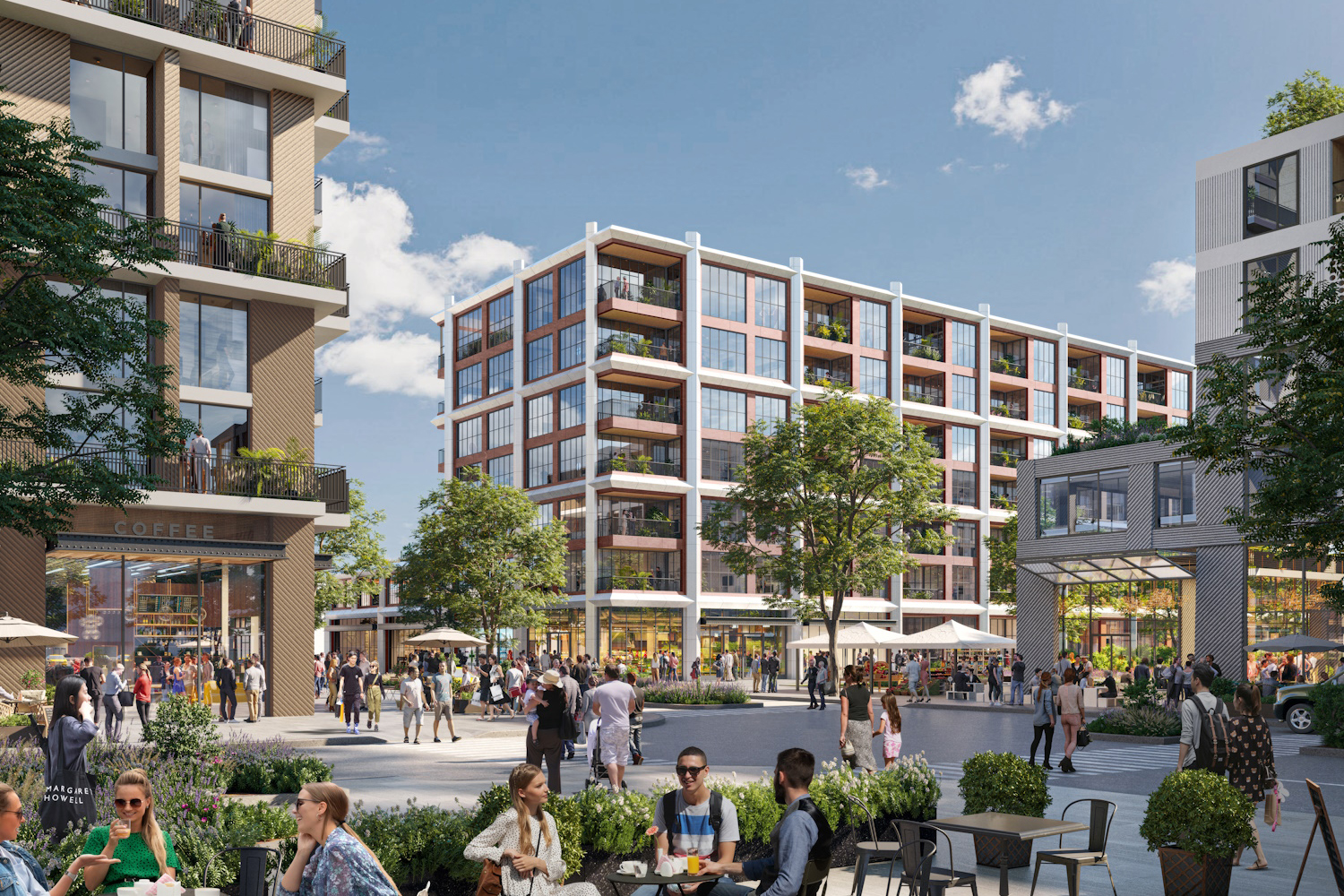
Renderings of the proposed mixed-used development on the former Vallco mall property in Cupertino, Calif.
Sand Hill Property Company
The South Bay city is chasing a 2031 deadline to build 4,588 new units of housing in light of the state’s housing affordability crisis. Cupertino has been at odds with the state over building more housing, including 2,635 low- to moderate-income units. In 2023, three nonprofit housing advocacy groups sued Cupertino, among other jurisdictions, for not submitting their housing plans in time to the state.
Housing in the suburb, like much of the Bay Area, is pricey. The average rent for an apartment in Cupertino was $3,858 per month in March, according to data from RentCafe. For very low-income households of four in Santa Clara County, affordable one-bedroom housing is defined as units with monthly rent of $1,836 or less.
Article continues below this ad
Despite the reduction in affordable units, Sand Hill is increasing the number of housing units in the development at 10123 N. Wolfe Road from 2,402 units to 2,669 using density bonus laws. Affordable housing made up half of all units in the original plans submitted to the city in 2018. Per SB 35, some 20% of units must be classified as lower income, but that is based on the base number of units, not those included in the bonus density, so the overall number is closer to 13%, according to planning documents.
Developers reduced office and retail space in the plans, too. They say the reduced office space will decrease the project’s traffic impacts.
Reaction to changes, and what comes next
The city must now look for additional sites to build low- and moderate-income housing but hasn’t found any, Moore said on Thursday. Cupertino had already suffered a blow in January when two other developers shrunk plans — the Dividend Homes development at 20111 Stevens Creek Blvd. slashed 45 of its affordable housing units, and SummerHill at 20840 Stevens Creek Blvd. cut 59, according to planning documents.
Article continues below this ad
The Rise project has been in the works since 2014. Residents have pushed back against the project, which they have called too dense for suburban Cupertino. In 2020, neighbors who didn’t want the mall developed lost a lawsuit that alleged that the city improperly approved the project.
Leora Tanjuatco Ross, California director for YIMBY Action, said that all housing built at the Vallco site will benefit renters by increasing the overall supply of options and chip away at the state deficit.
Renderings of the proposed mixed-used development on the former Vallco mall property in Cupertino, Calif.
Sand Hill Property Company
“The reality is that affordable housing is more expensive than ever to build and maintain,” she said in an email to SFGATE. “We’ve supported this proposal from Day 1, over 10 years ago, and we wholeheartedly support it now. Bedrooms should be prioritized over vacant retail spaces.”
Article continues below this ad
Ilya Gurin, volunteer lead with South Bay YIMBY, is not surprised by the reduction in affordable units. He noted that delays in the project have come “largely because the city has been conflicted about what it wants.”
“The reality of housing development is that the longer a project is delayed, the more costs increase, which necessarily reduces the community benefits (such as subsidized affordable housing) that the developer can afford to provide,” he said in an email. “Macroeconomic conditions continue to be unfavorable, so cities all over the region are grappling with pipeline projects reducing the number of affordable units from earlier projections, even sites that haven’t experienced as much conflict as Vallco.”
However, this is still a net positive according to Gurin.
“Any affordable housing is more than this site has ever had, so Cupertino should take the win,” he said.
Article continues below this ad
Members of Cupertino For All, a volunteer-led pro-housing group, are disappointed in the percentage of below-market-rate units now included in the plan.
A view of the Vallco mall property, where part of the mall was demolished in 2018, in Cupertino, Calif. There are plans to redevelop the whole property as a mixed-use development.
Google Satellite
“The laws are confusing, but the impact is not,” said Yvonne Thorstenson, Connie Cunningham and the board of directors for Cupertino For All in an email to SFGATE. “[We are] disappointed that the reduced number of affordable homes will result in a severe limit to the number of households that can live there. … We find it truly disappointing when people who have a comfortable place to live will go out of their way to deny safe and decent housing opportunities for others.”
In the Bay Area, this is common practice.
Article continues below this ad
Developers of a project to transform a more-than-century-old bus storage and maintenance facility in San Francisco’s Mission District into housing cut their project’s affordable units from 465 to 100 in 2025. In East Palo Alto, Sand Hill Property Company also reduced the number of affordable apartments and townhouses in a development that includes more than 250 units of housing at University Avenue and Bay Road.
In the meantime, construction workers should begin paving roadways on the site this spring, Moulds said.
He chalked up the request to cut lower-income housing to help with necessary cost-cutting because of interest rate hikes, economic uncertainties and the increase in remote work.
Article continues below this ad
“We think it is important to take a big swing at this [housing affordability] crisis, which is why we planned for roughly two-thirds of the total project’s affordable homes to be delivered in the first phase alone, allowing the first move-ins within a few years from now,” developers said in a November 2025 blog post.