
The Abridged version:
Local parents say when it comes to youth sports, there’s no Field of Dreams. From broken sprinklers to a lack of bathrooms, mom and dads are left wondering why more can’t be done.
The city of Sacramento maintains more than 200 parks across the city, an operation more challenging than many may realize.
A recent plan focused on Sacramento’s parks lays out specific strategies to improve fields and facilities for young athletes.
When I started writing Beyond the Bleachers earlier this year and asked for input, Sacramento sports mom Jessica Tudor Elliott was among the first to reach out.
Why, she asked, aren’t the city’s sports fields better maintained?
It’s a common question. The condition of fields and facilities is among the most frequent topics overheard at a Sacramento youth sporting event.
Elliott is a soccer mom, raising two young athletes in Sacramento’s Land Park neighborhood. Known for its tree-lined streets, charming 1930s and 40s bungalows, and — of course — William Land Park itself, it’s a community full of families with young kids and young athletes. Elliott describes herself as an active parent participant in the Land Park Soccer club. She volunteers as a coach and sometimes attends board meetings.
Sign Up for the Morning Newsletter
The Abridged morning newsletter lands in your inbox every weekday morning with the latest news from the Sacramento region.
“A lot of the fields are in such poor condition that they can’t be used as a soccer field safely. We’ve had situations where kids fell on hard bare dirt during practice and hurt their knee and weren’t able to play the rest of the season,” she shared. “There are a lot of parents involved and … working really hard to try and get the facilities in place… and help try to figure out solutions for some of the problems we’ve faced.”
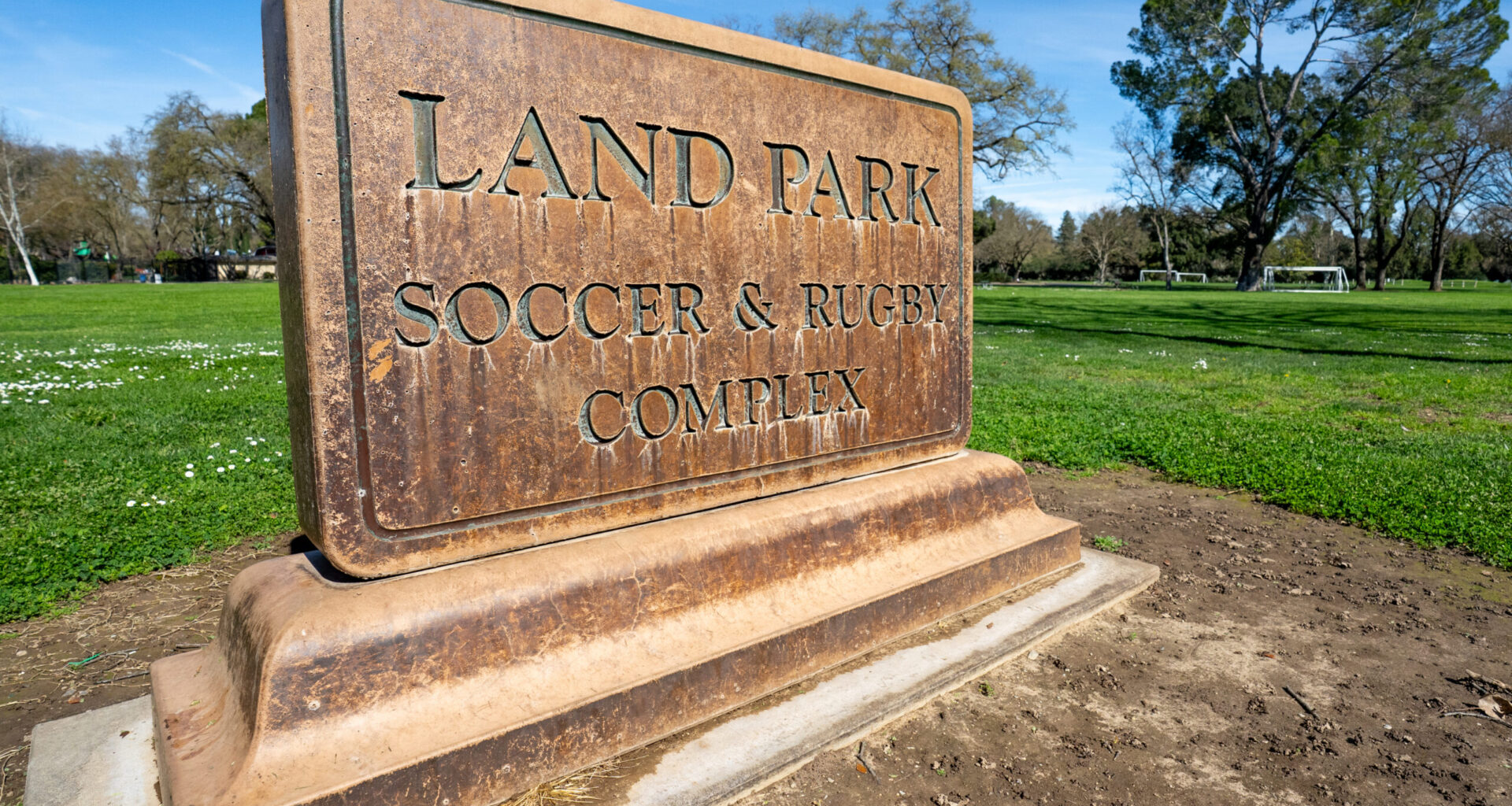
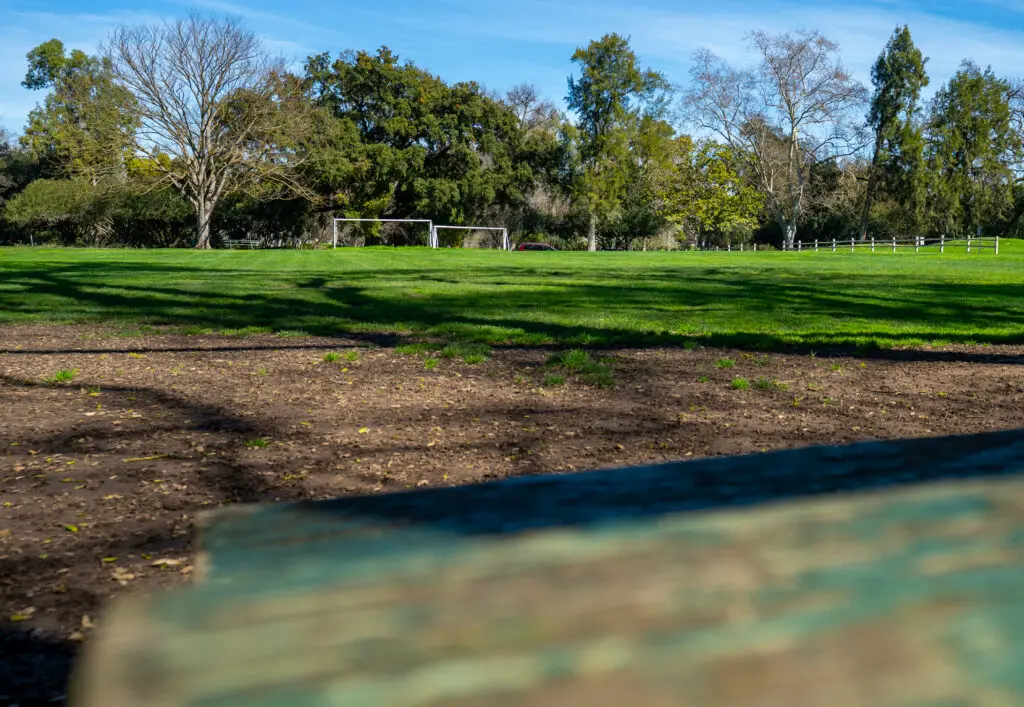 The Land Park Soccer & Rugby Complex on Feb. 26, 2026. (Cameron Clark)
Hard truths in Sacramento parks plan
The city of Sacramento acknowledges a number of hard truths in a recent report about its park system, including:
Sacramento is not meeting the service standards it adopted for parks in 2010 with the Parks and Recreation Plan 2005-2010.
The city has invested so much in parkland that it has lacked sufficient funds for park maintenance, asset replacement, park development and activation.
Community members believe park resources “are not equitably distributed across all of Sacramento City parks.”
The more than 200-page Parks Plan 2040, dated May 2024, details the challenges of managing and maintaining the city’s 241 parks, comprising thousands of acres. The report also offers a vision for how the city can better maintain current fields and facilities as well as responsibly add parks serving all kinds of purposes in the future, including youth sports.
“You see that there’s big development going on in other areas (of the city), and they have nice fields, facilities, and playgrounds and there’s not garbage everywhere,” Elliott said. “It feels like they’re listening to the developers more than the longtime residents.”
Developers pay less than half of costs
Parks Plan 2040 includes input from not just city leaders and staff but also thousands of residents and stakeholders, including 14 members of Sacramento’s Youth Commission, made up of young people between the ages of 14 and 22. It also sheds light on the role developers play.
In order to achieve the city’s goals for servicing parks, the Youth, Parks, and Community Enrichment (YPCE) Department has been asked to fund more than 60% of the cost of new parks, while developers fund 40% — an approach the report indicates “has not been feasible.” The report also states that the city’s park impact fees (PIFs) — the special fees paid by developers to offset the costs of new parks — have supported less than half of what city standards for service require.
City says it’s focused on safety, cleanliness
“Crews work diligently year-round to deliver both routine maintenance and respond to resident service requests,” Gabby Miller, a spokesperson for the city, said in a written statement. “The majority of (their) work is proactive, regular maintenance aimed at cleanliness, functionality, and safety.”
The city also points out that people can call the city’s 311 hotline for maintenance requests or to report things like park lights that aren’t working or broken sprinklers. This is a tool Elliott says she’s leveraged with mixed success.
“I think generally you hear back sometimes on those 311 calls and sometimes you don’t,” she says. “For something like a broken sprinkler head, they might come and turn it off but then you see the next season that area of grass is just brown now. Ok, well, they turned it off but didn’t repair it.”
Inconsistent funding brings deferred maintenance
Sacramento’s parks also have a lot of “deferred maintenance,” a pattern that emerges when maintenance needs surpass maintenance budgets, which results in a growing number of projects left untackled. The report points to a lack of consistent funding, noting that parks present perpetual expenditures for upkeep and operations.
“Being heavily dependent on the city tax base, parks and recreation departments may not have the stability required for effective planning and operations,” according to the report.
As city officials look for ways to dig out of the current budget shortfall, park maintenance is on the preliminary list of cuts to consider, perhaps presenting a more politically acceptable option than cutting public safety.
The Parks Plan includes insights from a study that found that more than $140.5 million worth of repairs and improvements were needed for over 5,000 park amenities, and among the amenities with the worst average scores were restrooms. And that’s just for the parks that have bathrooms. Local sports parents know what a luxury that is.
In some cases, youth sports programs have been forced to take matters into their own hands. Volunteers from leagues often maintain city park fields, going as far as renovating baseball fields with their own time and money, just to get those fields into shape.
Where to go? No bathrooms common complaint
Elliott points out that where kids in Land Park play soccer, there’s no publicly accessible bathroom. “There is a golf club that’s adjacent to the soccer field, and sometimes they will take mercy on you and give you the code to get into the bathroom there,” she said. “There’s a lot of frustration with that.”
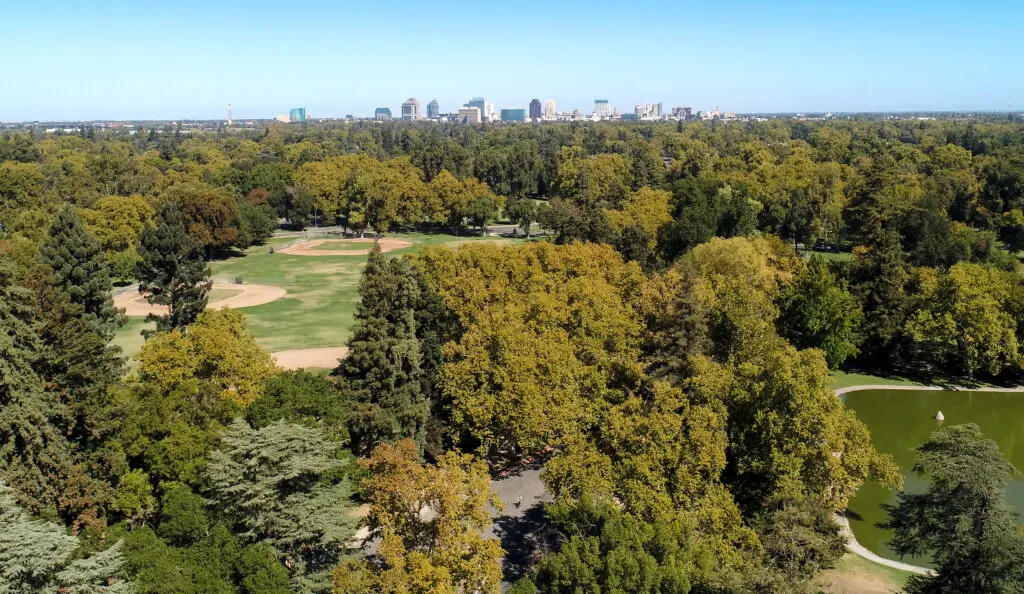 Aerial view of Land Park in Sacramento. (Martin Christian)
Blackbird Park in North Natomas hosts baseball games — including doubleheaders — but does not have a single bathroom. The City’s master plan for this park includes a bathroom, but there’s no indication when that may get built. For now, parents have to rely on neighbors’ homes if they happen to know someone nearby or drive half a mile across Del Paso Road to Westlake Community Park, which does have a public restroom.
As is suggested in its title, Sacramento’s Park Plan 2040 focuses a lot on the future, outlining nine “key directions” over the next 20 years for the city to improve parks and programs, as well as develop new ones. The guidance includes a decision-making framework for annual budgeting and park prioritization, recommending — among other ideas — increasing developer fees and identifying new revenue streams.
Keep kids in the game
As for Elliott, the soccer mom, she simply doesn’t want the poor conditions of any field to deter a kid from playing.
“That’s been my main goal as a coach and any involvement I’ve had – make sure these kids want to come back next season,” she said. “Even if they’re not going to play in high school or college, it doesn’t matter. They’re getting outside and developing those synapses that wouldn’t otherwise be happening.”
Carolyn Becker is a regular contributor covering youth sports for Abridged in her feature Beyond the Bleachers. She’s lived in Northern California most of her life and worked in journalism and communications in Sacramento for more than 25 years. She and her husband are raising two boys, both of whom play competitive baseball.