
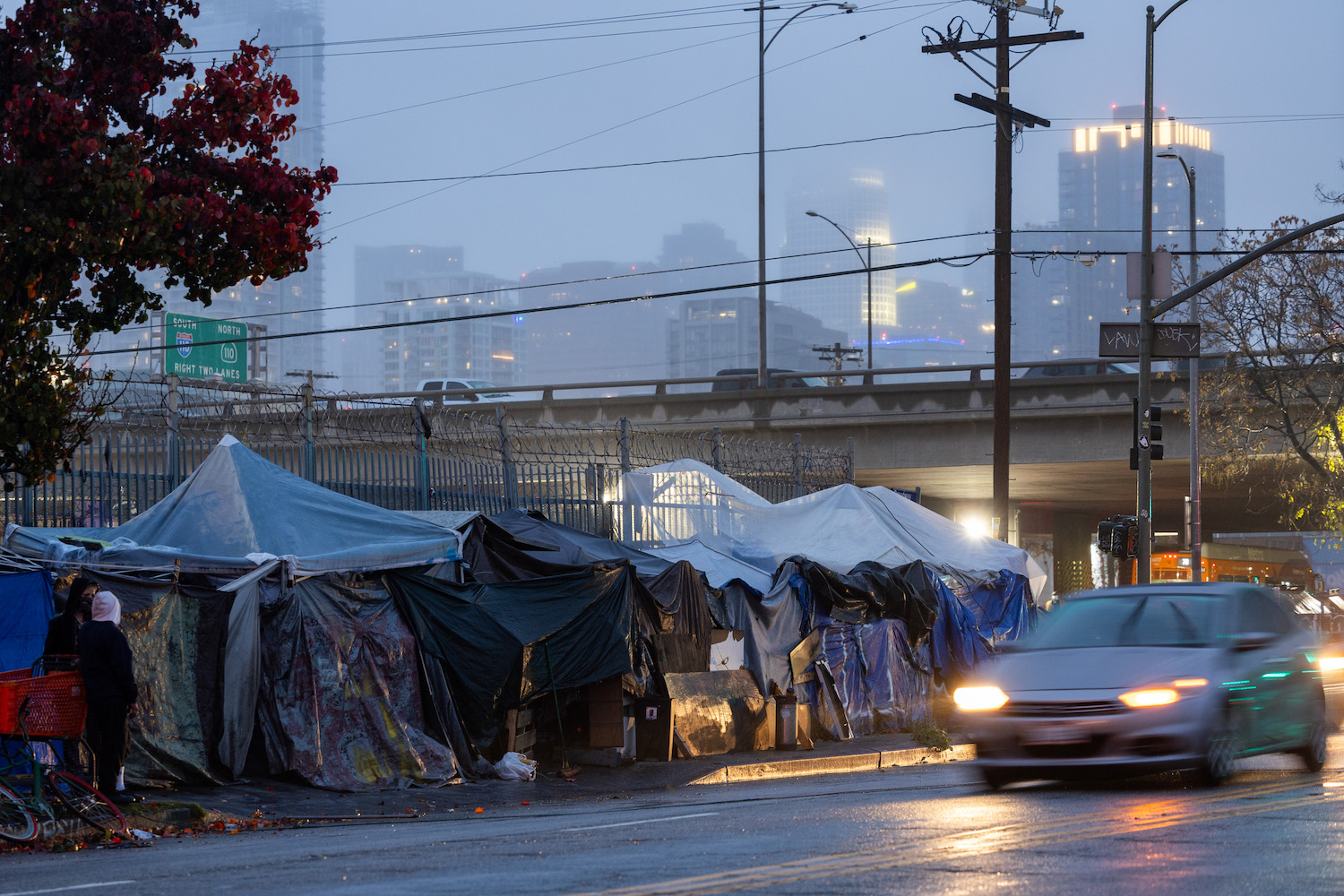
A South L.A. sewer incident reveals how far the city’s housing emergency has pushed people
In South Los Angeles, city sanitation crews nearly sealed a man inside a storm drain.
The incident followed days of growing attention around people living inside the city’s storm drain system, after videos circulating online showed individuals entering and exiting tunnels beneath the streets, prompting a city response.
Workers prepared to weld shut a manhole near 88th Street and Grand Avenue when someone noticed movement below. Moments later, a man in his late 20s climbed out of the darkness, suitcase in hand, just before crews closed the opening. The man, later identified as Luis Jimenez, told reporters he had been homeless for about 10 years and had stayed in the drain for one or two nights because he felt safer there.
The moment drew attention, but it did not come out of nowhere.
Residents say people have lived in the storm drain system for years, moving between street encampments and underground spaces as enforcement increases above ground. Some neighbors say fencing and barriers pushed encampments out of nearby areas, but did not reduce the presence of unhoused residents, who instead moved deeper into surrounding neighborhoods or underground.
As Los Angeles clears encampments and installs barriers ahead of global events like the World Cup and Olympics, some unhoused residents are moving into more hidden and hazardous spaces, including sewer systems and flood channels.
A Crisis Moving Out of Sight
For some, living underground offers a temporary sense of stability, particularly for those trying to avoid theft, violence or displacement. But the risks are significant. Storm drains can flood without warning, air quality is poor and conditions are often unsafe.
Recent reporting has identified multiple cases of people sheltering in these systems. In one instance, a 43-year-old mother of three lived inside a storm drain under hazardous conditions before walking away from outreach efforts.
Scroll to continue reading
The cases emphasize the ongoing challenges the city’s response teams have. Outreach teams often deploy alongside cleanups, offering shelter and services. Still, many individuals decline assistance or return after being relocated, underscoring the limits of short-term solutions.
Los Angeles has invested billions in recent years to address homelessness, including programs that convert hotels and motels into housing. Even so, cases like underground encampments point to deeper structural issues. The challenge extends beyond housing to include mental health care, addiction services and long-term support. Even as Los Angeles County has recently recorded a decline in deaths among unhoused residents, the broader system continues to face gaps in long-term care and stability.
City officials, including Mayor Karen Bass, describe the current moment as part of a broader effort to address years of unmet need. Following the South L.A. incident, the mayor’s office said crews responded quickly and offered resources to those encountered.
For many residents, progress still feels uneven, with some reporting the same concerns for years.
Next Steps for Los Angeles
The sewer incident raises a difficult question for Los Angeles: what happens when the crisis is no longer just visible, but hidden beneath the city itself?
Closing off storm drains may reduce immediate safety risks, but it does not address the underlying causes. In many cases, it shifts the problem rather than resolving it.
Moving forward, the city’s approach will likely need to extend beyond enforcement and temporary shelter. That includes expanding permanent housing, strengthening mental health services and improving how outreach teams connect with individuals who repeatedly fall outside the system.