
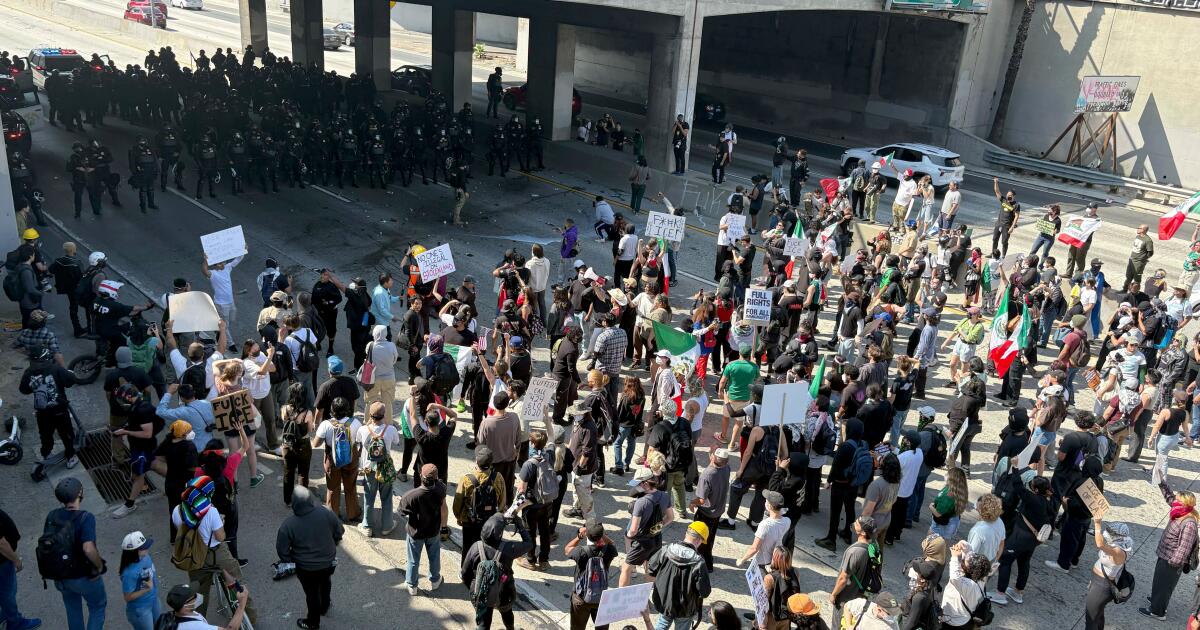
It’s not a stately town square or Instagrammable tourist attraction. But the subterranean stretch of the 101 Freeway through the civic center is a remarkable bellwether of L.A.’s struggles. A recent makeover of the venerable freeway section has the marking of a cry for help.
You’re reading the Essential California newsletter
Sign up to start every day with California’s most important stories.
By continuing, you agree to our Terms of Service, which include arbitration and a class action waiver. You agree that we and our third-party vendors may collect and use your information, including through cookies, pixels and similar technologies, for the purposes set forth in our Privacy Policy such as personalizing your experience and ads.
L.A.’s bellweather
Its very construction in the 1950s was an early warning sign of downtown’s waning influence — a route to speed motorists not into the heart of L.A. but around it to the burgeoning suburbs. The deep trench, known in the days of radio traffic reports as “The Slot,” divided the city center from Chinatown and the Eastside. It was a preview of how the L.A. freeway system would bring geographic fracturing.
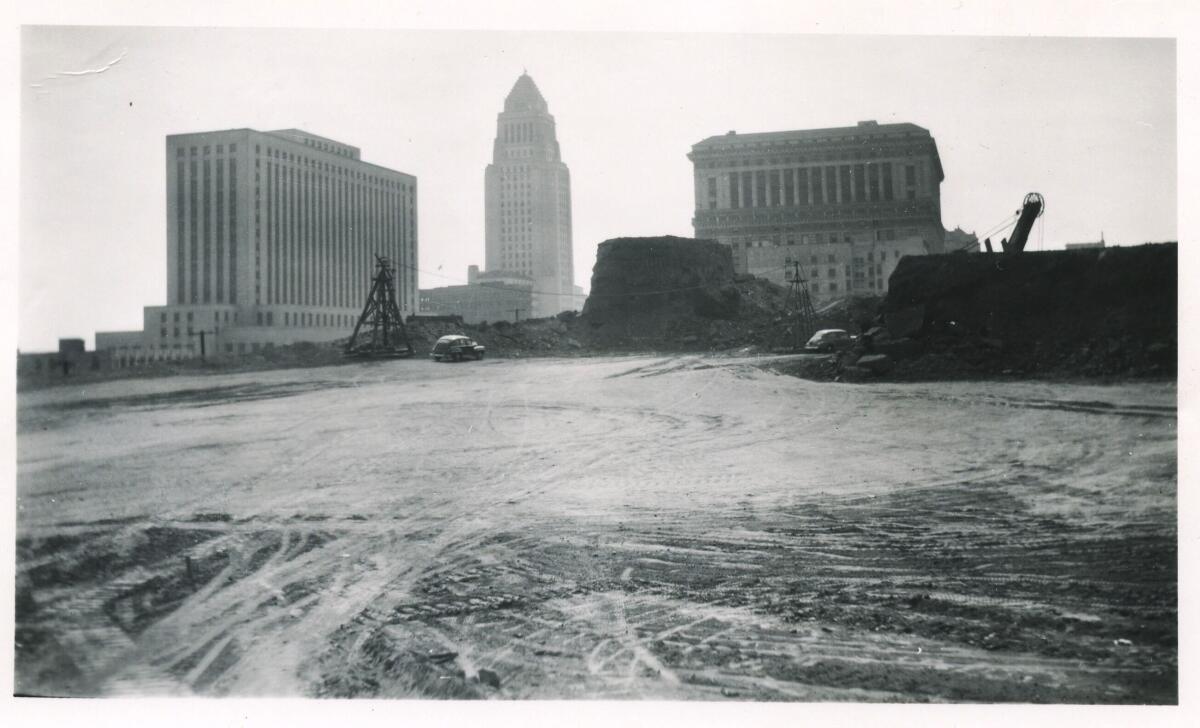
Construction of the 101 Freeway included “The Slot” in downtown L.A.
(UCLA Library / L.A. Times)
But in recent decades, it’s become a symbol of social and political fracturing as well.
When a white suburban jury acquitted the LAPD officers who beat Black motorist Rodney King, protesters spilled into the Slot and set the nearby landmark palm trees on fire — a precursor for the unrest to come. The protesters returned after George Floyd’s killing and most recently amid the Trump immigration raids, as if deciding the only way to get L.A.’s attention was to shut down the 101.
The Slot gets a makeover
So now, the Slot is getting security. On Friday, morning commuters noticed large black iron gates on several ramps to the 101. The gates give Caltrans the ability to block protesters from marching onto the freeway. Still, that was not needed Saturday during the “No Kings” demonstrations in downtown L.A., according to Caltrans officials.
It was surreal to see the gates join the cityscape, and says more about L.A. than just creative crowd control.
The installation comes a few months after officials announced another Slot “innovation” — installing fake ivy on the concrete wall to help beautify the roadway through the civic center. Sheets of the “graffiti-resistant” astroturf went up in January as a temporary measure to cover up the once-grand Olympic murals along the freeway’s concrete walls that have for years been targeted by taggers.
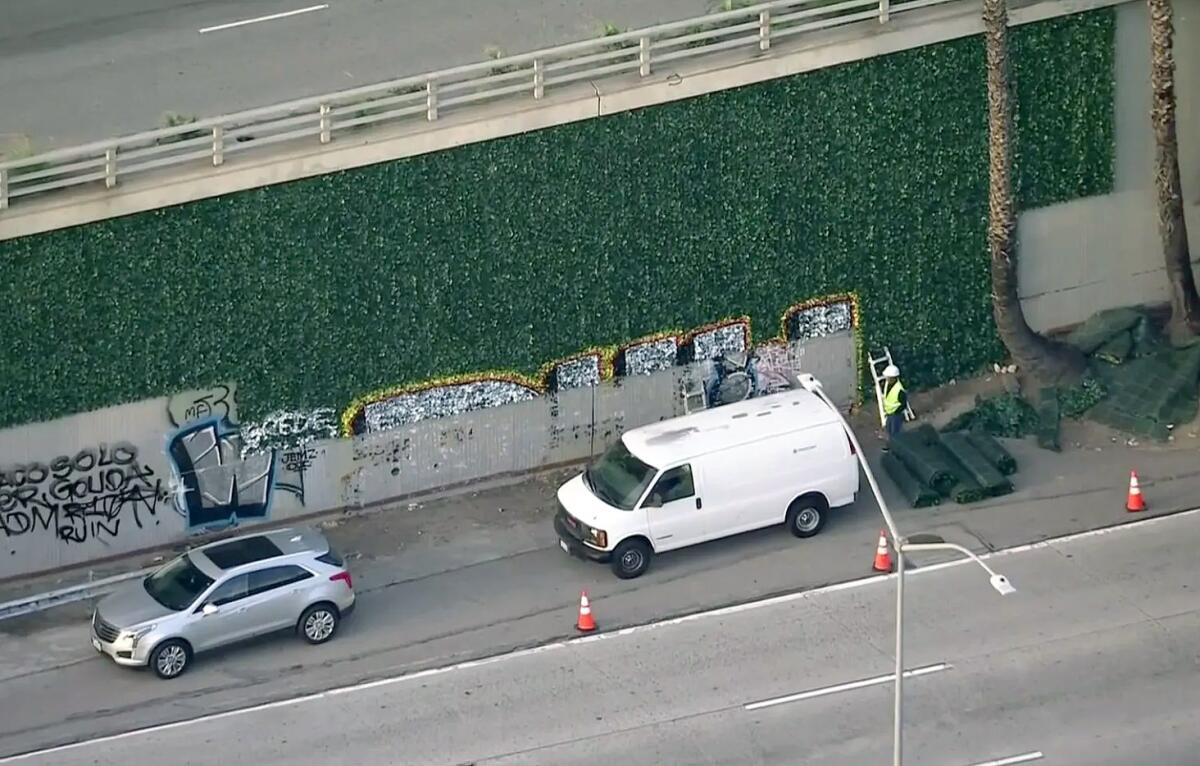
Workers remove fake ivy that was tagged and replace it with new ivy.
(KTLA)
Fixing L.A.’s grand gateway
It’s hard not to think the Slot deserves better.
The concrete tomb is one of L.A.’s gateways, with great views of the skyline, City Hall, the L.A. cathedral, Disney Hall, Music Center and Dodger Stadium. The murals were likened to a gallery for the car age. As L.A. historian Nathan Masters notes, the 101 is L.A.’s mother road, an “ancient highway, trod by Indian traders, Mexican soldiers, and American horses, that linked Los Angeles” to points north and south.
Our city once had ambition for the 101. In the 1980s, L.A. spent a decade debating whether to build a mammoth abstract monument along the Slot called “The Steel Cloud.” At the time, Mayor Tom Bradley thought it could be L.A.’s version of the Statue of Liberty, but most Angelenos saw it as a wasteful white elephant.
More recently, there was momentary excitement for another epic project: Capping the 101 from Hope to Alameda street with a park. The 100-acre greenbelt captured the imagination of urbanists who saw it as a way to reunite communities divided by the freeway. But with a price tag of at least $700 million (in 2010 money), the idea never went far.
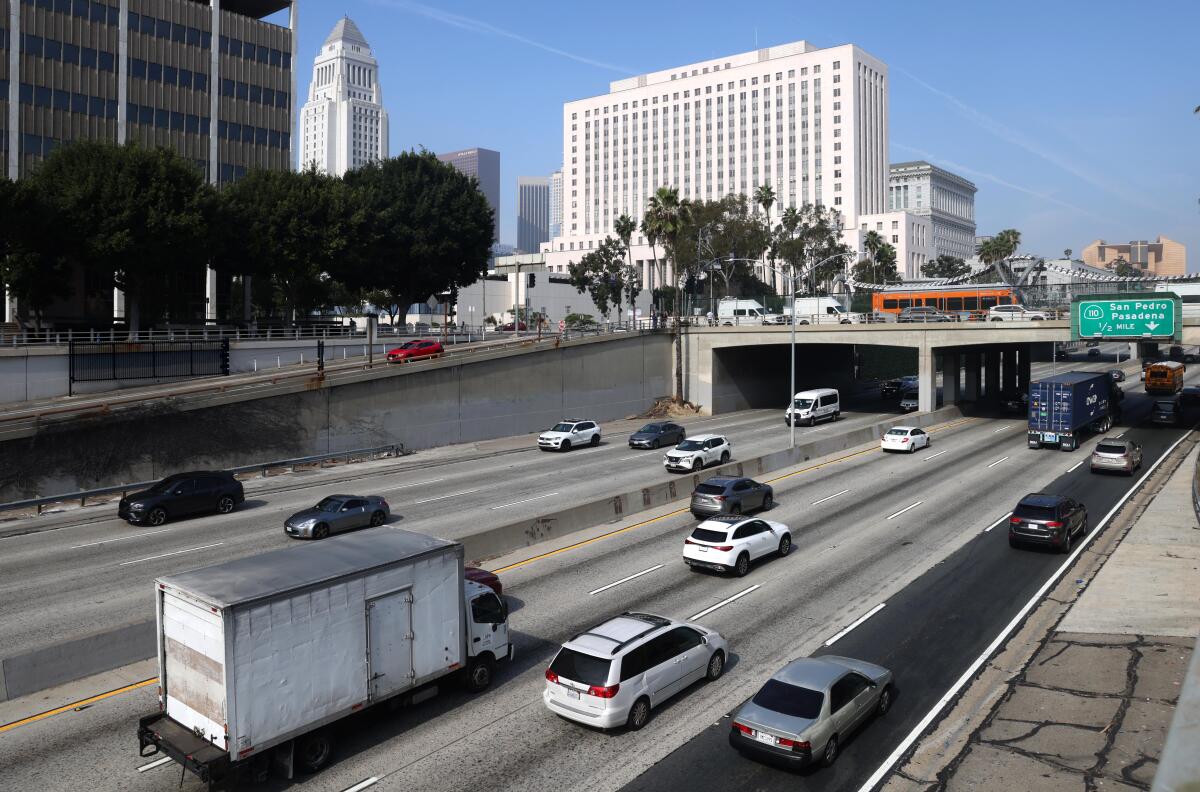
Traffic moves along the 101 Freeway.
(Genaro Molina / Los Angeles Times)
Where’s the ambition?
Is there a middle ground between creating L.A.’s Central Park and adding a Statue of Liberty and astroturf and security gates?
As those who turned the Slot into a site of resistance might know, the freeway is famous for another reason. The cover of Mike Davis’ “City of Quartz” — a classic L.A. history tome and bible for some activists — is dominated by an ominous Metropolitan Detention Center looming above the 101 at night. Davis took a dim view of freeways, seeing them as one of L.A.’s original sins, part of the city’s “militarization of urban space.” One of his biggest criticisms: They benefited suburbanites at the expense of people living in the city.
True enough. But as my colleague Patt Morrison has been writing this week in her series on the battle over smog, L.A. has a proud history of fixing its mistakes — if people feel the stakes are high enough.
Today’s top stories 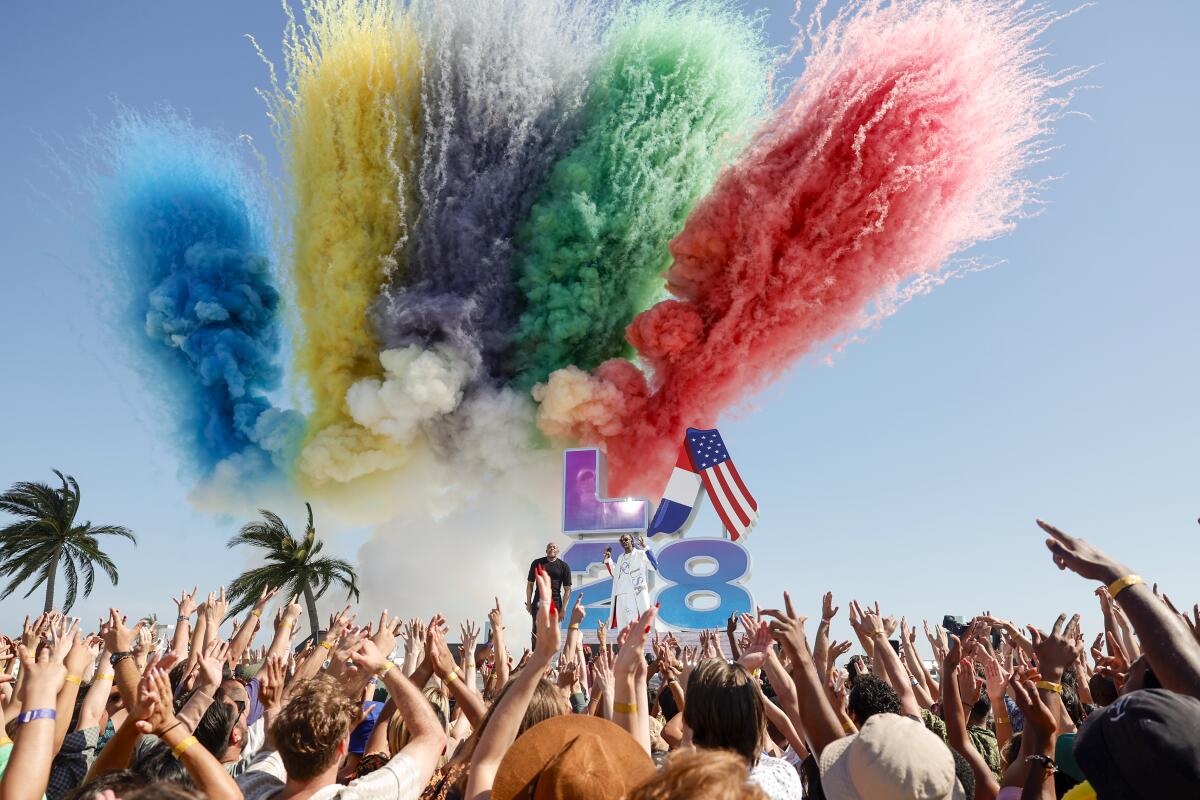
Dr. Dre and Snoop Dogg perform at the Los Angeles 2028 Olympic Games handover celebration in Long Beach in August 2024. L.A. 2028 Olympic tickets go on sale this week for people who live in Southern California and Oklahoma.
(Emma McIntyre / Getty Images for LA28)
L.A. 2028 Olympic ticketsThe window for purchasing tickets for the 2028 Los Angeles Olympic Games officially opens this week.Southern California and Oklahoma residents will be able to buy tickets for the 2028 Olympics April 2-6 in the presale reserve window.Cooler weather is coming to SoCalRiverside County sheriff suspends election fraud probeChad Bianco has paused his controversial investigation into election fraud claims after seizing more than 650,000 ballots from November’s Proposition 50 election.It was a major reversal for the outspoken Trump supporter, who had defended the investigation — and broadened its scope — just last week.More big storiesCommentary and opinionsThis morning’s must readAnother great readFor your downtime 
(Nico189 / For The Times)
Going outStaying inA question for you: What are some of your favorite Easter recipes?
Email us at essentialcalifornia@latimes.com, and your response might appear in the newsletter this week.
And finally … the photo of the day 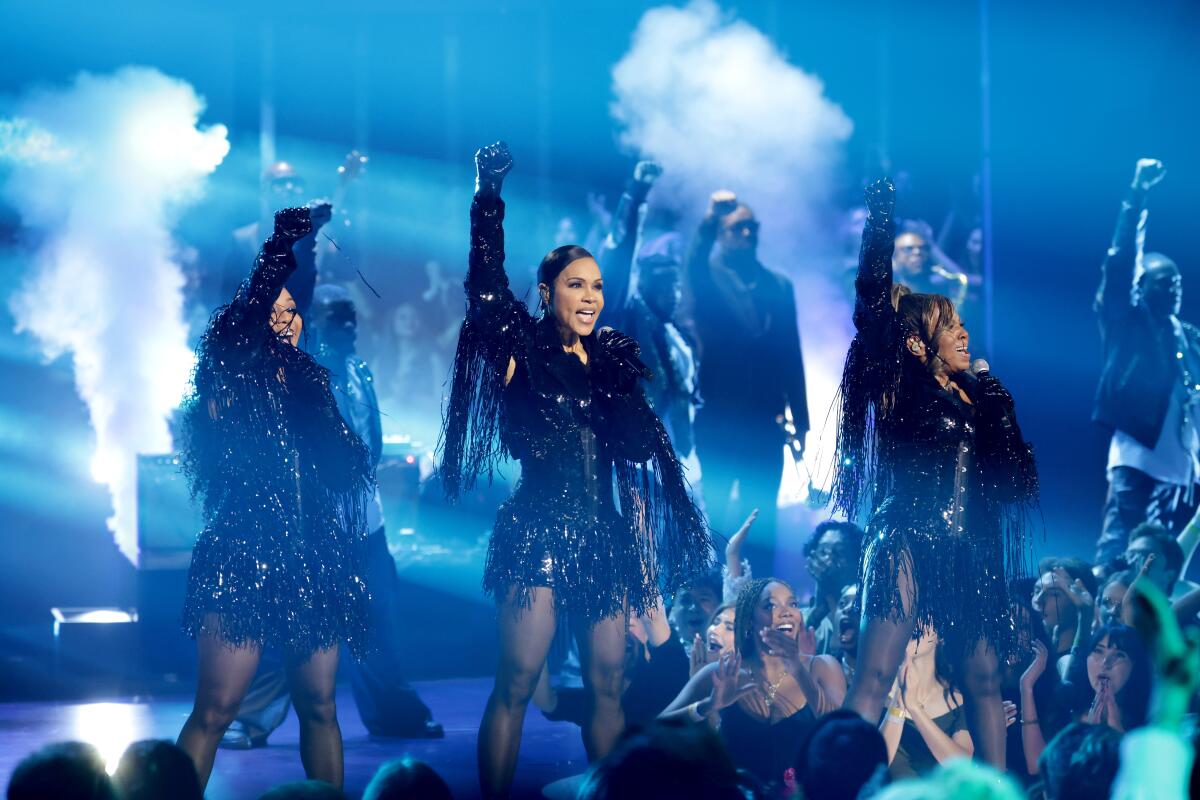
Terry Ellis, from left, Cindy Herron and Maxine Jones of En Vogue perform at the 2026 iHeartRadio Music Awards.
(Robert Gauthier / Los Angeles Times)
Today’s great photo is from Times photographer Robert Gauthier at the 2026 iHeartRadio Music Awards.
Have a great day, from the Essential California team
Jim Rainey, staff reporter
Hugo Martín, assistant editor, Fast Break desk
Kevinisha Walker, multiplatform editor
Andrew J. Campa, weekend writer
Karim Doumar, head of newsletters
How can we make this newsletter more useful? Send comments to essentialcalifornia@latimes.com.