
The opening night of a live performance always has an invaluable energy to it — the buzz of the crowd serves as a reminder of the excitement that continues to surround an art as traditional and curated as ballet, more than 500 years after its emergence during the Italian Renaissance.
If “no one cares” about ballet, as a certain ping-pong-obsessed A-list actor has virally propagated this year, it was certainly not evident during the opening of San Francisco Ballet’s “Don Quixote” on Mar. 19 at the shimmering War Memorial Opera House.
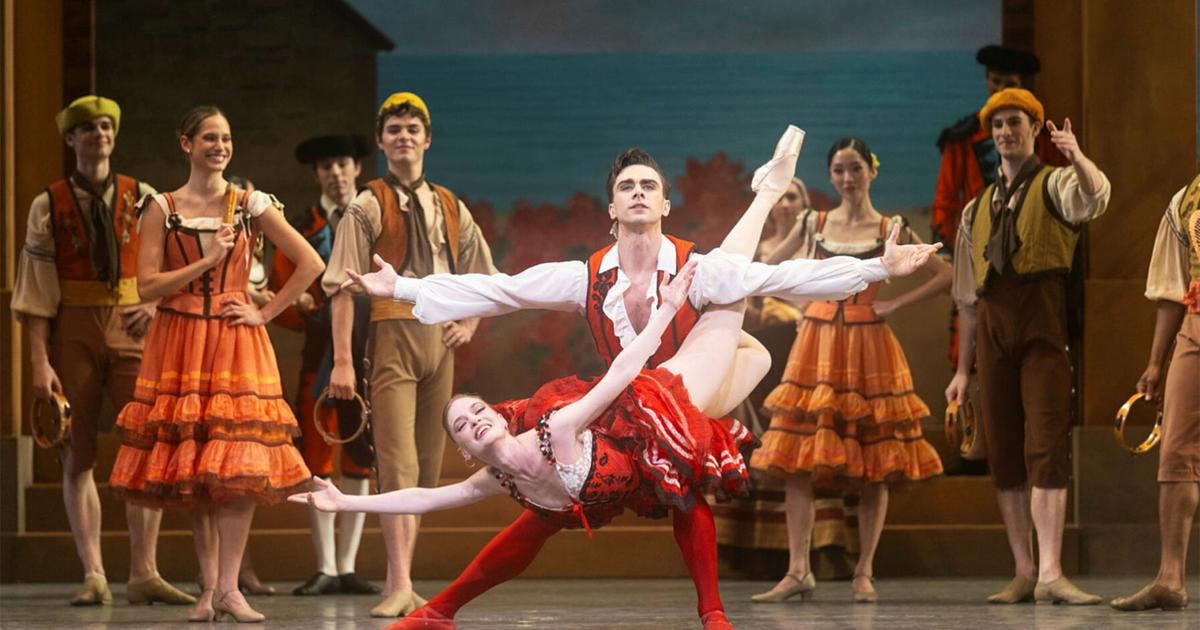
The beloved tale of Miguel de Cervantes’ “Don Quixote” is a fun and adventurous story that invites laughter and connection. SF Ballet’s rendition of the story brought the adventurous spirit, the dazzling set design and not to mention a pair of real horses to the stage last week.
As the titular Don Quixote, Nathaniel Remez moved like an expressive animatronic — his movements fascinatingly cartoonish and fluid. Quixote and his trusty companion Sancho Panza (Pascal Molat) squabbled and ran around the stage in hilarious sequences. As Quixote journeyed on and encountered a lively square in Barcelona, he found Kitri (Sasha De Sola), the daughter of the innkeeper, a grouchy man who insists on her marriage to the wealthy and pompous Gamache instead of her real love, Basilio (Francesco Gabriele Frola).
De Sola is a graceful, technically precise dancer. Her portrayal of Kitri, while sweet and polite, lacked a bit of Kitri’s signature carefree playfulness. She appears as a natural turner and balancer but seemed slightly stalled by opening night nervousness.
However, De Sola’s depiction of Dulcinea in Act 2’s dream sequence was elegant and shining. Shifting from a Mediterranean village to an icy blue setting, the variation emphasizes her delicate precision and converts her restrained demeanor to gleaming elegance.
Frola is charming as Basilio, embodying the endearing sweetness and spontaneity of his character. Frola is a powerful jumper, floating in the air and resulting in a dazzling 540 jump in Act 3, a move that involves kicking his leg straight into the air, leaving the whole room in awe.
De Sola’s shining moment is alongside Frola in the second act’s pas de deux. Alone for the first time, the pace of the story slows down to allow our two central characters to develop past their flirtatious attractions and truly fall in love.
Frola’s chemistry with De Sola feels effortlessly realistic. The two execute stunning sweeping jumps into lifts, melting into each other. Along with the romantic sways and the orchestra’s crescendos, the scene is a standout gem among the ballet. The development of the characters was aided backstage by acting coach Javier Galitó-Cava, whose efforts were focused on emphasizing the humanity and artistry of the dancers.
Jasmine Jimison particularly embodied the bold character of Mercedes, the legendary bullfighter Espada’s partner. Jimison playfully lingers during Mercedes’ long, iconic backbends, staring out into the audience and clearly having fun with them. The material and flowy outlines of her costumes complemented Jimison’s stunningly long, exaggerated lines and high attitudes. Outfitted in a shimmery midnight blue dress in the Act 2 tavern scene and a ruffling celeste gown for the wedding in the third act, both designed by Martin Pakledinaz, Jimison brings the sultriness and sass that the audience craves in a performance of “Don Quixote.”
The town square fills with villagers for the fandango dance, and it is then that the brilliance of the costume design comes full circle. The costumes are Pakledinaz’s masterpieces, the looks exuding stunning high fashion couture with a ballet flair.
While Frola regrettably left the stage during the final coda following a leg injury, the celebration continued as the dancers quickly adapted and completed the performance. For an audience that repeatedly turns a blind eye to the arduous strain and athleticism ballet demands, often fooled by its grace, injuries like this remind us how immense the effort behind ballet is and how a performance’s magic comes from both its flaws and achievements.