
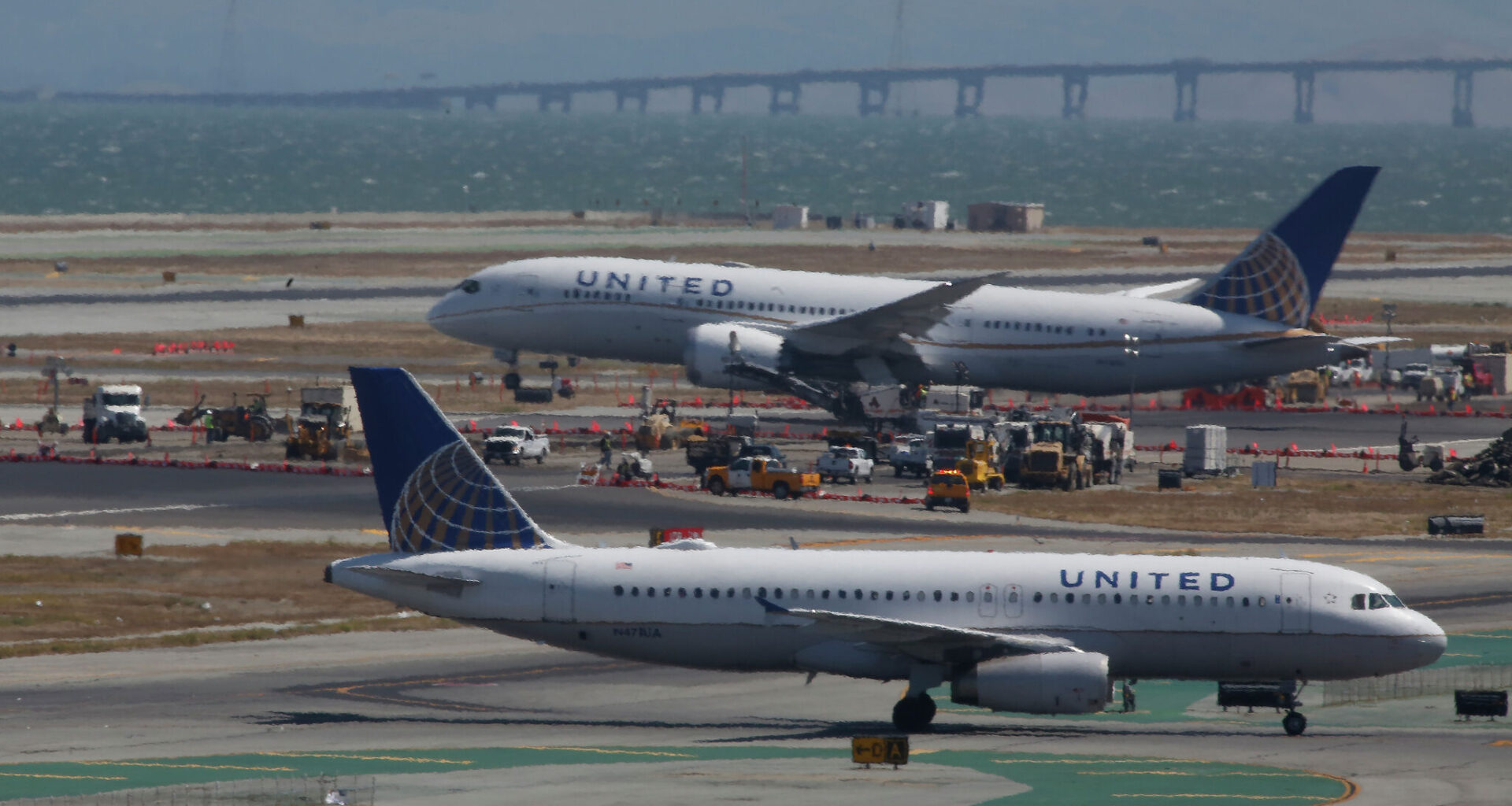
San Francisco International Airport is expected to face major indefinite delays for arriving flights after a new Federal Aviation Administration order prohibited parallel landings. Here’s what you need to know about the big policy change.
The agency banned side-by-side landings at the airport’s two east-west runways at all times. Such landings, which have been the norm for decades, had previously been banned during bad weather, such as the common foggy conditions that can cause delays at the airport. The FAA said the practice didn’t comply with its aircraft separation policy. SFO’s runways are “only 750 feet apart, so aircraft must arrive single-file.”
How will flights be affected?
SFO expects around 25% of arriving flights to be delayed up to 30 minutes due to both the policy change and a separate six-month construction project to repave and realign a runway. Airport officials had previously expected around 15% of arriving flights to be delayed due to just construction, but the FAA order has worsened that forecast. According to Reuters, maximum arriving flights per hour will drop from 54 to 36. Of the 18-flight reduction in hourly arrivals, roughly half is tied to the runway closure and half to the FAA’s new rules, the FAA said.
SFO said it would work with the FAA to try to lessen delays.
Is this related to a new runway construction project?
No, the FAA said the timing of the new order was just a coincidence. The runway project is expected to be completed on Oct. 2.
How are airlines responding?
United Airlines, the biggest carrier at SFO, told the Chronicle that it was reviewing the “FAA’s updated guidance to determine if we will need to make any changes to our flight schedule in the future.” It said customers should check their flight status to prepare for delays.
Could SFO expand its number of runways?
Do any other airports have similar side-by-side bans?
No, the FAA confirmed the change is specific to San Francisco.