
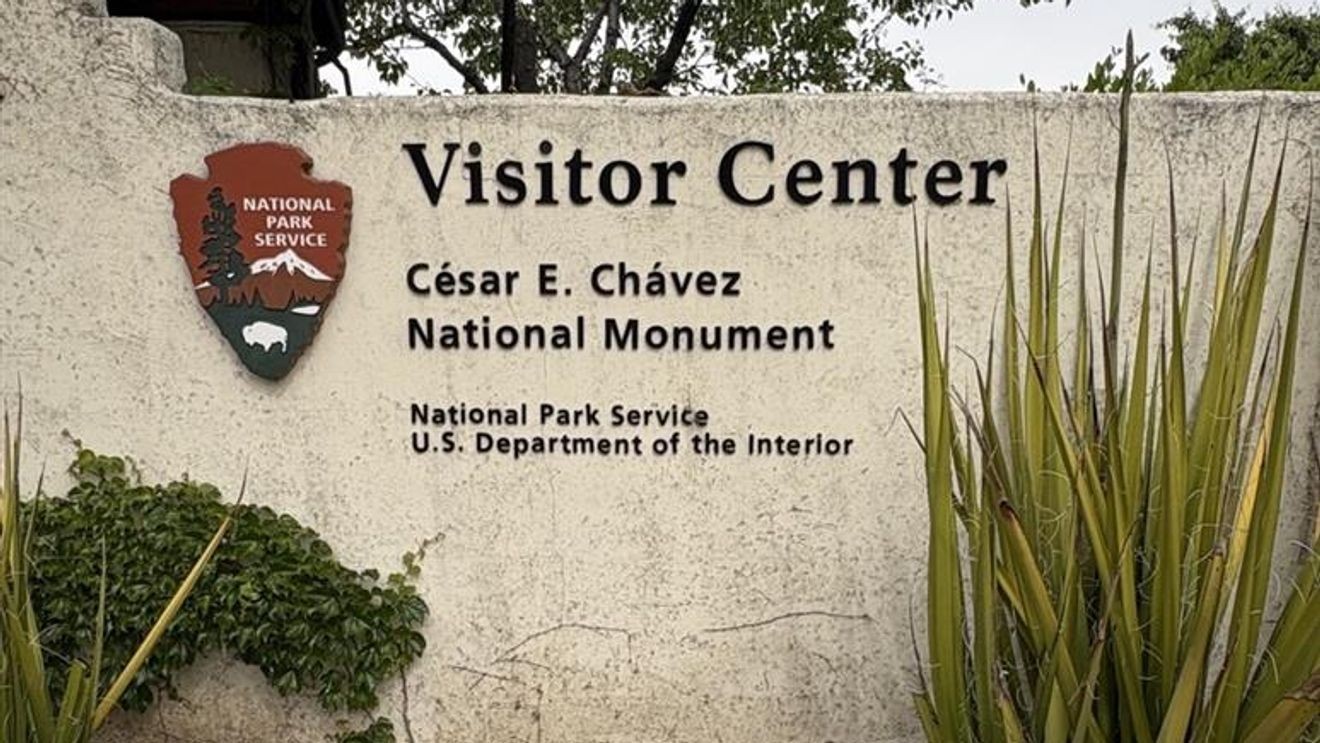
KEENE, Calif.(KBAK/KBFX) — A sparse amount of visitors continued to arrive on March 31 at the César Chávez National Monument in Keene to reflect on the late labor leader’s legacy, as sexual abuse allegations against Chávez have raised questions about the future of the site and renewed debate over why the date is now recognized as Farmworkers Day.
Brothers Esau and Joel Herrera drove from San Jose to visit the monument on Chávez’s birthday. They said they wanted to honor Chávez while also acknowledging the allegations.
“So I’m here to grieve. I’m here to honor Cesar. I’m here to put the pain to rest. Hopefully,” Esau Herrera said.
Staff at the site declined an interview.
The César Chávez Foundation released a statement that read in part: “Like many across the country, we ourselves are grappling with what to do with a name and identity that carries with it so much history, but now also carries so much pain.”
The controversy has also reached Washington. Last week, Republican Sens. John Cornyn of Texas and Bill Cassidy of Louisiana authored a bill to abolish and defund the Chávez National Monument.
Cornyn wrote: “Not one dime of taxpayer money should be spent on a monument that glorifies a monster like César Chávez, especially when that monument stands quite literally at the scene of some of his alleged crimes.”
According to The New York Times, women have alleged they were sexually abused as minors at La Paz on the national monument site.
Some visitors said the allegations did not change their decision to come.
“Not at all because those were allegations. His works stand for themselves,” said Leigh Hanson, a Pinon Hills resident.
Bill Cropper of California City said he visits the monument every time he drives to Bakersfield because Chávez “looked out for other people.”
“With everything in the news, they might decide to change the name, and they should leave it alone. It’s his grave site. People have been coming here for years. They should just leave it alone,” Cropper said.
For many, Chávez’s impact on farmworkers remains central to why people continue to visit the monument, but as questions emerge, how that legacy is remembered may continue to evolve.