
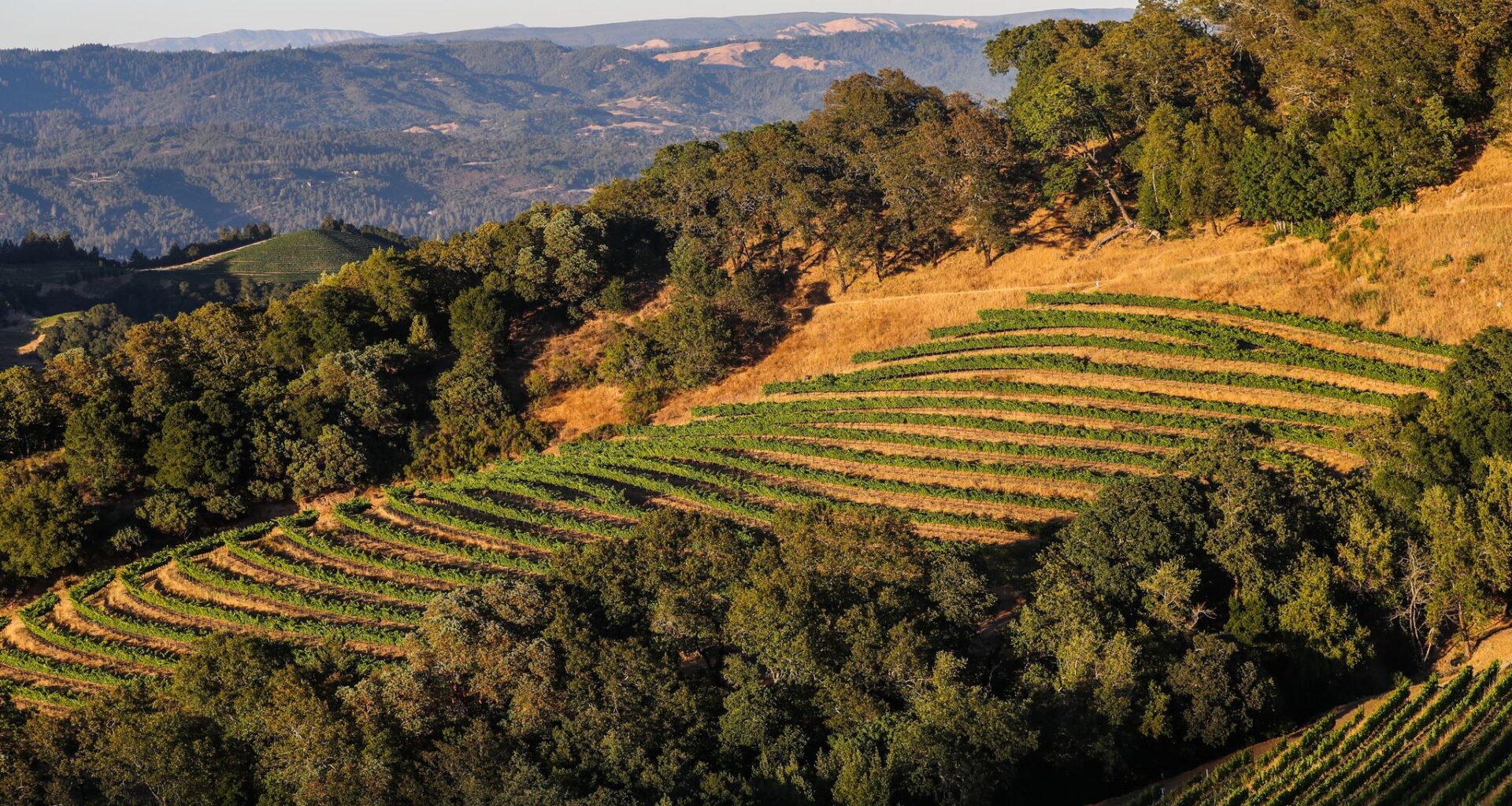
A view of the vineyards at Cain Vineyards & Winery in Napa Valley in 2016. Much of the estate was destroyed by the 2020 Glass Fire. In December, Third Leaf Partners, a San Francisco investment firm, purchased the wine brand.
Gabrielle Lurie/Special to The Chronicle
Five years after it was devastated by wildfire, a historic Napa Valley winery has sold to one of the region’s burgeoning power players.
In December, Third Leaf Partners, a San Francisco investment firm, quietly acquired Cain Vineyards & Winery, the 46-year-old Spring Mountain winery known for producing some of Napa Valley’s most unorthodox Bordeaux blends, an antidote to the big, Napa Valley fruit bombs of the 1990s and 2000s. Cain’s winery, tasting room and a significant portion of its mountain vineyard were destroyed in the 2020 Glass Fire; the winery and tasting room were never rebuilt.
Third Leaf purchased the brand and inventory, but not the estate, which sits more than 2,000 feet on top of a ridge of Spring Mountain, directly on the Napa-Sonoma county line. The purchase price was not disclosed.
Article continues below this ad
“Napa is an incredible winemaking region, and I think there’s a lot of financial stress in the valley. There’s a lot of pressure, banks are kind of backing away and a lot of sources of funding are drying up,” Third Leaf managing partner Alex Pagon said, confirming that the company is open to buying other wineries. “That creates the opportunity for us to find great brands and wineries that may not have a solid future.”
Investment firms buying up wine estates is controversial in Napa Valley, where corporatization — large, corporate entities, such as investment firms, buying up small, family-owned wineries — is in full effect. Spring Mountain Vineyards, another historic mountain estate scorched by wildfire, was recently acquired by New York City firm MGG Investment Group via bankruptcy auction, after the winery defaulted on a $185 million loan from the firm. In 2024, private equity firm Butterfly Equity acquired the Duckhorn Portfolio, one of California’s largest wine companies.
The 46-year-old Spring Mountain winery is known for producing some of Napa Valley’s most unorthodox Bordeaux blends that are more European in style than California wines.
Gabrielle Lurie/Special to The Chronicle
There’s a stigma within the wine industry that corporate owners dilute the legacy of storied brands as they may prioritize return on investment over wine quality and land stewardship. But Pagon insisted that Third Leaf is thinking “about the long term” with Cain.
San Francisco Chronicle Logo
Make us a Preferred Source to get more of our news when you search.
Add Preferred Source
“There’s no fund,” he said. “All investment partners are family offices, so there’s no set plan or investment period. It’s not private equity that has to come in and sell a business within seven years.”
Article continues below this ad
Third Leaf has steadily grown its wine portfolio since purchasing online wine auction site WineBid in 2017. The company acquired Last Bottle, an online wine retailer that offers a daily flash deal, in 2021. In 2024, Third Leaf bought two longtime Napa Valley brands: Conn Creek from Ste. Michelle Wine Estates and Cornerstone Cellars from its co-founder.
Third Leaf is focused on acquiring smaller wineries that mostly sell direct-to-consumer “particularly ones that have a bit of history that would be a shame to lose, like Cain,” Pagon said. Conn Creek, Third Leaf’s most renowned wine brand, was founded in 1973, while Cornerstone launched in 1991.
Cain’s previous owners, the Meadlock family, planned to rebuild the winery, but didn’t make much progress in the five years after the blaze, according to Pagon. “I think the family was just fatigued,” he said. “Nobody lived locally and they really lost the connection to the property.”
Pagon said the Cain estate, totaling more than 500 acres, is being sold to another buyer (whom he would not disclose), but that Third Leaf is “close to finalizing a long-term arrangement” to continue purchasing grapes from the site. While most of the vines were destroyed in the fire, significant replanting has taken place in recent years. Chris Howell, Cain’s winemaker of more than 35 years, said roughly two-thirds of the vineyard is planted and that by 2030, all of it will be restored. The grapes would primarily be used for the winery’s flagship wine, Cain Five, a blend of all five Bordeaux grapes from its Spring Mountain vineyard. The winery will continue to source grapes from other vineyards for wines like the Cain Cuvee, an unconventional blend of two consecutive vintages.
Cain winemaker Chris Howell, who has been at Cain for more than 35 years, will continue to make the wines.
Gabrielle Lurie/Special to The Chronicle
Cain’s wines are more European in style than Californian: rustic and earthy, with a “complex, wild, herbal perfume,” Howell said, and “delicate, silky tannins.” Sometimes, the wines have aromas and flavors described as “barnyard” due to the presence of the yeast strain Brettanomyces. Howell attributes Cain’s distinctiveness to the conjunction of the vineyard’s “thin, clay-rich soils founded on ancient bedrock,” and the “cool, wet side of the Mayacamas ridgeline.”
Article continues below this ad
“We’re not planning any changes to the winemaking,” Pagon said. “Chris has never wavered in the quality or style of the wines he makes, and they’re clearly of a place.”
Third Leaf is looking for new homes for Cain and Conn Creek where they can host visitors. In the meantime, tastings of both are being offered at a new wine tasting collective that the company also owns. In February, the Cornerstone Cellars tasting room in Yountville expanded into the space next door, becoming the Yount Room. There, visitors can taste wines from Third Leaf’s trio of Napa Valley brands, as well six others that Third Leaf does not own. This includes Hibou and Tilth from noted Napa Valley winemaker Kieth Emerson, who’s made the Vineyard 29 wines for 20 years. The Yount Room also has a nonalcoholic wine bottle shop, which director Matthew Mills believes has the largest selection of NA wines in Northern California. Flights, including an NA option, cost $20-$50.
Pagon, who said he got his start in the wine business in 2010, when he helped noted winemaker Raj Parr launch his Central Coast wine brand Sandhi, suggested that as the industry approaches the bottom of the wine crisis, the company could swoop up additional wineries. “I think there’s a big opportunity right now in California, and certainly in Napa,” he said. “A lot of great businesses, if they can’t find a new backer, will face the difficult decision to close. Our goal is to keep as many of these businesses operating as possible.”