
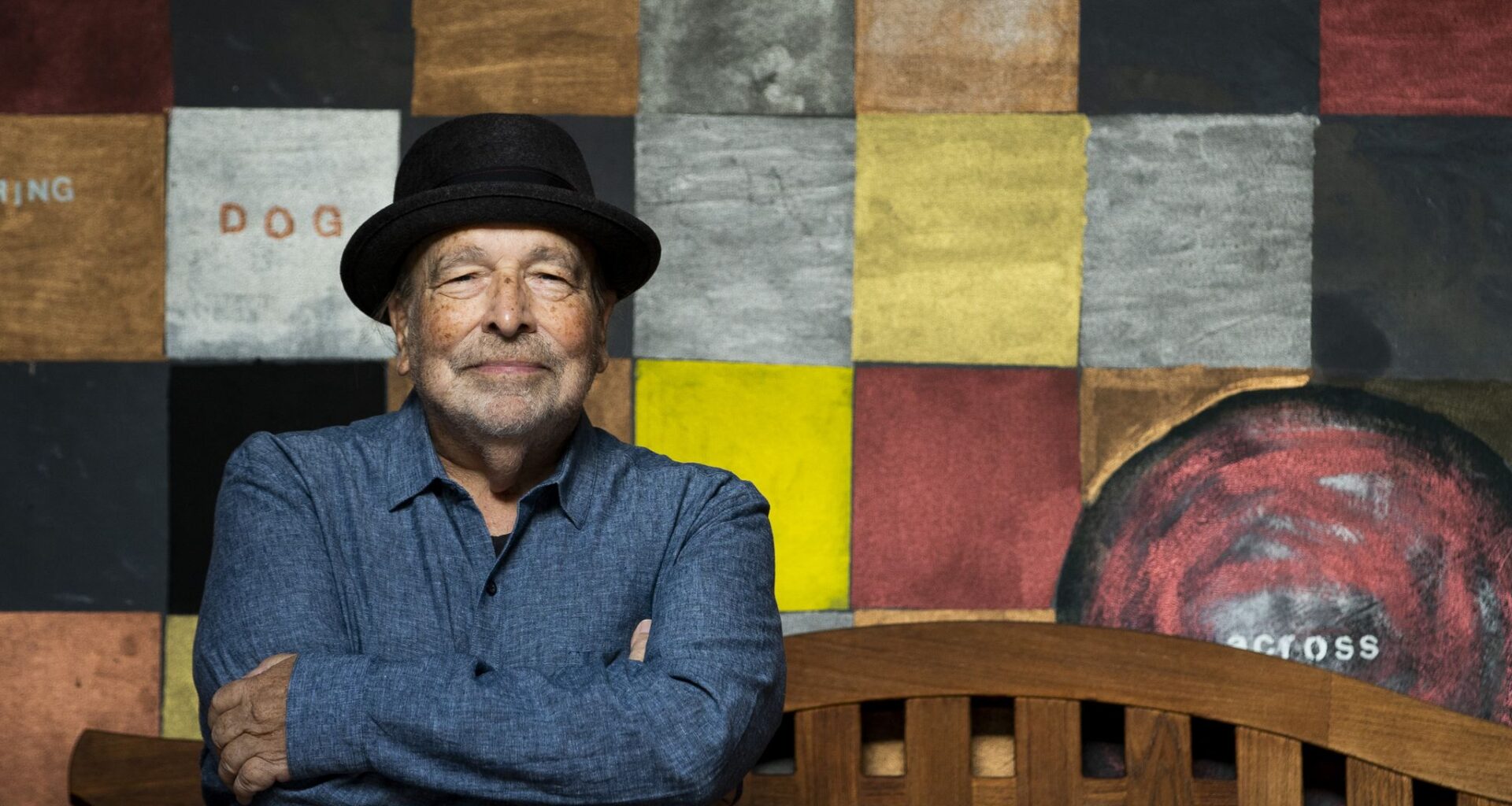
John Elberling, longtime president of Tenants and Owners Development Corp., known as TODCO, has died.
Santiago Mejia/The Chronicle
John Elberling, a controversial San Francisco powerbroker who wielded his position at the helm of a housing nonprofit to bankroll progressive ballot measures and bedevil everyone from mayors to real estate developers, has died of leukemia. He was 79.
As the executive director of TODCO, which owns about 1,000 low-income housing units in eight buildings in the South of Market, Elberling dedicated his life to carving out a place in the neighborhood for the low-income families and artists threatened by the gentrification and real estate speculation that, for decades, has ebbed and flowed across the district that lies in the shadow of downtown.
Along the way, the man some called “Elbo,” ruffled the feathers of mayors from Dianne Feinstein to Willie Brown to London Breed and became a supervillain to members of the YIMBY movement who regarded him as an obstructionist representing everything that was wrong with how San Francisco approached land use decisions.
Article continues below this ad
With his signature pork pie hat, the scruffy Elberling, a dive bar aficionado and former rock roadie who made annual music pilgrimages to New Orleans, would hold court in TODCO’s back conference room across the street from his beloved Yerba Buena Gardens. There he and progressive allies would hatch plans for ballot initiatives –— some successful and many less so — that would tax big business, preserve blue-collar jobs and open space, protect tenants, fund affordable housing and limit development of offices and market rate condos.
John Elberling, known for his pork pie hat, was once a roadie for rock bands.
Santiago Mejia/The Chronicle
What he lacked in slickness he made up for in guile. When he wasn’t dreaming up ballot measures, he was throwing his weight around in backrooms, coercing developers to add more so-called community benefits — open space, day care centers, low-income units — or risk getting sued. What he couldn’t get done at the ballot box or through backroom negotiations, he often tried to accomplish in court, regularly filing lawsuits aimed at squeezing more concessions from market rate housing or office development.
San Francisco Chronicle Logo
Make us a Preferred Source to get more of our news when you search.
Add Preferred Source
“John stood for the simple idea that every human being has a place where they belong,” TODCO said in an email to supporters. “Not just in a stable home, but in a neighborhood with green parks, thriving small businesses, good schools, and vibrant arts and culture. A place that was welcoming and affordable — a place rooted in community.”
Article continues below this ad
The ballot initiatives and lawsuits made him a frequent target of a wide range of political moderates and pro-business groups who argued that his old-school brand of activism made it harder and more costly to build housing in San Francisco, ultimately making the city more expensive and less welcoming.
He came under fire for using his nonprofit’s money on political campaigns and for living for nearly 30 years in a TODCO-owned affordable unit that was supposed to be set aside for a property manager.
But, despite the criticism, for a half century Elberling played an outsized role in shaping the South of Market. He sued to stop the rezoning of Central SoMa, eventually settling with the city after planners and developers agreed to set aside land for affordable housing and recreation space. He passed a measure that protected spaces used for artists and blue-collar jobs. He successfully fought to ensure that a merry-go-round and playground were included in the redevelopment of Yerba Buena.
“They broke the mold with Elbo — he was the last of the Mohicans,” said former supervisor Aaron Peskin. “He was the conscience of Yerba Buena. He had enough institutional history to be able to remind everybody when they were breaking historical promises. He held them accountable.”
John Elberling was known for his wit and his deep love for San Francisco.
Liz Hafalia/The Chronicle
Former Chinatown Community Development Center director Gordon Chin called Elberling “my favorite curmudgeon.”
Article continues below this ad
“John was always one of the smartest guys in the room which he constantly reminded us of,” Chin said. “I’ll miss his wit, his love for San Francisco and his friendship.”
Elberling was born and raised in Oakland where his family owned a commercial laundry business. He attended Catholic schools before going to boarding school in San Jose and to Boston College, where he dropped out after a year. He worked as a roadie for a rock band before returning to San Francisco in 1970, settling in the Inner Sunset and becoming part owner of a North Beach ice cream parlor.
Around that time he got involved with neighborhood politics, working on a 1972 fight to keep Muni fares at 25 cents. By the late ’70s he had joined forces with prominent slow-growth preservationists like Sue Hester and Calvin Welch. In 1978 he took over TODCO, which at the time was starting construction on the first of its senior housing buildings.
Much of Elberling’s power in the last decade came from his much-criticized decision to use money pulled from refinancing TODCO’s real estate portfolio on politics. In 2016 Elberling took advantage of a law that allows owners of federally funded affordable housing buildings with Section 8 subsidies to “re-syndicate” their debt every 20 years, recapitalizing their portfolios by selling tax credits and tax-exempt bonds. Since then TODCO’s advocacy subsidiary, the Yerba Buena Neighborhood Consortium, spent more than $3 million on pet ballot measures, lobbying and polling.
John Elberling, shown in 2020, was known for shepherding, or fighting, various ballot measures relating to the city’s growth.
Liz Hafalia/The Chronicle
While nonprofits can’t give money to individual candidates, TODCO’s newfound wealth has helped shift the city’s political landscape by giving progressive campaigns enough money to compete against more moderate housing-related initiatives, which tend to have the support of trade unions, business groups and large real estate developers
Article continues below this ad
Those funds became the main source of funding for progressive ballot measures, but critics argued the money should have been spent on building improvements and residents services. In 2023 then Supervisor Catherine Stefani accused TODCO and Elberling of “profiting from the taxpayer and public subsidies at the expense of the city’s most vulnerable.”
Elberling was unrepentant in the face of criticism.
“They are unhappy because we do a million bucks and they don’t do anything,” he told the Chronicle in 2021. “F— ’em. And tell them we are thinking about doing more next year.”
While TODCO is technically a neighborhood-based affordable housing group, it stopped building in the early 2000s. Elberling said he stopped pursuing development opportunities after clashing with former Mayor Willie Brown over several ballot measures and a political dustup led to TODCO losing out on a project.
“After that I thought, ‘Well, if we want to be housing developers, then we can’t be advocates,’” he said. “It’s one or the other.”
Article continues below this ad
Elberling also came under fire for choosing to live rent-free in a 400-square-foot resident manager’s unit in a TODCO building on Folsom Street, despite the fact that his salary — about $200,000 a year — was four times the income he would need to qualify for the building. Affordable housing laws allow a live-in building manager who is exempt from income requirements.
John Elberling was raised in Oakland before briefly attending college in Boston and returning to the Bay Area.
Santiago Mejia/The Chronicle
Elberling made no apologies for living in the free apartment, saying that the unit he lives in was empty before he moved in 1986. He shared the studio with cats named Queen Shorty, Princess Squeaky and Hunk of Burning Love.
Mission Housing Executive Director Sam Moss, a frequent Elberling critic, said “though we rarely agreed on how to best be stewards for San Francisco’s affordable housing, I know he cared deeply for his community and that’s always something to be respected.”
While Elberling had long been a favorite punching bag of the YIMBY leaders, in 2021 he received national attention when he successfully lobbied the Board of Supervisors to reject a project that would have converted a valet parking lot into a 495-unit tower off Market Street. The vote prompted the California Department of Housing and Community Development to launch an unprecedented “Housing Policy Review” of San Francisco, citing the Stevenson vote as evidence of “tendentious” local obstruction.
As Elberling’s health failed the TODCO board of directors named Eric Tao as acting CEO. Tao is an experienced San Francisco developer who has built about 1,200 units of mostly market rate housing. While he said he shares Elberling’s values and love of San Francisco, Tao said the bare-knuckled political style that TODCO practiced was likely a thing of the past.
“John’s thing was always ‘how do you preserve the soul of the city,’” Tao said. “A place for blue-collar workers, the neighborhoods, a place for all income levels.”
Sunny Angulo, a longtime city hall aide and progressive leader, said today’s nonprofits “are so dependent on City Hall for funding that it makes it hard for folks to speak up” like Elberling always did.
“There will never be another Elbo or someone who built something up with his bare hands — an entire neighborhood and community infrastructure — and remained such a force for so many generations,” Angulo said. “Who are the leaders left? Who will be the voice that isn’t afraid of a fight?”