
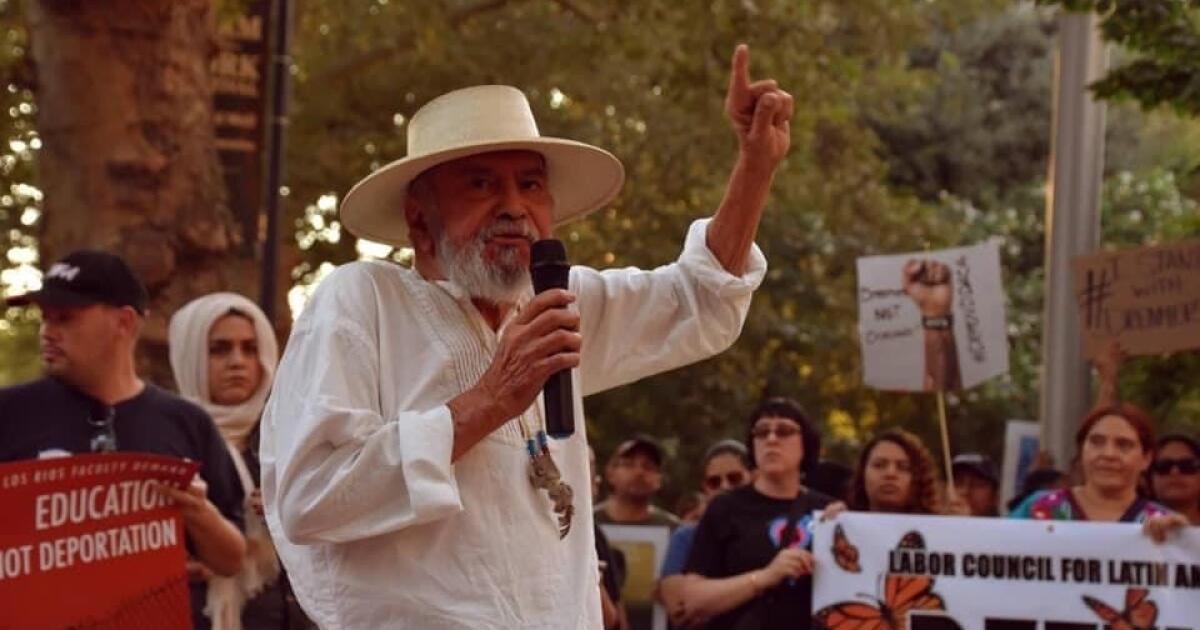
The allegations that venerated labor leader César Chávez sexually assaulted teenage girls along with his longtime collaborator Dolores Huerta arrived like an earthquake. As the reverberations continue two weeks later, people who grew up in the farmworker movement are demanding another historical course correction.
They want greater recognition given to the many others who led the fight to win better wages and working conditions for some of America’s poorest people. High on that list would be Larry Itliong and Al Rojas.
Itliong died in 1977 and Rojas in 2021, but their children have been working hard to make sure their contributions will not be forgotten. Chávez’s fall from grace created a moment for that message to get through.
Rojas’ daughter, Desirée, launched a website celebrating her father long before the New York Times broke the news that her older sister, Debra, had gone public with her account of being sexually preyed upon by Chávez when she was a teenager.
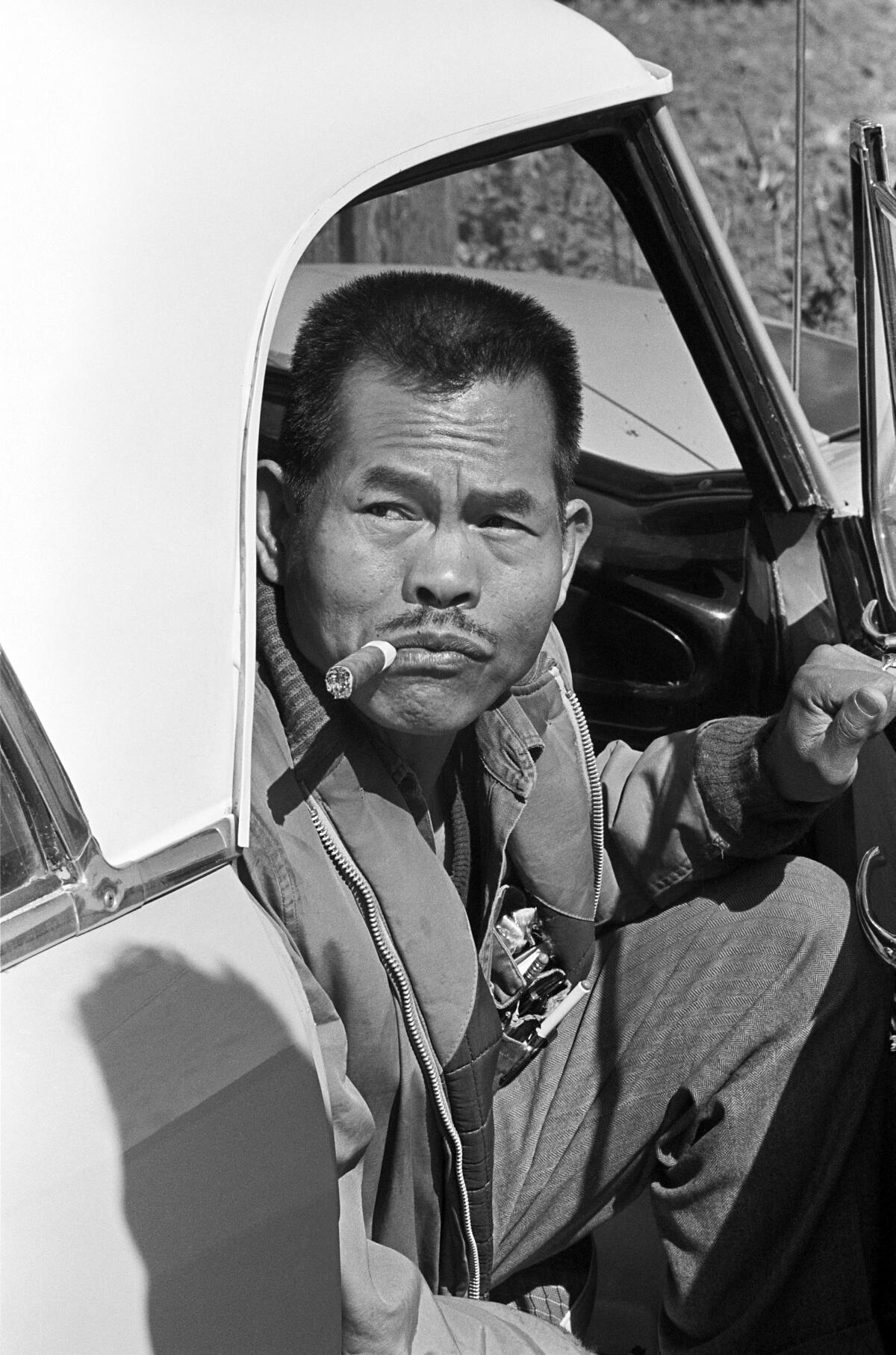
A photograph featured in “Asian Americans” of California: Larry Itliong, arriving at an AWOC meeting in the Central Valley in the early 1960s.
(George Ballis / Take Stock / TopFoto)
Itliong’s son, Johnny, has done nearly 20 interviews in recent days, assisted by the Asian Civil Rights League, in telling the world how his father began fighting for workers’ rights almost from the moment he got off the boat from the Philippines in 1929.
Organizing longshoremen, asparagus pickers and grape field workers
The elder Itliong hopped from town to town on the West Coast, organizing longshoremen in Seattle and asparagus pickers near Stockton. It was in the grape fields of the Coachella Valley in 1965 that the feisty, cigar-chomping Itliong and his allies made one of their biggest impacts — launching a strike to demand higher wages. One thousand workers under the banner of the Agricultural Workers Organizing Committee walked out. The wage increase they won marked a watershed, showing other poor workers that they could win through collective action.
That momentum carried on to Delano, which would become the epicenter of the farm labor movement. Many Filipino laborers moved north with the grape harvest and they soon called a strike and persuaded another organization, the National Farm Workers Assn., to join the walkout. Chávez headed the NFWA. The alliance led to the birth of the United Farm Workers of America, which would win some of the first contracts for agricultural workers in North America.
Though some UFW hagiographies leave little room for the Filipino leaders, even Chávez’s son, Paul, conceded how important their work had been. “They set the stage for everything,” the younger Chávez said in an interview, 40 years after the grape strike. “Nobody showed the kind of conviction these men did.”
The city of Delano named a park for Itliong. Union City named a middle school for him and another of the Filipino labor leaders, Phillip Vera Cruz. Itliong’s son, Bobby, said renaming of other places would be fine, but that’s not his focus. He said his father would want a more universal message. Said Bobby Itliong, a former farmworker who now lives in Santa Monica: “His purpose was to raise everybody up.”
Rojas’ daughter, Desirée, feels much the same way. She was not even school age when her entire family moved to Pittsburgh in the late 1970s to support the UFW’s nationwide grape strike. They arrived with $50, their clothing stuffed in paper grocery bags, she recalled in an online homage to her father.
A migrant farmworker raised in Visalia, Rojas later ran a group called Citizens Against Poverty in Oxnard and kick-started an early union for field workers (the United Farm Workers Independent Union) that would merge with what became the UFW.
Organizing workers south of the border
Rojas also won acclaim for organizing workers in Mexico, believing that workers on both sides of the border had common interests. That differed vastly from Chávez, who disdained immigrants, believing their cheap labor held American-born workers back.
Desirée Rojas hasn’t given many interviews, unlike her friend, Bobby Itliong. She hopes people will visit her website and understand the farmworker crusades were much bigger than César Chávez or any one individual.
“My mother and father taught us that helping other people is the greatest gift you can give, while teaching any person to do the same on this planet to create a ripple effect,” she said. “We have not forgotten that.”
Today’s top stories 
Auto enthusiasts check out West Coast Customs cars on display and other vehicles at the annual L.A. Auto Show at the Los Angeles Convention Center in 2024.
(Allen J. Schaben / Los Angeles Times)
California cracks down on suspicious luxury car salesLuxury car buyers in California and other states have been buying their vehicles in Montana, which has no sales or personal property tax.State officials have identified 500 dealers involved in 2,500 suspicious luxury car sales since 2023, costing California more than $10 million annually in lost tax revenue.Why PayPal is strugglingPayPal’s stock has dropped as it faces a slowdown in branded checkout and more competition from Apple and Google. With a new chief executive at the helm, the company sits at another turning point.Trump’s speech on the Iran warPresident Trump’s meandering speech on the Iran war did little to assuage U.S. allies and world markets concerned about the conflict’s ongoing disruptions to the global oil supply.Oil prices surged after the address as Trump deflected responsibility for reopening the Strait of Hormuz to other nations.What else is going onCommentary and opinionsThis morning’s must readOther must readsFor your downtime 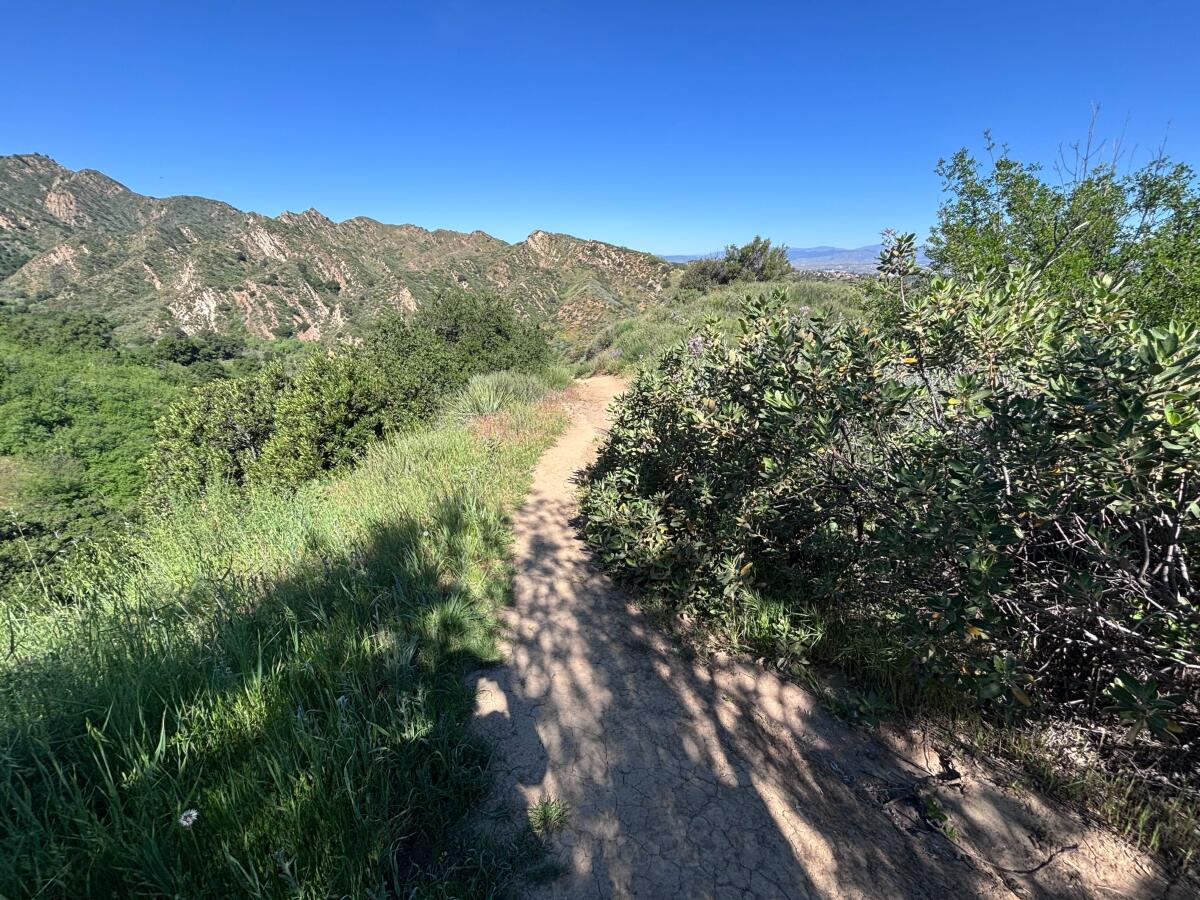
The hike through Towsley Canyon provides visitors with wildflowers, wildlife and wonderful views of the surrounding landscape.
(Jaclyn Cosgrove / Los Angeles Times)
Going outStaying inAnd finally … your photo of the day 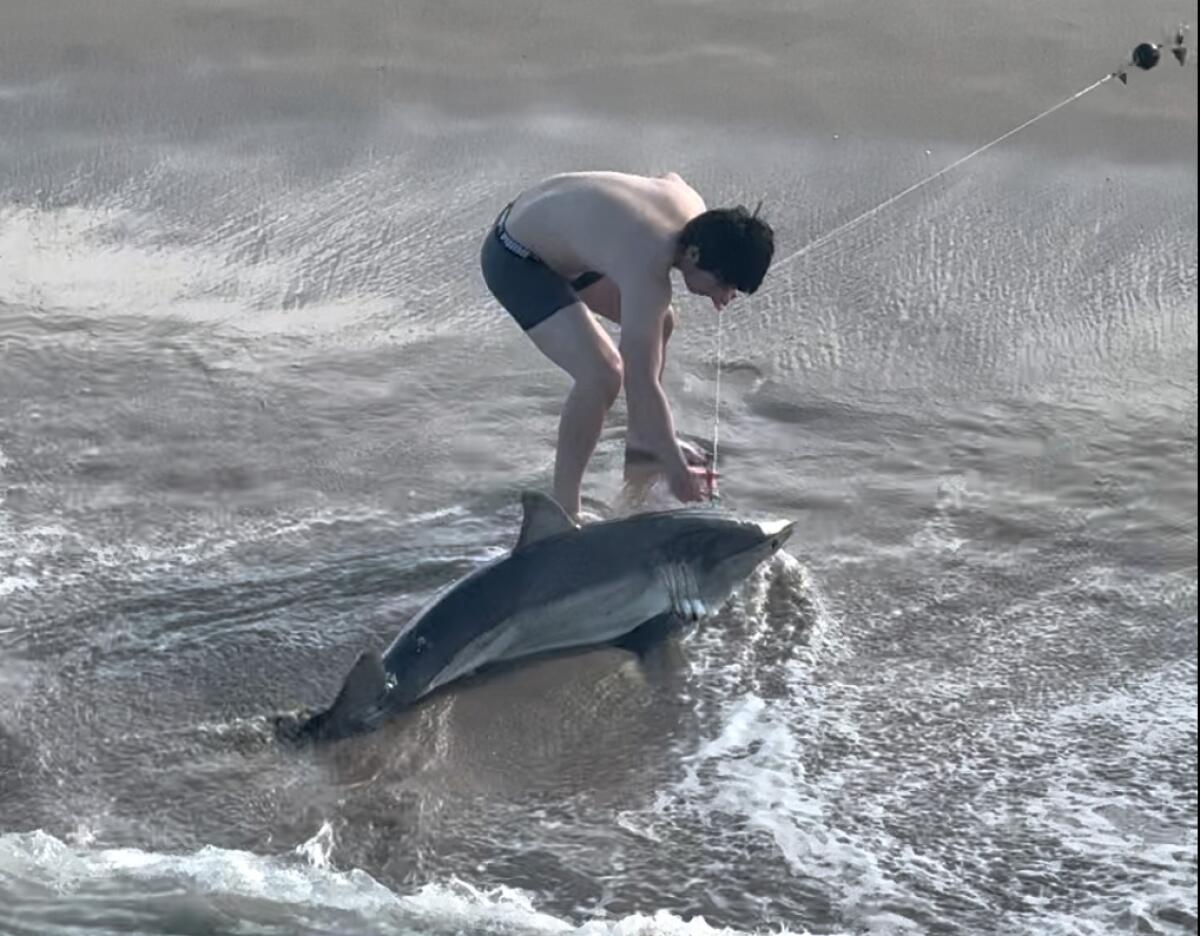
A great white shark caught on a line at Hermosa Beach Pier is freed by a brave fisherman.
(Alexandra Garry)
Today’s great photo is from contributor Alexandra Garry at Hermosa Beach, where a fisherman freed a juvenile great white shark caught on a fishing line.
Experts expect a surge in shark sightings due to unseasonably warm SoCal waters and a strong El Niño.
Have a great day, from the Essential California team
Jim Rainey, staff reporter
Hugo Martín, assistant editor, fast break desk
Kevinisha Walker, multiplatform editor
Andrew Campa, weekend writer
Karim Doumar, head of newsletters
How can we make this newsletter more useful? Send comments to essentialcalifornia@latimes.com. Check our top stories, topics and the latest articles on latimes.com.