
Everyone wants to hold accountable the scammers and unscrupulous businesses that break the law and take advantage of consumers, but there are good and bad ways to go about it. San Diego County’s creation of a new consumer protection bureaucracy duplicates existing efforts, leading to a case of too many cooks in the kitchen, potentially leading to significant waste and abuse.
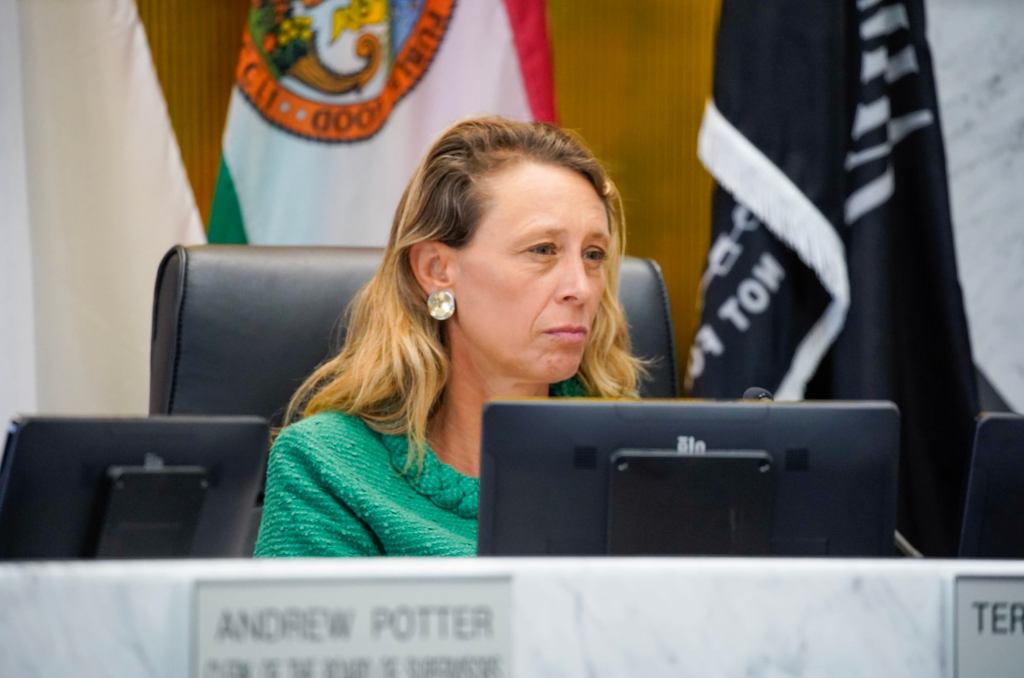
On March 24, the San Diego County Board of Supervisors voted 4-1 to approve a proposal by Chair Terra Lawson-Remer to create the Consumer Fairness and Public Protection Unit, charged with fighting scams and unfair business practices. In doing so, the county took advantage of a 2022 state law allowing cities with more than 750,000 residents, or counties that contain a city of such size, to establish consumer protection units separate from district attorney’s offices.
And this is what makes the Board of Supervisors’ decision so curious. The District Attorney’s Office already has an Economic Crimes and Consumer Protection division that prosecutes such cases. In fact, the DA’s office has been so successful in doing so that it has amassed a $224 million fund based on judgments made against companies guilty of violating consumer protection laws.
It seems that this pot of money was irresistible. Rather than simply expanding the DA’s Consumer Protection division, if such a need exists, the county created an entirely separate — and competing — bureaucracy. The desired staff of 20 would nearly double the 25 prosecutors and investigators in the DA’s office. This seems to be the very embodiment of the famous line from the movie “Contact”: “First rule in government spending: Why build one when you can have two at twice the price?”
It is telling that District Attorney Summer Stephan staunchly opposed the idea.
“I would love to hear a reason why [Lawson-Remer] wants to grab at this hard-earned money,” Stephan told The San Diego Union-Tribune in January. “She has not given one reason why it’s needed to duplicate the work, or to fill a gap that I’m unable to fill.”
“I don’t think this is the right thing to do,” she added.
Even some advocates of such consumer protection units acknowledge that they go above and beyond the normal scope of local government operations.
“It’s still a relatively nascent project in the sense that this is not yet kind of seen as a core function of local government,” admitted Jill Habig, a former attorney in San Francisco’s unit and founder of the Public Rights Project, which works with local governments to establish their own such “affirmative litigation” units.
In addition to the waste from duplication, the DA has noted that the new unit could threaten complex cases involving coordination with the state attorney general and end up prematurely settling cases that are part of larger investigations.
Even more alarming is the potential for outright abuse. A stated goal of the effort is to make the new unit self-sustaining based on revenue received from settlements with companies accused of wrongdoing. But specifically charging an agency with the prosecutorial powers of the government with seeking revenue, rather than merely going after those they see fit to prosecute based on the merits of their cases, is a recipe for disaster. We have seen this in the many police departments that have abused the civil asset forfeiture process — oftentimes without even charging the property owner with a crime — in order to pad their budgets, sometimes known as “policing for profit.”
And what if the low-hanging fruit is exhausted and settlements become harder to come by? Will the agency adopt the model of personal injury attorneys and serial plaintiffs who have abused the Americans with Disabilities Act and the Unruh Civil Rights Act to shake down unsuspecting business owners for purely technical violations of the law? Even if no one has actually experienced any harm, businesses in such cases can be coerced to pay tens of thousands of dollars in settlements for violations such as hanging a bathroom mirror an inch too high or having ADA parking spaces with somewhat faded markings or painted the wrong shade of blue.
If the county determines that greater enforcement of consumer protection laws is needed, it should merely bolster the District Attorney’s Office, which by all measures has already been successful in this endeavor. Establishing an entirely new and competing agency is merely the pursuit of a bureaucratic gravy train, and providing it with incentives to abuse power in order to boost its own coffers is an invitation to tyranny.
Summers is a columnist, economist, and public policy analyst, and a former editorial writer for the Orange County Register / Southern California News Group. He is also editor and co-author of “Beyond Homeless: Good Intentions, Bad Outcomes, Transformative Solutions.”