
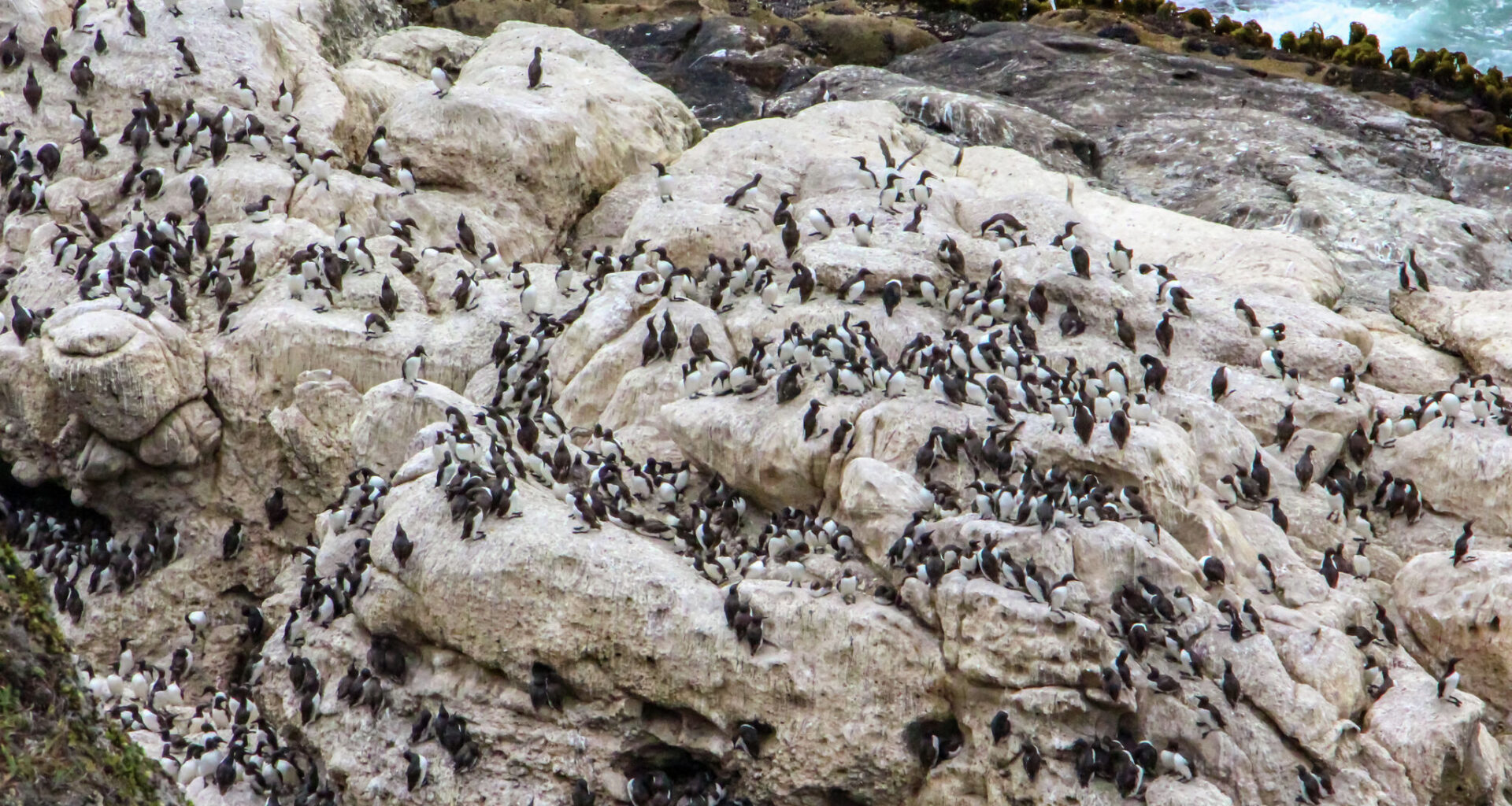
From Mendocino to San Diego, beachgoers have been alarmed recently by large numbers of dead seabirds appearing on California’s beaches.
The mass mortality event seems to be primarily impacting Brandt’s cormorants and common murres, though California brown pelicans have also been affected, according to the California Department of Fish and Wildlife. All of the animals are species of aquatic birds native to the northern Pacific Coast.
“They didn’t even try to fly away. They just feebly made noise,” a woman told the Santa Barbara Independent on Saturday after spotting over two dozen dead or dying cormorants near Goleta Beach. “A few were on their stomachs, wings spread [and] gasping for breath…. Heartbreaking.”
The birds appear to be suffering from starvation, CDFW wrote. Nearly all examined birds have been emaciated juveniles, some of which also had secondary injuries, parasitism or respiratory infections.
“Last year was a very reproductive year for these species, meaning there are more juveniles out there, and when there’s more birds, there’s less resources,” CDFW spokesperson Krysten Kellum told SFGATE. “Basically, they’re starving. There’s more competition out there for food.”
CDFW began receiving reports of mass deaths among cormorants and murres last fall, the agency wrote. Wildlife rehabilitation centers throughout the state have also reported an increase in sick or injured cormorants, murres and pelicans. Testing on examined birds has ruled out avian influenza, which was first detected among wild birds in California in 2022 and recently spread to the state’s marine mammal population.
Though some reports point to climate change impacting the birds’ food sources, Kellum said she does not find this year’s mass starvation event to be indicative of anything out of the ordinary.
“It doesn’t happen every year, but we’ve seen this throughout the years,” Kellum said. “It’s basically just there’s not enough food out there for them, and that’s what it boils down to. It’s nature running its course.”
“If anything, we wanted to let people know not to panic,” Kellum said.