
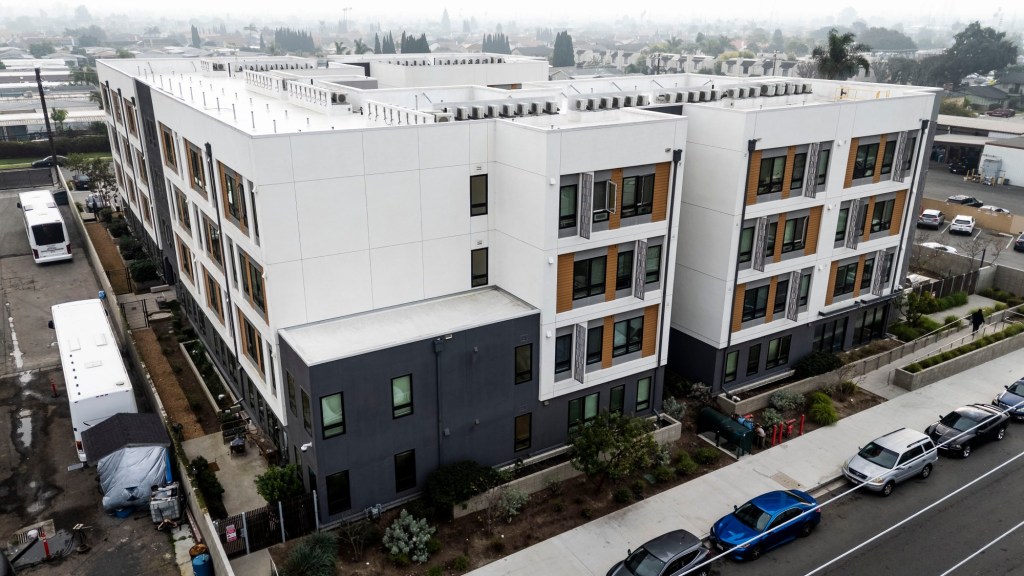
A maddening aspect of life in California is that policies that have been hugely successful in other nations can’t gain traction here because of powerful interest groups bent on preserving the status quo. One obvious example is the use of modular, prefabricated components to quickly and relatively cheaply build housing. In Sweden, a stunning 84% of newly built detached homes use prefabricated elements that provide for superior quality control and energy efficiency. Japan is even more advanced, using an industrialized, automated construction process to build about one in six homes.
Building and construction unions no longer can use their old rhetorical cudgel in this debate — calling prefab homes flimsy and unsafe. But they can still rely on the union establishment’s collective power in the Golden State to limit the ability of modular developers to sell 1,500-square-foot detached homes for less than half the state’s median home price of $819,000. So what if cheaper housing makes life better for the great majority of Californians — even considering expanding such housing has been billed as an “insult” to union members.
Thankfully, there are signs of hope. In December, Assembly Speaker Robert Rivas, D-Hollister, convened a Select Committee on Housing Construction Innovation. At its first hearing on Jan. 15, union leaders surprised Assemblymember Sharon Quirk-Silva, D-Fullerton, with their seeming openness to nontraditional homebuilding. And in recent weeks, the chair of the committee, Assemblymember Buffy Wicks, D-Oakland, introduced a package of three bills meant to rapidly increase use of modular/factory-built housing in California.
One bill focuses on reducing construction costs by updating building codes. A second focuses on making it less onerous to transport modular housing components on state highways. The third and most important, AB 1815, would prohibit local governments from enforcing unique, stricter building standards on factory-built projects — a common tactic across the state. If it passes, because it would clear the way for intrinsically cheaper ways of homebuilding, the Housing Action Coalition believes it could be the state’s most consequential pro-housing law yet.
Because hyped state housing measures have accomplished little in recent years, it’s easy to be skeptical of Wicks’ big plans. But there’s nothing illusory about the rapid growth of modular housing across the world — at least in nations that actually want it to work.