
For The Union-Tribune
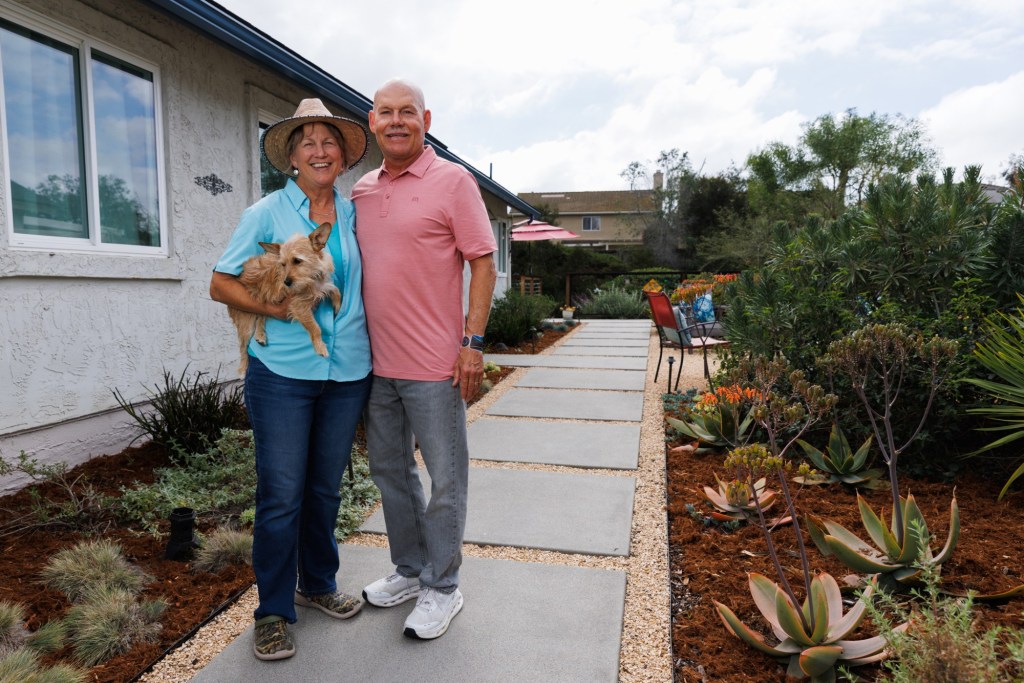
Cathy Spence didn’t grow up gardening. She attributes that to the multiple moves her military family made when she was growing up — before they settled in Chula Vista. Now, she lives with her husband David in the same area — with their cute scruffy terrier mix rescue, Skipper.
They bought their house in 2018 after both retired from the military. David had been an emergency manager in the Army Corps of Engineers, while Cathy was a Department of Defense worker in the family services side of the Army and Air Force in Alaska, then in Germany, Georgia and Japan.
“I worked in the parks and rec,” she recalled. “At first I was in the outdoor recreation field. I love being outdoors. And depending on where we moved and what the need was, I worked in either parks and rec or social services. In Alaska, it was helping soldiers and families prepare to arrive.”
Then in 2018, an old high school friend and her husband, both active duty Navy officers, found themselves with a new assignment on the East Coast. They asked the Spences if they’d like to take a look at their house when the latter were making plans to return to the States from Japan.
“And we liked it,” Spence said. “I knew the neighborhood because I went to school in this area, and we decided that was a good investment for us, and lo and behold, it’s our retirement home now.”
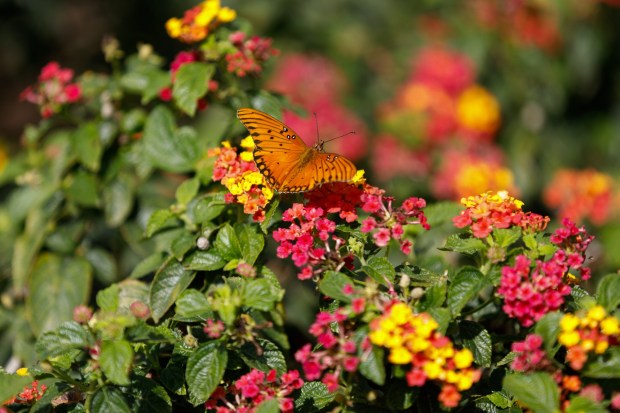 A Gulf fritillary butterfly rests on lantana blossoms. (Kristian Carreon / The San Diego Union-Tribune)
The property has a long side yard leading from the street to a spacious patio with a backyard below. The side yard was dominated by a lawn.
“My husband was tired of mowing the lawn,” Spence said. “We’ve done very little landscaping over the years because we lived in Alaska: It’s so seasonal and the summers are so short. Coming here, we decided to just focus on this [the lawn] because we didn’t even want to worry about that [the backyard] yet.”
It coincided with the pandemic. Cathy Spence retired in 2020 and was stuck at home.
“I’m like, yeah, now, what do I do? I can’t go places, right? Can’t go do things, because you’re not supposed to,” she recalled. “And I’m like, I’m gonna develop my backyard. I’ve always been interested.”
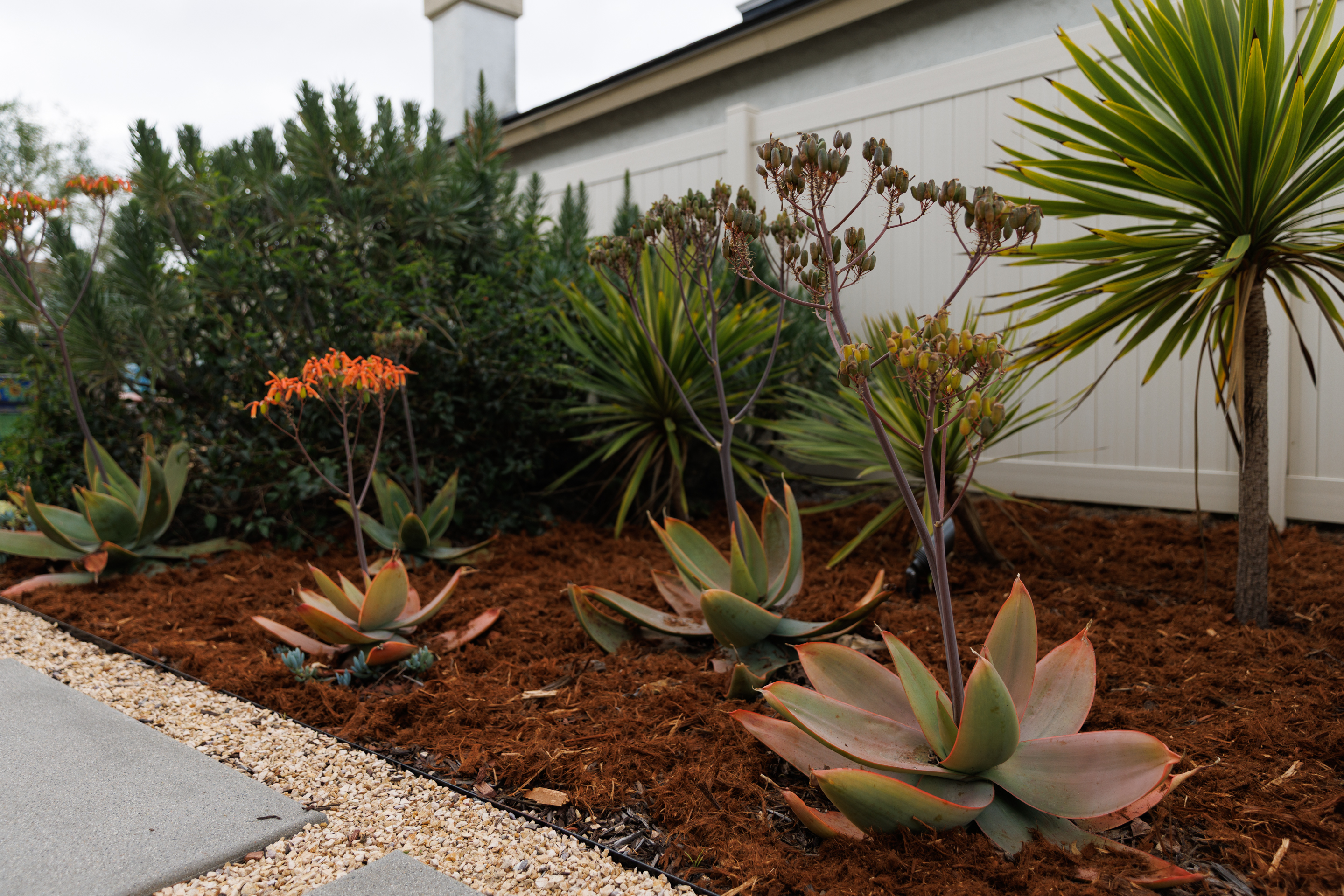
Coral aloe plants, foreground, add sunset-hued leaves and blooms to the mix. Gorilla mulch overlays the soil. (Kristian Carreon / The San Diego Union-Tribune)
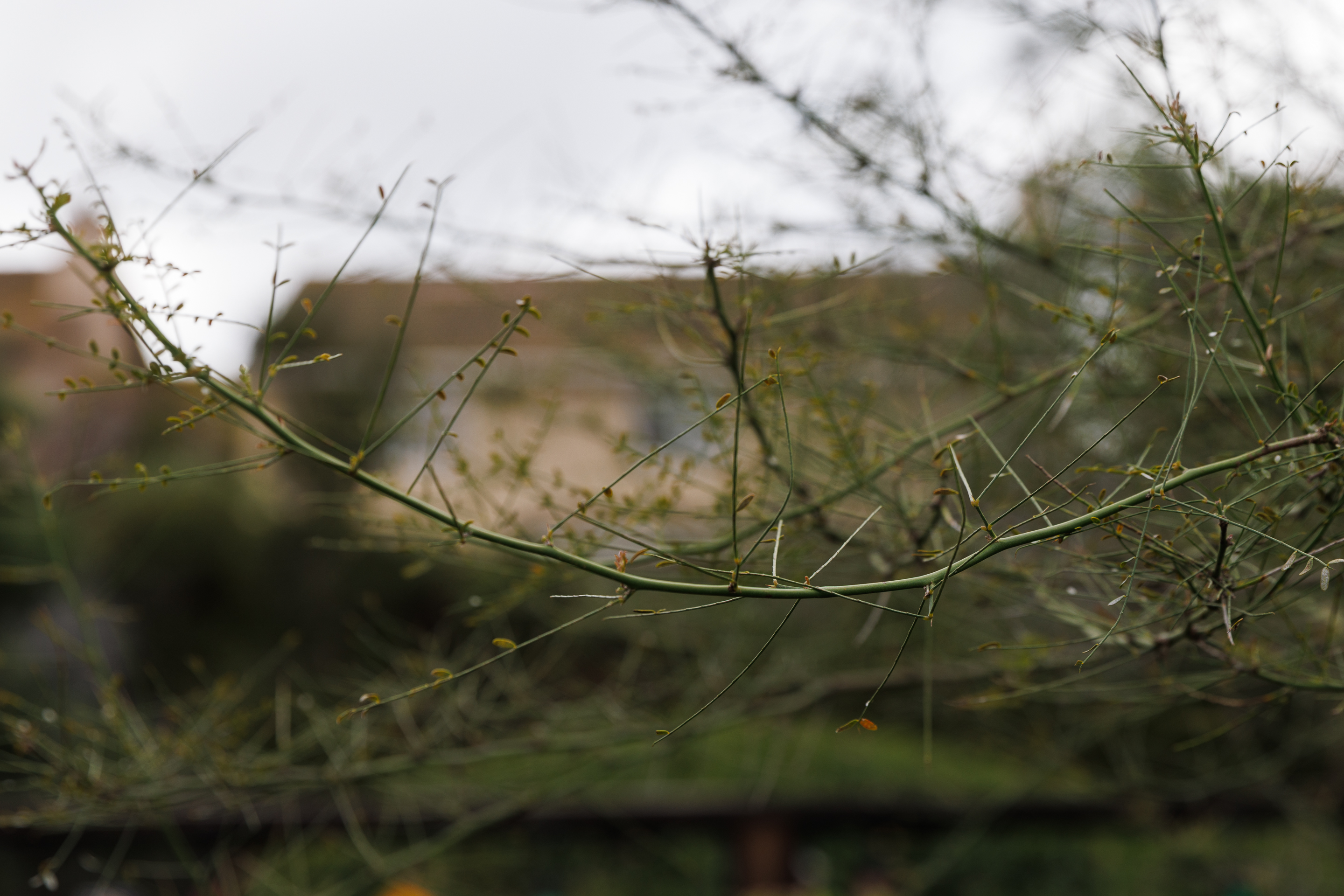
A branch of a ‘Desert Museum’ palo verde tree. (Kristian Carreon / The San Diego Union-Tribune)
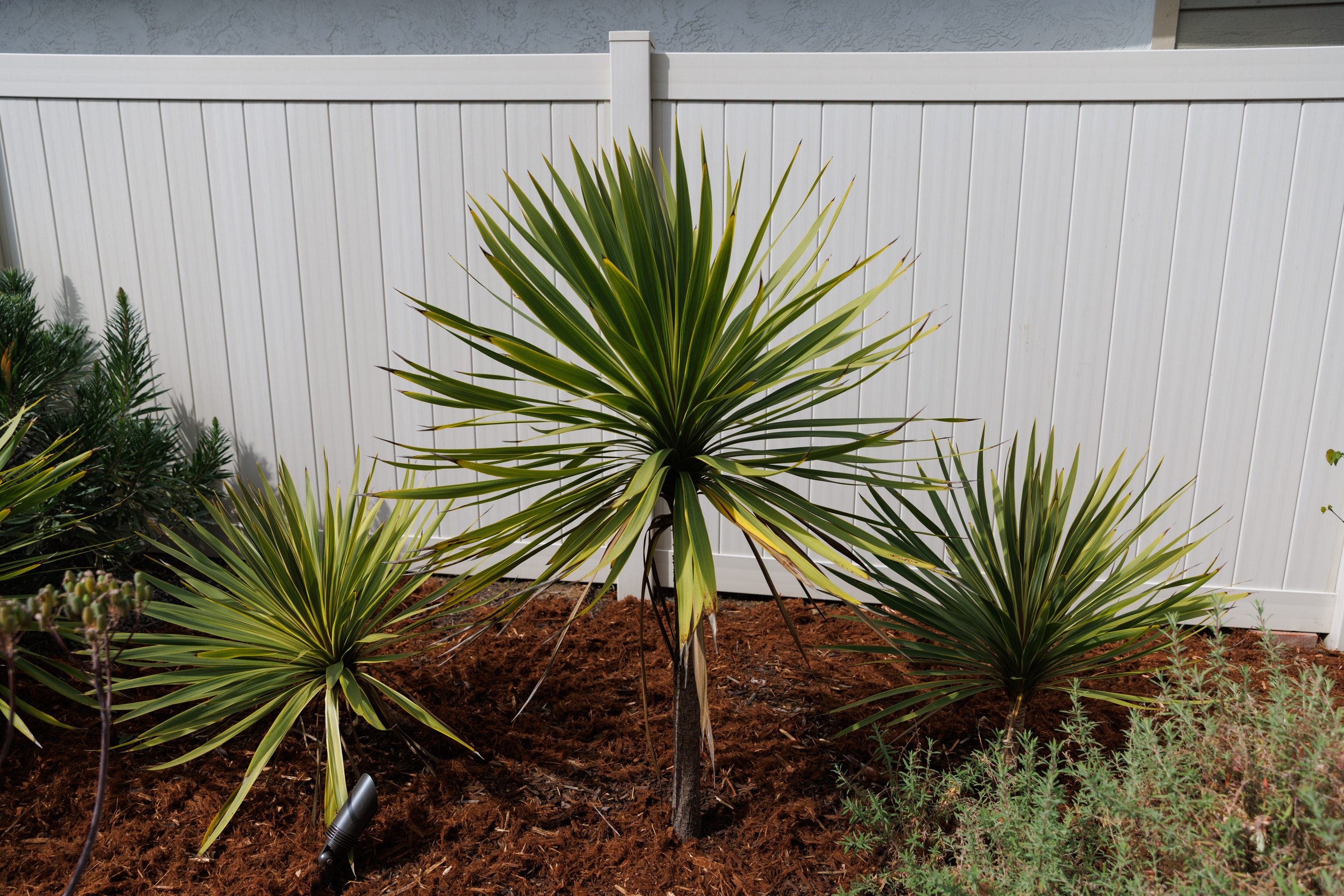
New Zealand cabbage tree (Cordyline australis) makes a spiky statement in the side yard. (Kristian Carreon / The San Diego Union-Tribune)
Show Caption
1 of 3
Coral aloe plants, foreground, add sunset-hued leaves and blooms to the mix. Gorilla mulch overlays the soil. (Kristian Carreon / The San Diego Union-Tribune)
What the couple wanted was to cut down on water costs and have a space that looked good but was low maintenance. Spence got books early on with the idea that someday she’d pursue redesigning the side yard.
“And so someday came, and I said, ‘Oh, this is kind of overwhelming. What kind of plants do I want, and where do I want to plant them?’ And I just got overwhelmed. I took the WaterSmart class, and it was really great information on how to do your landscape for your yard. I had to do the design and everything.”
The San Diego County Water Authority’s virtual WaterSmart classes were a huge help. But what threw Spence for a loop, she said, was how to install and manage the irrigation. So she told her husband they’d need to bring in a professional, and he was all in.
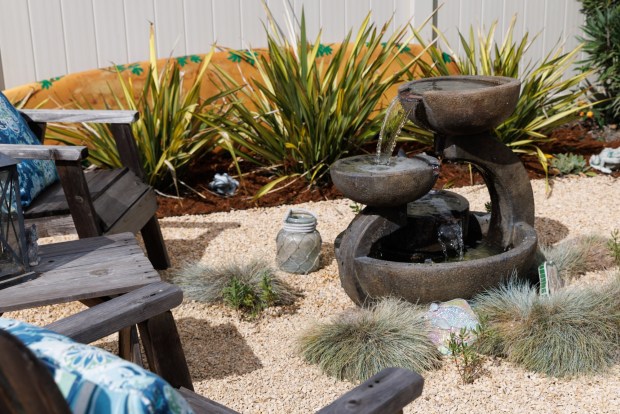 A fountain is a key feature in the seating area. (Kristian Carreon / The San Diego Union-Tribune)
They hired a landscape architect early in 2023 and had the 792 square feet of turf removed after applying for and receiving a turf rebate of almost $2,400 from the SoCal WaterSmart Turf Replacement Program. From there, the irrigation and plants were installed. The work was completed in March 2023.
As part of the WaterSmart online course, Cathy Spence learned about the WaterSmart Landscape Contest, and she entered the Otay Water District’s competition in 2025. With her win, she received a prize of a $250 gift certificate to the nursery of her choice, which was Native West. She put that into native plants for the backyard, which they’ve started working on recently.
The inspiration
While not having a lawn to mow sparked the couple’s decision to change things up, what to have in its place took some thought. So Spence sought inspiration by going on garden tours, particularly those featuring native plants. She also has a friend named Caroline who has expertise in native plants and gave Spence feedback.

A monarch butterfly alights on lantana flowers in Cathy and David Spence’s side yard in Chula Vista. (Kristian Carreon / The San Diego Union-Tribune)
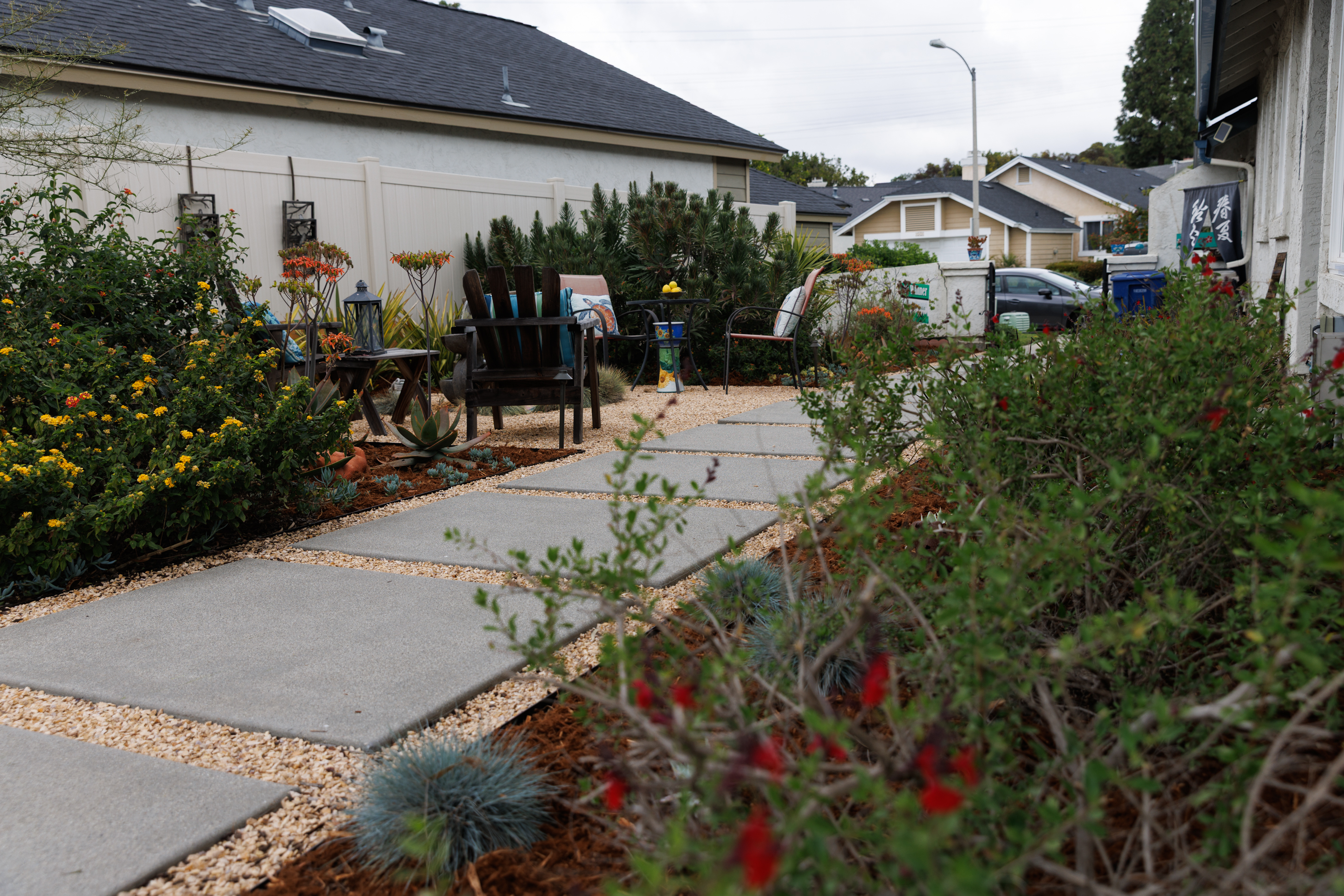
An overview of the walkway through the Spences’ side yard. (Kristian Carreon / The San Diego Union-Tribune)

A seating area in the Chula Vista side yard includes a fountain. (Kristian Carreon / The San Diego Union-Tribune)
Show Caption
1 of 3
A monarch butterfly alights on lantana flowers in Cathy and David Spence’s side yard in Chula Vista. (Kristian Carreon / The San Diego Union-Tribune)
What Spence discovered was that her design aesthetic is a cross of Mediterranean drought tolerant plants and native plants. She wanted year-round color. And she was keen on creating a haven for bees, birds, butterflies and other critters.
On the side yard’s back fence, she installed a little wooden birdhouse designed to entice bluebirds, but currently, a male house wren is fixing it up.
“He’s wooing the female here with this nest he’s been building with all the twigs in there,” she pointed out.
As for color, even with the plants installed, Spence is continuing her education.
“I’m learning that there’s quite a few plants you can choose from that are native, that yet can be perks of color or the leaves are different colors,” she said. “I’ve got tickets to the local chapter of the Native Plant Society’s tour of homes again. And I’ve got lots of reading materials to educate myself on that. We have some plans probably to establish more California natives in some of the areas of the side yard. I’m just going to take some time to figure out what that would look like.”
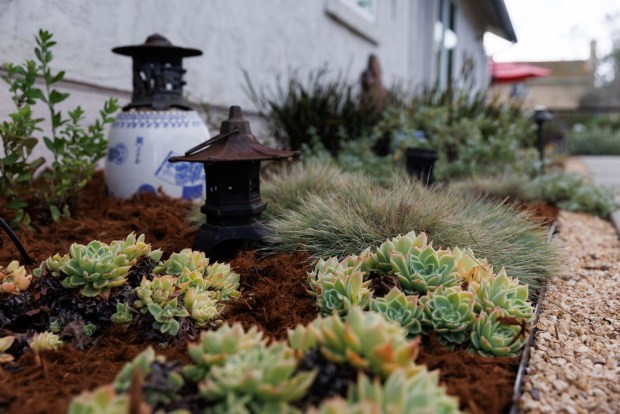 Echeveria succulents, foreground, and blue fescue, behind, are planted among decor from the Spences’ time in Japan. (Kristian Carreon / The San Diego Union-Tribune)
The details
Once the couple decided to hire a professional to help them redo the side yard, Spence found and hired Angel Carrasco of Promised Path Landscaping in Chula Vista. He pulled out the lawn. Then they got down to the task of selecting plants. It was Carrasco who pointed out that flowers weren’t the only way to introduce color year-round, and there were other elements to keep in mind.
“He said, ‘I know you want a variety of things to have some color throughout the year. You can have unique colorations of the agave versus the dudleya. And you can have the lavender for smell,’” she recalled.
Established lantana has been a major attraction to butterflies and birds. And while Spence enjoys them, she’s starting to rethink the presence of some of them since they are prolific, if invasive, growers. In one spot, they’re horning in on a tall statement Pride of Madeira, sneaking branches through the bush.
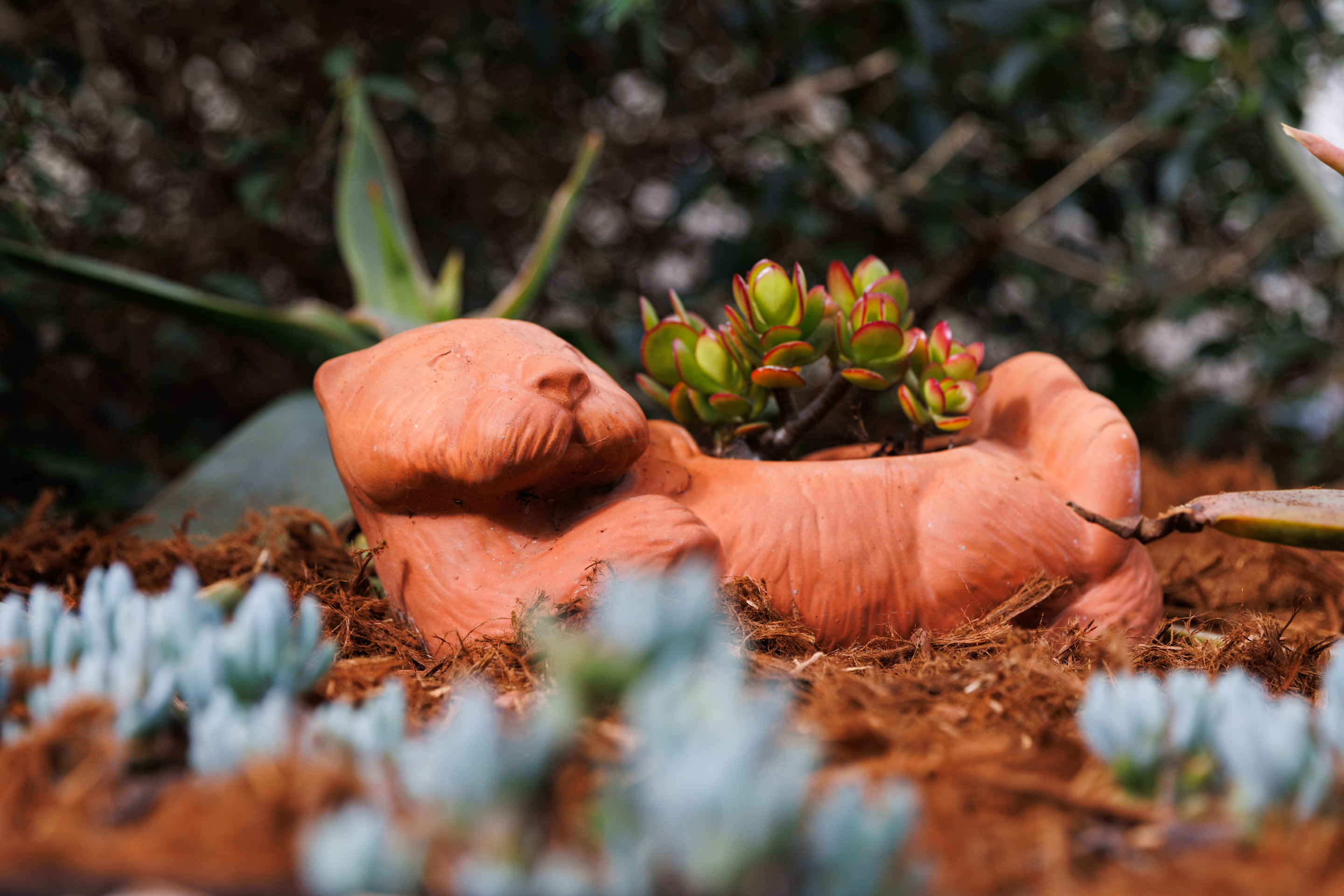
A succulent fills out a whimsical otter-shape planter. (Kristian Carreon / The San Diego Union-Tribune)
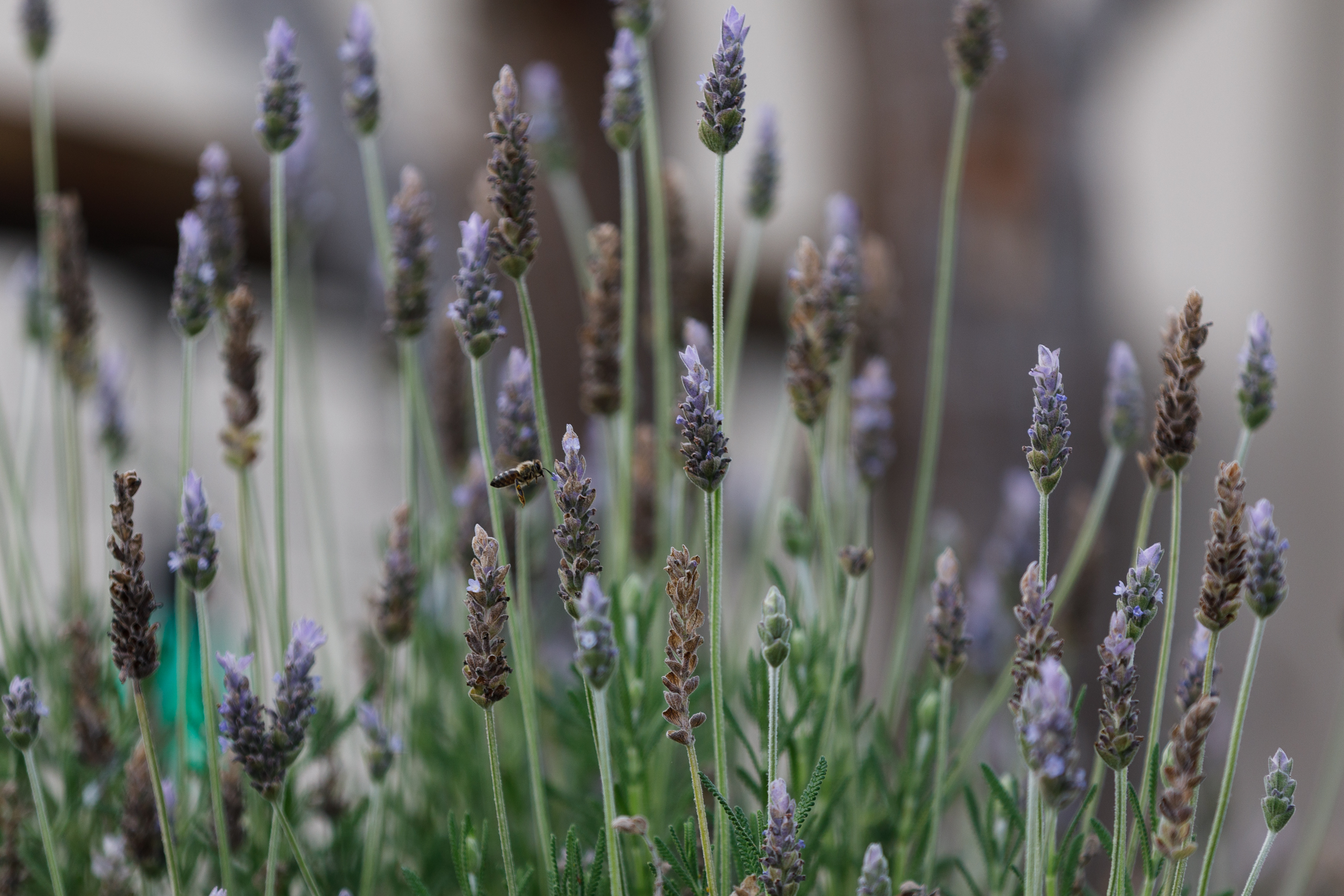
Spanish lavender grows in the side yard of Cathy and David Spence’s home in Chula Vista on Tuesday, March 10, 2026. (Kristian Carreon / The San Diego Union-Tribune)
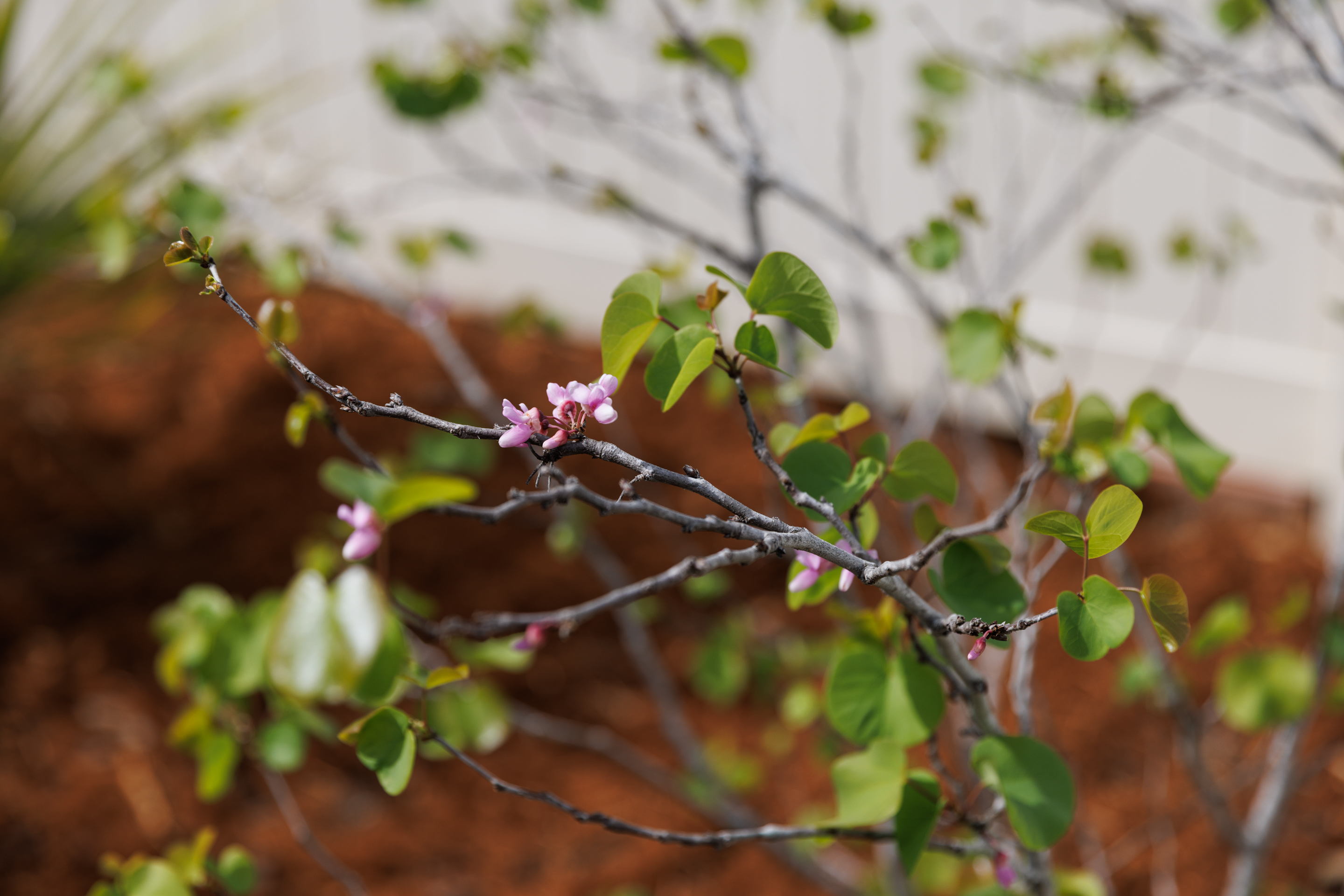
A Western redbud begins to bloom. (Kristian Carreon / The San Diego Union-Tribune)
Show Caption
1 of 3
A succulent fills out a whimsical otter-shape planter. (Kristian Carreon / The San Diego Union-Tribune)
Spence collaborated with Carrasco on the selection and placement of a variety of plants, noting the southwest exposure. It’s a strategic mix of thick bushes that put out pops of color, such as the Pride of Madeira — which also acts as a privacy screen from the street — along with Spanish lavender, dwarf lantana and autumn sage; upright clumping plants like kangaroo paw; and sticklike cabbage trees. A Western coastal wattle at the back of the yard, doing its best to imitate an olive tree, adds height. A ‘Desert Museum’ palo verde will be putting out yellow flowers soon. Closer to the ground are blue fescue, lamb’s ears, echeveria, dudleya and octopus agave. Spence is looking forward to the pink blooms of her Western redbud. To keep the plants watered — as little as they need to be — is a Hunter Wi-Fi drip irrigation system covered by gorilla mulch, as well as two rain barrels.
In the middle of the garden is a seating area with simple but cute second-hand furniture and a three-tier stone fountain from Backyard X-Scapes on Sorrento Valley Road. And while she fell in love with the fountain, Spence suggested choosing a recycling fountain — which this is not — to avoid having to keep refilling it. Around the fountain is blue fescue, but she’s started replacing it with groundcover, young San Diego marsh-elder. Behind the seating area and against the wall is a line of New Zealand flax plants.
Dotted around the garden are memorabilia from the Spences’ time in Japan and heirlooms from Spence’s mother’s house. There’s lighting throughout the garden, focused on the paths, but also highlighting trees.
Spence loves the space she helped create. So do the neighbors.
“When we initially put it in, there was a lot of excitement that somebody’s doing something different,” she said. “This walkway is different than everybody else’s walkway. It kind of encourages you to explore more. I’m mostly excited because I’ve planted more natives and drought tolerant plants. When we had grass, there were very few birds, bees and butterflies. But as soon as we changed to this kind of environment, we’ve seen butterflies and birds. They just come here naturally and feed on everything that’s here. That’s so cool. So it’s been fun.”
Costs
The project cost over $50,000. The couple received $2,376 from the SoCal WaterSmart Turf Replacement Program for removing 792 square feet of turf.
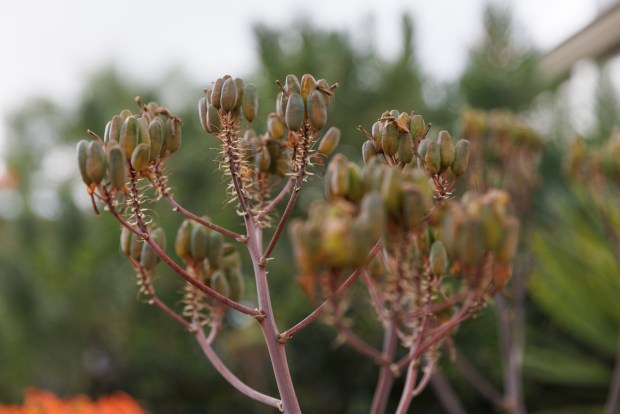 Seed pods cluster atop the stalks of coral aloe. (Kristian Carreon / The San Diego Union-Tribune)
A closer look: Cathy and David Spence
Plants used: ‘Desert Museum’ palo verde (Cercidium), Western redbud (Cercis occidentalis), Carolina laurel cherry (Prunus caroliniana), autumn sage (Salvia greggii), Pride of Madeira (Echium candicans), Spanish lavender (Lavandula stoechas), echeveria, kangaroo paw (Anigozanthos), blue fescue (Festuca glauca), lamb’s ears (Stachys byzantine), New Zealand cabbage tree (Cordyline australis), dwarf lantana (Lantana camara), coral aloe (Aloe striata), San Diego marsh-elder (Iva hayesiana), chalk lettuce (Dudleya), Baja fairy duster (Calliandra californica), Western coastal wattle (Acacia cyclops), octopus agave (Agave vilmoriniana), California fuchsia (Epilobium canum), New Zealand flax (Phormium)
Estimated costs and any rebates you got: The project cost over $50,000. The couple received $2,376 from the SoCal WaterSmart Turf Replacement Program for removing 792 square feet of turf.
Who did the work: Landscape architect Angel Carrasco of Promised Path Landscaping was the primary contractor. Oscar Reyes Jr. of Seascape Landscape Services was brought on as the secondary contractor for maintenance.
How long it took: In 2022, the Spences enrolled and completed the WaterSmart online course, applied for the turf rebate and received approval to remove the turf on Sept. 14, 2022. The primary contractor began turf removal, irrigation and installation of plants in February 2023 and work was completed in March 2023.
Water savings: According to the Otay Water District, the Spences have reduced their overall water use by approximately 39 percent. The couple also installed two rain barrels and can use that water for their potted plants and fountain.
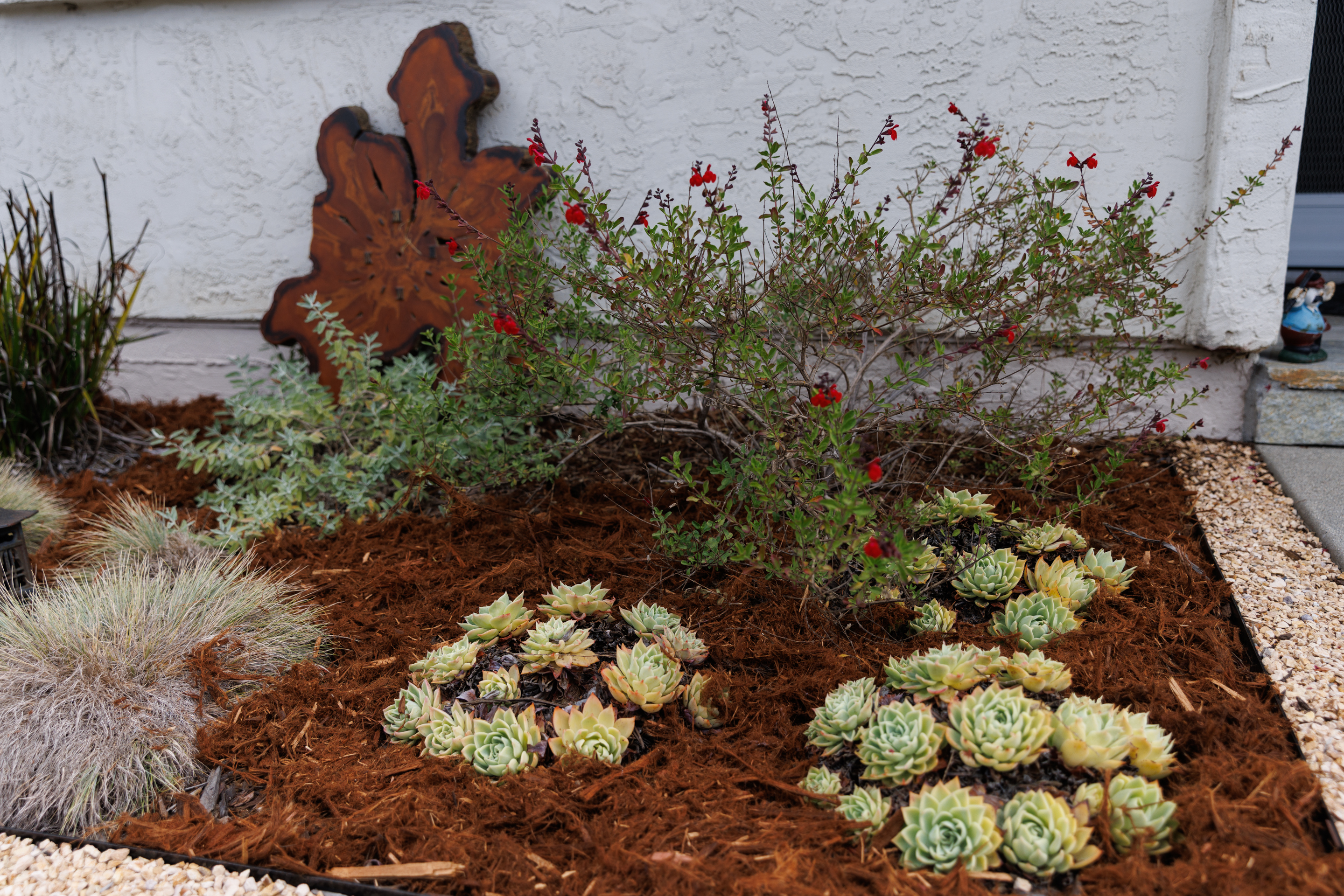
Various plants, including echeveria, foreground, and autumn sage, bring varied color and texture. (Kristian Carreon / The San Diego Union-Tribune)
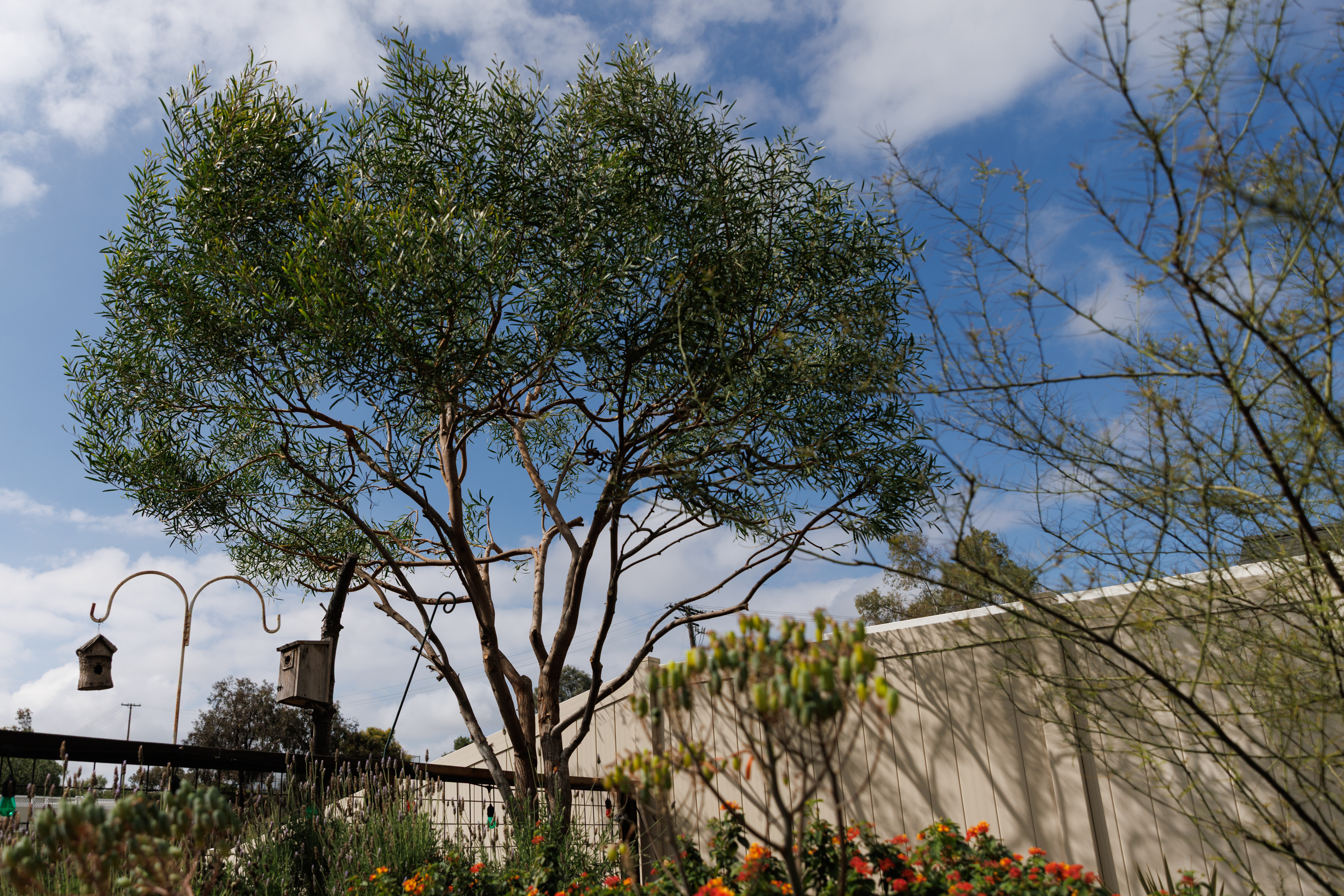
A Western coastal wattle adds height. (Kristian Carreon / The San Diego Union-Tribune)
Show Caption
1 of 2
Various plants, including echeveria, foreground, and autumn sage, bring varied color and texture. (Kristian Carreon / The San Diego Union-Tribune)
Advice:
• Visit The Water Conservation Garden, enroll in the WaterSmart course and visit other local gardens like California Native Plant Society’s 2026 Native Garden Tour for ideas. Be sure and talk with the homeowners.
• If you have the time, energy AND strength, save money and do the research, turf removal, irrigation and plant installation yourself.
• Divide your yard into sections like we did and work in phases: Phase 1: side yard, Phase 2: backyard.
• When you buy plants, if you are interested in those that will become bushes or trees, choose those in 1-gallon pots instead of buying them in a 5-gallon pot. The smaller ones haven’t been in the pot that long, whereas the more mature plants in the larger pots have been growing in there for a while and the roots might be more compacted.
• Have fun and don’t be afraid of trying new things. You will learn as you go, and there are plenty of experts to learn from along your journey to a new native habitat that attracts birds, butterflies and other wildlife. Conserving our natural resources — water, trees, native vegetation — helps our planet!
About the series
This is the eighth in an occasional series on 2025 winners of the annual WaterSmart Landscape Contest, conducted in partnership with the San Diego County Water Authority. To learn about entering the next contest, visit landscapecontest.com.
For details on classes and resources through the WaterSmart Landscape Makeover Program, visit watersmartsd.org. Landscape rebates are available through the Socal WaterSmart Turf Replacement Program at socalwatersmart.com.