
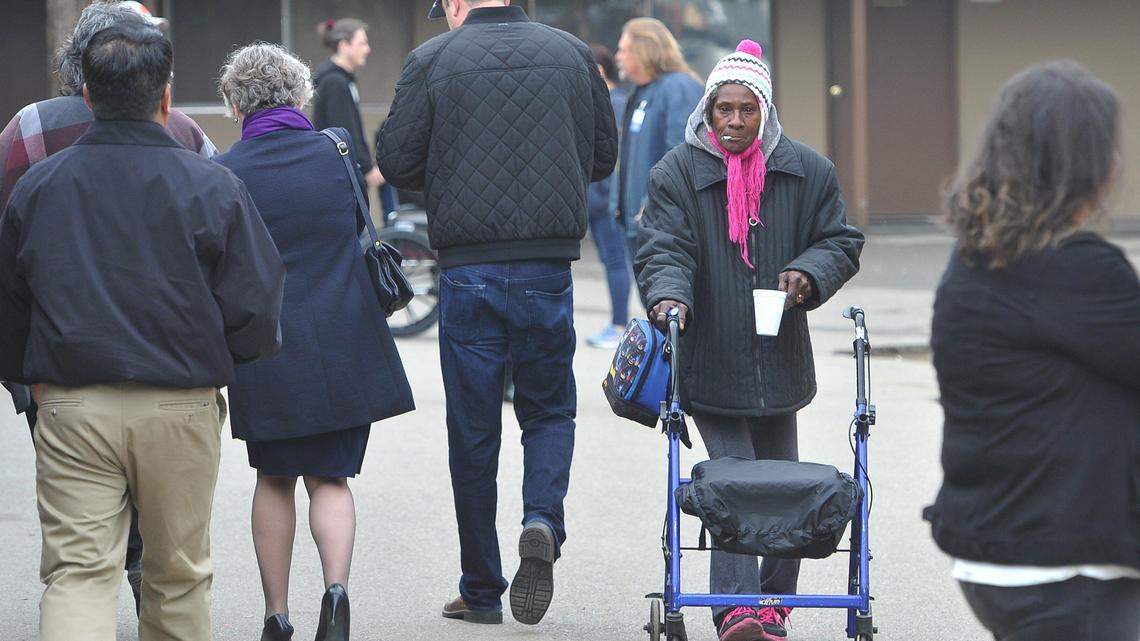
Mary Johnson, a resident of the RH Emergency Winter Warming Shelter, strolls the property as people tour the 77-bed facility aimed at ending homelessness, after grand opening ceremonies, Monday Jan. 6, 2020. RH Community Builders will provide housing and meals for 77 homeless individuals and families through February 2020, with the purpose of moving the residents from temporary shelter to a permanent housing solution during the operation period. Prevention strategies like rental stabilization and early intervention are needed to keep families housed.
JOHN WALKER
jwalker@fresnobee.com
Fresno recently received more than $10 million in state funding intended to expand emergency shelter services and support programs addressing homelessness.
The funding, awarded through California’s Homeless Housing, Assistance and Prevention program via the state Department of Housing and Community Development, represents a continued effort by state and local leaders to respond to a growing crisis. Investments like these reflect a recognition that homelessness is a serious challenge in communities across California, and providing resources for those already experiencing housing loss is important work.
But the announcement also raises an important question: Why does meaningful help often arrive only after someone has already lost their home?
Across Fresno, a growing number of individuals are doing everything they can to remain housed. These residents may be working, actively seeking employment, pursuing education or navigating temporary financial setbacks while trying to maintain stability for themselves and their families. Yet many discover that the systems designed to address housing crises are often activated only once a person has already fallen into homelessness.
In other words, assistance frequently arrives after the crisis has already occurred.
This reality highlights something fundamental: When housing becomes unstable, the ripple effects extend far beyond the loss of a place to live.
When housing stability disappears, it becomes harder to plan for work, harder to pursue education, harder to save money, harder to maintain independence and even harder to determine where to seek opportunity. This is the prevention gap that often goes unaddressed in conversations about homelessness.
The consequences extend far beyond individuals; when housing instability leads to displacement, families are often separated as parents search for temporary shelter, meaningful employment or other support services. This disruption can place additional strain on human service systems as families seek emergency assistance, housing vouchers or cash aid simply to maintain temporary shelter.
What begins as housing instability can quickly evolve into a complex web of social service interventions affecting parents, children and the broader community.
Public discussions about homelessness frequently focus on substance dependency or mental health challenges. While those issues are real and deserve attention, they do not represent the full picture of housing instability in our communities. Many residents facing housing vulnerability are capable, responsible individuals striving to remain self-sufficient.
Emergency shelter programs will always play a significant role in responding to homelessness, but prevention strategies — such as short-term rental stabilization assistance, early intervention services and stronger coordination between housing and workforce programs — could help many residents remain housed before displacement occurs.
Preventing homelessness is not only compassionate policy, it is also practical policy. Keeping individuals and families in stable housing reduces strain on emergency systems, preserves community stability and allows working residents to continue contributing to the local economy.
Expanding the housing conversation to include prevention strategies would help ensure that more Fresno residents have the stability they need to succeed.
As Fresno continues investing in responses to homelessness, it may be equally important to ask how we can strengthen the policies that keep people housed in the first place. The conversation about homelessness should not begin only after someone loses their home. It should begin with ensuring that fewer people lose it at all.
Tammy Slaughter is a Fresno resident and community advocate focused on housing stability and prevention.
Related Stories from Fresno Bee