
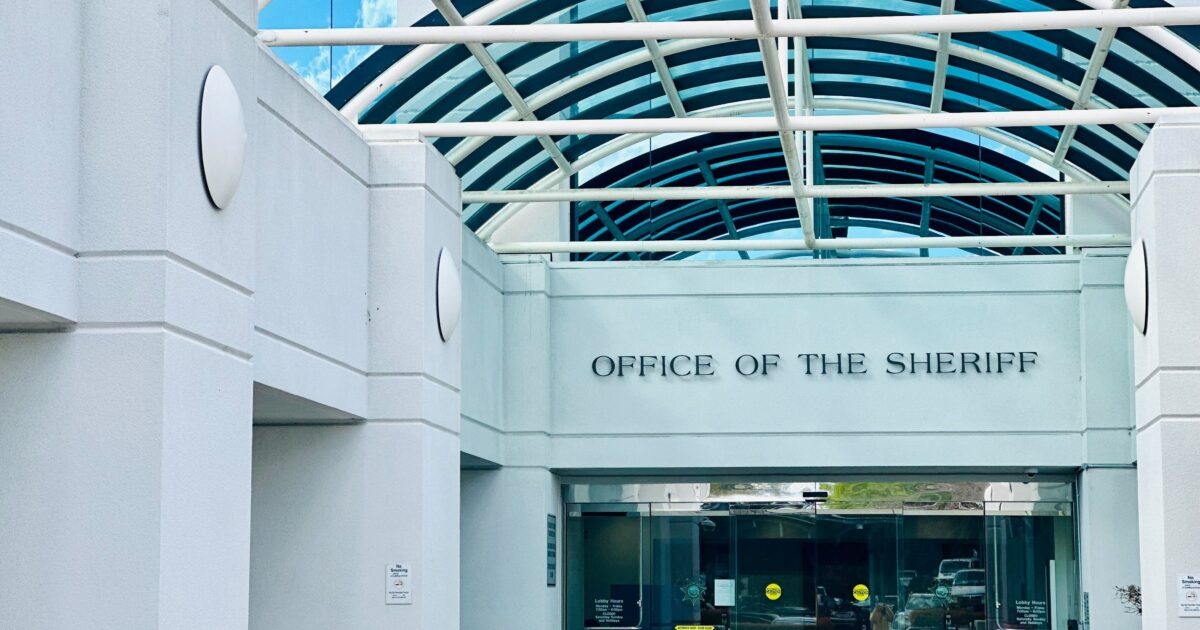
The Santa Clara County Sheriff’s Office is reporting a continuous, year-over-year decline in instances of use of force.
Sheriff Bob Jonsen‘s deputies used force on people in the jails and out in the community 603 times last year, a slight decrease from 621 incidents in 2024, according to an annual report for 2025. Deputies killed one person in 2025, compared to zero fatalities reported in 2024. The report defines use of force as the use of firearms, chemical agents, physical takedowns and punching and kicking, Tasers and batons.
Like previous years, a majority of use of force incidents happened in the county jails. Correctional officers most commonly used chemical agents in the jails — 181 times last year compared to 240 in 2024 — where 211 people with disabilities were booked last year, according to the report. Sheriff officials said uses of force trended downward at the Main Jail in San Jose and Elmwood Correctional Facility in Milpitas. However, Jonsen’s office reported an increase in deputies using force to stop assaults on jail staff and prevent self-harm last year compared to 2024.
“It’s concerning that we’re still seeing most use of force and chemical agents used in an environment where many people have mental health issues and disabilities,” Jose Valle, a community organizer with Silicon Valley De-Bug, told San José Spotlight. “Chemical agents are being used on folks who probably shouldn’t be incarcerated in the first place.”
Jonsen said several factors have contributed to the overall decline in uses of force.
“Over the past several years, our office has strengthened training in deescalation, crisis intervention, communication techniques and tactical decision‑making,” Jonsen told San José Spotlight. “We have also emphasized strong supervisory review, ongoing coaching and early intervention practices that support deputies in the field.”
The sheriff also credits the drop to the deployment of Tasers, which the Board of Supervisors approved for use in the county’s correctional settings starting in March last year. Jonsen’s report shows 17 uses of force in 2025 involved Tasers.
“Deputies have observed that the presence of this safety equipment during a developing incident often helps quell confrontations before they intensify, reducing the need for physical force,” Jonsen said.
Jonsen is pushing to expand the Taser program, to the objections of civil rights advocates.
His office is working to comply with two federal consent decrees — court-ordered performance improvement plans — to improve slow medical care and make correctional facilities more livable for disabled people, among other obligations. Jonsen, who’s running unopposed for reelection this year, previously told this news outlet that would be a priority over his next term.
A record high in jail deaths in 2024, lagging deputy misconduct probes and in-custody violence have tested federal monitors’ patience with the sheriff’s slow progress. Last year the Prison Law Office in Berkeley, which is overseeing the jail reforms, filed a motion asking Santa Clara County be held in contempt of court.
The report also shows a sharp uptick in deputies using force out in the community, notably in the courts and a smaller uptick in hospitals. Deputies used force in the courts 30 times last year compared to nine times in 2024. Deputies used force in the hospital eight times last year compared to three in 2024.
There has been a decrease in injuries stemming from use of force incidents and deputies sending fewer people to the hospital in 2025. In 2024, deputies also reported a downtick in uses of force while sending more people to the hospital compared to 2023. More correctional staff were injured and sent to the hospital in 2025 than 2024, according to the report.
Deputies continue to arrest and use force on Latinos more than any other demographic in both the jails and out in the community, according to the report.
Latinos represented more than 50% of last year’s 5,069 total arrests by the sheriff’s office, despite comprising only 25% of Santa Clara County’s population of roughly 2 million residents. They’re followed by white people at 22% of arrests, Black people at 13% and Asians at 8% according to the report. However, Jonsen’s office reported fewer uses of force in East San Jose, which is predominantly Latino, in 2025 compared to 2024.

The county is still developing plans for a new jail, after a recent assessment found major flaws with the outdated, existing facilities. Officials have wrestled with questions about the scale of their new facility when the incarcerated population has starkly declined since the pandemic. But they’ve voiced certainty that something will get built, even as they’re pinching pennies in a historic budget crisis with an anticipated $470 million budget shortfall for fiscal year 2026-27.
Valle said the county should instead focus its limited resources on expanding access to college credit and GED programs, as well as social and family activities during out-of-cell time.
“Anything where folks can prepare themselves for life after release — and find hope and opportunities — would be a better use of resources instead of investments that keep them standing around with nothing to look forward to,” Valle said. “That would really go a long way.”
Contact Brandon Pho at [email protected] or @brandonphooo on X.