
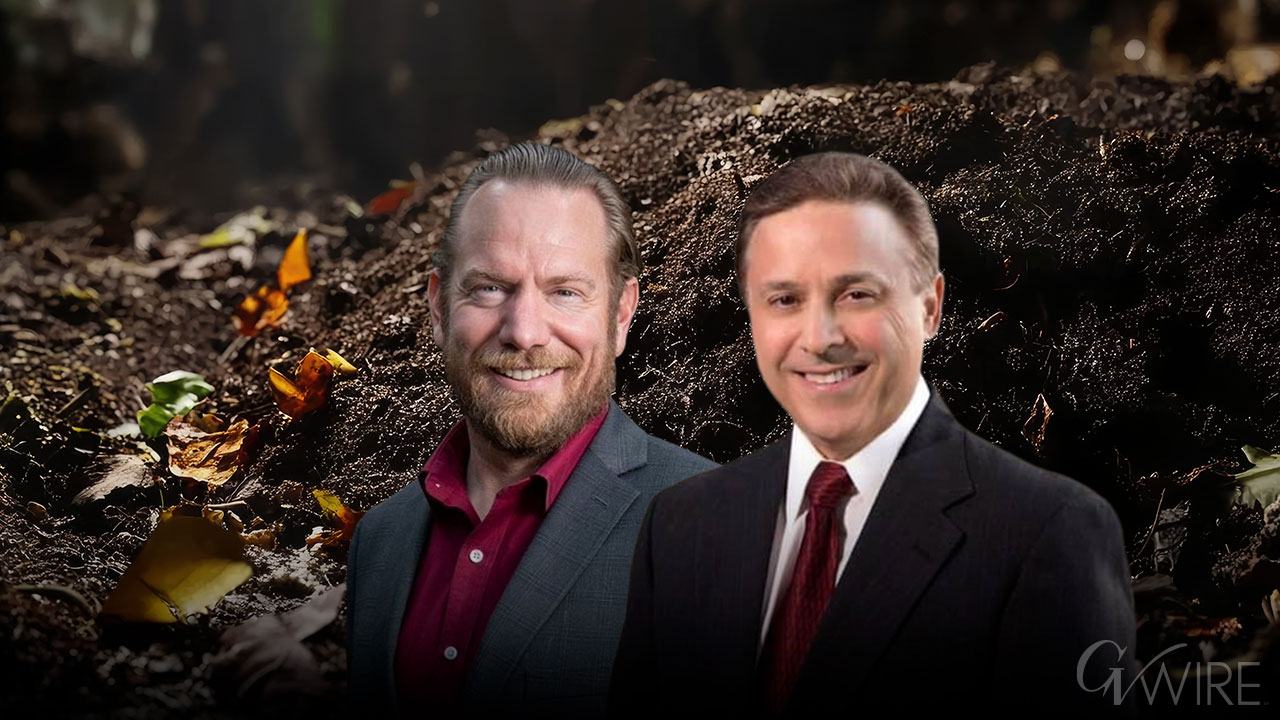
Supervisors on Tuesday will consider a ban on the application of human compost as fertilizer on farm and public land in Fresno County.
As California law opens up the usage of human compost in 2027, supervisors Garry Bredefeld and Nathan Magsig say there’s insufficent science examining the impact that decomposed human bodies can have on public health.
“We want to make sure that when it comes to organic matter, if there are pathogens present, we don’t want to create a situation where there’s food grown on private land that’s being sold in public markets that could have contaminants in it,” Magsig said.

Related Story: Family Doesn’t Want ‘Peck’ Name Tied to Human Composting At …
Is the Process Safe?
In 2022, California legislators approved Assembly Bill 351, which opened up human composting throughout the state by 2027. The legislation flew through the state Legislature without a single vote in opposition. Gov. Gavin Newsom signed it into law in September 2022.
KQED reported in 2024 that the bill’s author, then-Assemblymember Cristina Garcia, D-Bell Gardens, wanted an alternative to cremation and burial.
Before the law, Californians who wanted decomposition would have to go to states such as Washington, where it is legal, and then have their remains transported home.
The matter caught widespread attention locally when the San Joaquin River Parkway and Conservation Trust had human compost delivered to Sumner Peck Ranch and spread on the soil. The trust’s decision drew vocal objections from Bredefeld, the San Joaquin River Conservancy, and the Peck family.
Proponents of human composting say it gives people an environmentally conscious method for disposal after death. Washington-based Earth Funerals told GV Wire in an email that the process takes about 30 days.
Basically, the company wraps up the body and places it in a vessel along with other organic material to speed up decomposition.
As microbes break everything down, the body reaches temperatures of 131 to ensure pathogens are destroyed. After the process is complete, medical implants or devices are removed. The soil is tested for contaminants, and what’s left is about a cubic yard of soil.
Families take home a portion of that soil and the remainder goes to conservancies such as those at the San Joaquin River.
Related Story: Human Composting on San Joaquin River Grows a Fresno Political Fight
Law Allows Local Decision-Making
California law allows local governments to decide about using human compost. Bredefeld told GV Wire he wants to make it known the county opposes using the material.
“There’s a lot that is still unknown about human compost,” he said. “Who even knew about this until it was discovered they were using it by the river?”