
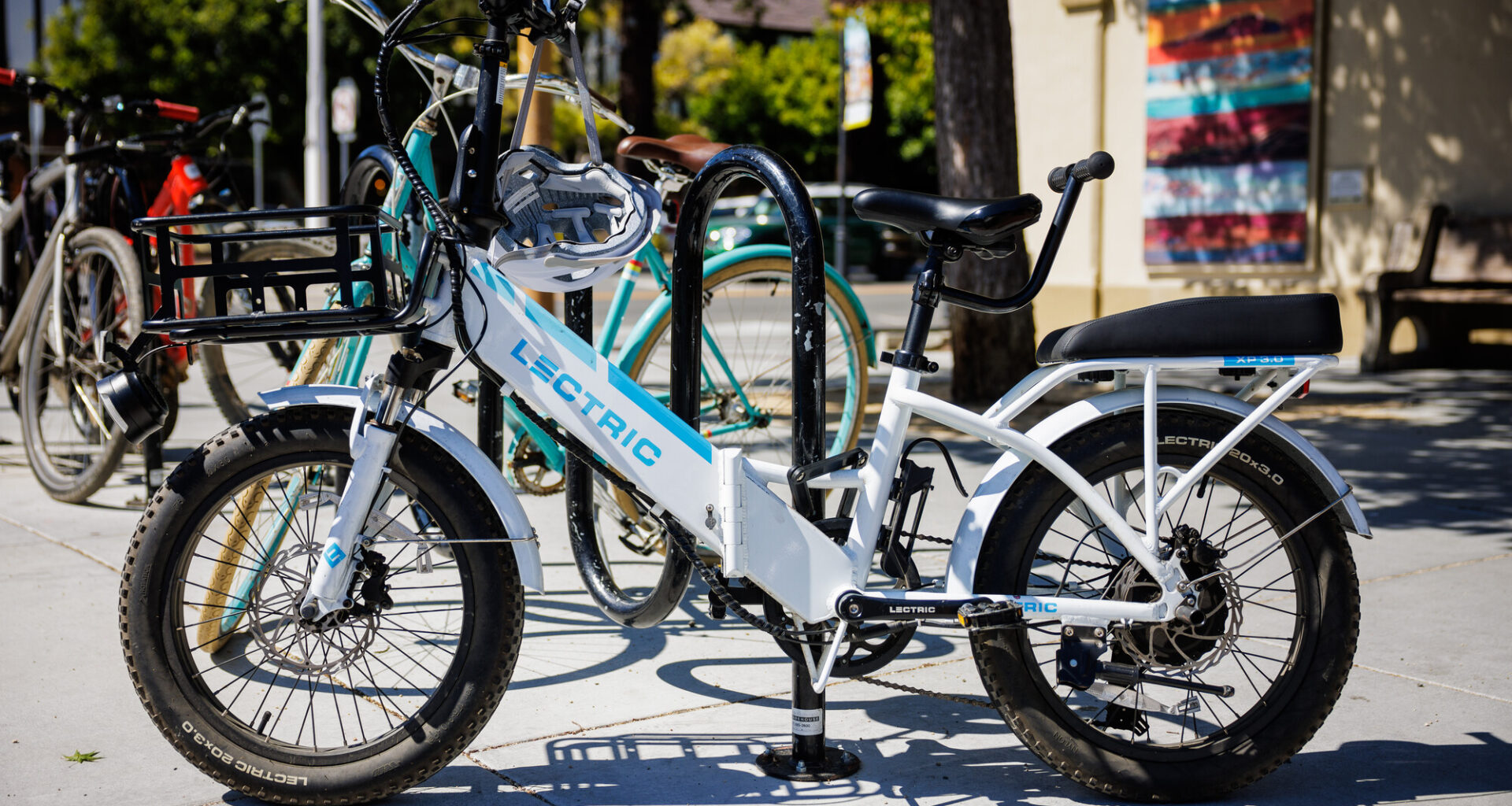
Lithium-ion batteries power many consumer products, from cell phones to vacuum cleaners, as well as electric vehicles, and the e-bike market is a fast-growing one.
Battery packs for e-bikes are much larger than those for personal electronics, and they are exposed to the elements more. Bicycle advocates and fire officials have raised concerns about regulations on manufacturing standards, user modifications to enhance speed or power and the risk of damage to the batteries from impacts.
Fielding said if e-bike users notice a battery beginning to show signs that it might be damaged, like an odor, bulging shape, or if it is starting to smoke, and they have time, they can take it outside to avoid a fire in a living space. But more often, he said, firefighters recommend simply evacuating.
“Try and enclose that living space and get out. Your life is not worth any property, so close that living place, shut all the doors, get out and call 911. It’s the best advice,” he said.
There have been an estimated 198,000 lithium-ion battery fires in structures since 2011, according to an analysis of multiple data sources on such incidents by the National Institute of Standards and Technology last month.
Consumer-level lithium-ion battery fires appear to be growing at a rate of about 10% per year, the analysis said. Fires starting with e-bikes and micromobility devices “are among the leading causes of home-related lithium-ion battery fires, especially in urban areas,” the analysis said.
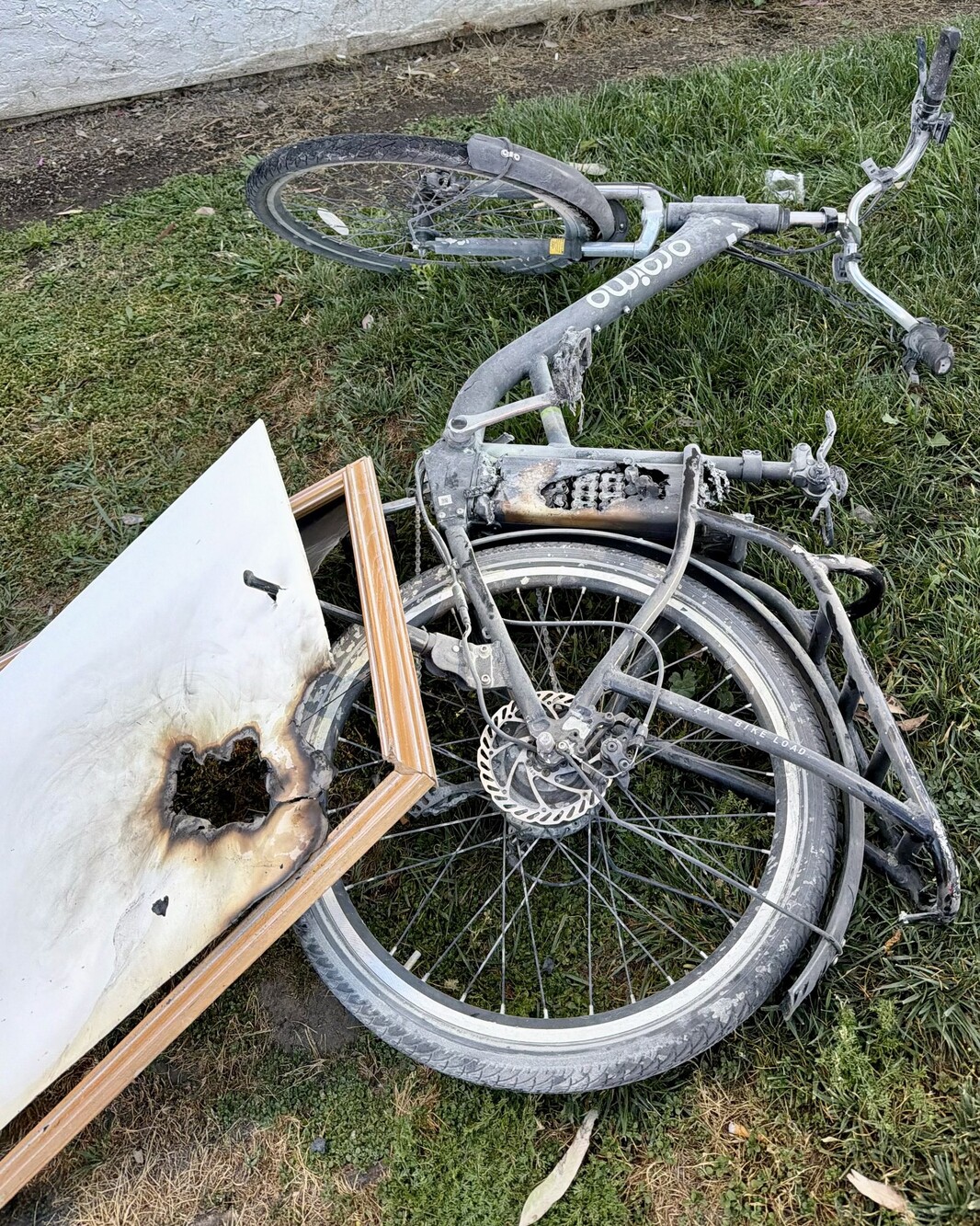 The San José Fire Department shared this photo of an e-bike that ignited causing a fire at an apartment on Friday, April 3, 2026. (Courtesy of San José Fire Department)
Fielding and biking advocates said following some simple steps can help avoid a fire in the first place, including only charging e-bike batteries under supervision.
“When a lithium e-bike battery is plugged in for too long, it can get overheated and for a variety of reasons, it can catch on fire. Not leaving your battery plugged in overnight is key, and then keeping an eye on it while it’s charging is very important,” said Jared Sanchez, the policy director at the nonprofit California Bicycle Coalition, known as CalBike.
In 2024, California passed SB 1271, a law that went into effect this year and requires all e-bikes sold in the state to include batteries that meet certain standards based on lab testing. But Sanchez said it’s still important to verify that an e-bike a rider is considering buying or renting meets and displays those certifications, and to use manufacturer parts if anything needs to be replaced.
“As we often see, most battery fires are in unregulated or aftermarket products that will often be more likely to catch fire than the certified ones,” he said. “Make sure the battery is designed for the motor for your particular bike. Extension cords have been linked to battery fires, so always plug in your battery charger directly into an outlet.”
A good way for cyclists to ensure they are purchasing a quality product is to buy directly from a reputable bike store or dealer. They will be required to follow the laws around battery certification, he said.
If you’re concerned about making the right choices, you can also seek help or advice from local organizations, like the Silicon Valley Bicycle Coalition, which offers an “Intro to e-bikes” class in San Mateo and Santa Clara counties.
“As we see e-bikes really surge in popularity, it’s so important that people know what they’re buying so that they can use this transportation tool that really does have the power to be transformative safely and effectively and never put themselves in harm’s way,” said Amy Thomson, the policy director at Silicon Valley Bicycle Coalition.
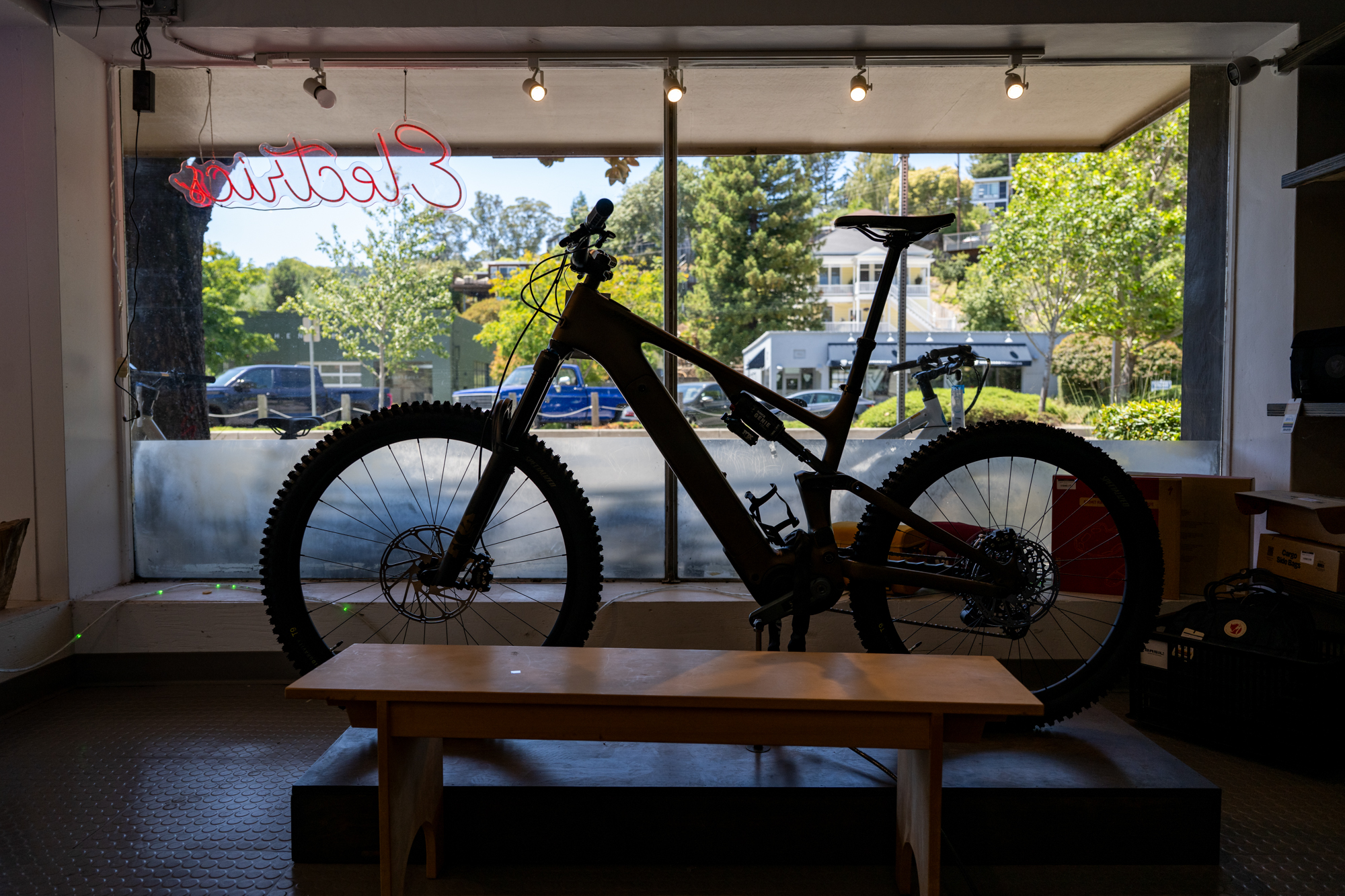 An electric bicycle sits on display at Tam Bikes in Mill Valley on July 29, 2025. (Beth LaBerge/KQED)
She said the class helps people understand what they’re buying, including whether the products have the proper power levels. Many products on the market have motors with too much power and too high a top speed — above 28 miles per hour — to be classified as an e-bike in California. Instead, experts say those devices are more akin to an e-motorcycle or an e-moped.
“There are a lot of options out there, and not all of them are legitimate. We see e-devices called e-bikes when they are not legal e-bikes. And you run the same risk with the battery that’s inside the bike,” Thomson said.
Thomson said that because an e-bike can be plugged in, some consumers might think it can be treated like any rechargeable home item.
“This is a transportation tool. It’s a powerful device, and that brings us really great mobility in terms of getting places more comfortably, in terms of carrying heavy objects or putting children on the back,” she said. “But that does require more powerful batteries, and so it is necessary to know what you’re buying and take a look at the instructions on how to charge it, how to take care of it.”