

This year’s Silicon Valley Index, an annual snapshot of the region published by the nonprofit, highlighted that investment income — such as dividends from stock portfolios and earnings from rental properties — is “overwhelmingly concentrated among higher-income households,” bringing in $200,000 or more each year. For households earning less than that, “investment income is nearly absent,” the report said.
Those investments, Massaro said, can generate much more income than wages alone.
In practice, those assets for tech workers can feel like bonuses, making it easier to snap up a rental property or to upgrade to a bigger home, “things that might seem out of reach for a lot of other people in our region,” Massaro said.
Compounding all of this is the fact that the Bay Area — in addition to being flush with well-paid product managers, engineers, programmers and marketers — has one of the highest concentrations of billionaires in the country. Executives and founders like Meta’s Mark Zuckerberg and Nvidia’s Jensen Huang are some of the 126 billionaires who call the area home.
“A lot of people across the country talk about the wealth gap in terms of the top 1%. But in Silicon Valley, the concentration goes way beyond that. It’s the top 0.001% alone that holds 18% of all of our liquid wealth,” Massaro said. “And the top 1% hold roughly a third. So things are different here, particularly because of billionaire liquid wealth.”
Other indicators reaffirm the Bay Area’s higher cost of living, including data from the Bureau of Economic Analysis, which researchers from SIEPR analyzed.
“Between 2012 and the pandemic, prices in the Bay Area increased faster than other metros and the nation at large,” researchers at SIEPR said.
“One way to think of this is that if you make $100,000 in San Francisco, the purchasing power it gives you relative to living in Houston is $85,000,” McEntarfer said. “And relative to living in Birmingham, Alabama, that money would go [as far as] $110,000.”
Bay Area workers looking to stretch their dollars have fled San Francisco and Silicon Valley for the East Bay and beyond in search of a lower cost of living. But as more people make that move, the limited housing supply has meant rising prices in previously affordable neighborhoods, which has pushed many families out of the region entirely.
Proposition 13
McEntarfer said economists sometimes compare housing stock to lasagna, where layers accommodate the different circumstances people experience in their lives and careers.
California’s controversial Proposition 13 and high home prices have complicated that notion locally, with many older residents staying in larger homes after their children have moved out and partners have died because downsizing is too expensive.
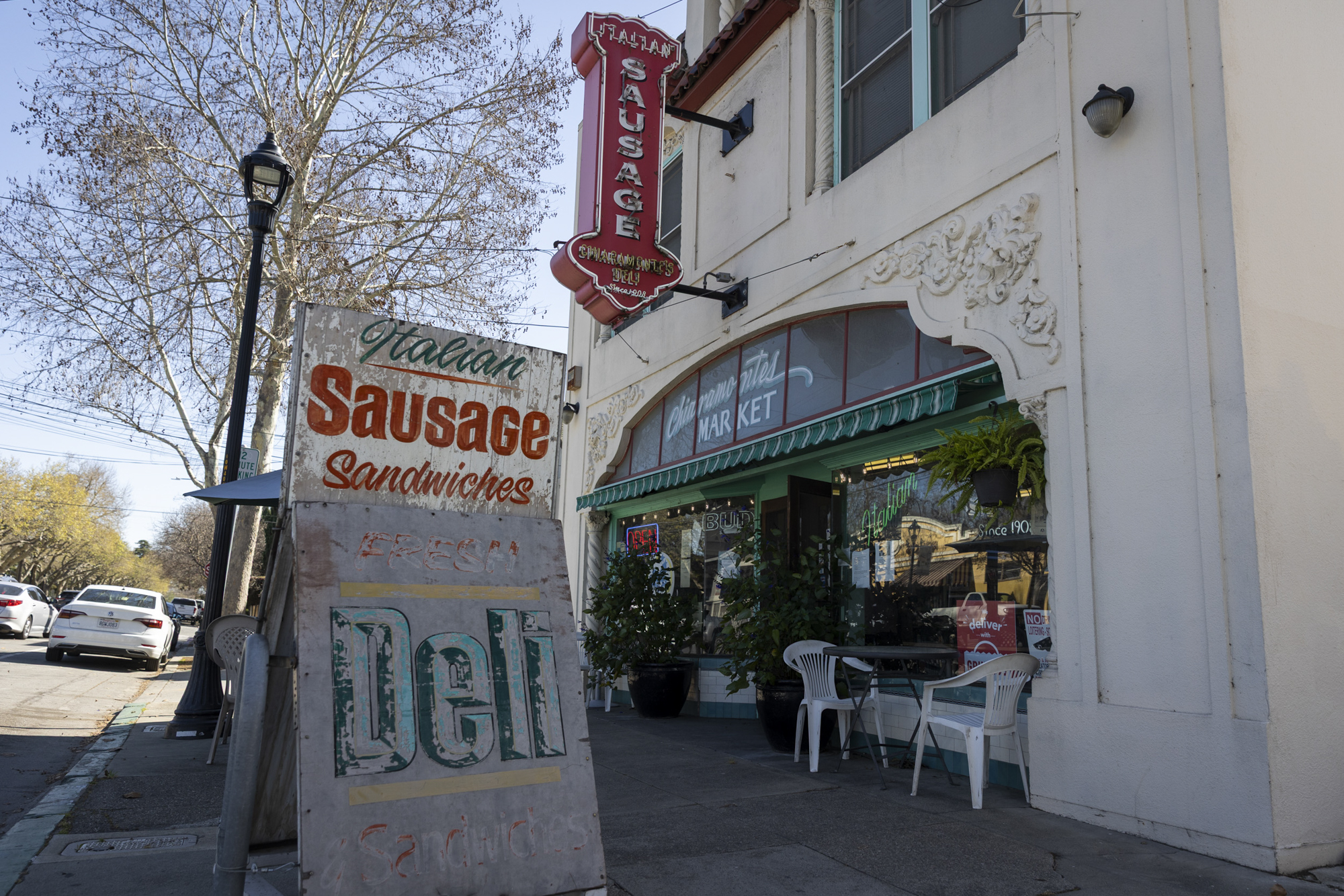 Chiaramonte’s Deli & Sausages is located on 609 North 13th St., in San José, on March 7, 2026. (Tâm Vũ/KQED)
For those who have already secured a home in the Bay Area, especially members of the Baby Boomer generation, the nearly 50-year-old Proposition 13 has shielded them from high annual property tax increases.
Enacted in 1978 by California voters frustrated about unpredictable inflationary pressures and increasing property tax bills, Proposition 13 requires the state to assess properties based on their purchase price, not current market value, and caps the annual increase in assessed value at 2%.
It means, for instance, that the buyer of a house who purchased the property in 2022 pays dramatically more in property taxes than their neighbor who bought a comparable home in the 1970s.
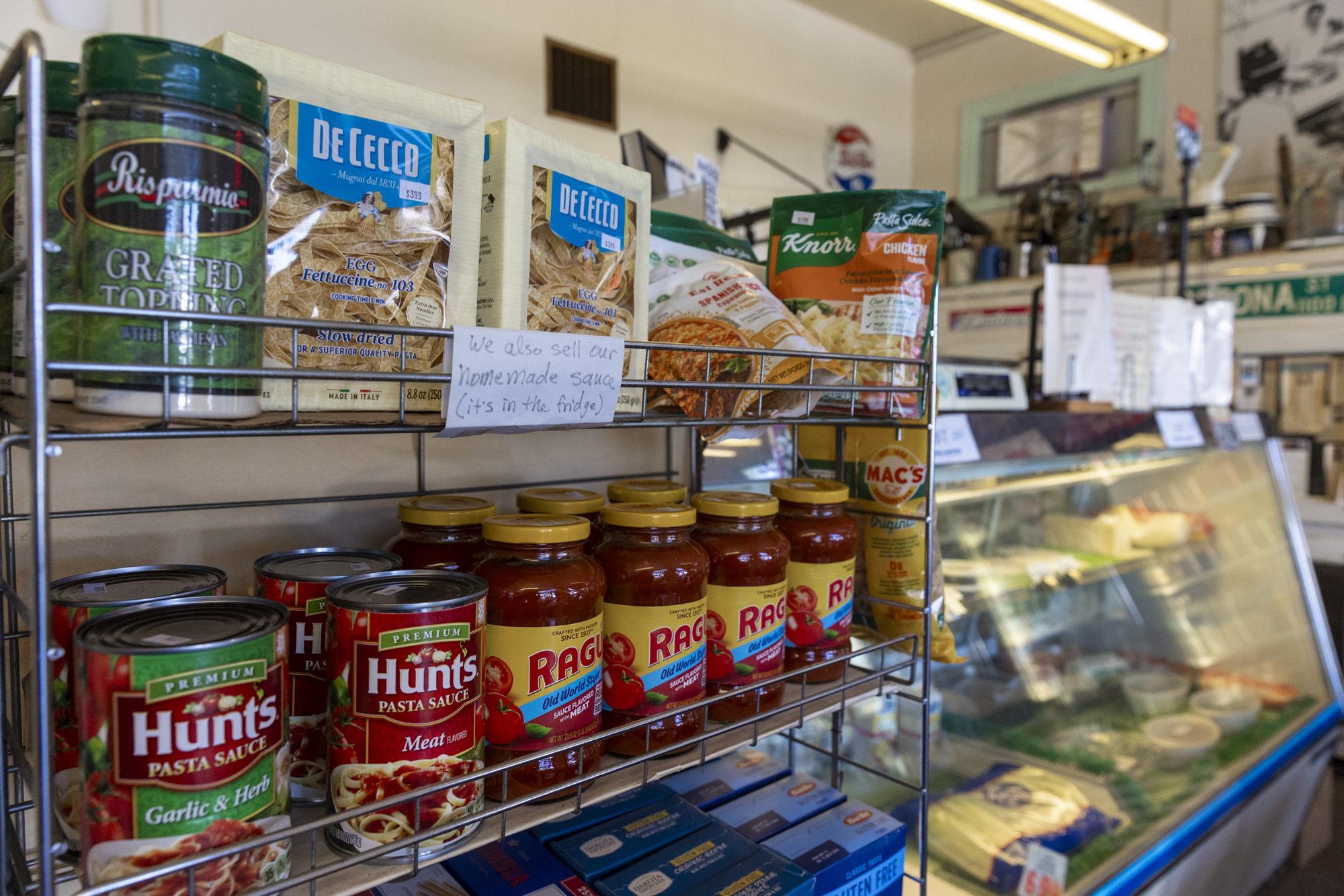 Dried pasta and sauce are sold at Chiaramonte’s Deli & Sausages in San José on March 7, 2026. (Tâm Vũ/KQED)
The law benefits residential and commercial property owners, but disincentivizes them from moving and severely limits funding for schools and other municipal services, prompting officials to more frequently ask local voters for tax increases and bond measures.
“It definitely transfers the burden of paying for all of the expensive services that we have to pay for in communities to the younger up-and-coming working families,” said Kelly Snider, a developer and professor in the Department of Urban and Regional Planning at San José State University.
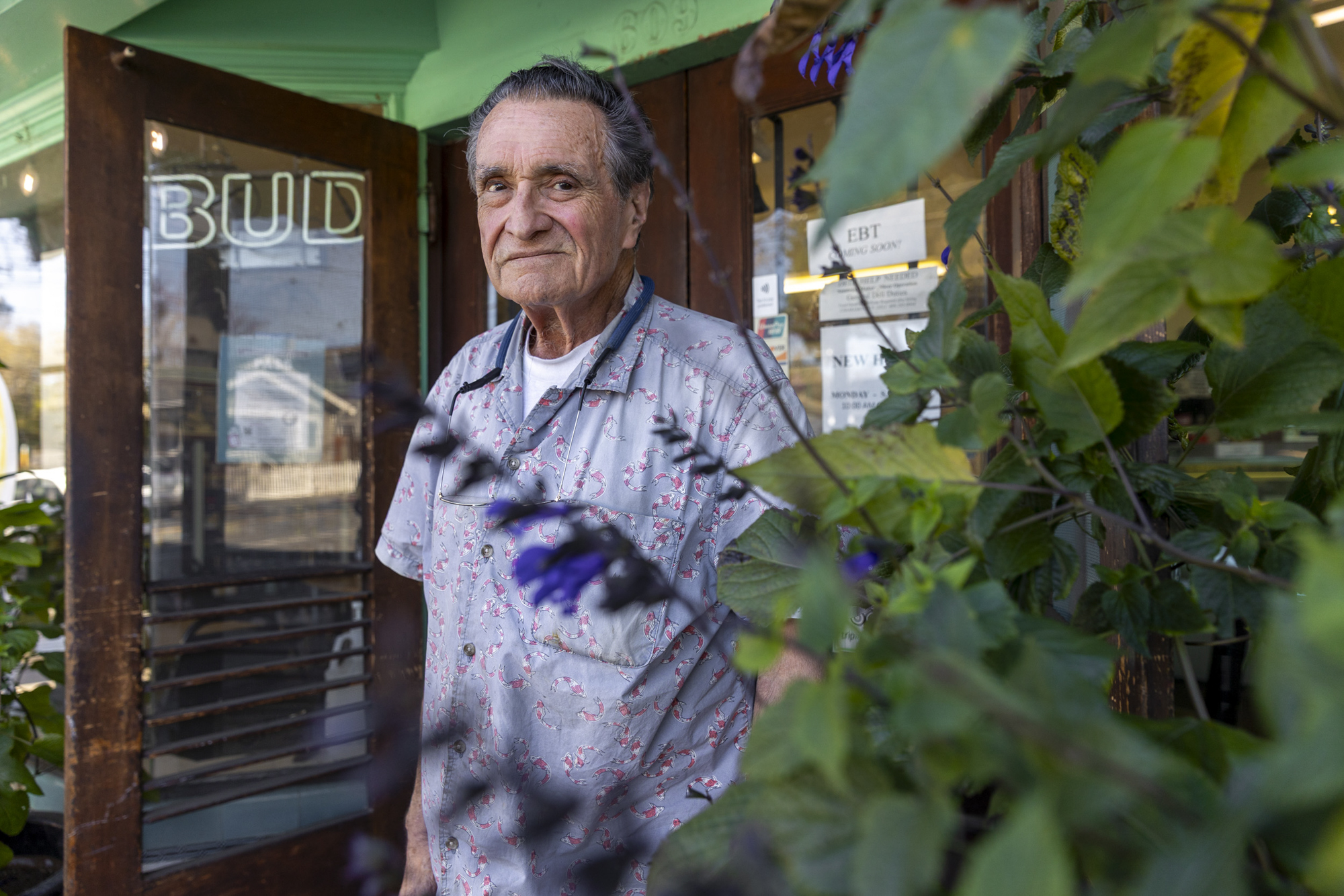 Louis Chiaramonte, owner of Chiaramonte’s Deli & Sausages, poses for a portrait at Chiaramonte’s Deli & Sausages in San José on March 7, 2026. (Tâm Vũ/KQED)
Some analyses have shown that Proposition 13 disproportionately benefits white and wealthier homeowners in higher-value neighborhoods because the difference between their homes’ assessed value and market value is greater.
The upshot, McEntarfer said, is that in the Bay Area, “even relatively well-off working professionals like the nurses, educators, people with good middle-class jobs, they can’t afford to buy a house anymore, so they’re renting.”
Average rental rates in the San José and San Francisco metro areas hover around $3,000 a month for apartments, and about $4,200 a month for single-family homes, the Silicon Valley index reported.
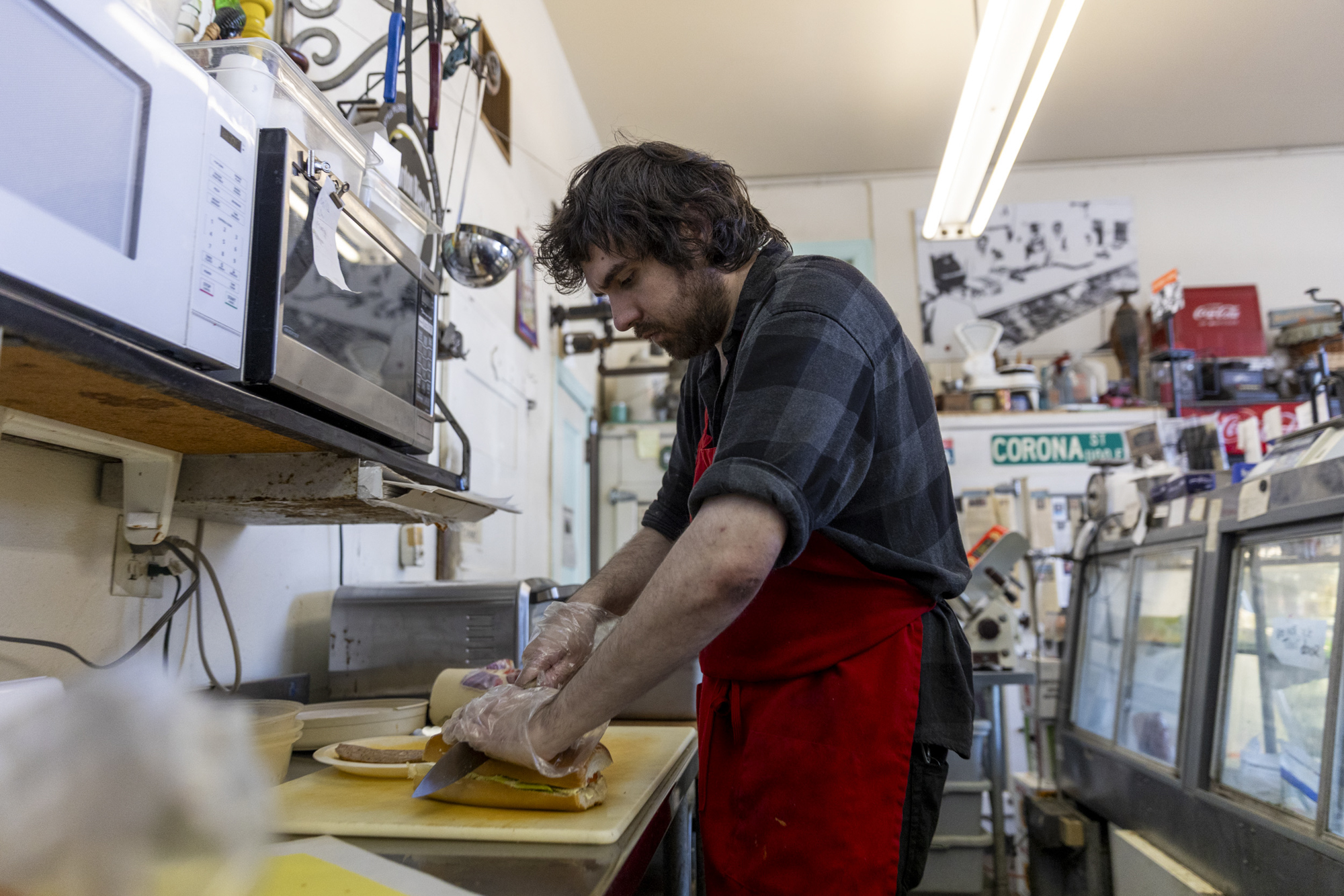 A.J. Fernandez makes a sandwich at Chiaramonte’s Deli & Sausages in San José on March 7, 2026. (Tâm Vũ/KQED)
A.J. Fernandez pays far less than that — just $600 a month.
He’s the grand-nephew of Louis Chiaramonte, the 81-year-old proprietor of Chiaramonte’s Deli & Sausages in San José’s Northside neighborhood, which has operated for 118 years.
Chiaramonte said people of his generation could buy a home “even with a regular type of job where you didn’t have to have a special education or special talents,” but Fernandez said he “couldn’t do that in my lifetime.”
The 34-year-old, who works crafting the deli’s housemade Italian sausage sandwiches, rents a room in a family-owned home with his grandmother. “They charge me very modestly, and even then, it’s hard to live in the Bay Area,” he said.
“There’s this huge crunch in terms of how expensive it is to just simply have a roof over your head,” said Stasia Hansen, the research and policy director for East Bay Alliance for a Sustainable Economy, a nonprofit that advocates for economic, racial, and social justice.
Hansen said that when the pinch of increasing housing costs pushes people farther from the region’s major job centers, it disconnects them from their families and communities and adds to their transportation costs as commutes increase.
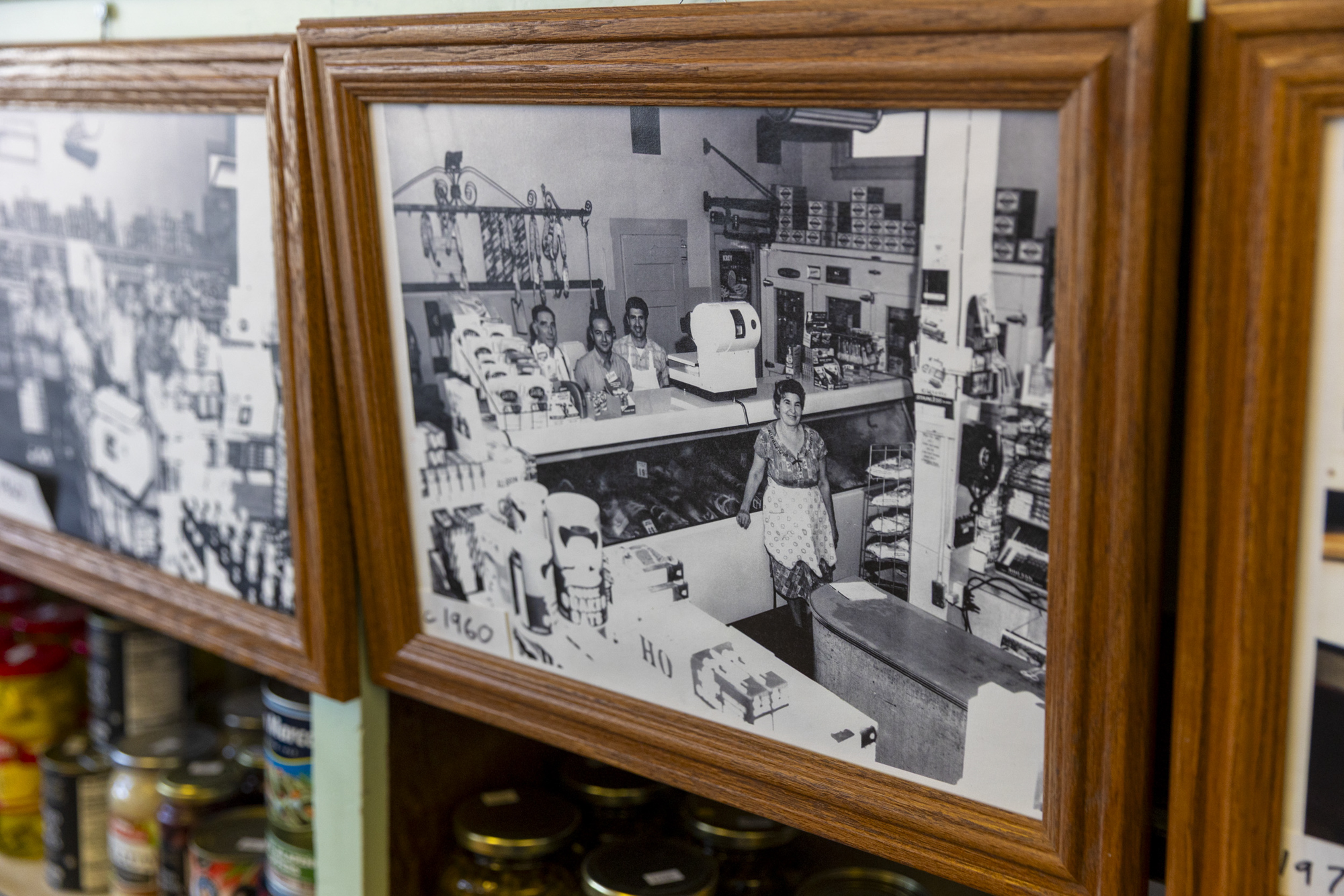 Old photos of Chiaramonte’s Deli & Sausages from the 1920s and onward are hung on a shelf at Chiaramonte’s Deli & Sausages in San José on March 7, 2026. (Tâm Vũ/KQED)
Moving from bigger cities like Oakland to smaller burbs in Contra Costa and Solano counties also means tenants often give up renter protections, she said.
One consequence of all that movement has been an explosion of supercommuters, people who commute more than an hour to their workplaces. In the Bay Area in 2019, just under 9% of regional workers identified as supercommuters, according to U.S. Census data, nearly double the national rate at the time.
The pandemic-driven remote work wave “took the edge off of the number of supercommuters in the Bay Area,” McEntarfer said, but the percentage of these commuters in the region in 2024 was still well above the national average.
Increasing strain
As more people fan out in search of housing they can afford, that puts pressure on lower-income neighborhoods and the people who live there. Black workers have historically been underrepresented in tech and other white-collar sectors, Hansen said. They are also more likely, according to the index, to be paid less even when they do hold the same degrees and jobs.
About half of Black workers in the East Bay were considered rent burdened, meaning they paid more than 30% of their income toward rent, according to an October report from UC Berkeley’s Labor Center. More than four in every 10 Latino workers were rent-burdened, compared to about a third of white renters.
 Twenty-four-year-old Kassandra Gutierrez embraces her 4-year-old son Esteban while getting him ready for school at her mother’s home in Oakland on April 6, 2026. (Tâm Vũ/KQED)
Kassandra Gutierrez said the financial strain of trying to stay in the Bay Area has taken a huge toll on her emotional well-being. She works full-time and is a single parent to a 4-year-old.
“I’ve been trying to see if I can get a second job just to make sure I can maintain a roof over my son’s head. It’s very mentally frustrating, mentally draining,” she said.
Gutierrez, 24, is a case worker at a mental health care agency in Oakland, where she serves up to 30 clients at a time. Despite living in an affordable apartment complex in Richmond, she worries she could face eviction because she’s struggling to pay a recent $250 increase in rent.
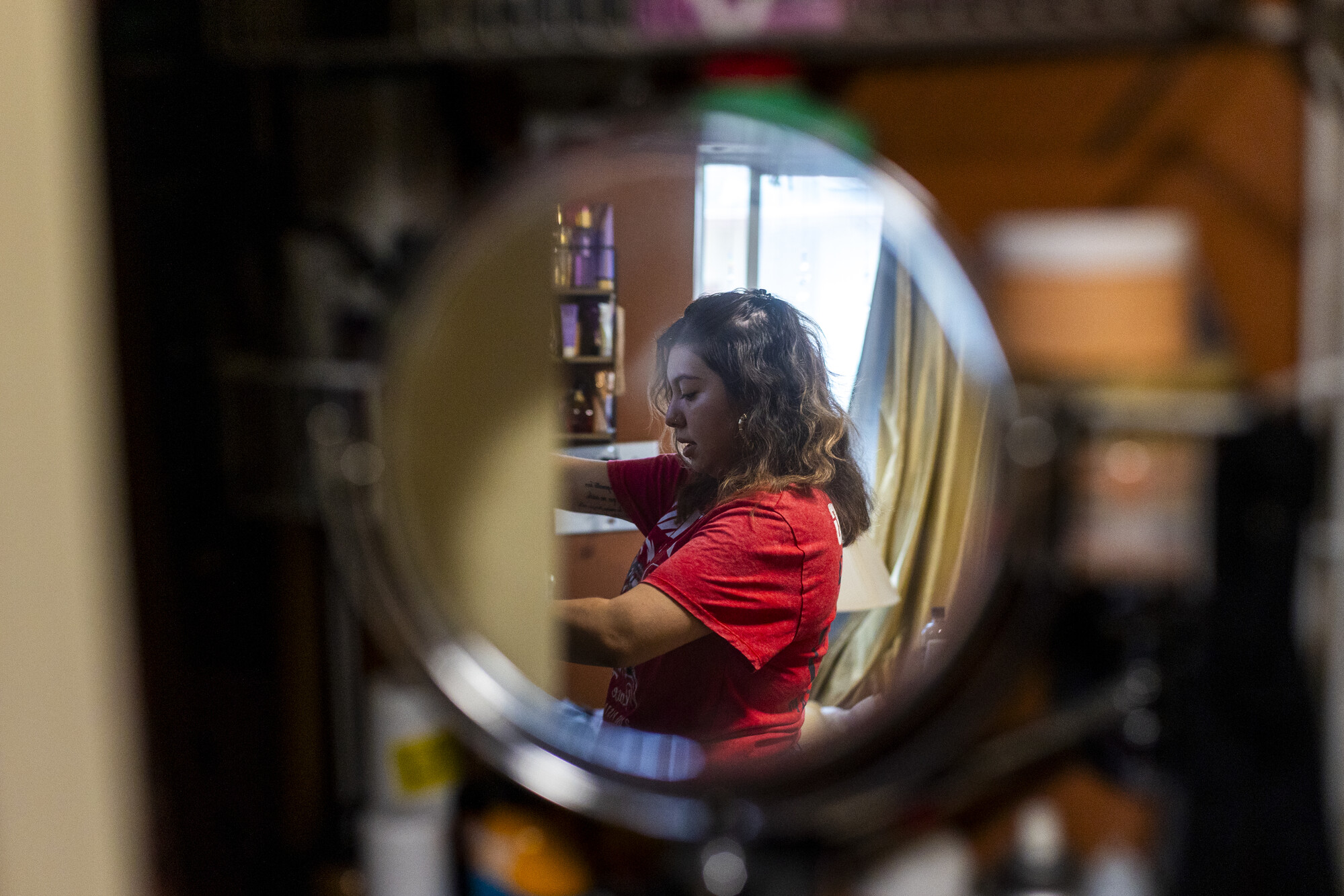 Kassandra Gutierrez, a single mother, gets ready at her mother’s home in Oakland on April 6, 2026. (Tâm Vũ/KQED)
Raised in Oakland, she said, “everything was easier” when she was younger, and it’s been painful to see the costs of daily life spiking.
“When I first started driving, gas was like $2.50, so filling up [my car]
wasn’t such an issue. Just seeing that increase in gas, seeing an increase in groceries, just buying a pack of strawberries is already almost 10 bucks, or a gallon of milk is six bucks,” she said.
“It’s such a fast increase that no one can really catch up.”
What comes next?
Walker, the Berkeley professor emeritus, said the inequality gripping the Bay Area is difficult to escape without drastic action.
“What comes next? Well, nothing. It’ll just be more of the same unless you get a mass popular movement and significant political change. We need to reclaim our state and reclaim our country from the rich,” Walker said.
He suggested everything from higher taxes on the wealthy and corporations, to stricter AI regulation and more subsidized housing like the public housing projects of the New Deal era that helped house the burgeoning workforce of the Bay Area after WWI. A proposed one-time 5% tax on billionaires in the state has gained momentum in recent months but faces vehement opposition from the subjects of the tax.