
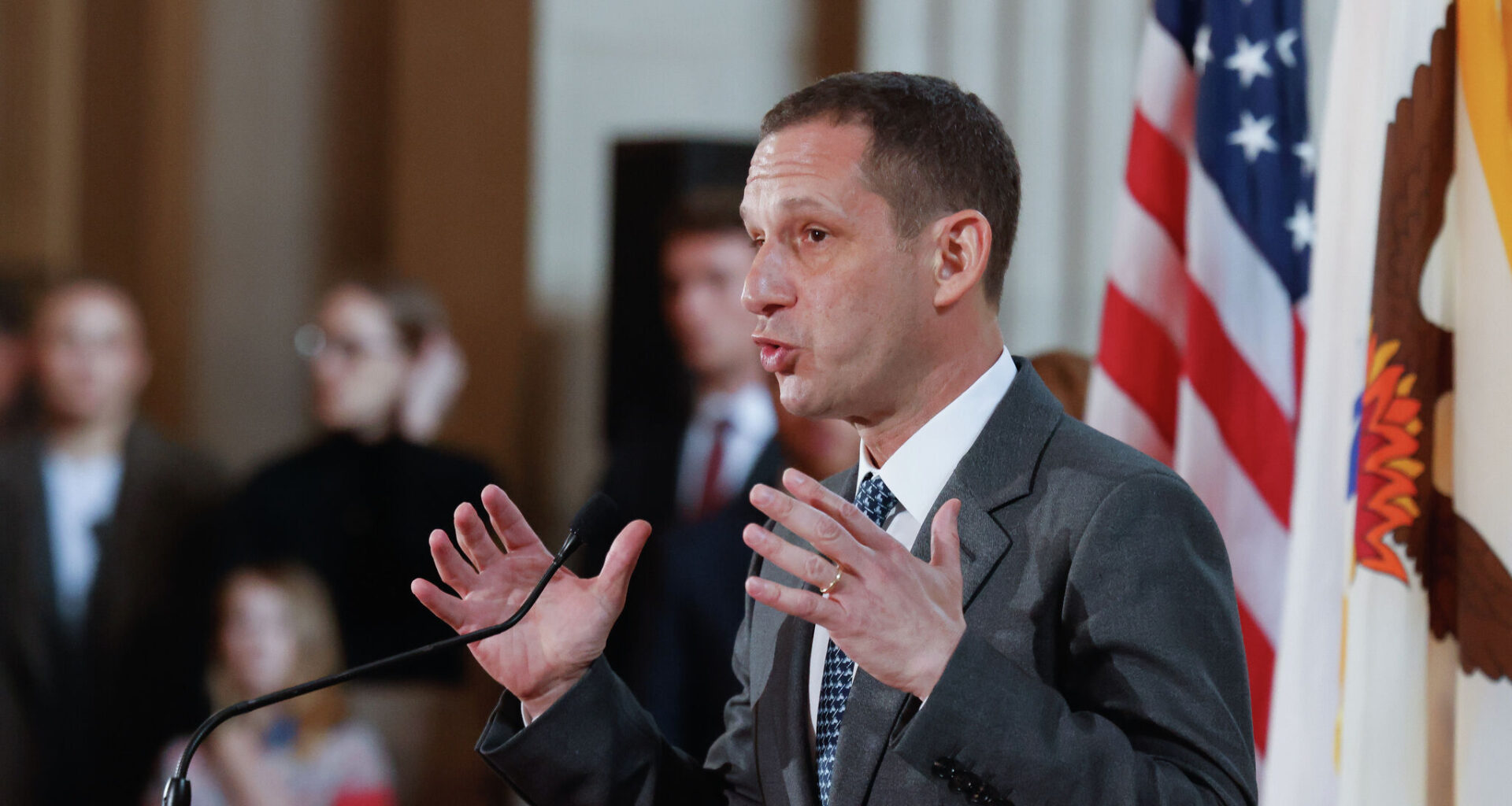
San Francisco Mayor Daniel Lurie was expected to announce the appointment of Mike Levine, the head of Massachusetts’ Medicaid program, as the incoming director of San Francisco’s Department of Homelessness and Supportive Housing.
Lea Suzuki/S.F. Chronicle
Mayor Daniel Lurie has chosen the next leader of San Francisco’s homelessness agency, an appointment that is poised to leave Lurie’s mark on one of the most important parts of the city government.
Lurie was expected to announce the appointment Wednesday of Mike Levine, the head of Massachusetts’ Medicaid program, as the incoming director of San Francisco’s Department of Homelessness and Supportive Housing. Levine will succeed Shireen McSpadden, who recently said she will retire effective June 30 after about five years leading the city’s response to homelessness. His appointment was recommended Tuesday by the department’s oversight commission.
Levine will be the latest high-profile Lurie appointee to bring Medicaid experience to City Hall, following the mayor’s decision last year to make Daniel Tsai the city’s public health director. Tsai previously ran the federal Medicaid program under former President Joe Biden and had also been a Medicaid director in Massachusetts before that.
Article continues below this ad
Levine will step into his new role at a key juncture for the Lurie administration, which is trying to balance an increasingly constrained city budget while advancing the mayor’s key policy priorities — such as reducing the number of homeless people who live on San Francisco streets.
San Francisco most recently counted a 7% increase in its overall homeless population, including those living in shelters, between 2022 and 2024. A more recent count was conducted in January and the results are expected to come out this summer, though a new methodology will make it harder to compare to previous years.
San Francisco Chronicle Logo
Make us a Preferred Source to get more of our news when you search.
Add Preferred Source
Lurie is hoping Levine can help the city continue to record declines in the number of tents on San Francisco sidewalks and advance a program intended to discourage people from living in RVs. In a statement praising Levine, Lurie said the city is already “moving in the right direction because we’ve brought together our homelessness work with our health care work around addiction and mental illness.”
“Mike is an expert in connecting health care and homelessness services, and he has seen the power of integrating primary care, behavioral health, and social supports to keep people housed,” Lurie said in the statement. “The positive direction is clear, but the work is far from finished. Mike brings the experience and the expertise to build on our momentum, and I look forward to working with him.”
Article continues below this ad
As Medicaid director in Massachusetts, Levine oversaw a $23 billion program that provided health care for 2 million people, including more than 10,000 who were homeless. In San Francisco, he’ll run one of the city’s largest departments, which has a budget of about $785 million.
Levine said in a statement that his experience has taught him that “homelessness is more than a housing issue,” and that government officials can “only succeed in getting people stabilized if we treat addiction and mental health issues” as well. He said he had “retooled” the Medicaid system in Massachusetts so that providers of health care and homeless services work better together and the state recognizes “providers who successfully engage the hardest-to-serve clients.”
“I know San Francisco has made tremendous progress in the last year,” Levine said. “I am excited to lean in to accelerate our progress to help more people move toward stability and I look forward to being out in the community — meeting with providers, community members, frontline teams, and most importantly the clients we serve.”
Dr. Jim O’Connell, president of Boston Health Care for the Homeless, described Levine in a statement as “a brilliant leader, trusted by all for his honesty and transparency, and blessed with an uncanny ability to bring together the key partners needed to find solutions to the most difficult health care challenges.”
Article continues below this ad
“Whether meeting with legislators, hospitals and health plans, shelters and community clinics, Michael has earned respect and admiration for his quiet and effective leadership,” O’Connell said.