
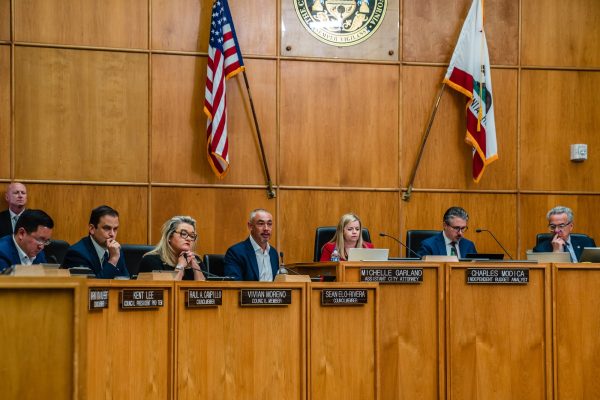
The San Diego City Council unanimously adopted an ordinance on Tuesday requiring federal law enforcement agencies, including border and immigration authorities, to obtain judicial warrants or court orders to access non-public city properties.
The Due Process and Safety Ordinance, which was introduced in October and passed unanimously on initial reading, was not brought before the council for a required second vote until now. The measure will now be sent to Mayor Todd Gloria for signature.
“A lot has happened in the world since then, but one thing that has not changed is the need for the city to adopt this into law,” said Councilmember Sean Elo-Rivera, who sponsored the ordinance.
Officials explained that the ordinance had completed the required meet-and-confer process with the city’s labor unions, which cleared the way for its adoption.
The city ordinance served as a model for one adopted by the county Board of Supervisors earlier this year amid increased immigration enforcement operations. Similar ordinances have also been voted on in other cities throughout the county.
Elo-Rivera said that while the ordinance will “certainly improve protections and give people stronger ground to assert their rights,” it cannot guarantee them protection against immigration arrests.
“I wish it could,” he said. “But it’s the best we can do at the moment, and we should be proud of that.”
In a statement, Gloria said that he will sign the ordinance into law. It will then go into effect 30 days later.
“The City Council’s adoption of this ordinance reflects our shared responsibility to keep San Diegans safe and uphold fundamental rights especially at a time when the actions and rhetoric from the Trump administration have threatened both public safety and civil liberties,” he said.
The ordinance follows an executive order issued by Gloria last summer that added measures to protect immigrant communities.
It establishes clear guidelines for non-public spaces and requires the posting of multilingual signage at the entrances of city-owned facilities to inform the public of the rules. The judicial warrant provision and other protections under the ordinance will also apply to city contractors, grantees and leaseholders.
A handful of people spoke in support of the measure during the public comment period Tuesday.
“It reinforces our shared values of justice and equality by ensuring that city departments and contractors respect people’s rights and due process,” said Patricia Mondragón, with the nonprofit Alliance San Diego, during the meeting’s public comment.
While local law enforcement agencies in San Diego do not participate in immigration enforcement, as stipulated by California law, there have been instances in which Immigration and Customs Enforcement has called on local agencies to help with crowd control and maintain public safety.
Just as the county ordinance does with the Sheriff’s Office, the city ordinance will require the San Diego Police Department to provide additional details about such incidents.
The police chief will be required to issue public reports within three business days whenever the department responds to a call for service related to immigration enforcement activities.
The reports must include the names of the agencies present, whether a judicial warrant was presented and information about the law enforcement officers involved, such as their badge numbers.
Last year’s executive order also required the department to appoint a liaison to the mayor’s office for reporting such incidents.