
At 11:45 a.m. on a recent Friday, servers attended to two customers eating alone on the first floor of a two-story restaurant in South of Market.
The restaurant’s manager looked over the mostly empty tables and remembered when this would have been the lunchtime rush. Employees from the San Francisco Federal Building at Mission and Seventh streets nearby were the bread and butter of this 19-year-old restaurant. “People would fill up the first and second floors,” he said. “Now it’s mostly empty. Business is very slow.”
Since the onset of the COVID-19 pandemic, he said, business has never returned to what it was — and his restaurant isn’t alone.
New sales-tax data shows a strong divide between South of Market small businesses and those in nearby Mission Bay. While South of Market remains far below its pre-pandemic levels, Mission Bay has recovered and grown.
SoMa’s sales-tax revenue fell from about $18.5 million to $9.37 million between 2019 and 2025 — a drop of some 49 percent, according to data from the San Francisco controller’s office. Mission Bay moved the other way, rising from about $4.37 million in 2019 to $5.26 million in 2025, an increase of over 20 percent.
The contrast suggests the two districts are now on very different post-pandemic paths.
“South of Market is struggling,” said Henry Karnilowicz, president of the South of Market Business Association. The numbers match what he has been hearing from merchants, and seeing on the ground, for years.
SoMa restaurants were especially hard-hit during the pandemic, Karnilowicz said, and many are still struggling to attract walk-in customers. Businesses with a more established customer base, like bike shops and motorcycle repairs, he said, have held up better.
The lack of foot traffic has started to feel self-perpetuating, he said. Office workers trickled away from the neighborhood as white-collar employees grew accustomed to working from home, and crime and poverty became more visible during the pandemic.
City data shows that, while the number of street tents in the neighborhood has doubled since last summer, it is still far below pandemic highs.
While citywide crime has fallen sharply, some SoMa business owners and residents have told Mission Local that disorder feels concentrated and highly visible in the neighborhood.
Data backs that up. SoMa’s crime rates in 2025 far exceeded those in the rest of San Francisco, more than double the rate in every other neighborhood, according to police data. The sharpest gaps were in assault and robbery, where SoMa’s rates were roughly four times higher.
During the pandemic, Karnilowicz said, businesses leaned on delivery apps and catering to stay afloat. But that did not necessarily bring people back into restaurants, or back onto the street.
Economic headwinds now linger in SoMa, according to Karnilowicz: fewer office workers, less foot traffic, weaker spillover from nearby conventions and persistent public-safety concerns around crime and drug use.
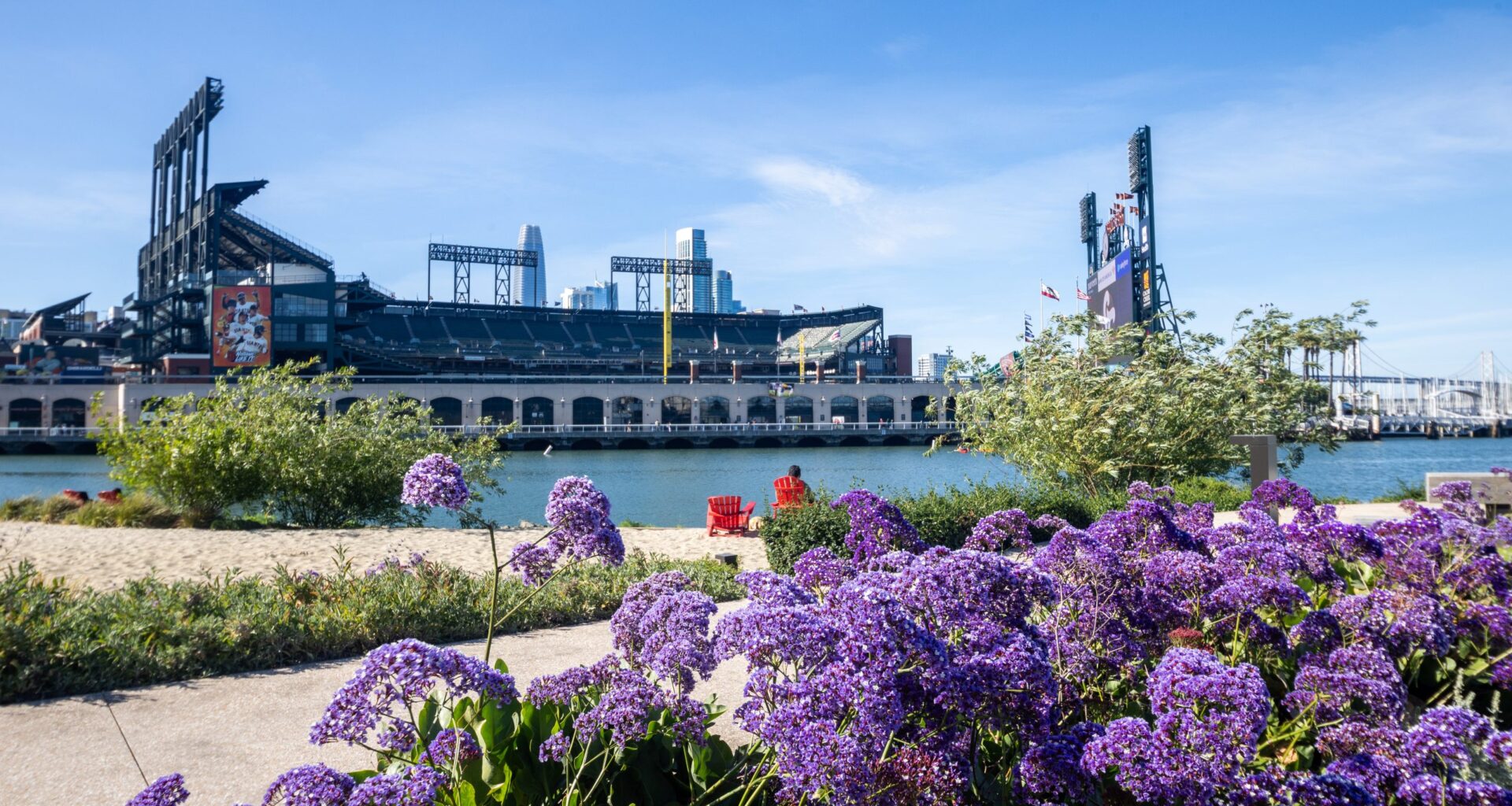
Mission Bay is SoMa’s opposite. It’s newer, cleaner and more inviting, Karnilowicz said, with attractions like the Chase Center, newer parks and a built environment that encourages people to linger. “Mission Bay,” he said, “is booming.”
Widening divide
Mission Bay is anchored by some of the city’s biggest employers — UCSF’s sprawling teaching, research and hospital campus is there — along with a growing cluster of biotech and AI tenants, creating a steady flow of students, researchers, medical workers and office employees who help sustain nearby cafes and restaurants.
Land use may also explain some of the divergence between SoMa and Mission Bay.
A 2021 San Francisco Planning Department report found that SoMa has long had far less open space per person than the rest of the city, a legacy of its industrial past and decades of displacement without investment in parks.
Mission Bay was similarly built out of sprawling industrial tracts. Photographs from the 1990s, before UCSF began developing its campus, show the railroad yards and warehouses that dominated the area just a quarter century ago.
But as Mission Bay was redeveloped over the last two decades, the master plan for the area prioritized open spaces, and businesses have benefitted from those amenities.
Planning documents show that Mission Bay was built around an extensive park system. The redevelopment plan envisioned roughly 49 acres of publicly accessible open space, including parks, plazas, open-space corridors and major waterfront destinations like Bayfront Park.
Mission Bay has also emerged as one of the homes for the AI boom.
According to a January report from brokerage firm CBRE, Mission Bay experienced one of the largest office occupancy gains in the city, driven by AI firms. OpenAI has expanded heavily near the Chase Center, including a major lease that the San Francisco Chronicle described as the city’s largest office lease of 2024. Gladstone Institutes, a biotech company, recently leased 105,000 square feet on Owens Street in a major expansion centered on AI research.
Real estate publications tout Mission Bay as a hot market for AI leases.
Vacancy rates in SoMa, meanwhile, are the highest in the city — over 16.8 million square feet of office space is vacant, versus 4.8 million square feet in Mission Bay.
Managers from San Francisco-based restaurant chains Proper Foods and Flour + Water, which both have outposts in Mission Bay, said office workers are sustaining their businesses.
“Business has been good over the last year. Our customers are mostly from nearby apartment buildings and Visa,” said Mikee Tocus of Flour + Water, referring to the company’s sleek new office, which sits in a development project called Mission Rock. “There’s lots of techies, too.”
Cavin The, manager of two Proper Foods outposts in Mission Bay, said business has been “consistent” from workers at Visa, UCSF and the Chase Center.
But SoMa still has its bright spots. Karnilowicz said some long-standing businesses continue to hold on, especially those with loyal customers. He also credited cleanup efforts on Howard Street, along with more visible attention from Mayor Daniel Lurie, as signs of possible progress.
For business owners like the SoMa restaurant manager, however, that has yet to translate into customers through the door.
“It will take time for people to come back to the neighborhood,” he said. “We are trying to survive.”