
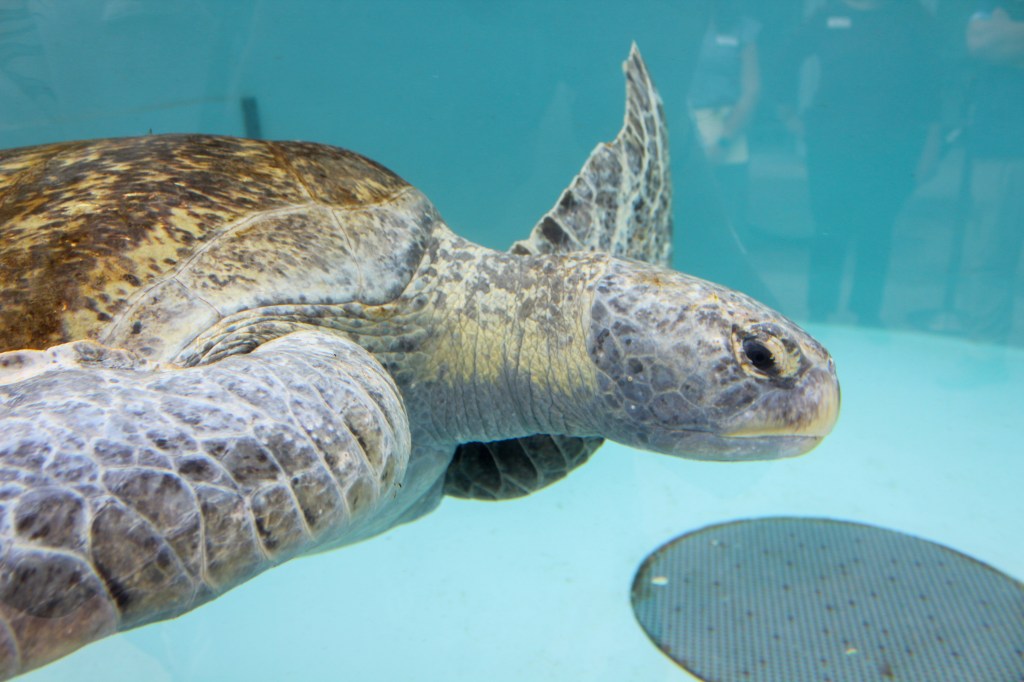
A new resident is calling the Aquarium of the Pacific’s sea turtle rehabilitation area home.
Meatloaf, a nearly 250-pound green sea turtle going through rehabilitation at the Long Beach aquarium, is now swimming and recovering in the facility’s new sea turtle rehabilitation area, with the goal of returning to the wild. The aquarium began allowing visitors see her on Wednesday, April 8.
The green sea turtle was found in the San Gabriel River, entangled in fishing line and rope, and was tethered to debris when she was rescued by the aquarium on Jan. 14, thanks to a partnership with and authorization from the National Oceanic and Atmospheric Administration and U.S. Fish and Wildlife Service, according to a press release.
“She was entrained, which means trapped, and she was entangled by some fishing line and tope, and then that material was tethered to some marine debris; I think it was a stroller and a shopping cart,” Dr. Lance Adams, the Aquarium of the Pacific’s director of veterinary services, said in a Wednesday interview. “We were able to rescue her by hooking that material and pulling it out, and it came with her. Then, we cut the ropes and material that were making her stuck.
“At that time, we noticed that that material, the fishing line, had cut very deeply into her flipper,” Adams added. “Her flipper was very, very swollen from the constriction injury. We brought her back here to the aquarium, removed that material, treated her for infection of that wound, and now she’s going through medical care to try and help that flipper heal so that she can keep it rather than lose it.”

Meatloaf, a nearly 250-pound green sea turtle found in the San Gabriel River, is now in recovery at the Aquarium of the Pacific’s sea turtle rehabilitation area. Visitors can see Meatloaf in the tank starting Wednesday, April 8, 2026. (Photo by Christina Merino, Press-Telegram/SCNG)

Meatloaf, a nearly 250-pound green sea turtle found in the San Gabriel River, is now in recovery at the Aquarium of the Pacific’s sea turtle rehabilitation area. Visitors can see Meatloaf in the tank starting Wednesday, April 8, 2026. (Photo by Christina Merino, Press-Telegram/SCNG)

Meatloaf, a nearly 250-pound green sea turtle found in the San Gabriel River, is now in recovery at the Aquarium of the Pacific’s sea turtle rehabilitation area. Visitors can see Meatloaf in the tank starting Wednesday, April 8, 2026. (Photo by Christina Merino, Press-Telegram/SCNG)
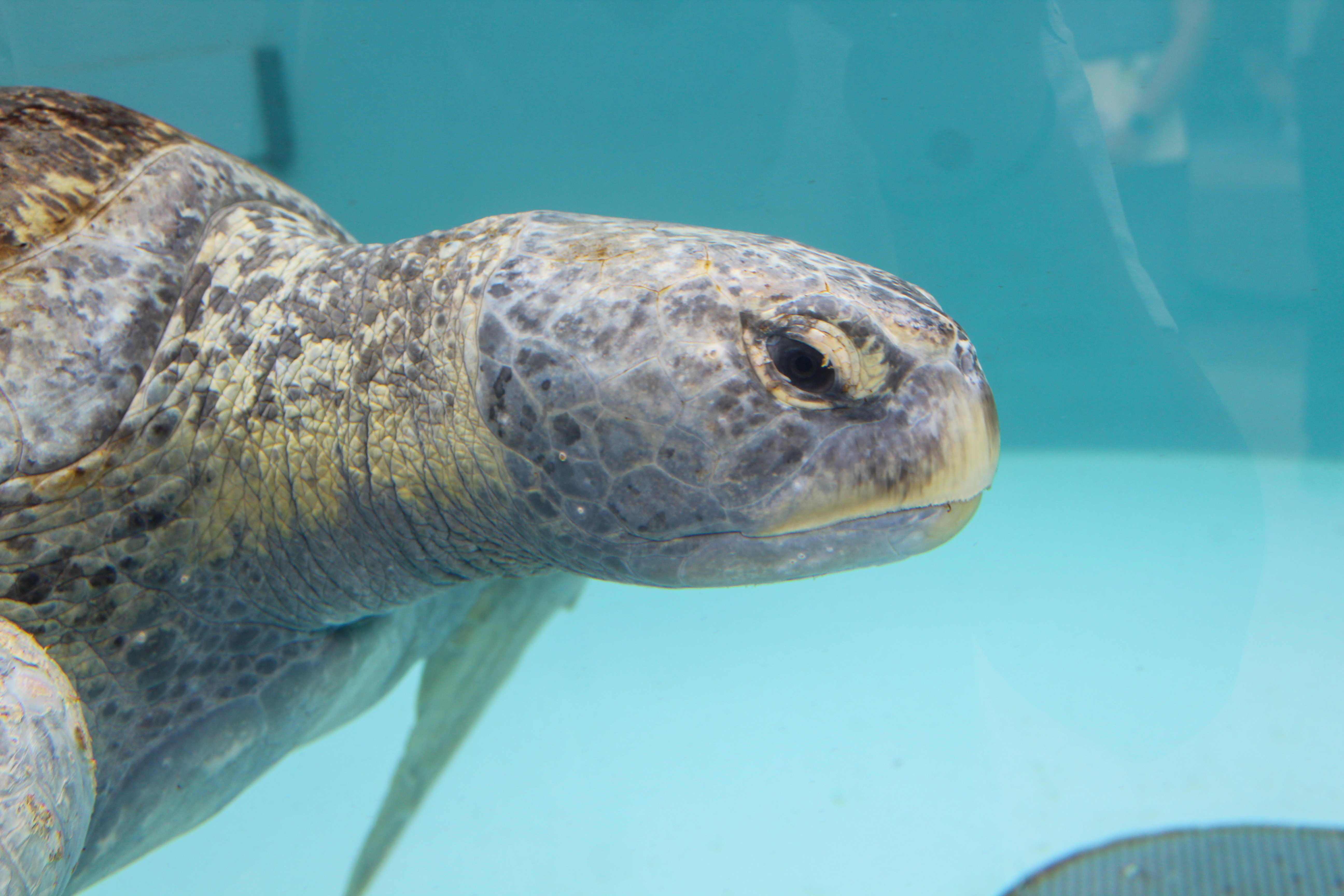
Meatloaf, a nearly 250-pound green sea turtle found in the San Gabriel River, is now in recovery at the Aquarium of the Pacific’s sea turtle rehabilitation area. Visitors can see Meatloaf in the tank starting Wednesday, April 8, 2026. (Photo by Christina Merino, Press-Telegram/SCNG)

Meatloaf, a nearly 250-pound green sea turtle found in the San Gabriel River, is now in recovery at the Aquarium of the Pacific’s sea turtle rehabilitation area. Visitors can see Meatloaf in the tank starting Wednesday, April 8, 2026. (Photo by Christina Merino, Press-Telegram/SCNG)

Meatloaf, a nearly 250-pound green sea turtle found in the San Gabriel River, is now in recovery at the Aquarium of the Pacific’s sea turtle rehabilitation area. Visitors can see Meatloaf in the tank starting Wednesday, April 8, 2026. (Photo by Christina Merino, Press-Telegram/SCNG)
Show Caption
1 of 6
Meatloaf, a nearly 250-pound green sea turtle found in the San Gabriel River, is now in recovery at the Aquarium of the Pacific’s sea turtle rehabilitation area. Visitors can see Meatloaf in the tank starting Wednesday, April 8, 2026. (Photo by Christina Merino, Press-Telegram/SCNG)
Meatloaf’s flipper is now showing some promise that she will be able to survive the injury, Adams said, but it will take time for her to heal and to see how much of the flipper she can have for the rest of her life.
Typical rehabilitation for a sea turtle’s simple injury may take two to three months to recover, Adams said, but for a wound more severe like Meatloaf’s, it may take six months to a year to heal. Aquarium staff will continue providing medical care for the rescued green sea turtle, and visitors can see her progress from the sea turtle rehabilitation area that opened in January.
The new space doubled the aquarium’s capacity for caring for stranded, sick and injured sea turtles so they have a chance to heal and return to their natural habitats, according to a press release. The area includes an approximately 4,000-gallon rehabilitation pool to accommodate rescued sea turtles found in Los Angeles County and beyond.
Meatloaf is one of the largest sea turtles rescued by the aquarium, officials said, with a weight more commonly in the range of 50 to 100 pounds.
“She’s at the top of the range for the ones that we’ve seen here that have come in for rehabilitation, but she’s not full size,” Adams said. “Green sea turtles can get bigger. Some of them can get up to 500 pounds, depending on where they live and how old they are.”
Meatloaf’s rescue occurred during the Aquarium of the Pacific’s Southern California Sea Turtle Monitoring community science program, during which volunteers gather weekly and monthly field data on the green sea turtles seen in the San Gabriel River. The sea turtle entanglement was identified by aquarium community science volunteers, who reached out to the NOAA stranding hotline. The volunteers continued to watch over the turtle to ensure a successful rescue by aquarium staff, according to a press release.
The aquarium is currently one of only two facilities in Southern California that have dedicated spaces to rehabilitate sea turtles. Porkchop, the first rescued sea turtle to use the new area, was released into the wild in February and since then, has been spotted with other sea turtles. Aquarium officials said they hope Meatloaf will be able to do the same.
The aquarium has been caring for turtles since 2000, including green, olive ridley and loggerhead sea turtles. In addition to rescuing and rehabilitating turtles, aquarium volunteers have been documenting the presence of green sea turtles in the San Gabriel River since 2008 through the community science monitoring program.
All species of sea turtles found in waters of the United States are listed as either endangered or threatened, and are protected by the Endangered Species Act. If people see a stranded sea turtle in the San Gabriel River or elsewhere, they are advised to call the West Coast Marine Mammal and Sea Turtle Stranding Network’s 24/7 hotline at 562-506-4315.
The Aquarium of the Pacific is asking for the public’s help to fund the specialized medical care needed for Meatloaf to recover and be deemed ready to be released back to the wild. Donations to the Sea Turtle Rehabilitation Program, which can be made at pacific.to/saveturtles, support expert care, critical surgeries and rehabilitation for Meatloaf and future rescued turtles.