
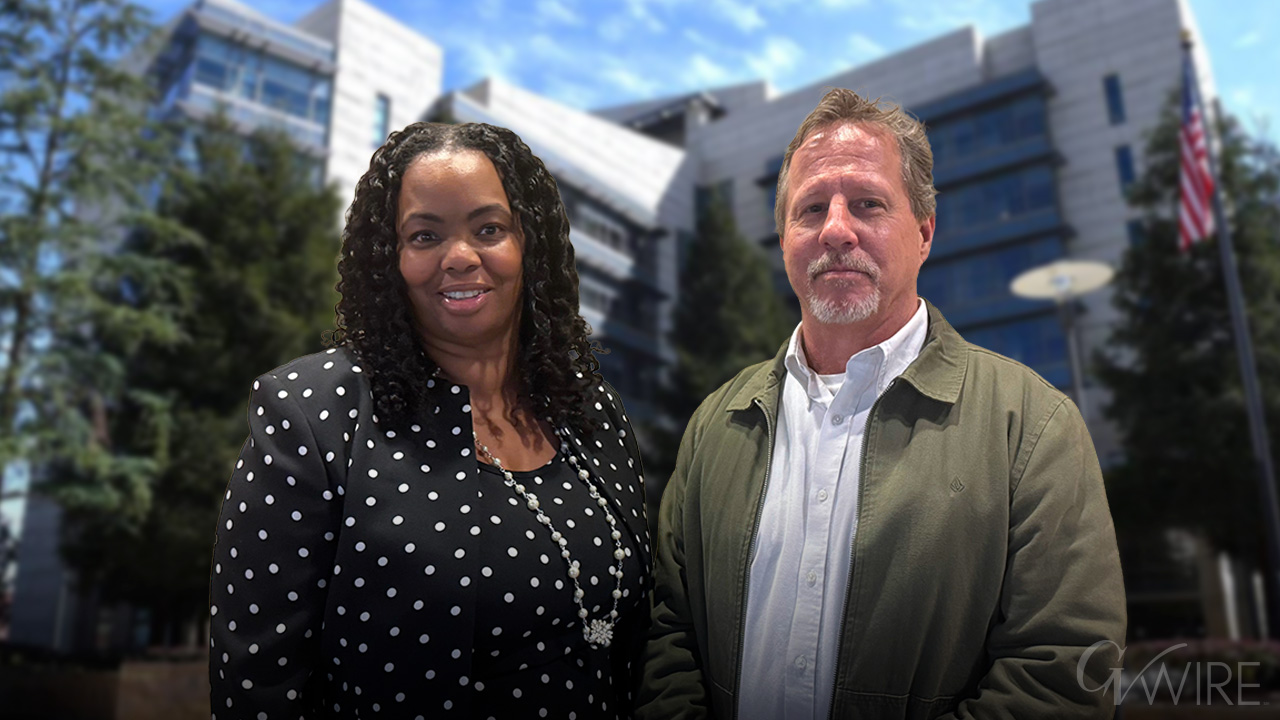
Saying a federal jury relied on emotion instead of legal rationale, the city of Fresno is asking for a new trial in a $15.4 million racial discrimination case.
Last month, the jury awarded the verdict to two former city employees, victims of the alleged use of the N-word by a supervisor. The city argues that La-Kebbia “Kiki” Wilson and Charles Smith failed to justify the size of the award with evidence.
Wilson, who is Black, and Smith, who is white, initially sued for discrimination, harassment, and retaliation in 2019. Smith testified that during a conversation with code enforcement department supervisor Howard Lacy, the latter used the slur and made other disparaging comments about Wilson. Lacy denied using the word during his testimony.

Smith quit his job shortly afterward, citing fears of retaliation. He told Wilson about the alleged slur. Wilson claimed the remark was proof the city discriminated against her based on race. At trial, she testified to a long list of grievances during her employment as a code enforcement officer.
The eight-person jury sided with the plaintiffs, awarding $15 million to Wilson and $400,000 to Smith.
Potential Costs to Taxpayer Climb With City’s Motion
In its 30-page motion, the city is asking federal Judge Kirk E. Sherriff for a new trial or, at the very least, a partial new trial to limit the damages.
An attorney for the plaintiffs, Gary Goyette, said the $15 million verdict will accrue $50,000 in interest each month it is not paid. Goyette also said he will file a separate motion asking for $6 million in attorney fees.
“The jury verdict in this action greatly exceeds awards that case law has held excessive, despite more concrete proof of more severe emotional distress in those other cases,” the city wrote in its motion filed Wednesday.
The motion for a new trial delays a decision by the Fresno City Council on whether to formally appeal the verdict. The 30-day window to appeal would have expired by the end of the week. Several community members implored the city not to appeal the verdict. Fresno City Councilmember Miguel Arias publicly stated his opposition to an appeal.
Gary Goyette, one of the attorneys for Wilson and Smith, said he had not fully read the city’s motion but was not surprised, describing it as more procedural than an attack on the merits of the case. Goyette said the $15 million verdict will accrue $50,000 in interest each month it is not paid. Goyette also said he will file a separate motion asking for $6 million in attorney fees.
Goyette estimates it would take Sherriff a year or more to issue a ruling.
“(City Attorney Andrew Janz) and the four city councilmembers who elected not to try mediation and instead rely on this post-trial motion are potentially creating far greater financial liability for the city,” Goyette said.
City Makes Its Arguments
The city provided several examples of how evidence presented at trial does not justify the award. It also argues that the law caps such awards at $300,000.
Arguments include the jury not following instructions, the failure to provide evidence supporting a $15.4 million verdict, and other technical elements.
The city pointed to testimony from Wilson and her doctor that it says did not justify the level of emotional distress indicated in the award. Most of Wilson’s issues happened after the timeframe the jury was instructed to consider, the city argues.
“(Wilson) presented limited, largely subjective testimony, unsupported by corroborating evidence such as medical treatment, expert testimony, or documentation of ongoing psychological injury. What little medical evidence there was confirmed that counseling would largely mitigate any injury, yet Plaintiff did not pursue counseling. Despite a record that objectively supports a sum lower than in other reported cases, this jury returned an award that far exceeds other amounts that have been judicially found to be excessive,” the city’s motion says.
The motion also attacked jury instructions, saying they could “inflame lay jurors” to punish the city when punitive damages were not allowed. The jury was instructed to consider only events during a certain timeframe in 2018 and 2019 — which the city argues the jury did not fully do. Several of Wilson’s grievances occurred either before or after the timeframe.
The city eventually fired Wilson in 2022, but those reasons were not allowed to be mentioned during the trial.
“This kind of line drawing is difficult for lay jurors who are in ordinary civic life and are not required to compartmentalize related events in a way that the law and instructions required in this case. That is why our law grants broad authority to, and imposes a solemn duty upon, the trial judge to conduct reasoned review of the verdict amount,” the city says.
The city also argued that Wilson’s attorneys did not provide evidence to justify the award they sought in closing arguments, between $5 million and $20 million.
“Lay jurors, who are not trained in the law, have no reliable way to assess whether such a request is normal or aligns with damages awarded in other cases,” the city’s motion says.
The city made technical arguments and offered legal analysis on why damages should be capped at $300,000 for each plaintiff. Goyette said while the cap applies to federal claims, there were also state claims made in the trial that would not be capped.
The motion includes several instances in which a court reduced an excessive verdict. It is asking Sherriff to do the same.