
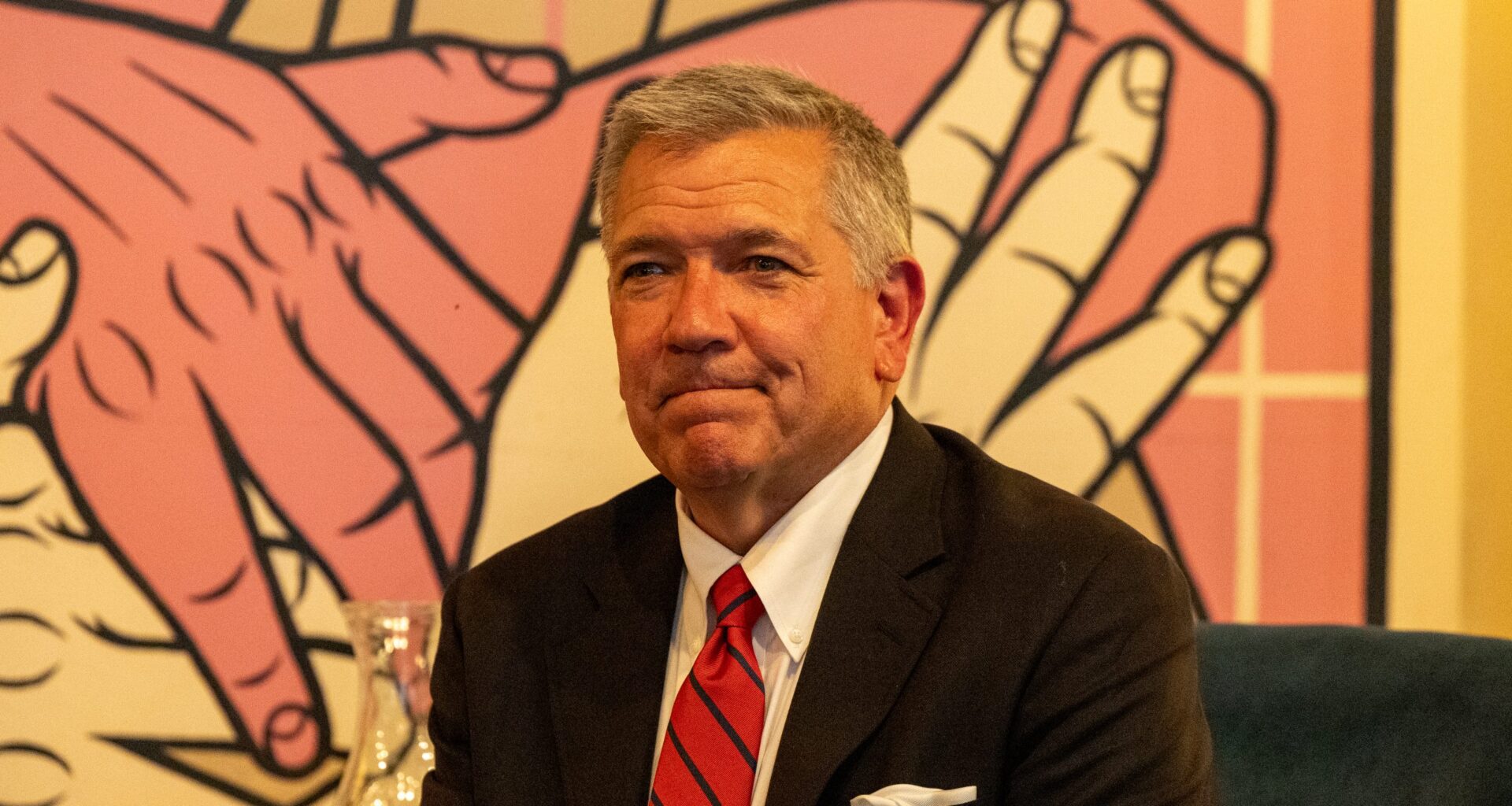
Supervisor Matt Dorsey says that he feels that, had he used drugs in supportive housing, he should have been evicted to the street. The caveat is, he was never in such a tenuous spot.
A piece of legislation the supervisor shared last month would allow new permanent supportive housing to evict residents on the basis of drug use, and drug use alone.
San Francisco’s permanent supportive housing sites currently follow California law, under which drug use alone is not grounds for eviction without other violations.
“The near universality of drug-tolerant policies” in these sites has failed the needs of many of their residents who seek to “stabilize their lives as they exit homelessness,” states Dorsey’s legislation. It would not only empower permanent supportive housing sites to evict residents because of drug use alone, but also mandate that, with exceptions, San Francisco fund only “drug-free” permanent supportive housing.
The new legislation has a 150-word first sentence — “This is really long,” said Mission Local editor Joe Eskenazi, who interviewed Dorsey at Manny’s Cafe Wednesday night. “That’s me. I’m so guilty as charged,” Dorsey responded.
Dorsey stressed that the legislation is about adding a drug-free option in the city’s permanent supportive housing portfolio. Between June 2024 and July 2025, 26 percent of San Francisco’s overdose deaths happened in permanent supportive housing, higher than that on the street, in shelters, hospitals or private homes, according to the Office of the Chief Medical Examiner.
“We would commit that from now on, city funding for new acquisitions of site-based permanent supportive housing would have to be drug free,” said Dorsey, who said there are about 30 site-based facilities that are solely city funded. His legislation, however, would not be retroactive and would only apply to new sites moving forward.
“Right now I’m working really well with the Lurie administration on this,” said Dorsey.
Technically this is something the mayor could just do, said Eskenazi. “Why does this legislation need to exist?”
“Because I don’t know that Daniel Lurie will always be mayor,” said Dorsey.
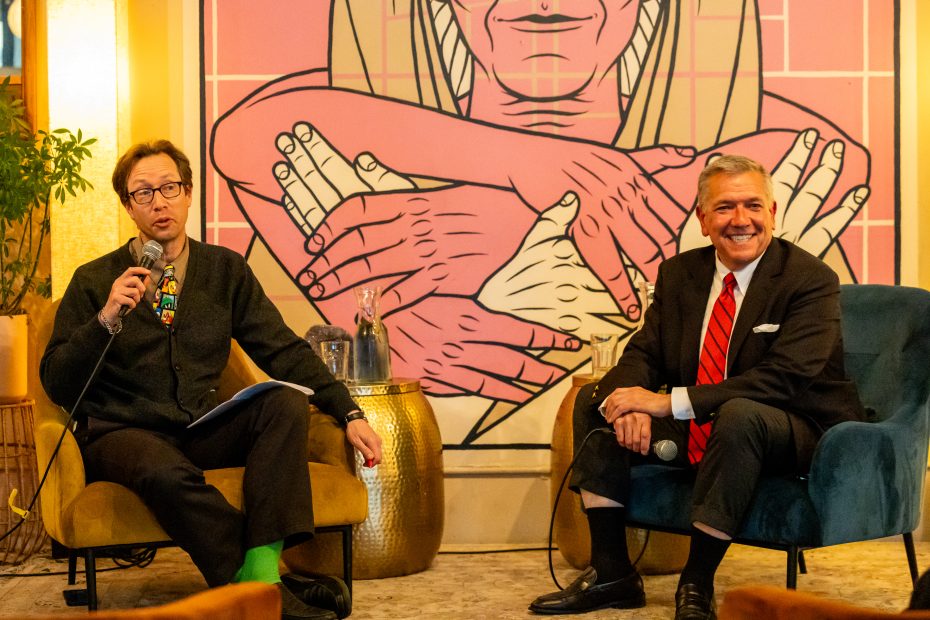 Joe Eskenazi, Managing Editor at Mission Local, and Supervisor Matt Dorsey converse inside of Manny’s on April 8, 2026. Photo by Zoe Malen
If approved, the legislation would mark a departure from the city’s long-standing priority of access to housing. The legislation could result in more evictions — including people struggling with relapses as Dorsey has done multiple times throughout his life.
Dorsey, however, is insured and privately housed. When asked how his recovery process would’ve been affected by being evicted onto the streets, he replied, “If I was doing something that was endangering the sobriety of somebody who was fighting for their sobriety … if I was in a sober facility and if I got evicted, I would be inclined to say I should go.”
“By the way,” he added, “I have been in situations like that even in treatment.”
As an elected official, Dorsey has been open about his battles with substance abuse in a way that has turned it into a political strength instead of a political liability.
He went through a discipline process after having two relapses as a civilian member of the San Francisco Police Department, which, he noted, doesn’t like its members using drugs. It was serious: “A last chance,” said Dorsey. Meanwhile, he represented the police department in monthly meetings with other city offices to preview the monthly reports on drug overdose fatalities. “Month after month, I sat in that meeting looking at a number, knowing that I’m one bad decision from being there,” he said.
Four years ago, on the day he celebrated 18 months of continuous sobriety, he asked then-Mayor London Breed to consider appointing him to the vacant District 6 supervisor seat. “Right now, in what the city is facing, I want the chance to bring a perspective and a voice from the recovery community,” Dorsey said, describing what he told Breed.
Dorsey is now running unopposed for the District 6 supervisor position — “no hard feelings if anybody wants to run,” said Dorsey. If a challenger emerges, he expects them to run to his right, because that’s where the District 6 people who are most vocally upset with him are, he said. “They would like to see more public order in the neighborhoods.”
For several years, there used to be a lot of optimism about the district’s future, said Dorsey, then 2020 hit with a storm of fentanyl, COVID-19, shelter-in-place hotels, and an “historically unprecedented police staffing crisis.” All made the neighborhood “a magnet for drugs, drug dealing and drug related bad behavior,” he added. “There’s a feeling of we were just trying to get this right and then it went off the rails.”
The district has also become “the most self-selecting YIMBY district,” said Dorsey, noting an entire neighborhood, the Tenderloin, was removed from D6. There was a lot of excitement during the recent upzoning discussions about turning the neighborhood into the next East Cut, a highrise neighborhood in downtown, with more density and high-rises, according to Dorsey.
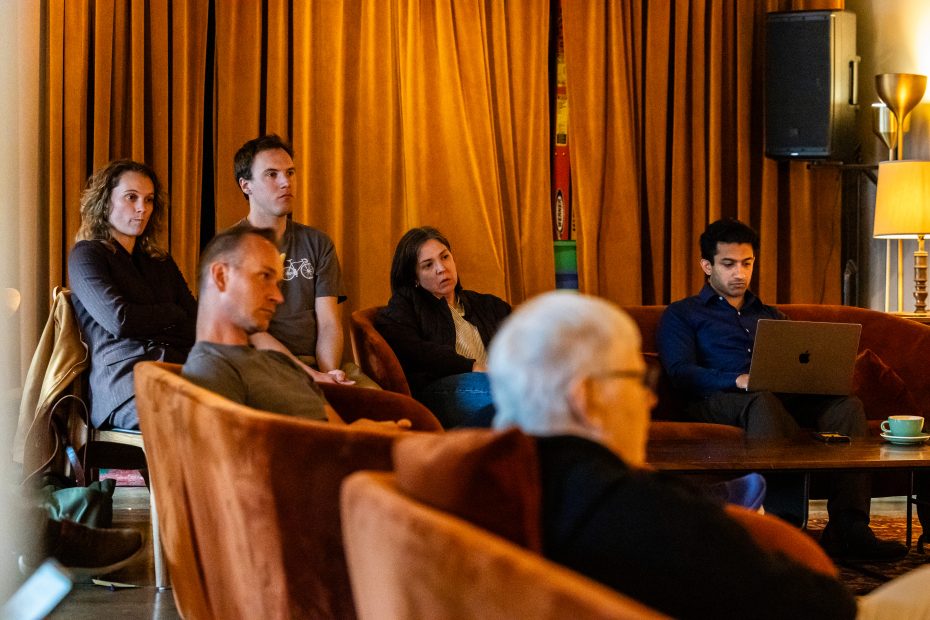 Audience members sit and listen to a conversation between Supervisor Matt Dorsey and Mission Local editor Joe Eskenazi inside of Manny’s on April 8, 2026. Photo by Zoe Malen
Similarly, Dorsey is also thrilled to see the pilot program of Lurie’s RESET Center coming at the end of this month or early May. The RESET Center will provide an alternative to jail or hospitalization for individuals who are arrested under the influence of drugs, according to the Mayor’s Office.
“The value proposition of it is that it will reduce from hours to 15 minutes” for a police officer to “get somebody under arrest, confiscate their drugs, confiscate their paraphernalia and put them in the sheriff’s custody,” said Dorsey. That’s “an innovative approach” for a city with a cop shortage where “the things that a normal city would be policing, like public drug use, drug dealing and drug related lawlessness, becomes a luxury.” Such custodial intervention “is unapologetically ruining the party,” he added.
The upcoming RESET Center at 444 Sixth St., near the Hall of Justice was approved by a 9-2 vote by the Board of Supervisors despite the fact that the City Attorney’s Office warned that it would be a “very high legal risk.”
Dorsey brushed off such questioning. “The city attorney often will send cautionary memos about legislation … if it were patently illegal, it would not be approved as to form,” he said. “If the Board of Supervisors stopped working on things that the city attorney says there’s a litigation risk about, it would probably cut half our workload.”
Eskenazi noted that “the city attorney made clear that a court would likely find the RESET center to be a ‘local detention facility,’ which would entail a number of licensing requirements and standards that this site doesn’t meet” — a warning not just of a legal risk but a legal outcome.
Dorsey expects drug policies to also be a major part of his electoral priorities if he gets another four years. He wants to propose a sober new deal program that offers a conditional basic income for a year or six months to incentivize and support local addicts to finish a drug treatment program.
Another idea is about drug users’ pets and animals, which too often become the obstacle that’s keeping people out of drug treatment, said Dorsey. He wants to create a drug treatment kennel and foster care program “to make a commitment to anybody who has a pet, who needs to go into recovery that we’ve got you and we can pay for that,” he said.
What we really need to be focused on, said Dorsey, “is turning off the magnet that San Francisco has become for drug-related bad behavior.”