
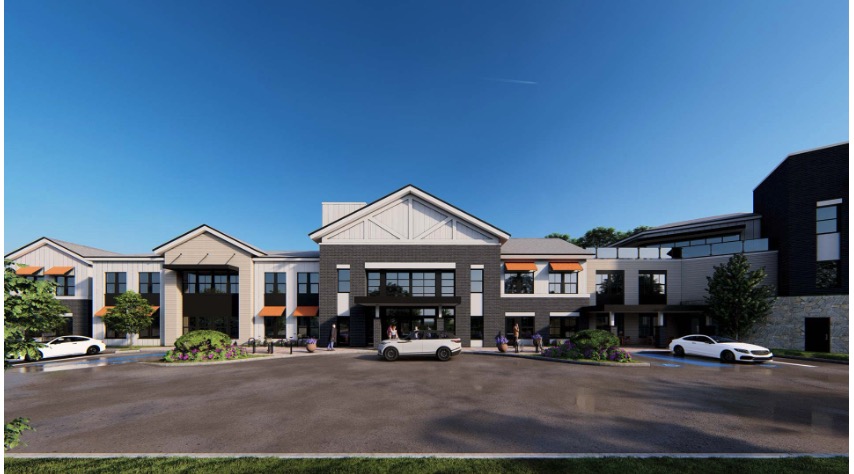
GRANADA HILLS – In Los Angeles, we’re told the planning process is open. Transparent. Driven by public input. Show up, speak, and trust that your voice matters.
But what if the real decisions are being shaped long before anyone walks into the hearing room?
That question kept nagging at me as I started digging into the MorningStar eldercare project proposed for Granada Hills. At first, it looked like a typical controversial development—neighbors concerned about scale, safety, and compatibility, and a City process moving forward despite objections.
But the deeper I went into the records, the more the timeline stopped making sense.
The project itself had gone quiet earlier in 2025. Environmental review had been underway, then things slowed, and for all practical purposes, it appeared stalled. That’s not unusual. Projects pause all the time.
What is unusual is what happened next.
In July 2025, City Planning staff reached out to the applicant’s representative to discuss a different path forward—specifically, the use of AB 130, a relatively new state law that can allow certain projects to bypass the traditional environmental review process.
That detail matters. Because the outreach didn’t come from the applicant trying to revive their project. It came from the City.
From there, the process picked up quickly. Meetings were scheduled. Eligibility was discussed. Criteria were reviewed. Guidance was exchanged. At some point, what had been a dormant project was now moving forward under an entirely different framework.
And all of that happened before the public hearing.
As I kept reading, another layer came into focus. The person communicating with City Planning on behalf of the project wasn’t the project’s attorney. In fact, in one of the emails, she explicitly references relaying questions from “the applicant’s counsel,” making it clear that someone else held that role.
So who was she? Not a lawyer in this context, but clearly not just an observer either. She was actively coordinating with City staff, asking for confirmation of legal interpretations, and helping move the project along. In other words, she was functioning as a representative—a land use consultant, the kind of professional who knows how to navigate City Hall.
That might not raise eyebrows on its own. This is how development often works in Los Angeles. But then another connection emerged.
Both the applicant and this same representative are affiliated with the Valley Industry & Commerce Association, better known as VICA, a prominent business advocacy organization that regularly weighs in on land use matters. They are not just casual members. They participate in the same land use committee, the kind of setting where projects, policies, and strategies are discussed among people who understand how the system works.
What makes this dynamic more concerning is the timing. This was not a case where a project had already been approved or denied and was later discussed in policy or advocacy settings. The applicant remained actively in the middle of the entitlement process while also participating in the same land use circles where development policy and strategy are regularly discussed. That overlap may be common in Los Angeles, but it raises a reasonable question about where the line is drawn between general advocacy and project-specific influence.
Again, none of that is inherently improper. But it does raise a question that becomes harder to ignore as you follow the sequence of events.
By the time the public hearing took place, what exactly was the public being asked to weigh in on?
At the hearing, speakers came forward in support of the project. That’s expected. Every project has supporters and opponents. But what wasn’t clear—what wasn’t disclosed—was whether those voices were independent, or whether they were connected through shared professional and organizational networks that had already been engaged on the project long before the hearing.
To someone sitting in the audience, it looks like a fair exchange of viewpoints. But when you look at the underlying relationships and the timeline, it starts to feel less like a debate and more like a process that had already taken shape.
That’s the part that should concern all of us.
This isn’t about whether the project is good or bad. It’s about whether the process that leads to approval is as open as we’re told it is. It’s about whether decision-makers and the public are seeing the full picture of who is advocating, in what capacity, and with what connections.
Because without that transparency, the idea of a public hearing starts to lose its meaning.
Residents are told to participate. To show up. To speak. To trust that the system is listening.
But participation only works when the playing field is clear.
What stakeholders need to understand going forward is this: when community comment opens, be prepared. You may not be stepping into a neutral forum. You may be stepping into a process where professionals have been working the issue for months, where relationships matter, and where the direction may already feel set.
That doesn’t mean your voice doesn’t matter. It means you have to come in informed, focused, and ready.
Because in Los Angeles, showing up is no longer enough.
(Eva Amar is a Granada Hills resident and community advocate focused on land use, public safety, and transparency in local planning decisions.)