

The sale of Sunderland’s women’s team this week caused a few ripples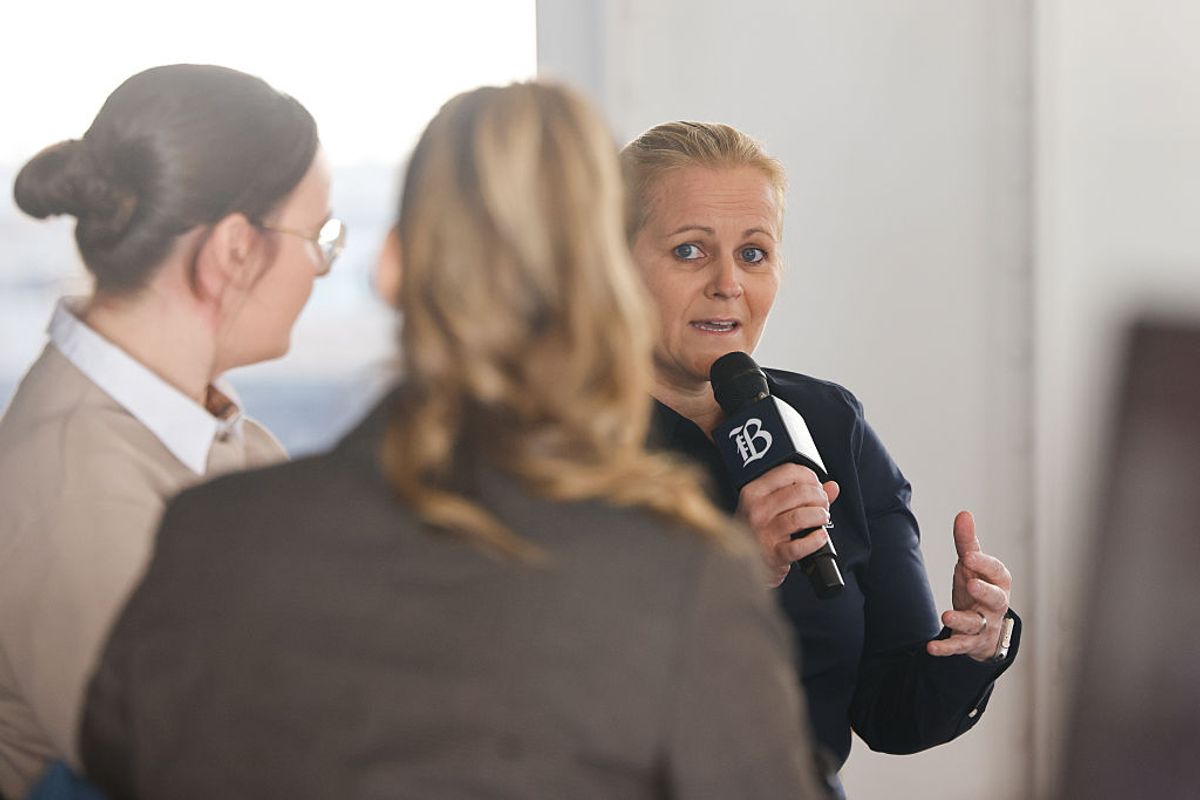
Kay Cossington, right, Bay Collective CEO, speaks during an introductory press conference for Emma Coates, left, Bay FC head coach
The international break is upon us once again and you might be forgiven for thinking that all would be quiet in women’s North East football as we edge towards the end of the season. As this week’s news showed, you couldn’t be more wrong.
After Sunderland lost to Birmingham, Newcastle left it very late to equalise at home against Forest and Durham got a deserved draw over Bristol, most things look like they are in place for the end of the season.
Newcastle will need Crystal Palace to lose both their remaining games for them to have a chance of the play-off and Durham look safer than they did, but still cannot be complacent with only two points above the drop.
It is Sunderland who have nothing to play for, at least in terms of promotion or relegation, but it is they who are making sure it isn’t a quiet two weeks.
Earlier this week, the club announced ‘an agreement for Bay Collective to acquire a majority take in Sunderland AFC Women’ as they became a part of a ‘multi-club ownership platform dedicated to building women’s football clubs that win on the pitch, thrive off it, and set new standards for the sport worldwide.’ But what does that mean?
Sunderland Women will become the second club in Bay Collective’s global platform, joining Bay FC of the National Women’s Soccer League. It’s a bold, brave move which will see Sunderland AFC retain a minority share.
“It’s very, very exciting,” Ant Waterson, Sunderland Women supporter and contributor to Roker Report and the Haway The Podcast said.
“We’ve been out of WSL for a long, long time now – this investment coming in gives us a lot of excitement that we could finally be back where we belong. I feel the club has needed that investment in the last couple of years.”
Bay FC have only been in existence for three years and are very early into their season. They are coached by Englishwoman Emma Coates, who played for Leeds United before becoming manager of Donny Belles and then England Under-19 and Under-23. Coates will have come across Sunderland and their players many times and has worked under Kay Cossington, chief executive officer of Bay Collective and Head of Global Women’s Football at Sixth Street who are behind the deal.
Cossington was the women’s technical director of the English Football Association when the Lionesses won the Euros on home soil in 2022. As far as pedigrees come, hers is right up there.
“She “knows what she’s doing, knows the women’s game very well,” Waterhouse added. “So we’re not just going to be taken over by an American entity, she’s someone who lives and breathes women’s football.
“The only thing I’d like is that we keep our identity.”
That identity, as Mel Reay told me last week for the WSL coverage while discussing the debut of 18-year-old Chloe Paxton, is simple. “We believe in our young players, we’re here to give them opportunities; it’s part of our DNA in terms of who we are as a football club,” she explained.
Paxton is having a run in the first team and has shown to be mature beyond her years.
Certainly it is something Bay FC want to build on – they would be foolish not to! This is a club that has developed players like Lucy Bronze, Beth Mead, Jill Scott and Steph Houghton – all of whom have starred for the national team – and continues to do so with the likes of Katy Watson, Emily Cassap and others. They must be doing things right.
It is worth pointing out that Keira Barry, who was on-loan at Sunderland until Christmas from Manchester United, has recently joined Bay FC permanently and has just joined the senior Lionesses’ squad for this International window. Reay should take some credit for that, Barry coming to our region, with her first team chances being limited at her parent club, and impressing scoring three goals in her 11 appearances.

Jozy Altidore of Sunderland(Image: 2014 Getty Images)
Another interesting person involved in Bay FC is an investor by the name of Jozy Altidore, the former Sunderland striker and USA international. He didn’t have the most successful time on Wearside, partially due to injury, but perhaps he had something to do with the choice of club?
The only example of a similar model in recent times, that springs to my mind, is that of London City Lionesses who spent big before last season, won promotion and have a had a good first campaign in the top division following Michelle Kang’s purchase to go with Washington Spirit and OL Lyonnes.
However, the club didn’t have the history and tradition that Sunderland have. What similarities exist are the plans to help develop the infrastructure, the training and community facilities, and the matchday experience.
Spending big doesn’t always bring success and, with more money coming into the women’s game and less chance of promotion next season, Sunderland could become another well-funded club battling in the craziness of WSL2. Newcastle, despite their ambition and investment, look set to miss out on promotion themselves.
What it will do, however, is certainly make the summer and next season even more interesting!