
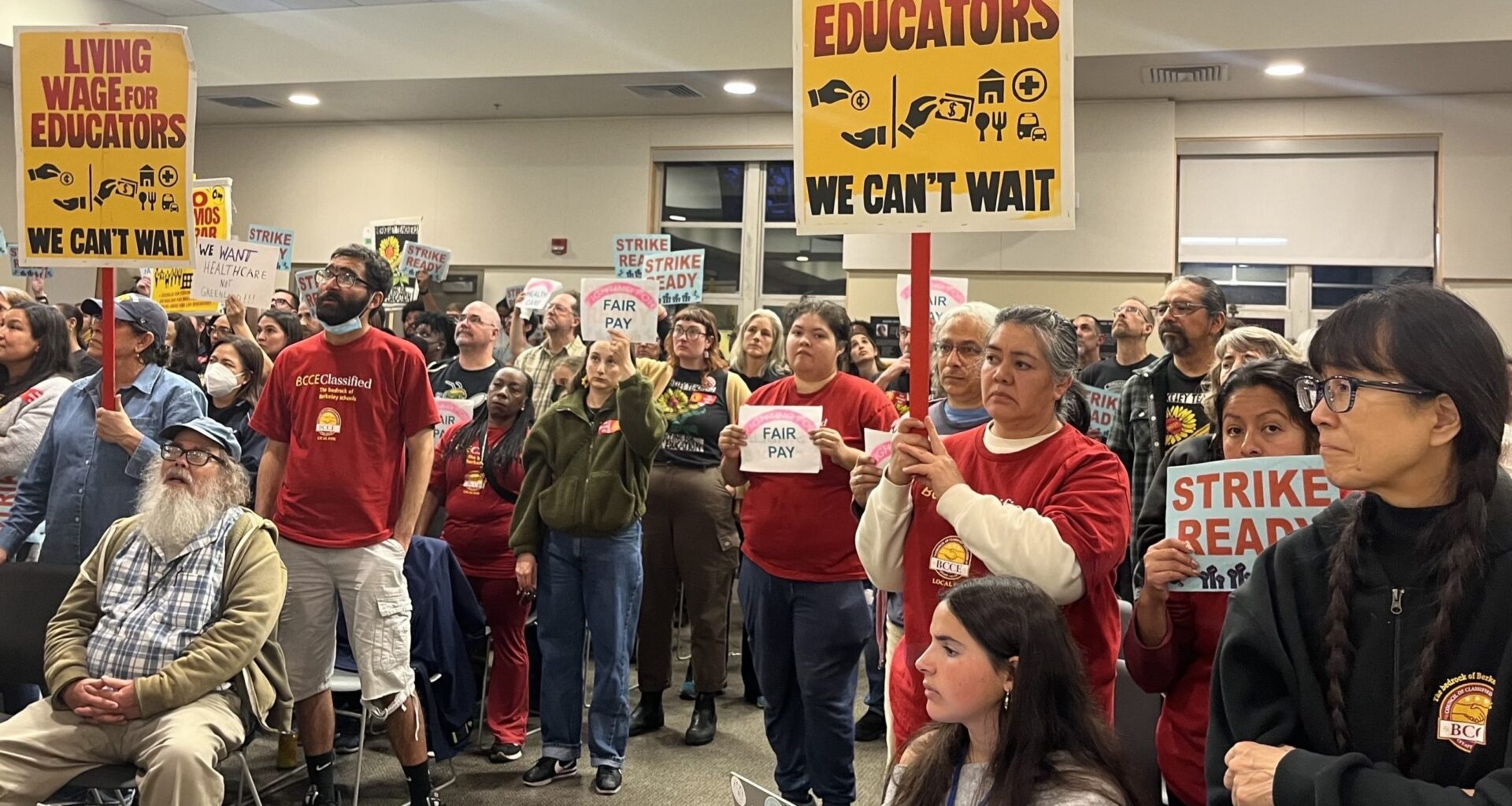
 Members of Berkeley’s classified workers union (in red) rallied in solidarity with teachers during a school board meeting in February, demanding the district prioritize contract talks and avoid a strike. Credit: Vanessa Arredondo/Berkeleyside
The Berkeley school board approved a new three‑year contract with its non-certified classified employees on Wednesday, ensuring salary increases, full health coverage for workers and their families, stipends for multilingual work and new restrictions on using contractors.
The Berkeley Council of Classified Employees (BCCE) represents about 700 non-credentialed staffers in clerical and administrative roles, including bus drivers, custodians, cooks, maintenance crews and classroom aides. The new contract covers July 1, 2025, through June 30, 2028, and was ratified by 99% of voting union members on March 23 (46% of all members voted).
The agreement includes a 3% retroactive raise for this school year, a 4% increase for next school year, and a one‑time bonus of $600 to $1,000. It raises the district’s health‑benefit cap to cover 100% of the Kaiser rate starting in 2027, meaning that most employees and their families will receive full benefits. Health coverage was previously fully covered for BCCE employees, but coverage for spouses and families required paying high monthly premiums, according to the union.
“We definitely made our contract a lot stronger, and we helped a little bit with the cost of living in the Bay Area,” BCCE President Frank Hernandez told Berkeleyside on Tuesday. He said salary increases and robust health benefits will help recruit and retain workers in BUSD, who would otherwise be paid more outside of the public sector.
BCCE’s deal comes about a month after the Berkeley Federation of Teachers approved a separate contract for its certified educators that increased wages and benefits as part of a statewide effort led by the California Teachers Association. The new agreement provides a 6% salary increase over two years, plus a one-time $1,000 bonus. BUSD also agreed to increase its share of health care coverage for individuals and families to 80% by 2028, up from 56%.
While Berkeley and Oakland’s school districts averted a walkout, teachers in Richmond went on strike for four days. BCCE and BUSD agreed to a no-strike or lockout clause during the contract period, a clause not included in the contract with teachers.
A tentative deal between BCCE and the district was reached on March 6, roughly a week before BUSD issued about 350 preliminary layoff notices to staff, mostly impacting non-credentialed classified employees. California law requires school districts to notify employees of potential layoffs by March 15 each year and issue final notices by May 15.
“There probably will be some layoffs this year, because we are in a budget crisis,” Hernandez said. “We’re trying to maneuver around that.” Departments facing the deepest cuts include the LEARNS aftercare program, the Office of Family Engagement & Equity, the garden and cooking program, and school counseling, which rely heavily on classified staff.
Since the previous contract expired on June 30, BCCE and the district met twice a month at the bargaining table over the past 10 months, Hernandez said.
In addition to salary and benefits increases, the new BCCE contract also stipulates additional compensation and new standards for how the district uses contractors.
The deal places new limits on contracting out work typically performed by union members. It requires BUSD to post vacancies, offer extra work first to current qualified employees, and provide advance notice of new contractors. The district and union would train permanent classified employees to fill contractor‑held positions lasting more than 90 days “should the need arise,” according to contract documents.
A new article in the contract also establishes a monthly stipend of up to $250 or $325 for bilingual or multilingual duties regularly performed during the workday. Eligible tasks include communication support for students, families or staff; assistance with language placement or proficiency assessments; and translation or interpretation in meetings, classrooms, phone calls and emails. Employees not originally hired for bilingual roles must pass a language proficiency test to receive the additional compensation.
“Our members bring tremendous linguistic diversity to the district, some speaking multiple languages, including individuals who speak as many as six,” BCCE Vice President Mildred Scherr said in an email statement on Tuesday. “These skills are not only valuable, they are essential in ensuring that students and families feel seen, heard, and supported.”
Scherr said the new contract “reflects meaningful progress in recognizing the critical role classified staff play in supporting students, families, and the overall functioning of our schools.”
“*” indicates required fields