
Berkeley composer and environmentalist Gabiella Smith
Brandon Patoc/San Francisco Symphony
In the San Francisco Symphony’s second SoundBox program of the year, the concert begins well before the music, as curator Gabriella Smith collapses the boundary between performance and environment.
The Berkeley-born composer is known for weaving the natural world into her music, but in her two-night engagement of “Urban Forest,” she takes that mission a step further. Dried leaves are scattered on tabletops, cacti are strewn about and recordings of birdsong fill the air, turning the rehearsal space behind Davies Symphony Hall into an immersive grove.
Set within this constructed landscape, the performance on Friday, April 10, unfolded without fanfare. Symphony bassist Orion Miller slowly pulsed in and out of silence in “Heartwood,” a contemporary work for solo contrabass composed by San Francisco native Samuel Carl Adams.
Article continues below this ad
San Francisco Symphony bassist Orion Miller plays “Heartwood” during SoundBox on Friday, April 10.
Brandon Patoc/San Francisco Symphony
Adams, a bassist himself, draws on his intimate knowledge of the instrument to great effect, employing a slew of non-standard techniques that nevertheless feels natural to the instrument. Miller handled the simultaneous use of pizzicato and bow, glassy harmonics and shimmering bariolage beautifully.
The performer was surrounded on all sides by video projections of dappled sunlight filtering to the understory of a redwood forest — and looking up revealed projections of the canopy above. The tentative murmuring of the bass registered as an integrated part of the imagined sonic ecosystem.
Percussionist Jacob Nissly, foreground, plays on found objects at San Francisco Symphony’s SoundBox.
Brandon Patoc/San Francisco Symphony
Indeed, what initially appeared as decorative mise-en-scène ended up being part and parcel of the performance. Those assorted cacti and leaves were, in fact, the instruments for “Branches.”The experimental percussion work by John Cage features plucking the individual needles of an amplified cactus among other plant-based sounds. Cage, one of the most influential figures of the 20th-century avant-garde, would likely not have taken offense to the giggles this provoked. The American composer once remarked that he found audience laughter “preferable to tears.” Even so, most grew silent at the enchanting chorus of strummed cacti at the work’s culmination.
Article continues below this ad
San Francisco Chronicle Logo
Make us a Preferred Source to get more of our news when you search.
Add Preferred Source
Smith had the clever idea to seamlessly blend this cactus plucking into the pizzicato scherzo of Maurice Ravel’s String Quartet. The transition worked well, but the Symphony musicians’ rendition was far from top-notch. The interlocking pizzicati and trills often faltered, though fleeting moments of elegant harmony were rendered with sensitivity.
SoundBox presents “Urban Forest,” curated by Gabriella Smith.
Brandon Patoc/San Francisco Symphony
In the following piece, Cage’s “Third Construction,”the percussion quartet showed a refined ear for finding timbral nuance in various found objects.
SoundBox presents “Urban Forest”: San Francisco Symphony. 8:30 p.m. Saturday, April 11. $80. SoundBox, Davies Symphony Hall, 201 Van Ness Ave., S.F. 415-864-6000. www.sfsymphony.org
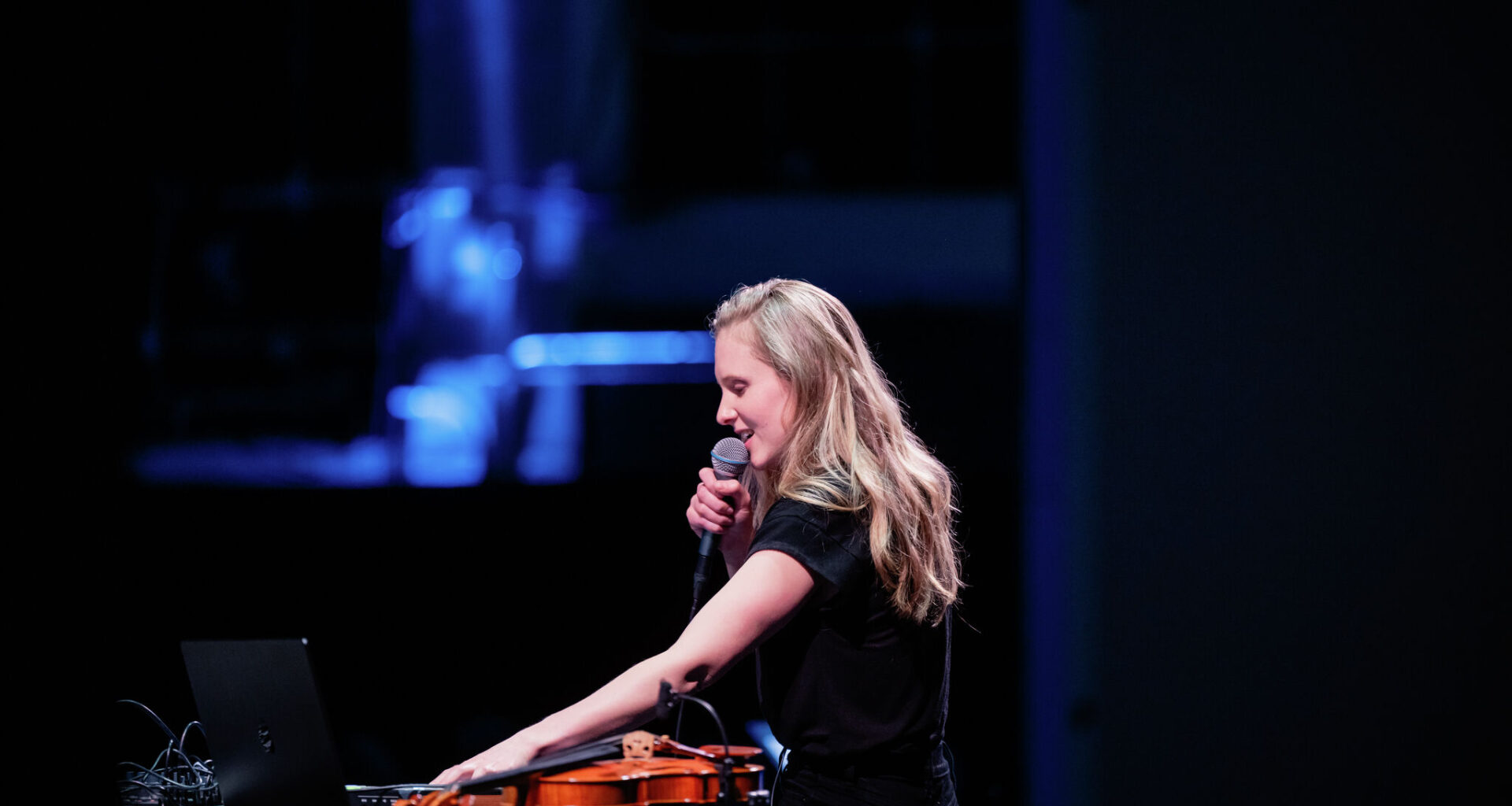
The longest work was a set of pieces drawn from Smith’s 2021 album “Lost Coast,”recorded with Washington D.C.-based cellist Gabriel Cabezas who performed it on Friday.
Article continues below this ad
Cabezas has a brilliant and direct classical tone but was equally at home with contemporary techniques, especially ethereal harmonic trills. Smith dexterously performed on violin, sang and controlled live electronic processing, which sent the sound through an array of speakers.
While many moments from this supercut of “Lost Coast” were genuinely moving, too much of it lacked direction and character. Occasionally, the churning textures mustered enough momentum for a small climax, but each arrival felt underprepared in context. In adapting the piece to incorporate members of the Symphony percussion and bass sections, it seems the proportions of the work simply became warped.
SoundBox presents “Urban Forest, ” featuring Alyssa Weinberg’s “Illuminating Arches.”
Brandon Patoc/San Francisco Symphony
Like “Lost Coast,”Alyssa Weinberg’s “Illuminating Arches” was inspired by her firsthand experience in nature — here, a sunrise hike in Arches National Park.
Out of the overtone-based drones that open this string sextet emerges a series of rich, nocturnal harmonies reminiscent of Austrian American composer Arnold Schoenberg’s “Verklärte Nacht,” a late Romantic work which shares the same instrumentation. To evoke sunrise, the lights gradually rose throughout the piece amid the projected backdrop of Arches.
Article continues below this ad
But not all the projections felt as integral to the music as they did in Adams’ “Heartwood.” Often, they verged into generic screensaver territory. Yet, the understated stillness of the redwood undergrowth built an atmosphere and created a truly affecting symbiosis with the solo bass. It was the evening’s most successful realization of Smith’s elusive goal.
George Papajohn is a freelance writer. This review has been provided in partnership with San Francisco Classical Voice.