
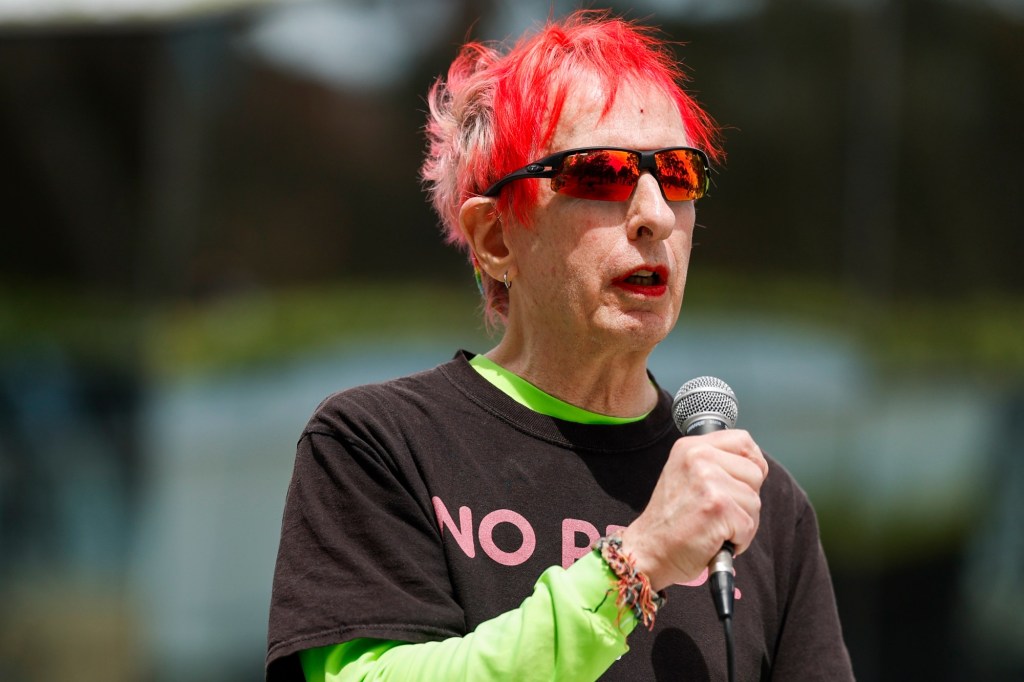
Approaching two years after authorities tore down a pro-Palestinian protest encampment and arrested several dozen people at UC San Diego, two professors now face disciplinary action for their alleged connection to the demonstration.
It’s unclear why the action against the professors is coming now. One of them, BT Werner, was notified in February of the disciplinary administrative proceedings expected to take place in May.
Werner, a professor of environmental physics and complex systems with the Scripps Institution of Oceanography, is looking at the potential of a two-year suspension without pay. Werner also teaches in the critical gender studies program.
Werner said there is one charge, an accusation of participating in an encampment that disturbed university operations, which violates the faculty code of conduct. Werner also said there was communication from the university about the protest in June 2024, but nothing more until February, roughly 20 months later. News of the allegation left Werner shocked but not surprised.
Werner declined, on advice from an attorney, to discuss what happened the day the encampment was dismantled but alleges the disciplinary action is politically motivated.
“It is absolutely crystal clear that this was not an attempt to fairly administer discipline,” Werner said. “This is basically a political prosecution.”
Werner alleged the discipline is “intended to suppress protected speech not aligned with the senior administration’s political perspectives or the perspectives of their donors and political allies. And to me, this illustrates what scholars and legal experts call the Palestine exception to free speech.”
A UC San Diego spokesperson said, “Dialogue, free speech and academic freedom are cornerstones of our university and UC San Diego fully supports the right to peacefully protest and express views on campus. Per the University of California guidelines on determining disciplinary action, all members of the UC community remain subject to all applicable laws and relevant codes of conduct.”
The other professor facing sanctions referred the Union-Tribune to her attorney, but the attorney was unavailable for comment. That professor reportedly faces a possible suspension for a quarter without pay.
The university spokesperson said the school is unable to comment on personnel matters and declined to comment on the faculty disciplinary matters, which are confidential. The statute of limitations for bringing charges against faculty is three years.
Encampments sprang up at UC San Diego and several other college campuses nationwide in spring 2024 as students protested the war in Gaza. Within a few days, the encampment near Geisel Library grew to about 50 tents. Tensions rose on May 5 when a couple hundred counter-protesters showed up, but the standoff ended peacefully.
As protesters slept early May 6, police in riot gear ordered everyone to clear out and arrested those who stayed. Hundreds of supporters of the protest showed up, and several got into shoving matches with police.
Officials have said 64 people — including 59 UCSD students and two faculty members — were arrested, many on suspicion of unlawful assembly, although some were taken into custody on suspicion of illegal camping or resisting arrest. After a months-long review, prosecutors declined to bring criminal charges.
However, many students faced disciplinary action from the university. The professors were only recently notified of their potential discipline.
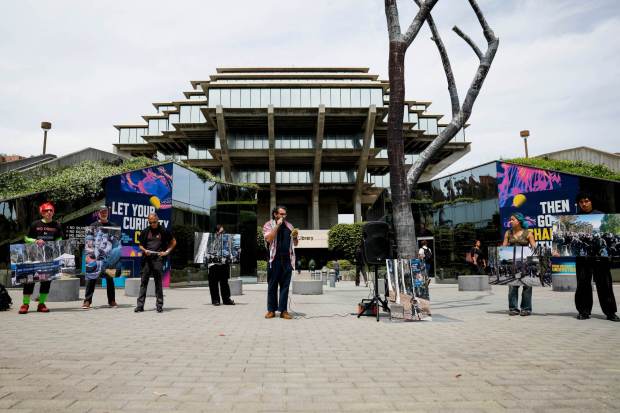 Anthony Harb, assistant professor of communication at USCD, center, speaks during a protest and press conference outside the Geisel Library on Thursday. The protest was regarding the upcoming disciplinary hearings relating to 2024 UCSD Gaza protest encampment arrests. (Meg McLaughlin / The San Diego Union-Tribune)
In recent weeks, several students, faculty and others have been gathering for weekly rallies outside Geisel Library in support of the professors and in protest of the disciplinary actions taken against students and staff.
“Our demand is simple: Drop the charges against these professors and the targeting of faculty,” a student speaker who asked to be identified as Yahya said at a rally last month. “And stop creating a campus environment where learning itself is targeted as something to be punished.”
UC San Diego alumnus Samar Ismail was on hand for a rally in support of the professors late last month. “Faculty shouldn’t be in a position where they have to jeopardize their careers to protect students’ right to the First Amendment,” Ismail said. “I think it is outrageous that the university is doing this, especially after all this time.”
At the rally last month, attendee Tricia Gallagher-Geurtsen, a lecturer at the school, said the professors were attempting to protect their students from law enforcement during the raid.
In October 2024, an attorney who coordinated the defense of students facing academic discipline said that while the process was ongoing, roughly 20 students had completed it and all received similar sanctions: a year of probation, community service and a course on decision-making. It’s not clear what happened with the remaining students, and the university said it could not comment on the cases of individual students.
Gallagher-Geurtsen said late last month that some students have disciplinary records with the school, which could prevent them from receiving professional licensure after they’ve graduated or from getting certain jobs in the future.
Professor Gary Fields said that the two professors were not the only ones whose protests have been sanctioned by the university in recent years. Fields said that last May, before a guest lecture by former Israeli Ambassador Ido Aharoni, he and a handful of people protested.
A few months later, he was informed that three charges from the university had been levied against him, including an allegation that he had violated the school’s anti-discrimination policy. A third-party investigation later cleared him of the charges, he said.