
This filmmaking team had a couple of questions. One was about the research focused on the amount of time American children were spending on electronic screens versus time outside in nature — as much as seven hours a day on a screen. The other was about this widening chasm, politically, when it comes to educating people about the environment and who gets access to that kind of education.
“Those two things kind of made us curious about what does this mean for the future? Surely, it doesn’t seem like screen time trends are going away, or going down, any time soon, so what does it mean if kids are becoming less and less connected to nature if nature and environmental education are becoming more and more partisan and divisive?” said James Parker, director and co-producer of “In Our Nature,” a 60-minute documentary about how nature, and the people who teach with nature, can be bridge builders for their communities. “Perhaps that isn’t a future that we want. So, that set us into this inquiry of trying to understand, first of all, what is environmental education, and second, how is it being deployed across the country right now?”
They spent months following three programs — in Chicago, Kentucky and San Antonio, Texas — along with interviews with various experts to talk about the connection between learning more about the natural world and improving the ways that we relate to each other and our ability to come together, rather than moving farther apart. The film was screened at SXSW EDU in March, and will be screened in San Diego on Friday at Rivian San Diego in a special community event featuring local organizations, including the San Diego Natural History Museum and the San Diego Environmental Film Festival, and Quilen Blackwell, CNN’s Hero of the Year, who is featured in the film through his work with Southside Blooms in Chicago. This free event, from 6:30 to 9:30 p.m., is part of a broader national campaign around environmental education, in partnership with the North American Association for Environmental Education.
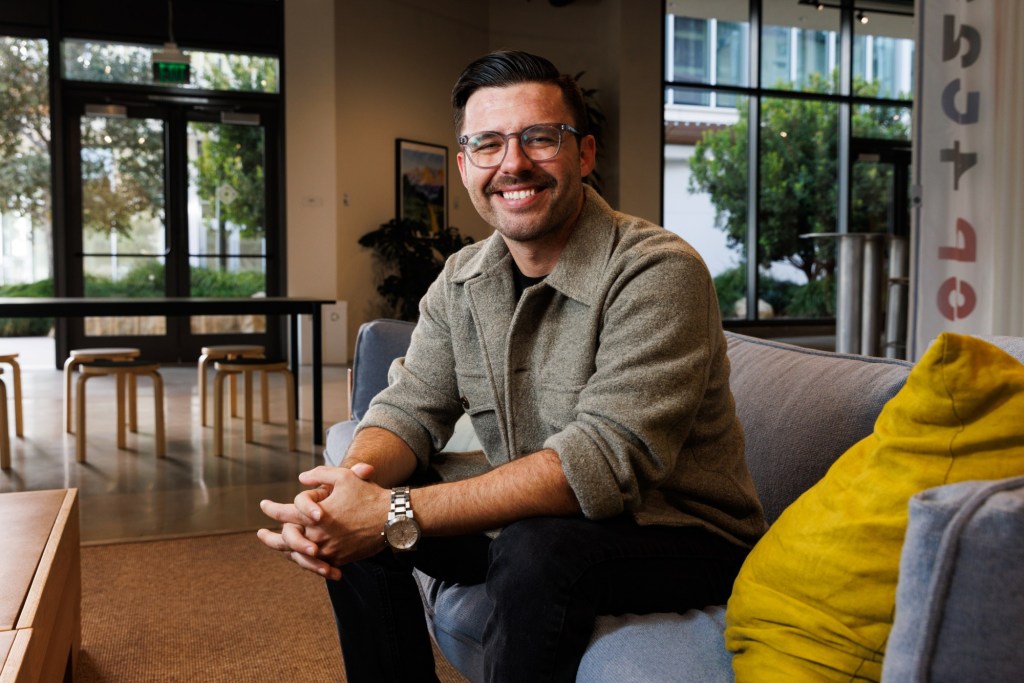
Parker, 35, who grew up in San Diego and lives in La Mesa, is also the founder of his Synchronous Pictures production company, and took some time to talk about the film, the value of nature and the environment, and how his own relationship with the outdoors has improved his own life.
Q: Tell us about your film.
A: “In Our Nature” is a 60-minute documentary that explores how nature, and especially those who are teaching with nature, can be some of our best bridge builders and forces for community. In the movie, we highlight three heroes and programs that exemplify what can happen when you really lean into environmental education. One of those stories takes place on the south side of Chicago. That group is called Southside Blooms, and they convert vacant lots into productive, sustainable flower farms. They employ local youth, and in addition to delivering really amazing environmental education, they’re starting to build these really beautiful bridges across a city that, by many, is considered to be one of the most segregated cities in the country. That is one example of the power of nature. Then, we move to Kentucky for a story about a forest school called Red Oaks Forest School. That story becomes about the power of nature and environmental education to bridge rural urban divides. You have families from very different political stripes coming together on literal common ground in nature, and in search of the best education for their kids. The last story that we highlight is a military story in San Antonio, Texas, where an environmental educator is connecting military families, most often children who are dealing with grief, to the healing powers of nature (through the Tragedy Assistance Program for Survivors). So, these three stories come together as sort of an ode to environmental education and kind of a call to action that we need now more than ever.
Q: What is environmental education?
A: I’m glad you asked because I think the definitions of environmental education and the classifications are something that are important, but have also been a bit restrictive in who can access it and also who can deliver it, who can be in environmental education. Part of the hope of the movie is to expand that definition. I think, at its core, environmental education is about connection. It’s about connection to the natural world, but it’s also just as much about connection to each other and learning about all of these systems that we collectively depend on. We all need clean air, clean water, clean soil; it doesn’t matter where you live, your political stripe, your background. I think that really gets to the heart of why more environmental education is something that I think we would benefit from tremendously. There would be an incredible return on that investment if we leaned more into environmental education because we’re seeing so many trends of disconnection and division, and so this is a wonderful antidote to those things.
The example of Southside Blooms is a really great one for this point of expanding definitions because Quilen Blackwell and Hannah, who will be here for the San Diego screening, talk about how Southside Blooms was born from the ground up. It was this program that wasn’t so focused on how it was classified, or what bucket it would fit into, but they really stayed laser focused on how they could deliver the best impact and results to their place and to the kids in their community. While it was really important to them to build an environmental education program and a social enterprise, they really rarely ever call it an environmental education program. It’s much more of a job program and I think there’s just so much wisdom in that. In this modern context where funding for programs like this can be elusive and there’s less federal funding available, it’s really important for folks, wherever they are in the country, feel empowered to build their own environmental education programs and social enterprises.
Q: Can you walk us through a bit of your creative process for this film? What you wanted to say through this film?
A: I guess it started from that initial inquiry of what is environmental education and how is it being delivered. We were really fortunate to work with the North American Association for Environmental Education from the very beginning of the project and they connected us to a lot of programs and amazing heroes all across the country, delivering innovative environmental education. There was no shortage of amazing stories, but how we landed on these three programs is it was important for us to demonstrate that environmental education and connection to nature is important in many different contexts. The south side of Chicago is one context, rural Kentucky is another one, and then suburban San Antonio is another. We wanted to highlight and spotlight the power of the bridge building that was happening, and show some different colors of that. In Chicago, it’s about building bridges across the racial divide or socioeconomic divide; in Kentucky, it’s about building bridges across the political divide; and in San Antonio, it’s much more about social and emotional well-being, so bridging that disconnection divide that a lot of children are navigating now. I think the process of documentary can be really chaotic and beautiful and difficult to predict, so the film that we ended up with is very different than the film that we imagined it to be at the outset. But, that is really the power and the beauty of this medium. You start to explore and perhaps discover some new truths and wisdom through the collective voice that you end up capturing in the movie.
It’s sort of being an observer and listening and collecting. The same thing with environmental education programs, or this pursuit of building more connection to nature. We’ve tried this approach of top-down prescriptions of ‘This is what you need to do’ and ‘This is how it should look’ and ‘This is how much money it will take and this is how much time it will take.’ That doesn’t work very well across the whole sample size of the country. Now, perhaps the beauty and opportunity in this otherwise very challenging moment in time in our country is there is an opportunity for lots of ground-up solutions and programs to fill a lot of the voids that are out there. When nature is such a powerful tool to add to that mix, whatever issue someone might be concerned about or wanting to get involved in, maybe something we’ve learned from this movie is that when you find a way to incorporate nature into that solution, it can sort of yield a lot of benefit in the pursuit of bridging divide and building connection.
Q: The trailer opens with information about how little time the average American child spends outdoors compared to the time they spend on a screen. What was your own relationship to nature, and the time you spent outside, like?
A: I grew up in San Diego, so most of my nature connection happened through time in the ocean. I love surfing, so that was my refuge. It was meditative, it was also a place to connect with other people, with friends. We weren’t a family that would go camping very frequently, but that connection to the incredible diversity of nature that we have in San Diego is really meaningful.
Q: How would you describe the relationship you have to nature today?
A: I think nature, as an adult, is one of the best ways to connect to a greater sense of belonging. I also think it’s one of the most powerful ways to remember the importance of empathy and compassion. I think it’s difficult to go out into nature feeling angry or really sad, or emotionally charged, and then leave nature with the same feelings. It just has an incredible power to absorb and to just remind us of our own humanity or connectedness, if you will.
Q: How would you describe your point of view as an artist? How might we see this point of view reflected in “In Our Nature”?
A: It’s been a while since I’ve reflected on that. Well, the name of my production studio is Synchronous Pictures, and synchronous means something can be multiple things at the same time. I think that really speaks to my voice as an artist and the types of stories that I’m interested in telling. Leaning into the ones where the lines are a bit blurred, and light and dark exist at the same time. We kind of explore the nuance and the complexity of the human experience and the human condition where it’s not just one thing. I think that so much in mainstream narratives and mostly in the political news that we’re reading, is that it’s very rigid and black-and-white. It’s either you’re in this camp or that camp. To me, in my experience in my life and as an artist, that doesn’t seem to hold true. Most often, things are many things at the same time, so when we can accept that and lean into that, hold space to listen and to be surprised, I think that’s how you can really tear down walls and connect to our shared humanity, while still respecting and acknowledging the differences that that we have.
So much of the human condition can be explored and reflected to us through nature, through the systems of nature, through the interconnectedness of nature, through this truth that nature can be a very violent and uncomfortable place while also being a place full of immense beauty and love and connectedness. These two things are not exclusive of one another. In fact, they’re probably always existing, it just depends on what positionality you might have, or what perspective you might have, what moment in time you might be in. Holding on to perspective, having nature reflect a sense of perspective to us is so powerful, whether you’re a child or an adult.