
Next month, Gov. Gavin Newsom will release his highly anticipated revision of the state budget. California is facing a multi-year budget deficit.Newsom and state lawmakers have less than three months to agree on a balanced budget before the next fiscal year starts on July 1.”How close we are to our forecast is going to have a big determining factor on what the revised budget in May looks like,” said H.D. Palmer with the Department of Finance.In January, Newsom released his first draft of California’s 2026-2027 budget. His administration outlined a $348.9 billion budget, though his proposal for how to spend all that money was far from final at that point.“In terms of revenues, we’re doing pretty well so far this year,” Palmer said. “Compared to what we thought we were going to be in January, we are about $7 billion ahead of where we thought we were going to be in our forecasts.”The Department of Finance is forecasting to receive $21 billion in personal income tax revenue in April.Palmer joined California Politics 360 to explain the impact the Iran war is having on the state budget. Despite the ceasefire in effect, Palmer said it’s a volatile time.”The experts are telling us that even if the war were to come to an end within the next week, it’s not going to snap back to where it was before, in terms of the price of energy. That’s going to have to play out over time. We have to make an assessment on where that’s going to go,” Palmer said. Energy costs can have wide-ranging impacts, from depressing consumer spending to increasing the production and shipping costs for companies. Those have the potential to dramatically erode profits, which also reduces tax revenue for the state. The revised budget proposal expected in May will be based on the latest estimates for state revenue and spending, and the war with Iran complicates that process. Any shock to the economic system, like the fluctuating energy costs, can make those numbers hard to predict. “That feeds into what can we expect to get in revenue, which also feeds into how big of a problem do we have to solve for?” Palmer said.Even before the war started, California’s work-in-progress budget plan was considered a “cautionary” proposal, aiming to balance the budget through fiscal restraint rather than new major spending.In January, Newsom’s administration projected a roughly $3 billion deficit. It was far different than the Legislative Analyst’s Office projection of $18 billion. The L.A.O. based its projection on concerns of lower revenue forecasts and higher spending obligations.The state is also planning for significant long-term deficits. Palmer said Newsom is approaching this year’s budget as a two-year plan, trying to head off a deficit they anticipate to be $22 billion in 2027-28. The state is also assessing spending, including within the Medi-Cal system. That is the state’s version of Medicaid. Medi-Cal spending is predicted to hit a record high, and the federal government has scaled back some reimbursements. The state is considering some eligibility and coverage reductions to reduce that spending.The revised budget proposal will be released on May 14 and will include updated budget deficit projections from the governor’s office and Legislative Analyst’s Office.See more coverage of top California stories here | Download our app | Subscribe to our morning newsletter | Find us on YouTube here and subscribe to our channel
Next month, Gov. Gavin Newsom will release his highly anticipated revision of the state budget. California is facing a multi-year budget deficit.
Newsom and state lawmakers have less than three months to agree on a balanced budget before the next fiscal year starts on July 1.
“How close we are to our forecast is going to have a big determining factor on what the revised budget in May looks like,” said H.D. Palmer with the Department of Finance.
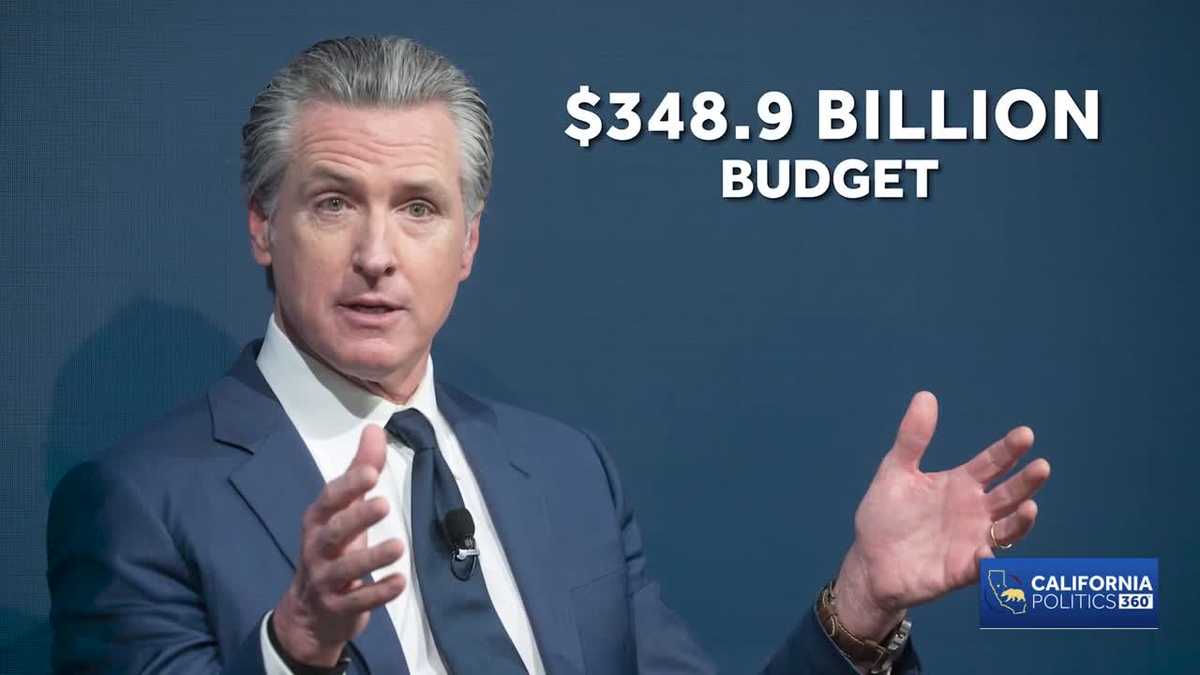
In January, Newsom released his first draft of California’s 2026-2027 budget. His administration outlined a $348.9 billion budget, though his proposal for how to spend all that money was far from final at that point.
“In terms of revenues, we’re doing pretty well so far this year,” Palmer said. “Compared to what we thought we were going to be in January, we are about $7 billion ahead of where we thought we were going to be in our forecasts.”
The Department of Finance is forecasting to receive $21 billion in personal income tax revenue in April.
Palmer joined California Politics 360 to explain the impact the Iran war is having on the state budget. Despite the ceasefire in effect, Palmer said it’s a volatile time.
“The experts are telling us that even if the war were to come to an end within the next week, it’s not going to snap back to where it was before, in terms of the price of energy. That’s going to have to play out over time. We have to make an assessment on where that’s going to go,” Palmer said.
Energy costs can have wide-ranging impacts, from depressing consumer spending to increasing the production and shipping costs for companies. Those have the potential to dramatically erode profits, which also reduces tax revenue for the state.
The revised budget proposal expected in May will be based on the latest estimates for state revenue and spending, and the war with Iran complicates that process. Any shock to the economic system, like the fluctuating energy costs, can make those numbers hard to predict.
“That feeds into what can we expect to get in revenue, which also feeds into how big of a problem do we have to solve for?” Palmer said.
Even before the war started, California’s work-in-progress budget plan was considered a “cautionary” proposal, aiming to balance the budget through fiscal restraint rather than new major spending.
In January, Newsom’s administration projected a roughly $3 billion deficit. It was far different than the Legislative Analyst’s Office projection of $18 billion. The L.A.O. based its projection on concerns of lower revenue forecasts and higher spending obligations.
The state is also planning for significant long-term deficits. Palmer said Newsom is approaching this year’s budget as a two-year plan, trying to head off a deficit they anticipate to be $22 billion in 2027-28.
The state is also assessing spending, including within the Medi-Cal system. That is the state’s version of Medicaid. Medi-Cal spending is predicted to hit a record high, and the federal government has scaled back some reimbursements. The state is considering some eligibility and coverage reductions to reduce that spending.
The revised budget proposal will be released on May 14 and will include updated budget deficit projections from the governor’s office and Legislative Analyst’s Office.
See more coverage of top California stories here | Download our app | Subscribe to our morning newsletter | Find us on YouTube here and subscribe to our channel