
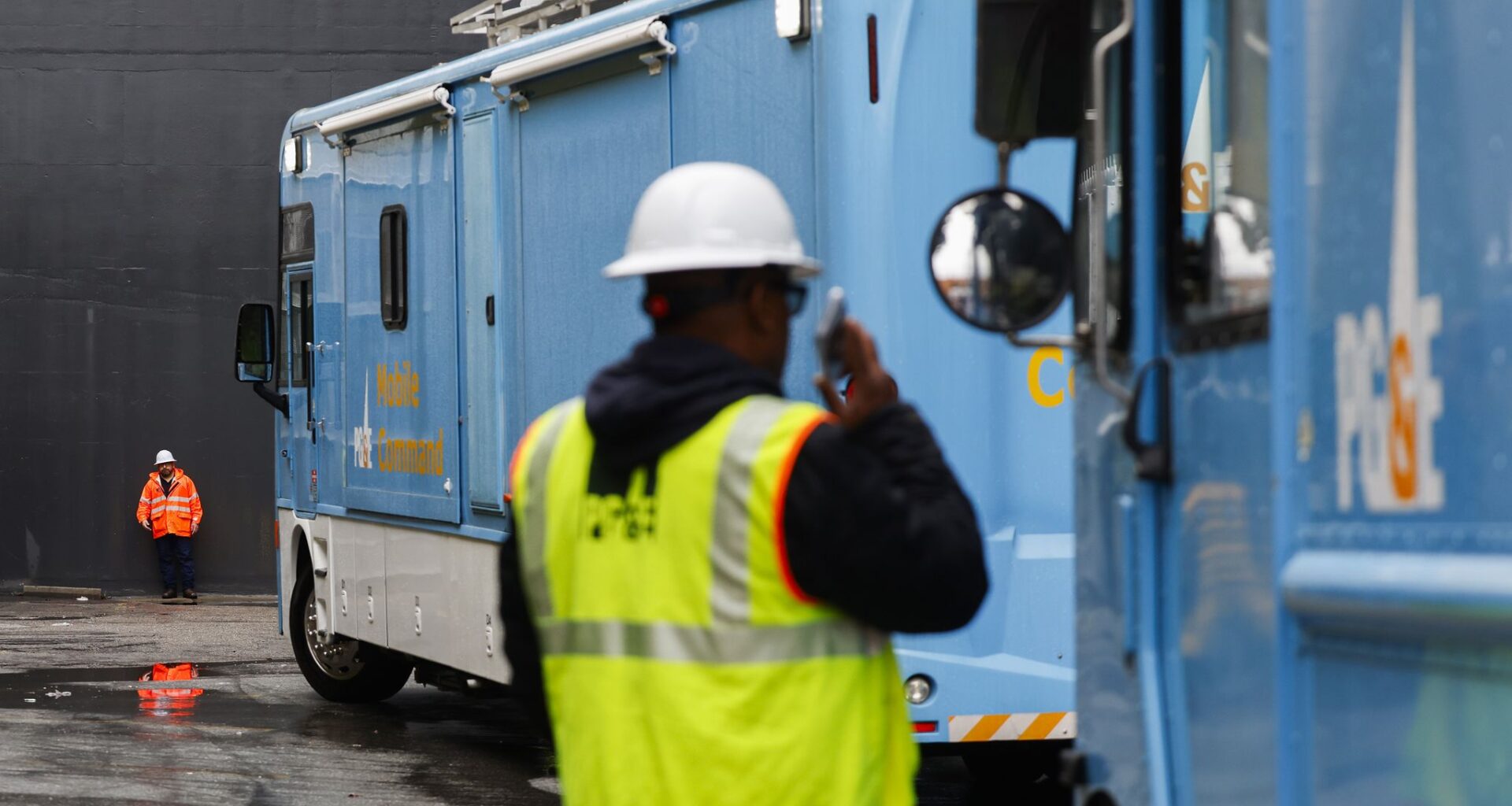
PG&E crews work near a substation in San Francisco during power outages across the city in December. The blackouts are one reason there are calls for a city takeover of its power grid.
Jessica Christian/S.F. Chronicle
As we gear up for the 2026 election season, Pacific Gas and Electric Co. is in the crosshairs. Tom Steyer is running for governor and loudly vowing to “break up” the electric utilities. Meanwhile, in the San Francisco congressional race to replace Nancy Pelosi, all three major candidates — Scott Weiner, Saikat Chakrabarti and Connie Chan — support a takeover of the city’s electric system.
Politicians and voters have every right to be upset at PG&E. Rates have gone through the roof as the company has presided over a string of deadly failures and costly outages. But moves to take over the grid should give us pause. San Francisco City Hall, with pressing challenges and its own history of mismanagement, seems ill-equipped to launch an electric utility, and advocates of municipal power are often unrealistic about what would be involved. There are better ways to get the electric system we want.
Here’s the thing: The large investor-owned utilities are already publicly controlled. As state-sanctioned monopolies, they are comprehensively regulated by the California Public Utilities Commission, which has the responsibility to approve their actions. So if we’re unhappy with the utilities, why don’t we just try regulating them better?
Article continues below this ad
We should be asking much more of the five members of the commission, who are appointed by the governor. As a developer of solar and energy storage projects in California, I have seen firsthand how our regulators have failed to produce effective energy policy or to provide even a modest check on the utilities.
The truth is, the commission has not been meeting the moment.
San Francisco Chronicle Logo
Make us a Preferred Source to get more of our news when you search.
Add Preferred Source
Growing demand, data centers and climate change pose great risks to California while also offering opportunities. Innovation and new approaches are needed to ensure our energy is reliable, affordable and safe. While the commission has allowed the big utilities to make repeated rate increases, it and other Sacramento actors have blocked many new solutions for the grid.
Together, the utilities and our regulators have shuttered programs and pathways for demand side and backup energy resources, infrastructure cost deferral and geothermal energy, to name a few. They have generally made it difficult to develop almost any kind of new resource for the grid, and in doing so, have disregarded laws passed by the state Legislature.
Article continues below this ad
Even the commission’s own studies spell out the risks and the high costs facing the state if we don’t change the way we manage energy. But rather than pay heed to such signals, the response by the commission’s leadership has been to dispute the studies and then work directly with the utilities to come up with an alternative set of facts.
Not every new idea is a good one, but it’s frustrating when our regulators seem to find any conceivable reason to say no, yet don’t feel any responsibility for finding what would work.
They defend a status quo that the entire state can see is not working.
Now’s the time for a fresh start. Leadership is turning over at the commission, and we’ll soon elect a new governor who will appoint new regulators. As voters, we should be asking pointed questions and demanding better results.
Can we unpack the rate increases? How are costs categorized, and do we agree? What returns are utilities receiving on their investments, and are they appropriate? Are there more cost-effective solutions to grid challenges that aren’t being considered? How can we empower communities to develop the next generation of energy assets?
Article continues below this ad
As a regional leader, San Francisco has cards it can play. But before we try to reinvent the wheel and take over the grid, why not do some old-fashioned, gloves-off lobbying? We’d have a lot of allies.
Energy costs burden many Bay Area cities, and public agencies formed to buy clean power — Clean Power SF, Peninsula Clean Energy and others — are all running into similar obstacles. In the private sector, Google and Tesla just formed an industry coalition devoted to addressing rising rates and poor grid utilization. A lot of people want the same thing. With political momentum and a popular mandate, we can lead a powerful coalition for long-term change.
Let’s organize with our neighbors — using existing groups and forming new ones. Let’s take a hard look at utility profits and, in this era of budget cuts and hard choices, insist that they do belt-tightening just like the rest of us. Let’s increase the pace of energy development and fight for the right to develop local resources to prevent future blackouts, just as PG&E has.
We should be unabashed about these goals with the incoming governor’s administration. We want a transformed utility system and intend to work effectively across the different stakeholders to effect real change. Of course, we can always keep a city takeover in our back pocket.
Guest opinions in Open Forum and Insight are produced by writers with expertise, personal experience or original insights on a subject of interest to our readers. Their views do not necessarily reflect the opinion of The Chronicle editorial board, which is committed to providing a diversity of ideas to our readership.
Read more about our transparency and ethics policies
Ultimately, there isn’t one solution to our energy woes. The grid is a large, multilayered system, and we have to do many things at scale to ensure that we have the energy we need over the coming years. But having regulators who recognize the urgency of the situation is a must, and right now, we don’t.
Article continues below this ad
So we can keep talking about a long-term breakup with PG&E, but let’s recognize that we have the opportunity to demand better outcomes now.
Sam Maslin is CEO of Eddy Energy, a developer of community energy storage projects, and the president of the Noe Valley Democratic Club in San Francisco.