
By JULIANNE GAURON
AFCADDE, Ethiopia (AP) — The critical note in some of the world’s most well-known perfumes is myrrh, a tree resin from the Horn of Africa that is under pressure from what experts say has been a historic drought.
Threatened by the lack of water and nibbled by starving livestock, the trees that once formed a dense forest in the Somali region of Ethiopia are in danger, locals say.
Earlier this year, researchers supported by the American Herbal Products Association, a trade group, and Born Global, a nonprofit, visited a source of the prized resin that makes its way to global markets from some of the most vulnerable places on earth.
Their goal was to ensure that those who harvest the resin get more of the direct profits instead of middlemen along the opaque supply chain.
Ethiopia is a major source of myrrh, which has been used in beauty, health and religious practices since at least ancient Egypt. Traditional harvesting in the region has not changed, which helps to protect the trees and produces the highest quality resin.
Myrrh’s hand-harvested nature raises its price, but those doing the work see little of the profit. Collecting 2.2 pounds of the resin brings as little as $3.50 and as much as $10.
That’s far from the prices for the perfumes it helps to create, which are marketed by well-known fashion brands like Tom Ford, Comme des Garcons and Jo Malone, and sold at prices as high as $500 a bottle.
Meanwhile, curiosity about myrrh’s other potential uses is growing with increased global interest in natural remedies.
For now, most myrrh from this part of eastern Ethiopia is purchased by traders from neighboring Somalia. Ethiopia collects no taxes on the goods.
Local residents hope more visibility will help them as the climate crisis threatens their ways of life.
“They expressed hope that a direct market would enable them to secure better prices, ensuring sustainable livelihoods,” said Abdinasir Abdikadir Aweys, senior researcher with the Somali Regional Pastoral and Agro-Pastoral Research Institute and a member of the research team.
The researchers were led by Anjanette DeCarlo, an expert in sustainable supply chains and resins at the University of Vermont, and Stephen Johnson, resin expert and owner of FairSource Botanicals. They found that communities practice traditional harvesting by collecting resin from trees’ naturally occurring wounds instead of by making intentional cuts, which makes trees more vulnerable to pests and disease.
“Traditional practice is in balance and protects trees. It should be celebrated,” DeCarlo said.
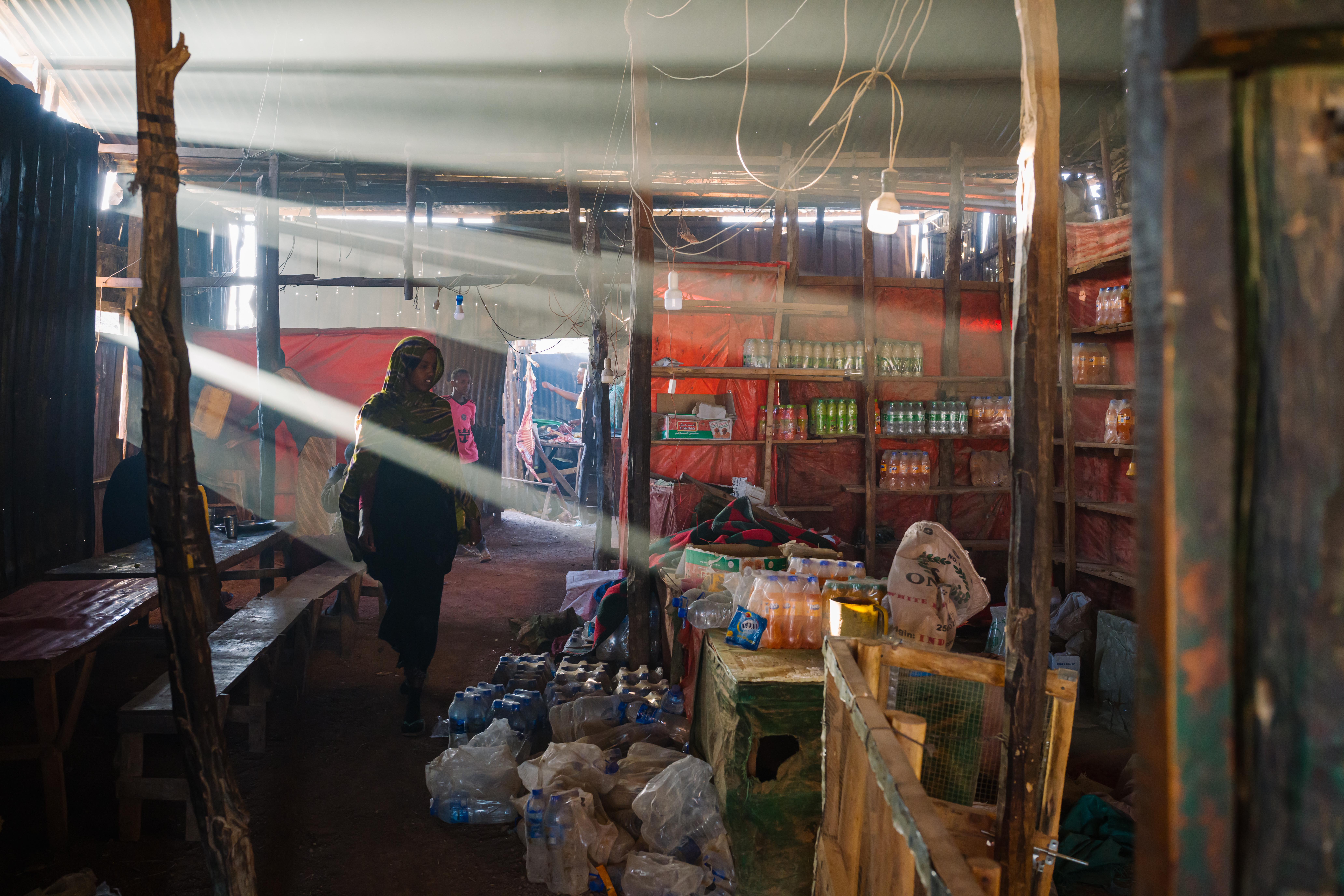
Burning myrrh, which is done to deter bugs and snakes, mingles with cooking smoke in a dark roadside restaurant as a young woman walks by bottles of water and soda Thursday Jan. 8, 2026, in Afcadde, Ethiopia. (AP Photo/Julianne Gauron)
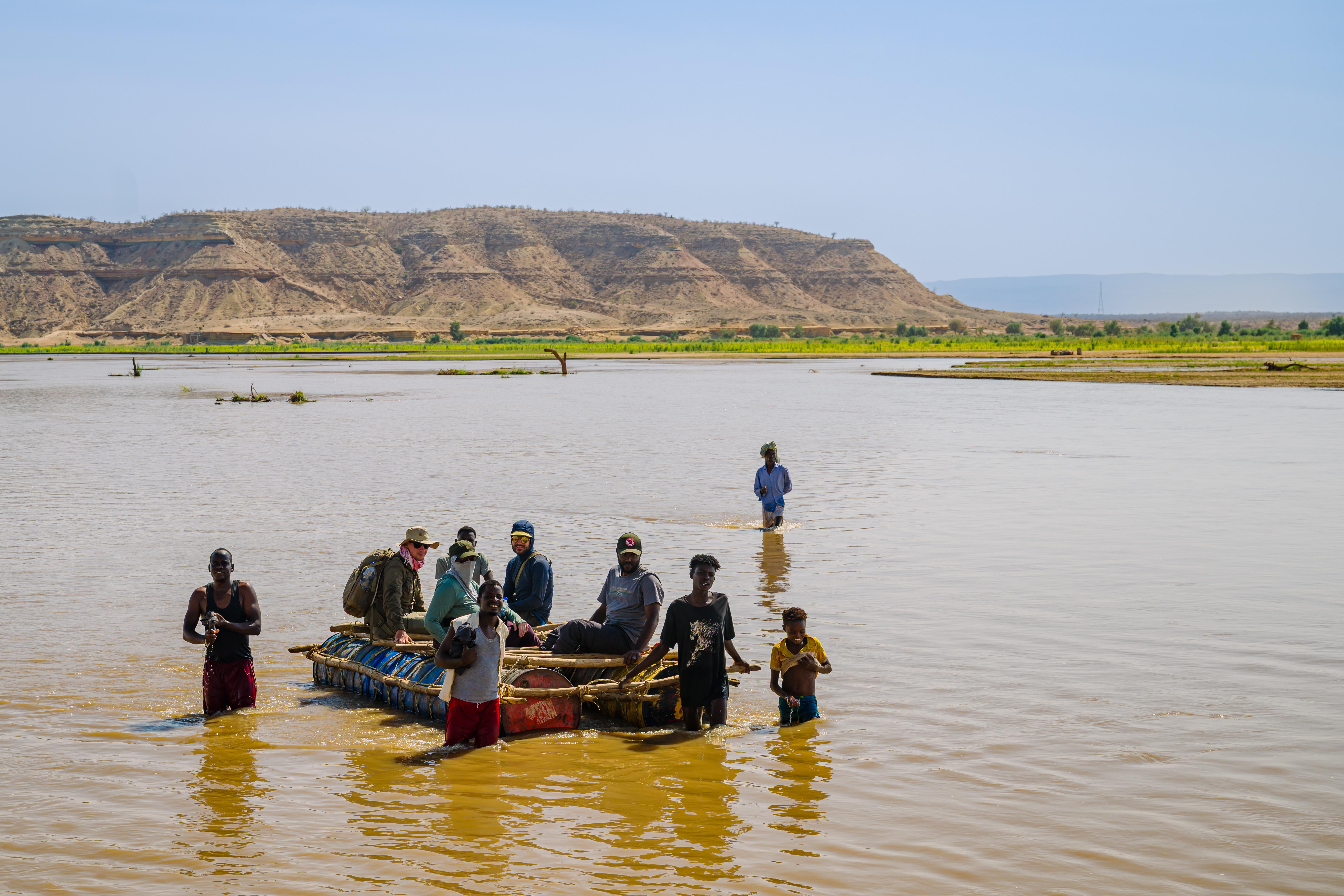
Myrrh researchers cross the Shebelle River with the help of boatmen that wade in the low levels instead of paddling as they make their way toward East Imi, Ethiopia, Saturday Jan. 10, 2026. (AP Photo/Julianne Gauron)

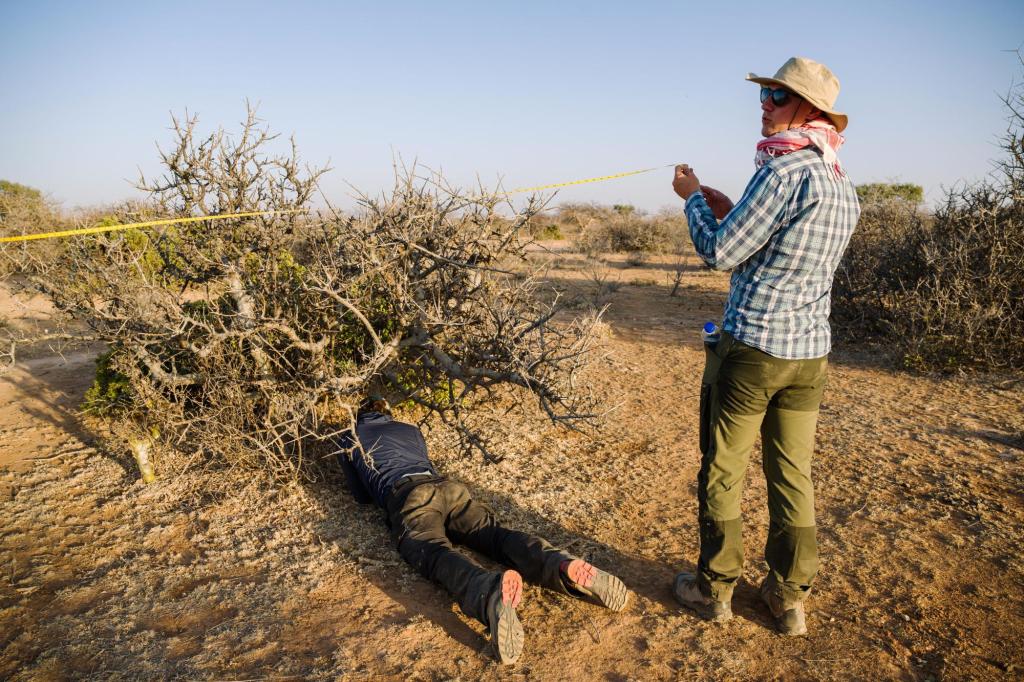
Stephen Johnson gathers data on a large, healthy Commiphora myrrha tree, the source of myrrh, Saturday Jan. 10, 2026, in Sanqotor, Ethiopia. (AP Photo/Julianne Gauron)
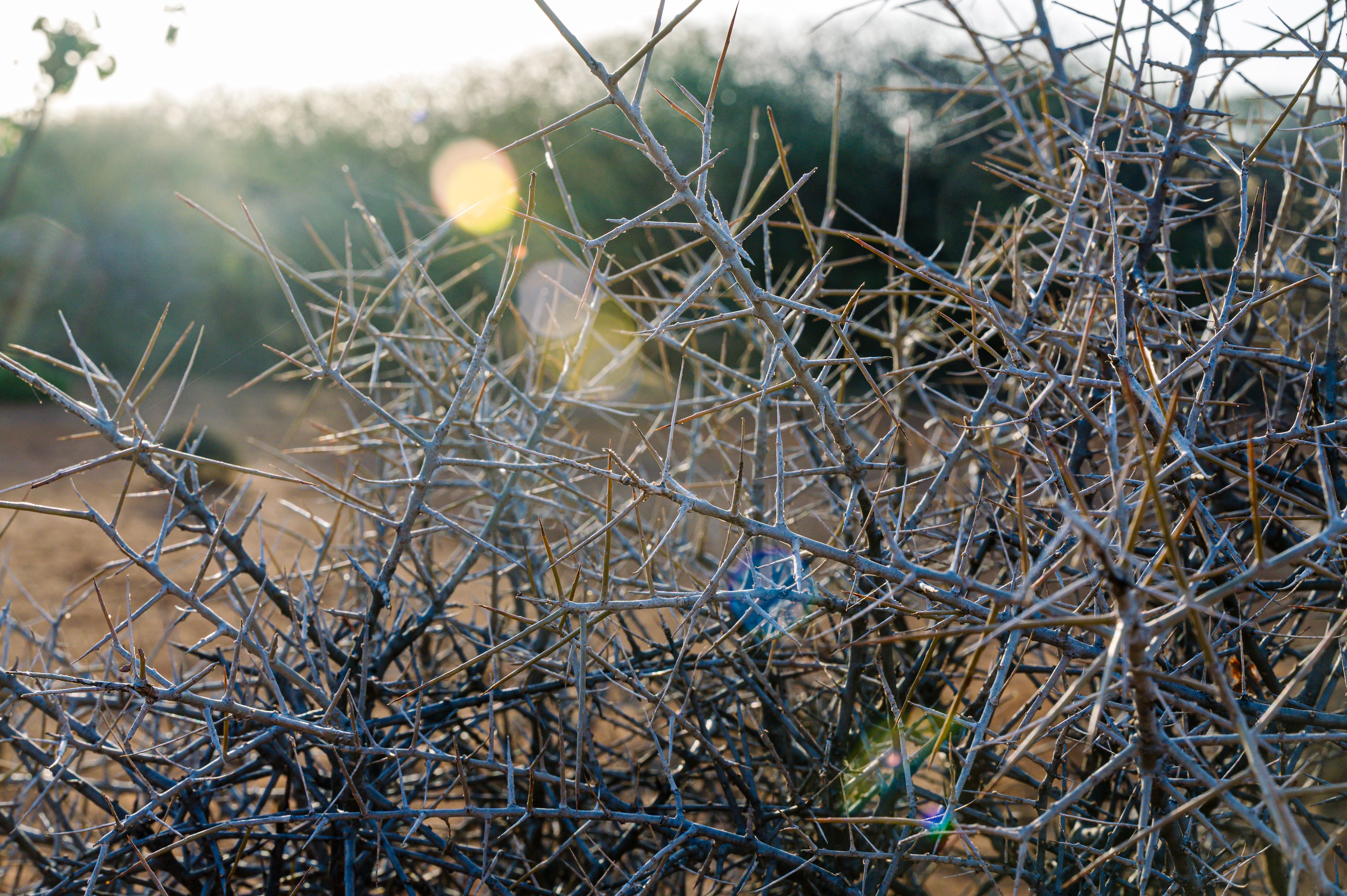
Sun shines on Commiphora myrrha trees with large thorns to protect itself against grazing livestock and wildlife Saturday Jan. 10, 2026, in Sanqotor, Ethiopia. (AP Photo/Julianne Gauron)
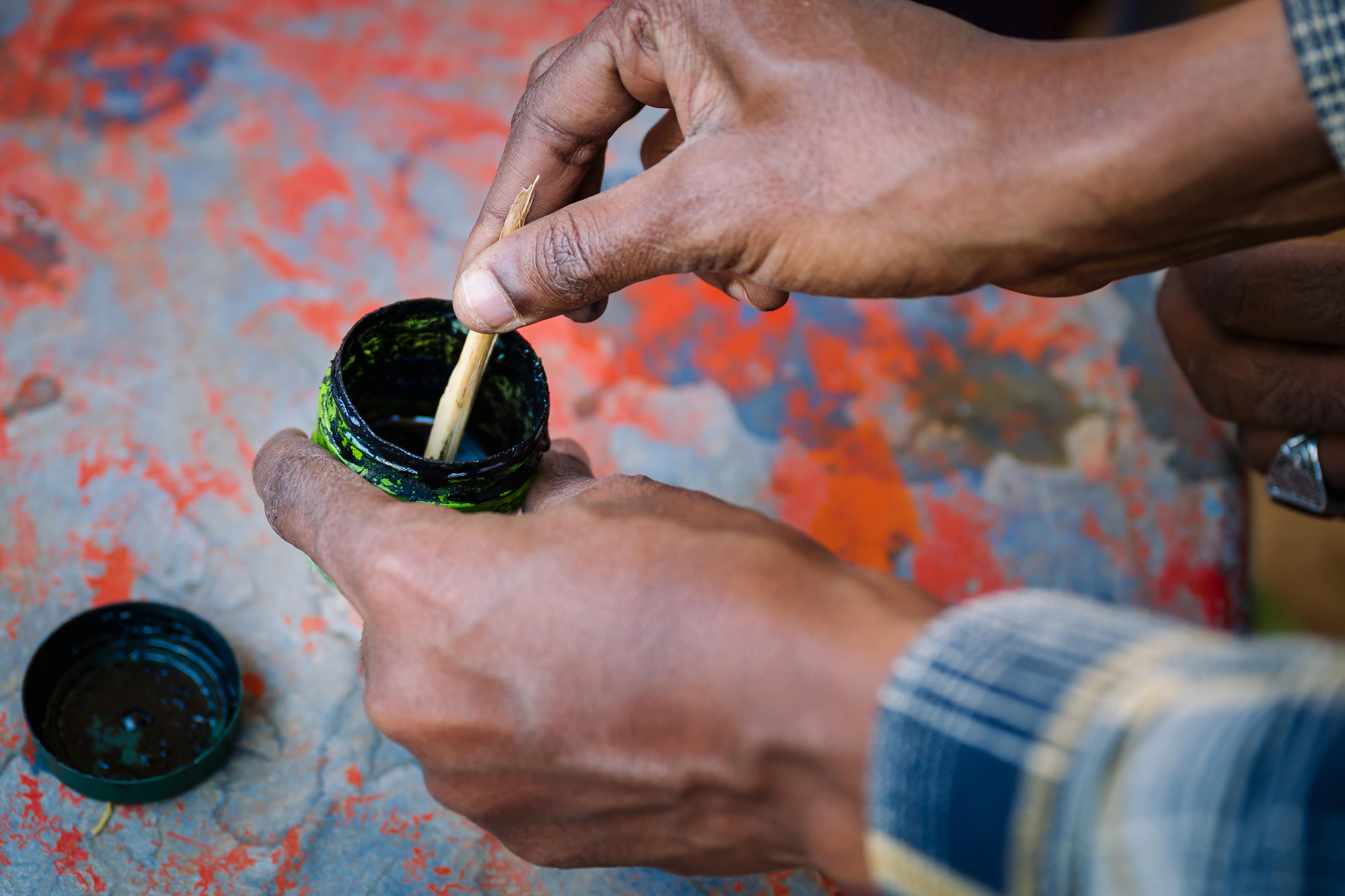
Dahir Yousef Abdi, guide from the Somali Region Pastoral and Agro-pastoral Research Institute, demonstrates ink made from myrrh Friday Jan. 9, 2026, in Sanqotor, Ethiopia. Myrrh, in Islam tradition, is turned into a black ink used only for writing the Quran and symbolizes the connection between the word and the divine. (AP Photo/Julianne Gauron)
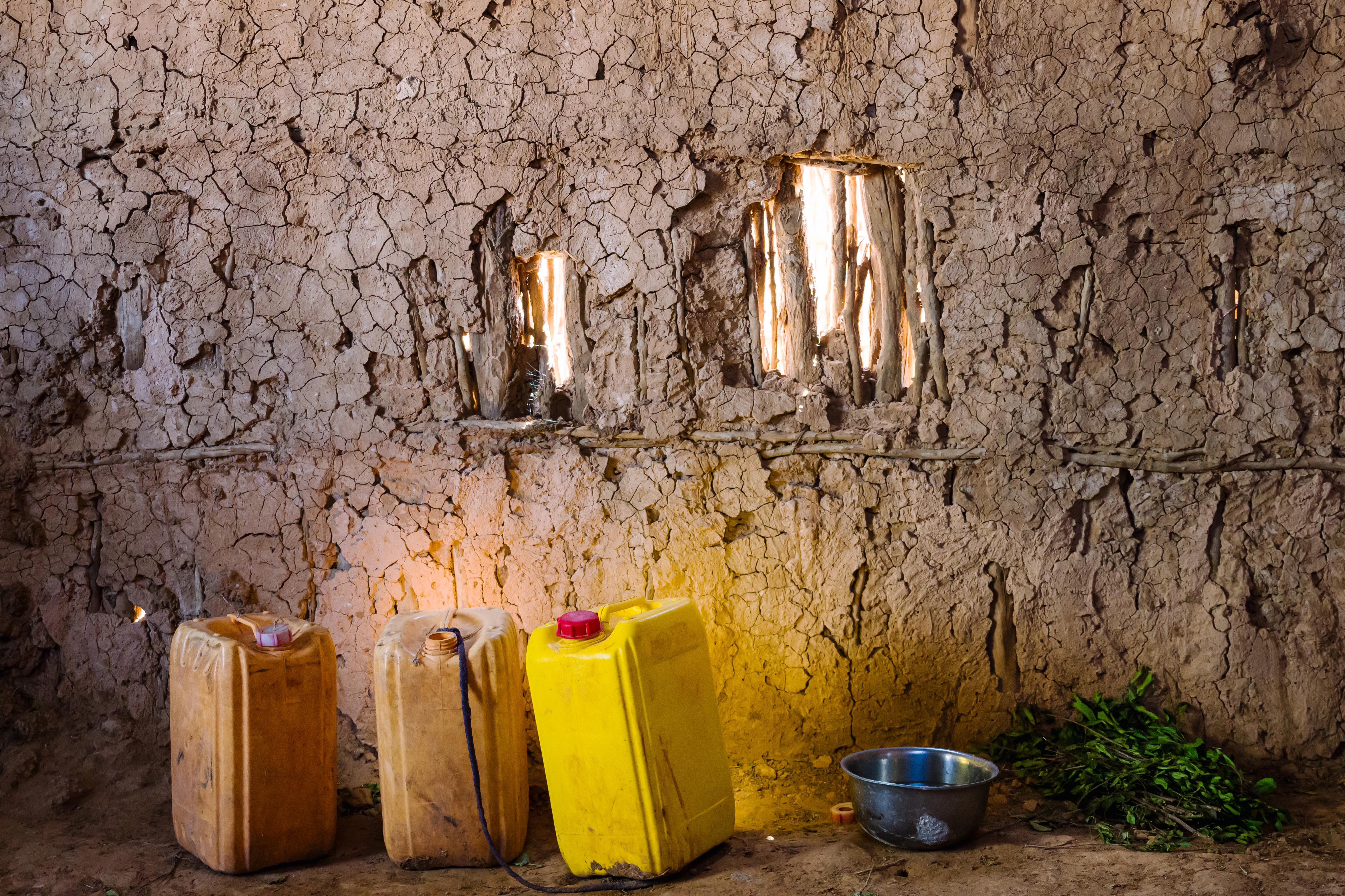
Yellow jerrycans, for hauling water, sit next to a bowl for washing up and a pile of khat leaves Friday Jan. 9, 2026, in Sanqotor, Ethiopia. (AP Photo/Julianne Gauron)
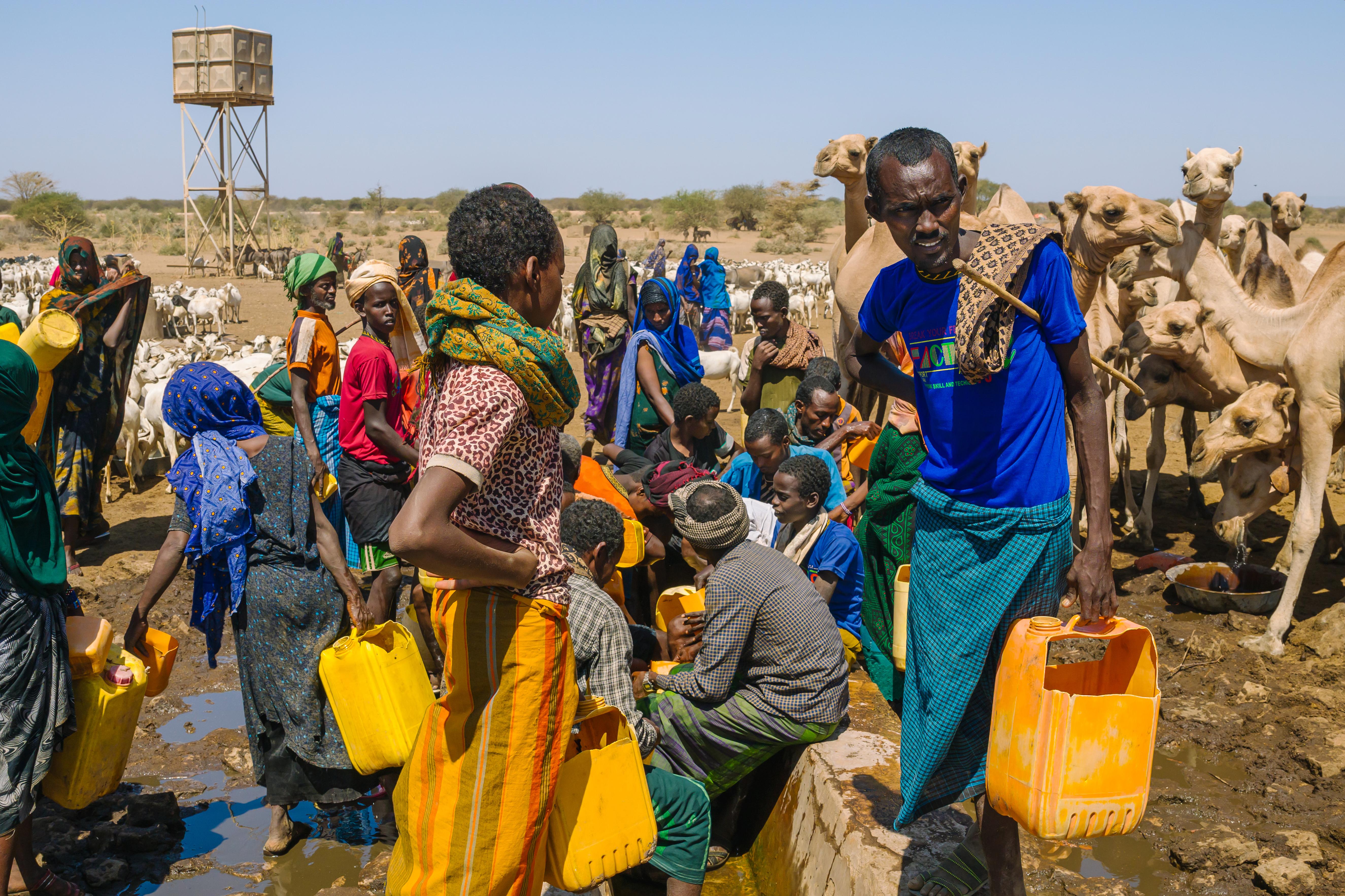
Amid a drought, herders gather after traveling to a well to get water for their livestock Friday Jan. 9, 2026, in Sanqotor, Ethiopia. (AP Photo/Julianne Gauron)
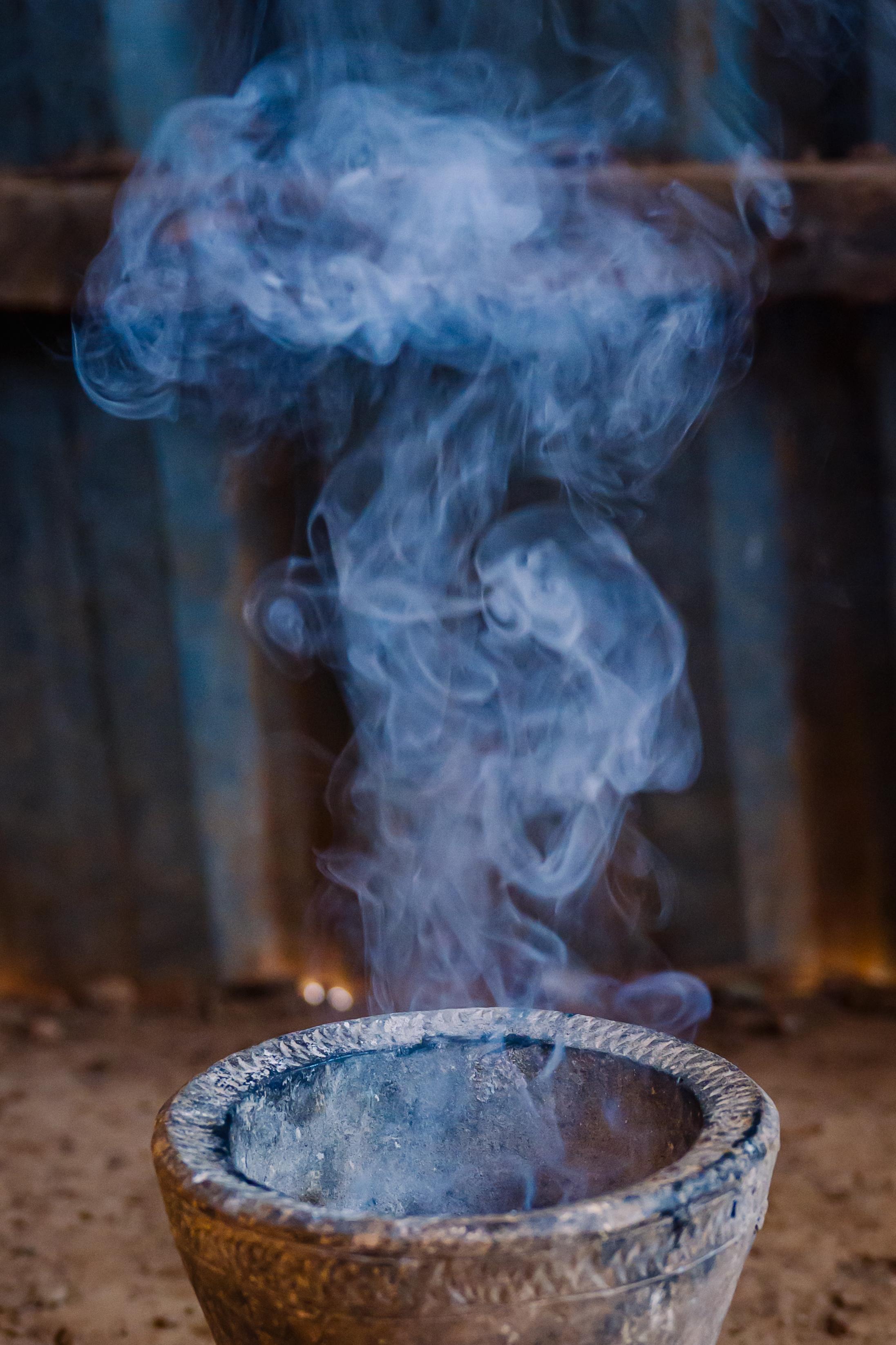
Myrrh burns in a traditional clay vessel in a home to ward off bugs, snakes and to fumigate it Friday Jan. 9, 2026, in Sanqotor, Ethiopia. (AP Photo/Julianne Gauron)
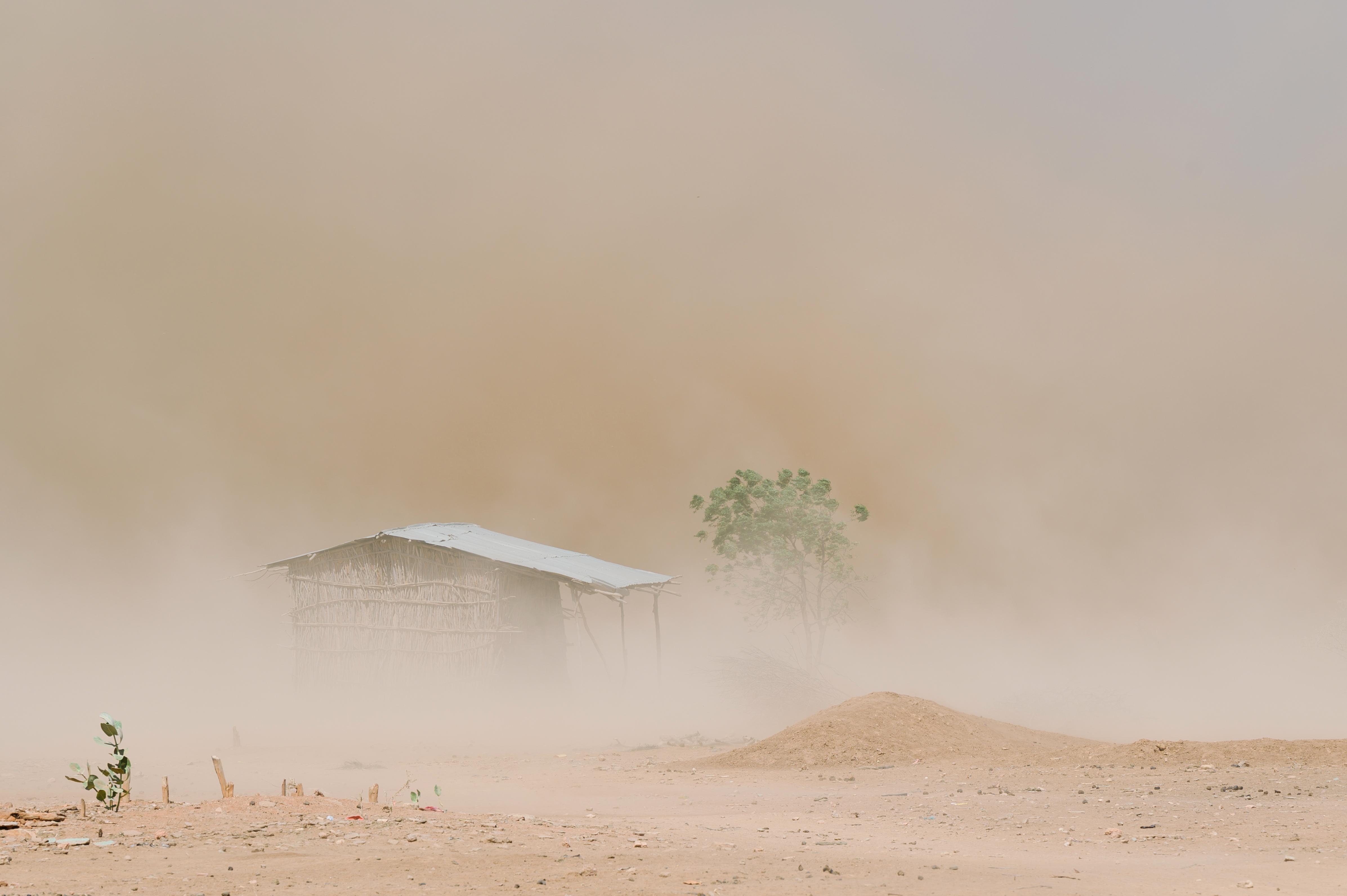
Dust engulfs a home and a tree barely visible is made worse amid a drought on Friday Jan. 9, 2026, in Sanqotor, Ethiopia. (AP Photo/Julianne Gauron)
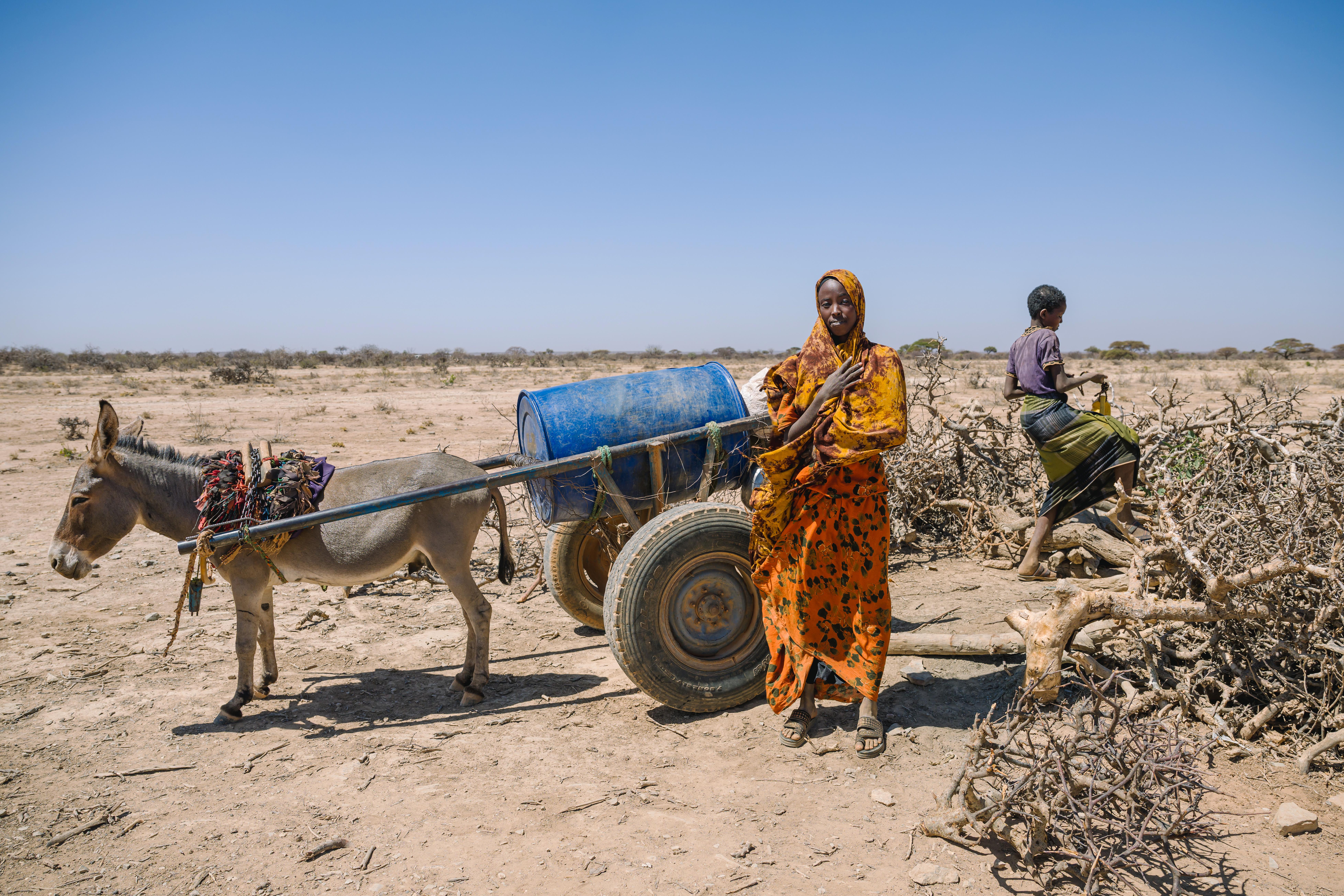
Children seeking water bring their donkey cart to a well, dug into the bottom of what should be a lake, surrounded by thorny brush to prevent livestock from falling in Thursday Jan. 8, 2026, in Afcadde, Ethiopia. (AP Photo/Julianne Gauron)
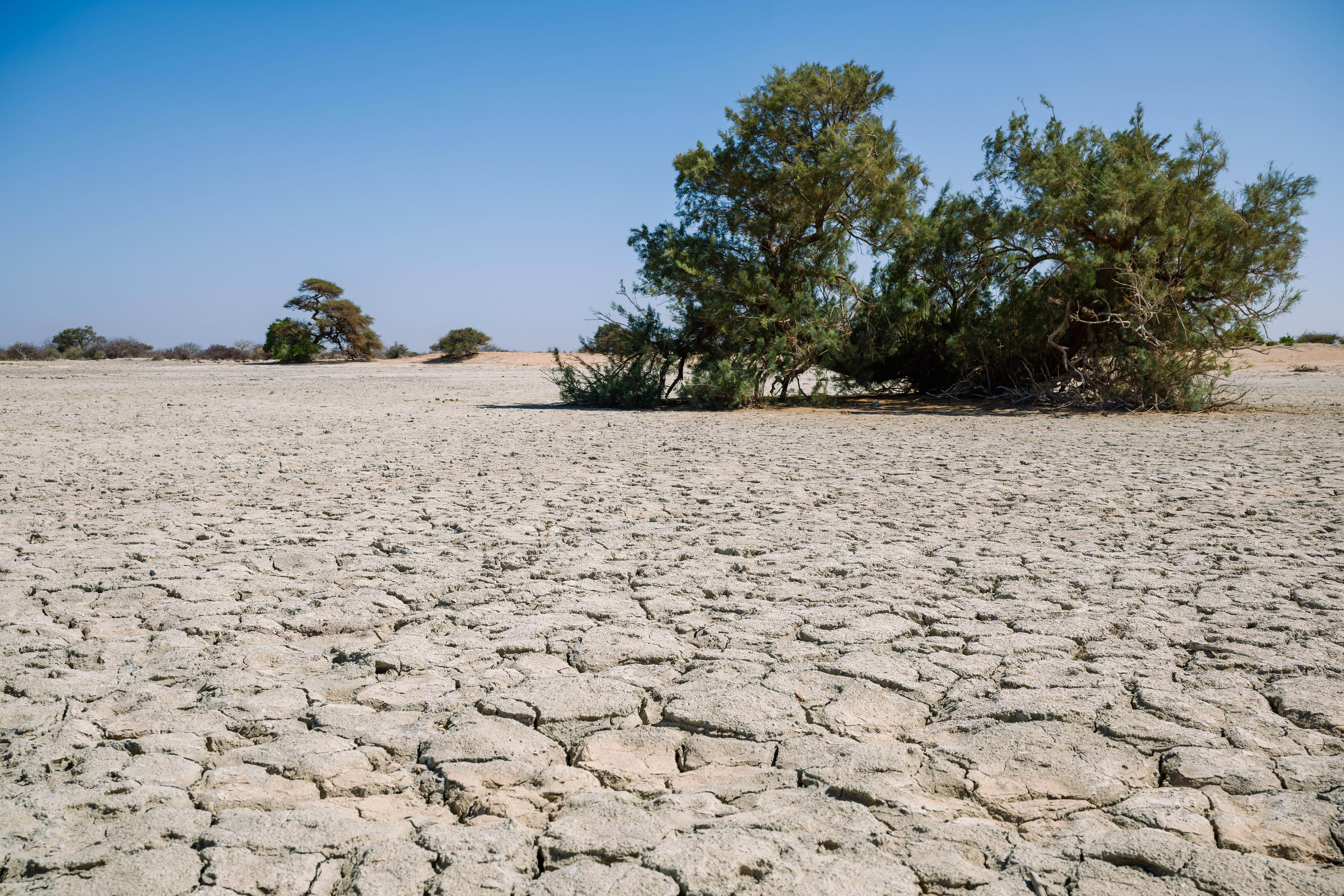
Amid a drought, a lake that should be full now remains dry Thursday Jan. 8, 2026, outside Afcadde, Ethiopia. (AP Photo/Julianne Gauron)

An example of text from the Quran, written on a wooden tablet with myrrh ink, is displayed Thursday Jan. 8, 2026, in Sanqotor, Ethiopia. (AP Photo/Julianne Gauron)

Women, who often help harvest myrrh, gather for a focus group to discuss it amid a drought Thursday Jan 8, 2026, in Afcadde, Ethiopia. (AP Photo/Julianne Gauron)
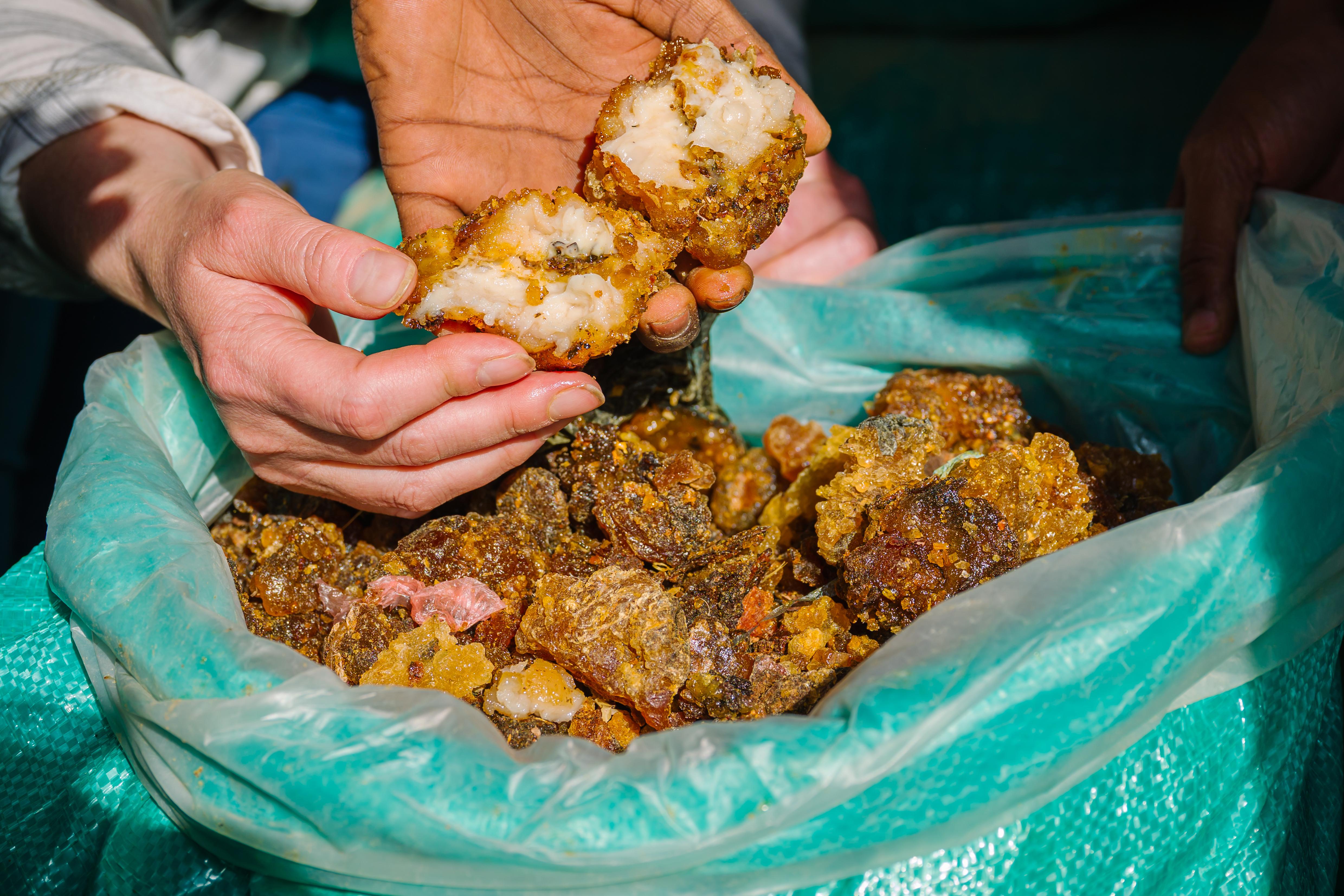
Members of a research team hold pieces of naturally exudated resin from myrrh, locally called suhul, which is extremely high quality and fragrant, Thursday Jan. 8, 2026, in Afcadde, Ethiopia. (AP Photo/Julianne Gauron)
Show Caption
1 of 14
Burning myrrh, which is done to deter bugs and snakes, mingles with cooking smoke in a dark roadside restaurant as a young woman walks by bottles of water and soda Thursday Jan. 8, 2026, in Afcadde, Ethiopia. (AP Photo/Julianne Gauron)
But the drought worried the team. The annual rains have been failing over the past several years, interrupted in 2023 by devastating flooding.
The arid region has long seen droughts, but this one has been historic. Experts have blamed the changing climate.
Myrrh harvesting is threatened. While adult trees are generally healthy, they are producing less resin. And fewer young trees are surviving.
“Unfortunately, many seedlings are uprooted by children who graze their livestock nearby, and the animals often eat the buds of the young trees,” said a local elder, Mohamed Osman Miyir, adding: “We are deeply worried about the declining population of myrrh trees.”
Without proper rain, other young trees are likely to fail. DeCarlo worried that eventually even the adult trees will die.
Villagers’ days are spent hauling water for themselves and their livestock. Herders travel over the parched, cracked earth as far as 125 miles to Sanqotor village, which has a rare well with water.
“Guests water animals first, then the villagers,” said local headman Ali Mohamed, watching hundreds of livestock crowd around the well.
But not everyone has livestock — the poorest residents rely solely on tree resin like myrrh for their survival.
The Associated Press’ climate and environmental coverage receives financial support from multiple private foundations. AP is solely responsible for all content. Find AP’s standards for working with philanthropies, a list of supporters and funded coverage areas at AP.org.