
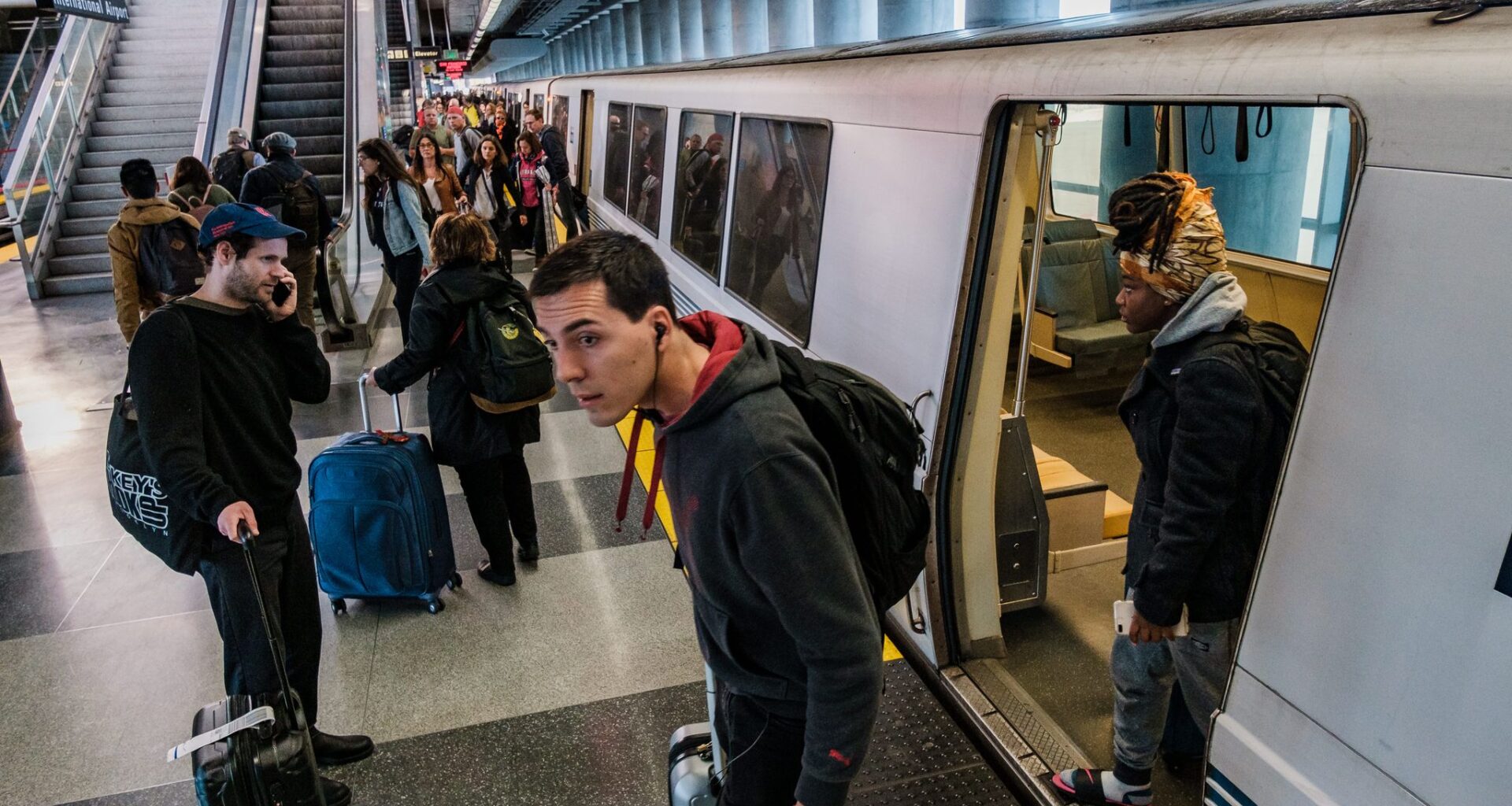
BART could be asking SFO for a reduction in the rent it pays every year to operate its trains in the airport’s terminal.
Nick Otto/For the S.F. Chronicle
When BART passengers gripe about a $5.51 surcharge applied to every trip to San Francisco International Airport, the agency has one response: Blame the rent.
In this case, “rent” refers to the $2.5 million annual payment that BART makes to the airport, in exchange for running trains to a station housed in the International Terminal. San Francisco Airport Commission built the station for $200 million, and has leased it to BART since the facility opened in 2023.
Under the agreement, BART anticipated paying rent for 50 years. But now, Bay Area policymakers are calling for a redo, saying the lease has become a burden for a cash-strapped transit agency.
Article continues below this ad
In a new draft financial efficiency review published on March 31, staff at the Metropolitan Transportation Commission, and their consultants at Nelson\Nygaard, recommend that BART and SFO renegotiate their agreement to “more accurately” reflect the costs, benefits and risks for both entities.
The review outlined many possible cost-saving measures for BART and three other transit operators, San Francisco Municipal Transportation Agency, AC Transit and Caltrain. All four agencies are facing existential budget crises due to a catastrophic loss of ridership, which dates to the pandemic but became permanent with the rise of remote work.
San Francisco Chronicle Logo
Make us a Preferred Source to get more of our news when you search.
Add Preferred Source
Regional policymakers have called on voters to bail out transit by approving a sales tax in November. But the bailout comes with strings, in that it includes a mandate for the agencies to be more efficient. A state bill authorizing the sales tax requires that MTC audit the agencies and produce comprehensive reports on what they have done to boost ridership and revenue, along with changes they could make.
For BART, the list is long and varied. The regional rail system could run shorter cars outside peak hours, keep hardening its fare gates to deter scofflaws, institute on-demand parking in station lots and lease out the telecommunications network it built so passengers could use smartphones in trains.
Article continues below this ad
But a change to the airport lease could be the most straightforward way for BART to save money. And it would likely draw approval from rail system leaders. Officials have already signaled dissatisfaction with the terms of their current agreement with SFO.
“We often get asked about fares,” BART representatives wrote in a 2024 social media post referring to people’s complaints about the airport surcharge. “We are required to pay $2.5 million annually in rent to the airport for 50 years,” the post continued. “We look forward to continued discussions about funding sources and transit investment.”
Notably, the lease obliges BART to keep paying rent, or a “termination amount” sufficient to cover all outstanding financing for the station, even if the airport connection shuts down.
It’s unclear whether a new lease would significantly lower BART fares to SFO, which are so widely loathed that users on the social media platform Reddit created multiple long threads to express their disenchantment.
While BART spokespeople said the agency initially imposed an airport surcharge to pay off the debt issued for construction of the extension, they have since found justification to keep it.
Article continues below this ad
“We’ve left it there and increased it as the typical airport BART rider is an infrequent rider to SFO,” spokesperson Alicia Trost wrote in an e-mail. “They are not paying this high fare on a regular basis.” She noted that airport and airline employees do not have to pay the extra fee.
Representatives of San Francisco International Airport did not immediately respond to inquiries.