
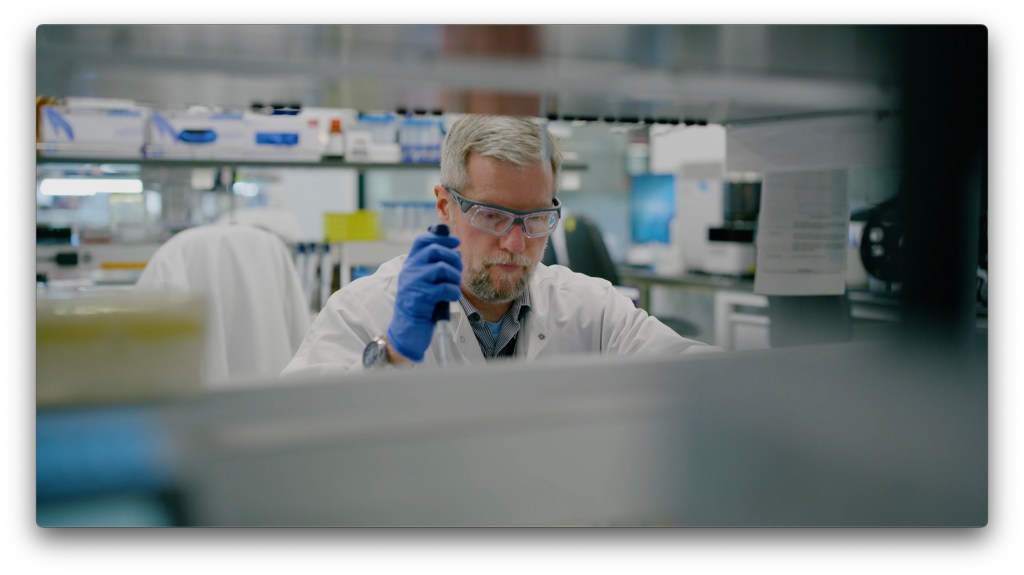
San Diego startup Neomorph on Monday announced a new $100 million investment for its molecular glue that tricks cancer cells into self-destructing.
Even as it awaits results from its first clinical trial, investors are interested. In the past three months, Neomorph has raised $200 million.
While other oncology treatments, such as chemotherapy, indiscriminately damage cells, Neomorph’s glue, NEO-811, redirects the body to dispose of harmful proteins by labeling them as “trash,” so enzymes will discard them.
This clinical trial is targeting clear cell renal cell carcinoma, the most common kind of kidney cancer. However, the company says this approach could potentially be applicable across oncology.
Since its founding in 2020, Neomorph has inked nearly $5 billion worth of deals with pharmaceutical companies.
Last year, Neomorph signed a $1.6 billion deal with AbbVie for an option to license its glue. In 2024, Novo Nordisk signed a $1.46 billion deal with Neomorph. Biogen also signed a $1.45 billion deal with the San Diego company that year.
Pharma giants that haven’t signed on are working on their own in-house glue.
As Neomorph awaits data from its first clinical trial, venture capitalists are putting in more money to “support the advancement of the ongoing NEO-811 Phase 1/2 trial,” according to a release.
After investing an initial $100 million Series A round in February, Deerfield Management led the latest $100 million Series B round with new investors Regeneron Ventures, Longwood Fund, Alexandria Venture Investments, Binney Street Capital of Dana-Farber Cancer Institute and others.
“This financing is a testament to the science, strategy, and team we have built,” said Phil Chamberlain, co-founder and CEO of Neomorph.
The new financing will go toward supporting the ongoing clinical trial. The company also plans to invest in a handful of other molecular glues that could target other cancers, though it did not specify which ones.