
Home
»
AIRLINE NEWS
»
Travelers Stranded at San Diego International Airport, USA as 141 Flights Are Delayed and 2 Canceled Disrupting American Airlines, Southwest, Delta, and More Across Domestic and International Routes to New York, Chicago, Denver, Seattle, and Vancouver
Published on
April 13, 2026
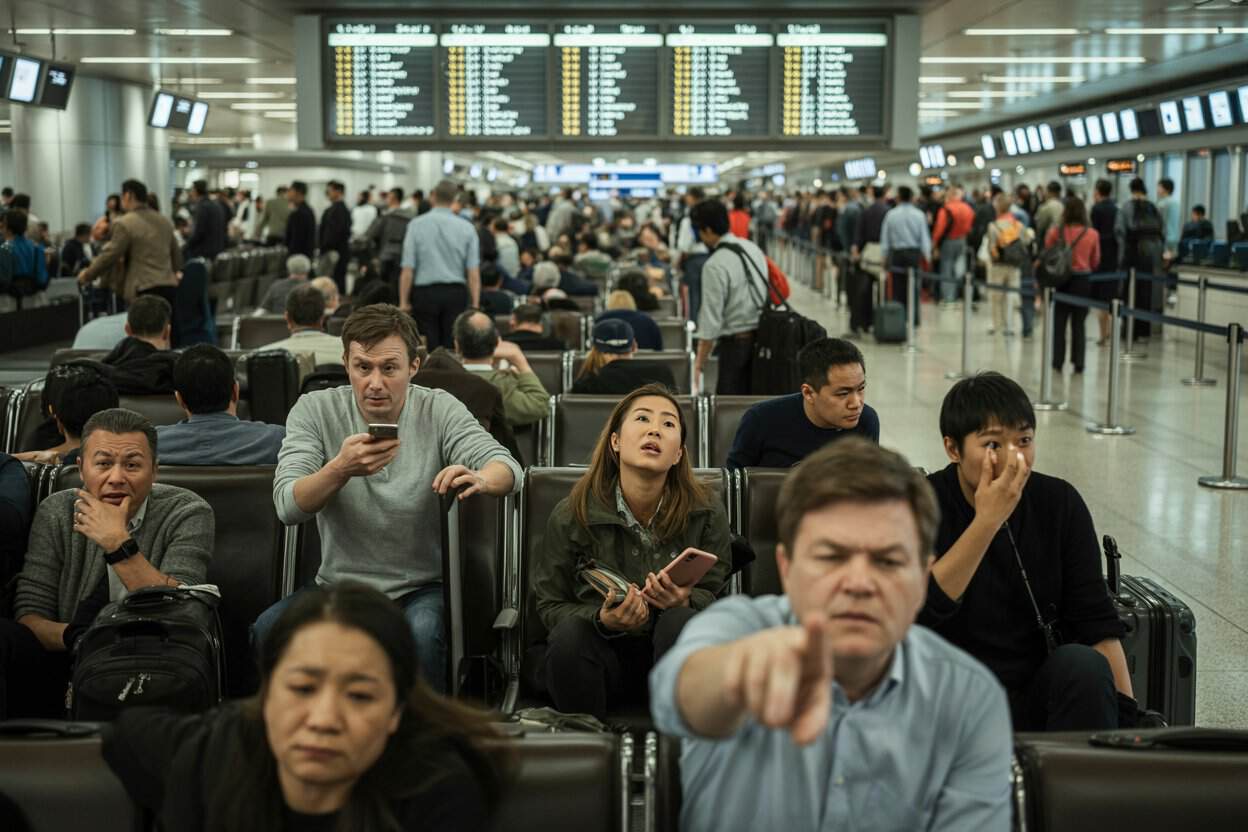
Image generated with Ai
For travellers arriving or departing through San Diego International Airport on Monday, the usually smooth experience of catching a flight turned into frustration and confusion as more than 140 flights were delayed and two were cancelled, leaving passengers anxious, inconvenienced and scrambling to salvage travel plans. The delays and cancellations were not isolated technical glitches but the result of a powerful confluence of stormy weather sweeping across Southern California and an ongoing staffing crunch that has strained airport operations.
This once‑in‑a‑day disruption at SAN — also known as Lindbergh Field, the primary international airport serving the San Diego–Tijuana region — delivered a stark reminder of how even established airport systems can falter when weather and workforce issues collide. Many travellers told local news outlets they had to endure hours of waiting at terminals, with children tired and elderly passengers struggling to keep spirits up amid repeated flight updates and uncertainty.
Storm Front and Strong Winds Behind the Delays, Weather Service Warns
The National Weather Service issued a flood advisory and strong wind warnings for San Diego County on the day of the disruptions, flagging coastal gusts of up to 45–50 knots that battered runways and slowed aircraft movements. According to flight‑tracking data published on airport and aviation websites, at least 140 flights into and out of SAN were delayed, with only two flights ultimately being cancelled due to the weather‑related slowdown.
Aviation officials temporarily halted air traffic in the morning as wind speeds exceeded safety thresholds, a move that rippled through the airport schedule. As each delayed departure and arrival fell behind, controllers and airlines struggled to reorganise flights and ground operations, contributing to a backlog that stretched throughout the day.
Advertisement
Advertisement
FAA Data Shows Minor Arrival/Departure Delays — But Reality Tells Another Story
Real‑time flight status from the Federal Aviation Administration (FAA) shows only short airborne and ground delays of 15 minutes or less at the time of the latest update. However, these figures do not fully capture the accumulated delays impacting passengers on the ground.
Experts explain that individual flight statuses may show short delays, but when an airport system experiences a cascade of postponed departures due to weather or staffing disruption, the practical experience for passengers can be dramatically longer. Aircraft queues, runway workload limits, and gate availability all factor into compounded delays beyond what basic FAA metrics immediately reflect.
Advertisement
Advertisement
Staffing Shortages Add Pressure: Security Lines and Controller Gaps Reported
Beyond the weather, ground operations at SAN have been stretched by staff shortages — especially among Transportation Security Administration (TSA) workers and air traffic controllers. Recent reports by local broadcasters highlighted long security queue times at TSA checkpoints, with travellers describing queues stretching out of terminals and onto sidewalks.
A senior airport official, speaking on condition of anonymity, told journalists that the staffing shortfall has been exacerbated by nationwide workforce constraints and intermittent federal funding issues that have left some key roles under‑resourced. The result: slower processing of passengers and more pressure on remaining staff to maintain safety and service levels.
Advertisement
Advertisement
TSA representatives confirmed that some agents have been working extended hours, while others have taken time off due to the strain, compounding the capacity gap. This, combined with reduced staffing in air traffic control towers, means fewer aircraft can be managed safely, even under otherwise normal conditions.
Frustrated Passengers Speak Out: Social Media Buzzes With Complaints
Social media platforms were awash with passenger complaints on the day of disruption. Videos and posts showed travellers standing in crowded terminals, passengers holding boarding passes with repeatedly changing departure times and families trying to keep calm among weary crowds. Some passengers shared clips of flight information boards flickering with “Delayed” tags beside dozens of flight numbers — a stark visual of the chaos.
One San Diego resident told a local news crew that they arrived at the airport more than four hours before a scheduled departure only to be told their flight was delayed with no confirmed new time. “It’s stressful,” the traveller said. “You’re not sure if you should wait here, call your ride, or try to rebook. It feels like we’re in limbo.”
Airport Authority Responds: Advice and Reassurance for Travellers
The San Diego County Regional Airport Authority, which oversees SAN operations, issued an advisory urging travellers to check their flight status with airlines before arriving at the terminal and to allow extra time for security screening and boarding procedures. The authority also pointed to weather forecasts and ongoing staffing challenges as key contributors to congestion.
Authority representatives emphasised that safety remains the top priority, noting that high winds and turbulent conditions around coastal areas can affect aircraft performance during take‑off and landing. They also reassured passengers that airport teams were working closely with airlines, TSA and the FAA to smooth operations and minimise further disruptions.
Broader Aviation Impacts: Not an Isolated U.S. Airport Issue
San Diego’s delays mirror broader trends at U.S. airports in recent months. Across the country, major hubs have reported substantial flight disruptions, with thousands of delays and hundreds of cancellations facing travellers at airports from New York to Chicago and beyond.
Industry analysts attribute this to a mixture of weather events, seasonal travel surges, staffing gaps and equipment challenges. As holiday and spring break travel peaks approach, airlines and airports are under pressure to balance demand with safe and efficient service — a balance complicated when unforeseen events strike.
Passenger Rights and Tips for Travellers Affected by Delays
Passengers stranded or delayed at SAN are advised to:
Check airline apps and airport displays frequently for real‑time status updates.
Contact airlines immediately if they miss connections to explore rebooking options.
Keep receipts for expenses incurred during long delays, as some carriers may offer compensation or reimbursement.
The U.S. Department of Transportation (DOT) outlines passenger rights related to delays and cancellations — including obligations for refunds in the event of major schedule changes — and passengers can consult these resources for guidance.
Conclusion: A Stressful Day at SAN Highlights Vulnerabilities in Travel Networks
By the early evening, many of the delayed flights from San Diego International Airport were finally underway or rescheduled, but the hard reality for travellers was a day marked by uncertainty, long waits, and stress. Children tired from extended waits, business travellers missing vital connections and holiday plans put on hold were all testaments to how quickly airport disruptions ripple through personal lives.
As airlines and airport authorities reflect on lessons from this disruption, passengers, too, are reminded of the unpredictable nature of modern travel — where weather patterns and workforce capacity can dictate the smoothness of a journey as much as ticket price or seat class.
Despite the frustration, airport leaders urge patience and preparedness, emphasising that safety and security will always guide operational decisions — even when it means a delayed take‑off on a stormy San Diego afternoon.
Advertisement
Advertisement
