
In most kitchens, the chef has tried every aspect of the menu. But Gordon Drysdale, the culinary director for Top 100 restaurant Scoma’s for the past 12 years, hasn’t tried many of the restaurant’s best sellers. He’s never tasted the crab cakes or savored the famed lazy man’s cioppino. He skips the shrimp and the Dungeness crab.
Drysdale has a shellfish allergy.
Al and Joe Scoma opened Scoma’s on Pier 47 in Fisherman’s Wharf in 1965, catering to fishermen with their Sicilian mother’s cooking, such as the cioppino, a seafood soup made of “Mama Scoma’s tomato broth” and a bounty of shellfish: crab meat, scallops, clams and mussels. Now the restaurant virtually rules the pier, down to the street name — renamed Al Scoma Way in 2002.
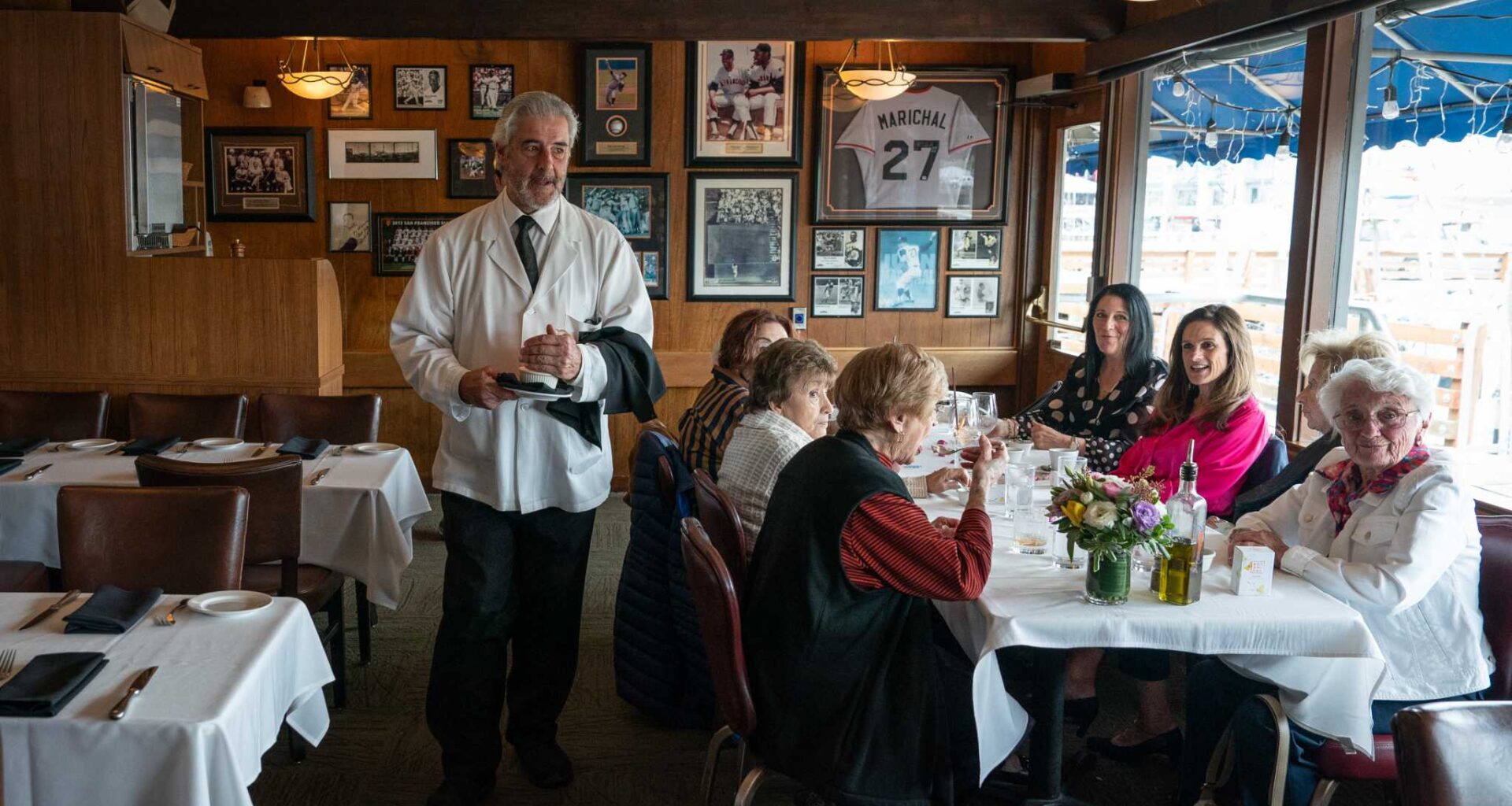
A historic restaurant on the docks with timeless swagger, Scoma’s is perpetually busy with both locals and tourists donning recently acquired San Francisco tees and backpacks. They come initially for freshly caught fish and the setting, a space awash in wood and stuffed leather, where Louis Armstrong and Etta James tunes play at soothing volume. But they return for the seasoned hospitality of waiters with decades of experience uniformly donning white jackets and black ties. Whereas most Wharf restaurants can feel like tourist traps, Scoma’s is the exception — a Top 100 restaurant among fast food chains and bread bowl peddlers.
Drysdale joined the ranks in 2014 after a decorated cooking career that included stints at the now-shuttered Fog City Diner and Bix in San Francisco, as well as his own Gordon’s House of Fine Eats, which closed after the original dot-com bust. Over his decade-plus at the helm, Drysdale has helped modernize Scoma’s, ridding the kitchen of frozen vegetables and implementing more seasonality.
Drysdale was no stranger to working with shellfish in his career — “in most kitchens, you’re going to have to deal with shellfish, so avoiding it was never really an option” — but Scoma’s, which sells more than 400 cioppinos and 100 crabs (whole and half) per week, presented some unique challenges. Early on, working with a large batch of Dungeness crab, he had a flair up from steam exposure alone. Over time, Drysdale has put systems in place to immediately address reactions. “We take it seriously,” he said. “We have EpiPens in the kitchen.”
But the most important system is trust in Drysdale’s well-trained cooking team. He relies on chefs Luis Alvarenga and Salvador “Chava” Gomez, two members of the kitchen leadership team, who Drysdale describes as “deeply experienced in handling shellfish.” They manage the bulk of menu prep and they’re tasked with doing final tastes of every dish with shellfish. “Over time, that trust becomes second nature,” he said.