
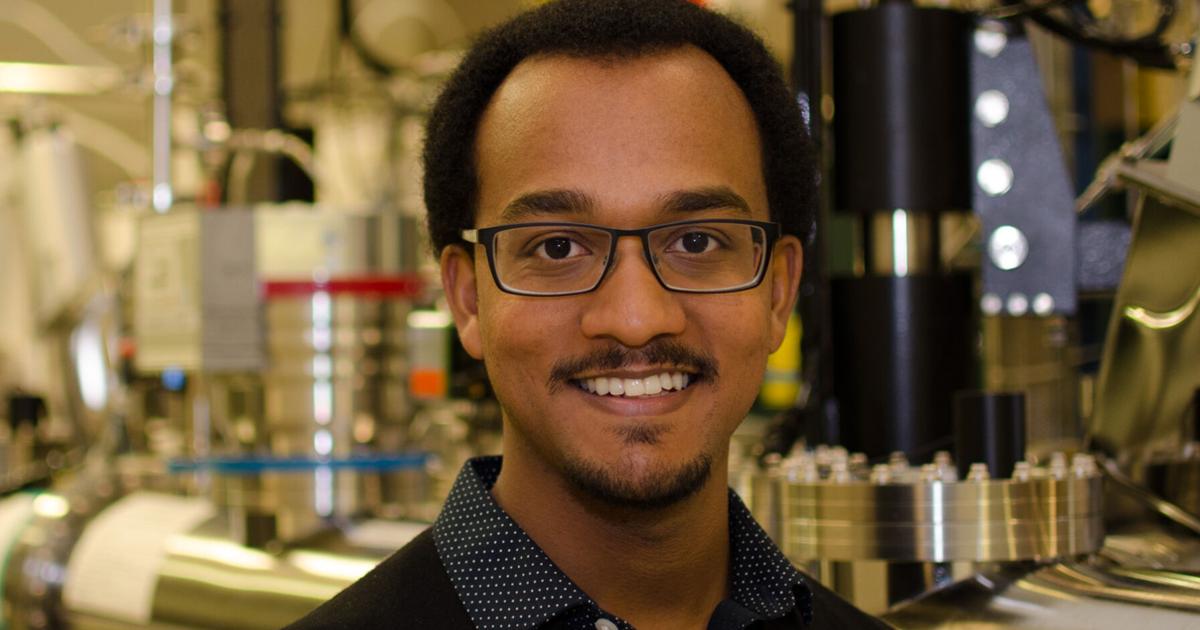
UC Berkeley associate professor of chemistry Kwabena Bediako is under investigation by campus following accusations of sexual harassment and discrimination from a graduate student, detailed in a widely circulated letter.
The letter has amassed 786 signatures from science students, researchers and faculty from universities across the country, including UC Berkeley, Stanford University, Harvard University and Columbia University.
“Getting into this program was one of the most exciting and important things to happen to me in my life, and I was prepared to put everything on hold to fully dedicate myself to earning a PhD,” said the student in the letter. “I am appalled that this occurred at an institution that I chose because of its prestige and my belief that, as a woman, I would be afforded the same opportunities and support to succeed.”
During his time at UC Berkeley, Bediako has won various awards and honors, including the Heising-Simons Faculty Fellowship, Philomathia Prize and the NSF CAREER award. He also runs the Bediako Lab, which conducts research at the intersection of chemistry and physics. He is a tenured professor and bears the official title of the Cupola Era Assistant Professor, a prestigious position in UC Berkeley’s chemistry department.
Since the allegations were publicized, nearly every graduate and undergraduate student in the Bediako Lab has left the laboratory.
The student, who requested not to be named and declined to comment, filed the original Title IX complaint at the end of October. Shortly after, UAW 4811 also filed a grievance against UC Berkeley in solidarity with the student, which union member and chemistry Ph.D. candidate Ruby Kharod helped write.
The letter, which was published at the end of January, includes testimony from the student and demands for “a community where every chemist can do their job with dignity and respect.” Kharod and fellow chemistry Ph.D. candidates and UAW 4811 members Conor Broderick, Gretchen Brown and Vivian Wall wrote the letter.
According to the authors, the letter repeats allegations made by the student against Bediako that were contained in the original Title IX complaint and only “shortened” and “restructured for concision” in the letter by the student.
The student alleges in the letter that Bediako “initiated repeated, inappropriate attempts to pursue a romantic relationship” with her, often during “scientific and professional engagements.” The student described being placed in “increasingly intimate and personal situations” that were “difficult to navigate” due to the “power imbalance involved” in their adviser-mentee relationship.
These interactions included unsolicited personal messages, a 3 a.m. email about his marriage and a late-night phone call in which he “expressed intense emotions and accused (her) of not caring for him,” according to the student in the letter. She then allegedly expressed to Bediako that “advisor/student relationships are strictly professional and that he was crossing a boundary.”
In the letter, the student said during a meeting in his office about her manuscript, Bediako directly asked her to have a “more personal, presumably romantic, relationship” with him. She said she was “visibly distressed, silent, and once again fearful for (her) professional standing.”
“The interaction ended with him angrily asking whether all I wanted from him was a PhD; I responded that he should not ask graduate students questions like that,” the student said in the letter.
The student added that one week after the meeting where he “solicited a romantic relationship” with her, they both attended the Gordon Research Conference in Barcelona. She also alleged that he “continued to engage in frequent, unsolicited, persistent, and overly familiar communication that (she) experienced as coercive and intimidating.”
In the letter, the student said these behaviors included following her to her hotel room, as well as asking her to spend time alone with him by getting lunch or visiting the Sagrada Familia – a famous church in Barcelona – together.
She added that after rejecting Bediako’s advances and in the months that followed leading up to filing the grievance, he allegedly attempted to “manipulate, intimidate, or control” her.
She said in the letter that this subsequently had a “destructive effect” on her “PhD, sense of safety on campus, and emotional wellbeing.”
“As I grew into my strength and potential as a scientist, my advisor abused his position of power by conditioning my access to professional and scientific opportunities on whether I would spend time with him and invest in him emotionally,” the student alleged in the letter.
Bediako did not reply to repeated requests for comment.
Campus administrators confirmed they are aware of the letter but declined to comment on the allegations, citing their inability to comment on cases of sexual misconduct due to “campus policies and confidentiality requirements.”
The student confided in a former UC Berkeley postdoc who previously worked closely with Bediako’s lab and became her friend during the alleged harassment. The former student, who will hereafter be referred to as “A,” was granted anonymity out of fear of retaliation from Bediako.
A shared that they had always noticed that in group meetings, the student “seemed very serious and nervous but on edge.”
“How do you respond when you’re a fourth-year grad student and your adviser, who has so much infinite power over you, requests this kind of stuff?” A said. “You fear retaliation and for your Ph.D.”
Campus sophomore Lyra Alers, a chemistry major who signed the letter and worked in Bediako’s lab under the student, said she felt shocked and disappointed by the allegations.
“I got involved with the Bediako Lab in the first place because he was my professor and he felt incredibly nice and welcoming,” Alers said. “When I first read the letter, a part of me lost faith in humanity. … It felt terrible because it was someone that I had trusted in the past.”
Alers said she noticed that the quality of the student’s research suffered as a result of the alleged “unwelcoming research environment.”
She added that the student admitted to and apologized for her “inability to focus on her research” to her and another undergraduate student in the lab.
“I still felt a connection with the … graduate student, because she is incredibly sweet, and super open to helping me,” Alers said. “I think she’s an amazing teacher … a great graduate student and a great all-around person. To hear that she was suffering like this was also very hurtful.”
Alers said following the Title IX complaint, she and her undergraduate peer in the lab were subsequently “legally obligated to have a second person in the room with them” if they were ever going to have any research or one-on-one meetings with Bediako.
This semester, Bediako was one of the professors slated to teach Chemistry 4B, “General Chemistry and Quantitative Analysis,” a foundational course in the College of Chemistry. However, freshman chemical engineering major Oscar Wahl — who is enrolled in the course — said Bediako is no longer teaching it.
According to campus, Bediako is still employed and working at UC Berkeley.
“There was just sort of this awkward silence … waiting to see whether … our lecture would start with a, ‘Hello … here’s why your teacher isn’t here,’” Wahl said. “I felt really disappointed when we jumped into learning about kinematics instead of bringing up that … it was a university failure as a whole: to not teach, to not take better care of his students.”
In a statement to The Daily Californian, campus spokesperson Janet Gilmore said the safety of students, faculty and staff is “paramount” to campus, and that administrators are “committed to fostering a climate where all members of our community are protected from sexual harassment.”
The letter also includes allegations against Daniel G. Nocera, a professor of energy at Harvard University, from a former researcher in his laboratory. The researcher makes allegations against both Bediako and Nocera from Bediako’s time working under Nocera during his graduate studies at Harvard.
According to the letter, the allegations began in late 2013 while the researcher was Bediako’s mentee and research assistant during the course of her studies there.
The Daily Californian has been unable to confirm whether the student ever made a formal complaint concerning her allegations.
“I take seriously my professional and ethical responsibilities and have never — and would never — callously dismiss allegations of sexual assault or harassment,” Nocera said in a statement to The Daily Californian.
In response to these allegations, the letter called for campus to cancel Nocera’s presentation of UC Berkeley’s annual Glenn T. Seaborg Memorial Lectures in Inorganic Chemistry on Feb. 13 and 20 and demanded that he no longer be invited for any future seminars.
The chemistry department administration did not cancel the event, which prompted students to plan a walkout during the lectures. The College of Chemistry’s chemistry department chair sent an email the day of the first planned lecture notifying students that the lectures had been postponed.
“We look forward to hosting Prof. Nocera at a future time to present his groundbreaking science to bring energy and food sustainably to under-resourced populations,” the email read.
Campus spokespeople have also confirmed that they plan to reschedule the lectures.
“It was definitely a little disappointing to see them scramble to cover their asses and yet not make a very clear statement against having this guy come speak,” said Abigail Derrico, a physics graduate student researcher and UAW 4811 member.
The letter also demands that Bediako’s future employees be notified of the complaints against him and that a “peer-led, anti-harassment training” be jointly developed and implemented for the department’s faculty in order to “foster a sense of accountability.”
According to an email written by the letter’s co-authors, campus declined to respond to the letter’s demands for a new SVSH training.
The training would be based on the existing Respect is Part of Research training for graduate students, a specialized sexual violence and sexual harassment, or SVSH, workshop that was originally developed in 2013 for UC Berkeley’s physics department and has since been used in other STEM departments.
The training was originally created by a group of graduate students who wanted to reduce the frequency of sexual harassment in the physical sciences, according to its website.
According to Derrico, who has helped facilitate these workshops, the prevention training signals that SVSH in academia, particularly graduate studies, is an “endemic problem.”
“This is a systemic issue in academia as a whole, but especially in chemistry,” Kharod said. “You are encouraged to keep your head down, work long hours and … get results at all costs.”