
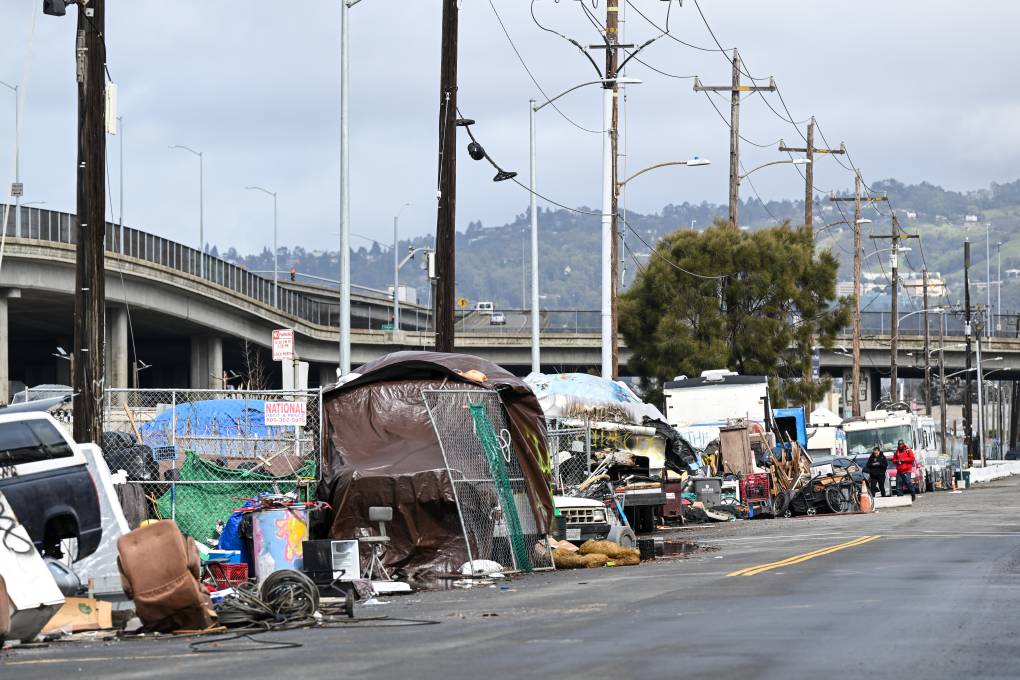
This problem has not been helped by three Oakland shelters closed their doors in the past few months.
Homelessness is on the rise in Oakland, increasing 8.5% between 2022 and 2024, according to the city’s point-in-time count. The 5,485 unhoused people in the city far outpaces the number of overnight parking spots, shelter beds, transitional housing, or permanent supportive housing units than the city currently provides, according to the bill text.
Encampment closures already skyrocketed from 240 closures in 2024 to 1,212 closures in 2025 following the Supreme Court Decision in Grant Pass v. Johnson, that permitted cities to punish people sleeping on the street even if there were no available shelter beds.
The city’s new abatement policy is less severe than Houston’s original text: Five council members amended the proposal to implement further notice and more safeguards for people who are at risk for displacement.
These include considerations to towing vehicles that house families with children and people with disabilities, allowing more time to relocate and requiring referrals to appropriate shelters that would accommodate their needs.
The city is also required to identify safe areas in all council districts to relocate affected individuals within 90 days of towing their vehicle.
Oakland’s new policy also clarifies responsibilities of the city’s Department of Transportation and the police department, according to Houston.
 Oakland City Hall in Oakland on April 28, 2025. (Martin do Nascimento/KQED)
Some public commenters at Tuesday’s meeting accused the council of trying to sneak the ordinance through with a 9:30 a.m. special meeting, outside the council’s regular schedule, because they knew how unpopular it would be.
Sharon Cornu, executive director of St. Mary’s Center in West Oakland, which advocates for seniors and young children, said she and her colleagues rescheduled their days to come to Tuesday’s meeting after closely tracking the policy for about nine months.
After the vote, Houston said he recognized Oaklanders’ frustrations around the new rules, and said it was a necessary “starting point.”
“Most people would be happy if their policy passed. I’m not. I’m really not,” said Houston, lead sponsor of the bill. “I feel hurt that we had to come to this point to make something happen for an unhoused individual … We have to start somewhere.”