
Dores André and Victor Prigent in the pas de deux from Akram Khan’s “Dust.”
Lindsey Rallo/San Francisco Ballet
San Francisco Ballet’s plans for its 2026-27 season just might qualify as some of the boldest programming in the company’s 94-year history, mixing fresh avant-gardism with beloved works.
The fourth season curated for the company by Artistic Director Tamara Rojo, announced Wednesday, April 15, will be preceded by a busy touring schedule, with engagements at the Jacob’s Pillow Festival in Massachusetts, the Edinburgh International Festival in Scotland and the Sadler’s Wells theater in London this summer and fall.
But the highlights are in 2027, represented in the six programs between January and May.
Article continues below this ad
“Rooted in risk and reinvention, and with a wide range of stories and emotions captured on stage, this season will serve as a powerful reminder that ballet is ever-evolving — and has never been more vital,” Rojo said in a statement.
The “risk” Rojo refers to comes in the form of commissioning rising choreographers Bobbi Jene Smith and Or Schraiber. The duo were members of the famously bold Batsheva Dance Company under the world-renowned choreographer Ohad Naharin. In recent years, they have gained traction creatively in the U.S., channeling Naharin’s animalistic influence into tense, often confrontational works.
Sasha Mukhamedov, left, and Joseph Walsh in Yuri Possokhov’s Violin Concerto.
Lindsay Thomas/San Francisco Ballet
Under the program banner of “Divine Creatures” (April 8-14, 2027), Smith and Schraiber’s premiere, set to music by Pulitzer Prize finalist and seven-time Grammy-nominated composer Andy Akiho, will debut on a triple-bill inspired by the legendary Ballets Russes.
San Francisco Chronicle Logo
Make us a Preferred Source to get more of our news when you search.
Add Preferred Source
Other marquee names in the ballet world scheduled for next year include George Balanchine, Hans van Manen, Christopher Wheeldon and Akram Khan.
Article continues below this ad
“SF Ballet’s 2026-27 season brings together a remarkable constellation of legendary artists—visionaries who have shaped the trajectory of ballet and those who continue to define it today,” Rojo said. “I’m especially thrilled to bring Bobbi Jene Smith and Or Schraiber, a creative partnership that is redefining what contemporary choreography can be, to San Francisco.”
But the biggest name among the Ballet’s planned commissions is William Forsythe, who will create a world premiere for the season kick-off gala on Jan. 14.
An American long celebrated for extending the language of classical ballet in thrillingly innovative directions, Forsythe has a history with the Ballet stretching back to 1987, when he first began to garner international acclaim as the director of Ballett Frankfurt. Forsythe’s three-part “Blake Works” set to the pop music of James Blake was a hit of the soon-concluding 2026 season, offering breakthrough roles to many of the company’s 81 dancers and prompting patrons to return for multiple casts.
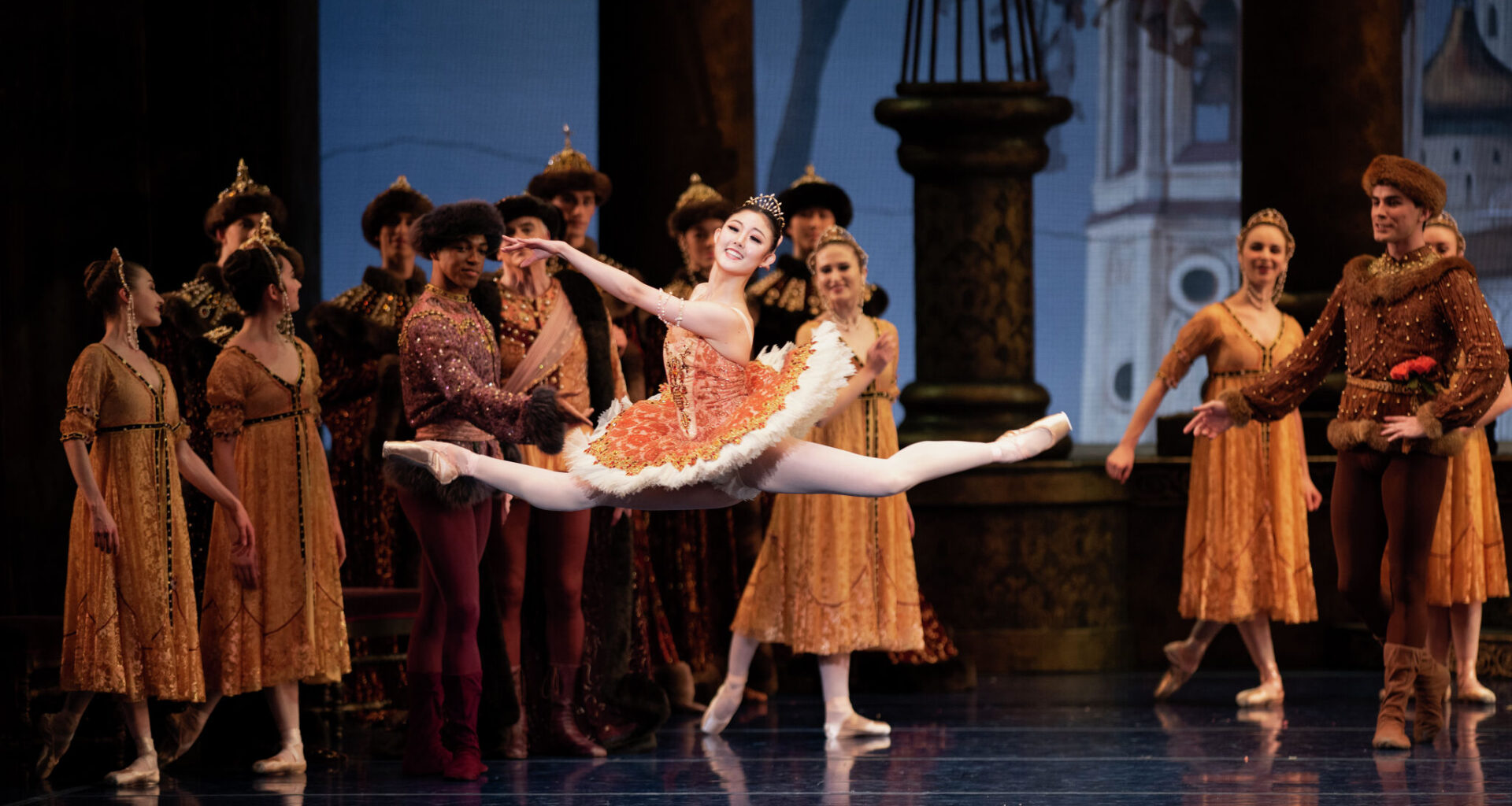
Wona Park in Helgi Tomasson’s “The Sleeping Beauty.”
Erik Tomasson/San Francisco Ballet
Following the gala, the company will open the 2027 season with the 19th-century classic “The Sleeping Beauty” (Jan. 29-Feb. 7) in former artistic director Helgi Tomasson’s resplendent production. Cherished for its rich Tchaikovsky score and choreographer Marius Petipa’s crystalline classicism, “Sleeping Beauty” offers ballerinas a chance to make their mark in one of the repertory’s most iconic and challenging lead roles.
Article continues below this ad
The second program is titled “Titans of Choreography”(Feb. 16-21) and brings together works familiar to San Francisco audiences from the last two years. The most striking of these is the highly erotic “Grosse Fugue,” by the recently deceased, revered Dutch choreographer van Manen. It will be performed alongside a revival of Wheeldon’s sweetly lyrical “Within the Golden Hour,” with acclaimed new costumes, commissioned by Rojo in 2025, by designer Zac Posen, executive vice president and creative director of San Francisco retail giant Gap Inc. Khan’s theatrically striking remembrance of World War I, “Dust,” first danced here that same year, rounds out the program.
The 2027 season will then move on to Balanchine’s full-length “Jewels” (Feb. 27-March 7), not danced in full by the company for 19 years. It comprises three stylistically contrasting ballets by the 20th century’s most consequential choreographer: the romantic “Emeralds,” to Faure; the jazzy “Rubies,” to Stravinsky; and the majestic “Diamonds,” to Tchaikovsky.
This will be followed by another dose of Balanchine,when the company revives the master’s “Midsummer Night’s Dream”(March 19-27), a work that condenses the Shakespeare play into one brisk, magical act, then crowns the ballet with a second act of pure neo-classical dancing.
“Midsummer Night’s Dream” was an audience favorite when Rojo brought it back, with costumes by acclaimed Parisian designer Christian LaCroix, in 2024.
San Francisco Ballet School Students in George Balanchine’s “A Midsummer Night’s Dream.”
Lindsay Thomas/San Francisco Ballet
Smith and Schraiber’s ballet will then premiere April 8-14.
Article continues below this ad
The piece will be danced alongside Sidi Larbi Cherkaoui’s “Faun,” to Debussy’s famous “Afternoon of a Faun” score. “Faun” will mark a San Francisco Ballet debut for the Flemish-Moroccan choreographer.
Rounding out the Ballets Russes-inspired “Divine Creatures” program is resident choreographer Yuri Possokhov’s 2023 “Violin Concerto,” set to the Stravinsky score composed in 1931.
The season will then close with Kenneth MacMillan’s “Manon” (April 23-May 2), the surprisingly relevant and psychologically complex story of an impoverished woman struggling to survive in a world of lascivious wealthy men. With its stirring mélange of music by Massenet and its extraordinarily realistic acting style, “Manon” marked a season high when the company danced it in 2025.
All of this will be preceded by the return of Tomasson’s production of “Nutcracker” (Dec. 4-27). Single tickets for “Nutcracker” range from $35 to $650.
Single tickets for the Ballet’s repertory season range from $36 to $565, with the six-series package starting at $168.
Article continues below this ad
The Ballet’s roster of dancers, to be announced soon, will be reduced by four for a total of 77 dancers next season, according to the company.
Rachel Howard is a freelance writer.