
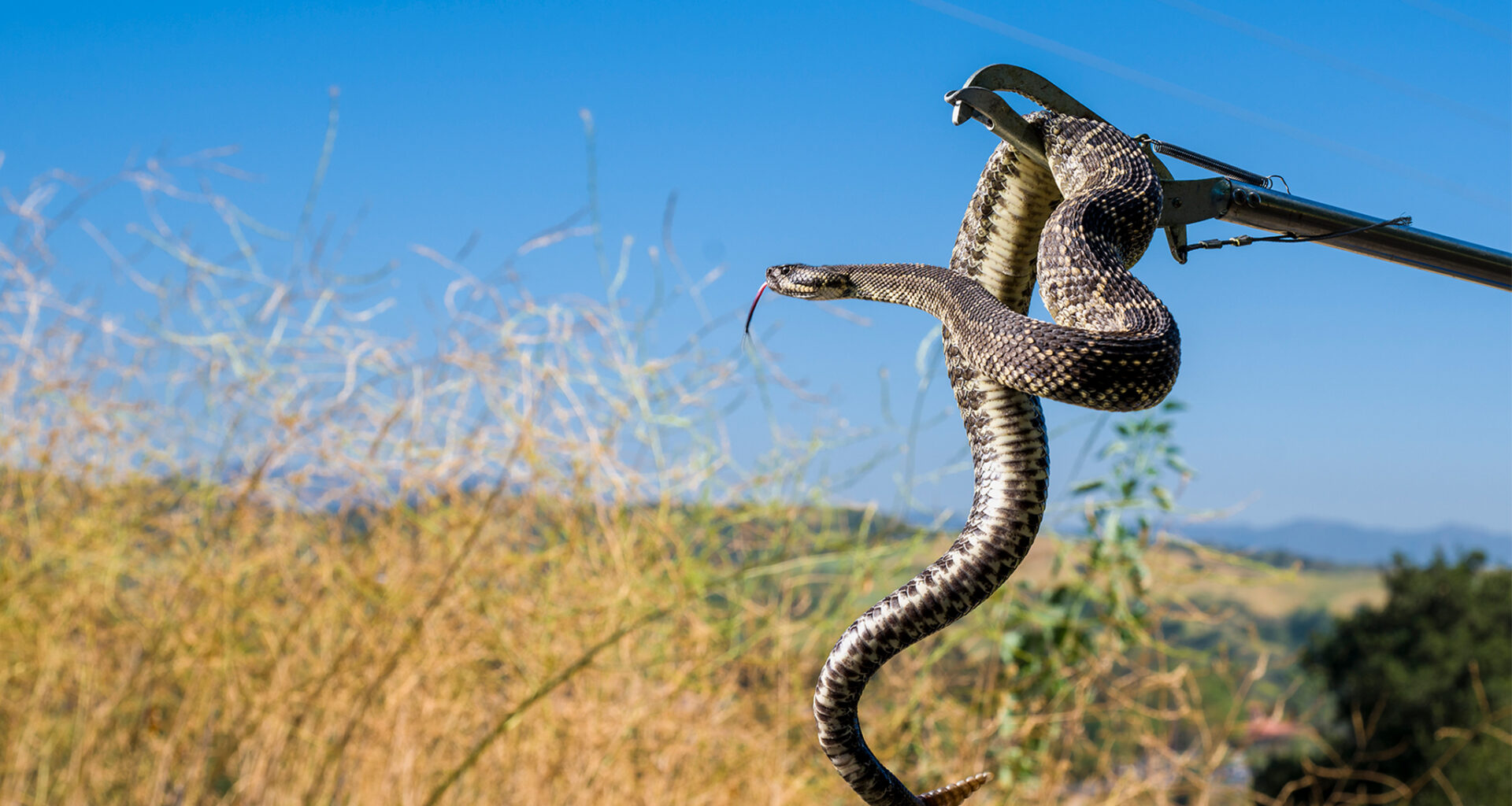
FILE: A captured rattlesnake squirms in snake tongs on March 24, 2026.
MediaNews Group/Getty Images
First responders rushed to a trail in Santa Barbara County on Sunday to assist a hiker who said a rattlesnake bit her ankle. The emergency marked the latest in a series of unfortunate rattlesnake encounters in California this spring.

After firefighters carried her down the trail, the hiker went to a nearby hospital for treatment, Montecito Fire Department spokesperson Christina Atchison told SFGATE. There was no additional information about her condition as of Wednesday.
Article continues below this ad
The bite comes after two recent fatal rattlesnake bites in Southern California in 2026 — which together were highly unusual given that nationwide, only about five people die from snakebites of any kind each year.
“It’s just so terribly tragic that these deaths happened, and it’s something that’s really rare,” Emily Taylor, the director of Cal Poly San Luis Obispo’s Physiological Ecology of Reptiles Lab, told SFGATE.
An upward trend of viper encounters seems to be emerging this year, including the two fatalities. A 25-year-old mountain biker died after a rattlesnake bit him on trail in Orange County on Feb. 1, and a 46-year-old hiker died after bite in Ventura County on March 14. Meanwhile, Ventura County Fire Department has responded to six calls about rattlesnake bites since mid-March, compared to nine total bite calls and no deaths in 2025. A county spokesperson said that for all snakebites, 10 people went to an emergency department last month, while typically there are fewer than two visits in March.
Article continues below this ad
In San Luis Obispo and Santa Barbara counties, Taylor runs a hotline where she takes rattlesnakes out of residential yards and relocates them into the wild. She said there was a “massive increase in traffic,” with about 40 calls in March alone, compared with the typical one or two that month. She normally only gets about 100 calls annually.
This year, the California Poison Control System recorded 77 calls about rattlesnake bites through March, compared with up to 300 annual calls on average, according to the Los Angeles Times.
Among scientists who study the approximately seven rattlesnake species that call California home, there seems to be agreement that the unprecedented heat in March drew the reptiles into the open earlier than normal. Assuming winter was over given the balmy weather, the males came out of hiding to search for mates, and all the snakes were looking for food.
Article continues below this ad
“They’re absolutely out early,” William Hayes, a Loma Linda University professor who studies rattlesnakes, told SFGATE. “I monitor some dens where they overwinter, and they emptied a month early. Everything is early in California here this year, so we shouldn’t be surprised at this early surge in snake bites.”
Taylor added: “We know for a fact that because of the weather, they came out early.” Other reasons why the reptiles have been more active are more speculative, she said.
“We had a relatively wet early winter, so I can speculate that we’re potentially having some booms in rodent activity, for example. I’ve noticed qualitatively that a lot of the snakes have food items in their bellies a little early compared to normal,” she said.
Another possible part of the story is that more people were out on the trails enjoying the unseasonably pleasant weather, Taylor added.
Article continues below this ad
Despite these explanations, two fatal bites occurring so close to one another was statistically unlikely, according to both herpetologists. Although the culprit species in both cases was probably a Southern Pacific rattlesnake, which has highly toxic venom that can lead to more severe symptoms, the odds of death from a rattlesnake bite are extremely low. Neither could explain for sure what happened in the recent events.
“People often assume one snake bite is the same as another snake bite,” Taylor said. “But the truth is that a lot of factors impact the severity of a snake bite, such as how much venom is injected, the composition of that venom, the health of the person bitten, and even whether people were exerting themselves out on the trails.”
Andrew Dowd, a spokesperson for Ventura County Fire Department, offered some safety measures, including staying on clearly marked paths, avoiding tall grass, wearing hiking boots and long pants, and watching your feet.
“Every encounter that has happened here in Ventura County has been accidental,” he told SFGATE. “Avoiding them is the best way to protect yourself.”
Article continues below this ad
In the case of a bite, getting to a hospital as soon as possible for antivenom is the only option as first responders don’t carry it, according to Hayes, so be sure to take a charged cellphone when exploring outdoors so you can call 911 in the event of an emergency.
“Please remember that these snakes are not out to get us,” Hayes said. “When they see us, their heart rate goes up and their first instinct is to not move and hope that we don’t see them. Once they realize we might be approaching them, then they’re going to defend themselves, but only as a measure of last resort.”
For more tips on rattlesnake safety in the Bay Area, the East Bay Regional Park District issued an advisory on April 6 with more guidance.
Article continues below this ad