
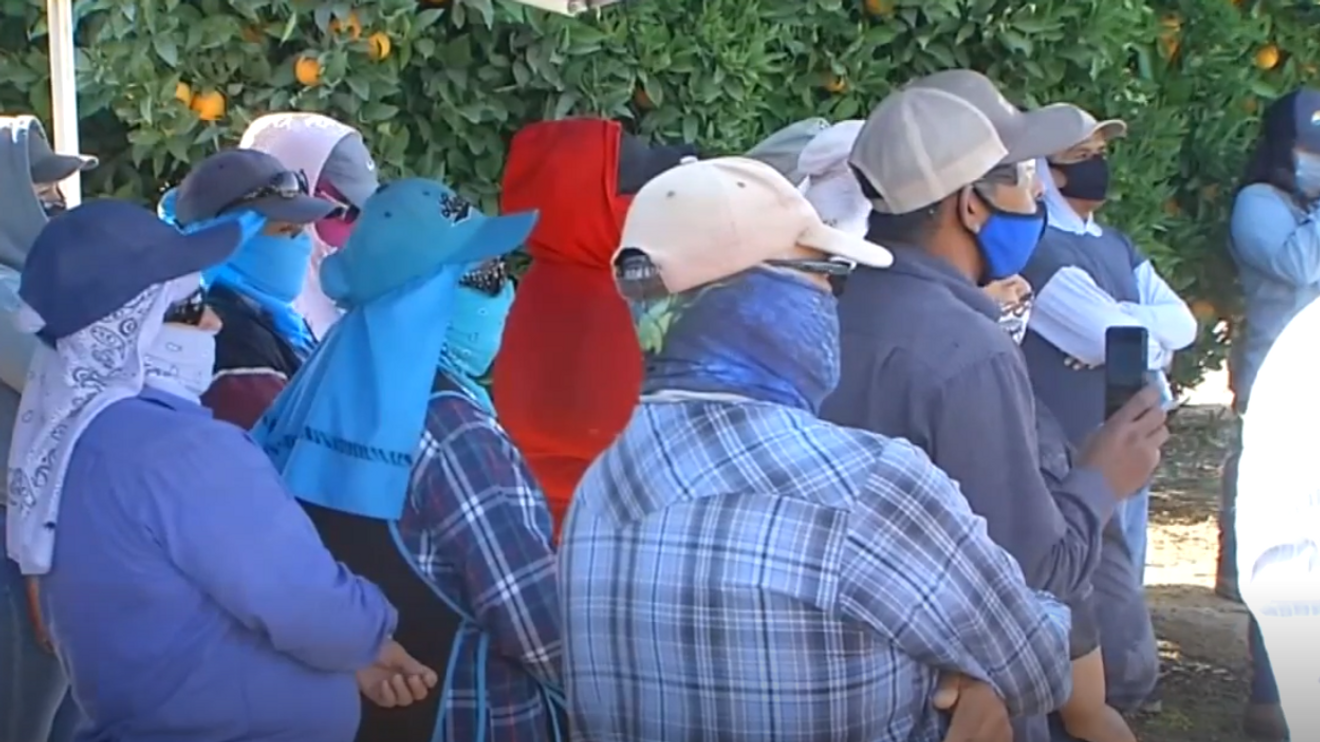
BAKERSFIELD, Calif.(KBAK/KBFX) — A proposal moving through the California Legislature could raise pay for some agricultural workers to nearly $20 an hour, but economists and farm advocates say it may also push up grocery costs and force difficult decisions for growers.
Assembly Bill 2646, introduced by Assembly Member Krell on Feb. 20, 2026, would set a new minimum wage for certain agricultural workers in California. The bill would require the minimum hourly wage for an “approved agricultural employee” and a “corresponding employee,” as defined in the measure, to be $19.75 per hour.
It defines an “approved agricultural employee” as an employee engaged in agriculture who is a resident outside of California and is permitted to work in the state on a temporary or seasonal basis through an application process approved, in part or in whole, by the Labor and Workforce Development Agency or the Employment Development Department. A “corresponding employee” is defined as a worker engaged in agriculture who is a California resident or who is not an approved agricultural employee, and who performs the same or substantially similar work as an approved agricultural employee for the same employer in the same county.

CSU Bakersfield economist Professor Richard Gerhart said higher wages could help many workers and their families. “It does lift a not insignificant fraction of these workers out of poverty, and it provides a lot of extra benefits to the families of these workers,” Gerhart said.
But the Kern County Farm Bureau warned the change could have broader impacts on farm operations.
“These adjustments usually ripple through the system in a variety of ways, whether that is in hours, staffing, or production decisions,” the organization said in a statement.
The bureau also said, “Historically, when labor costs increase in agriculture, it doesn’t happen in isolation.”
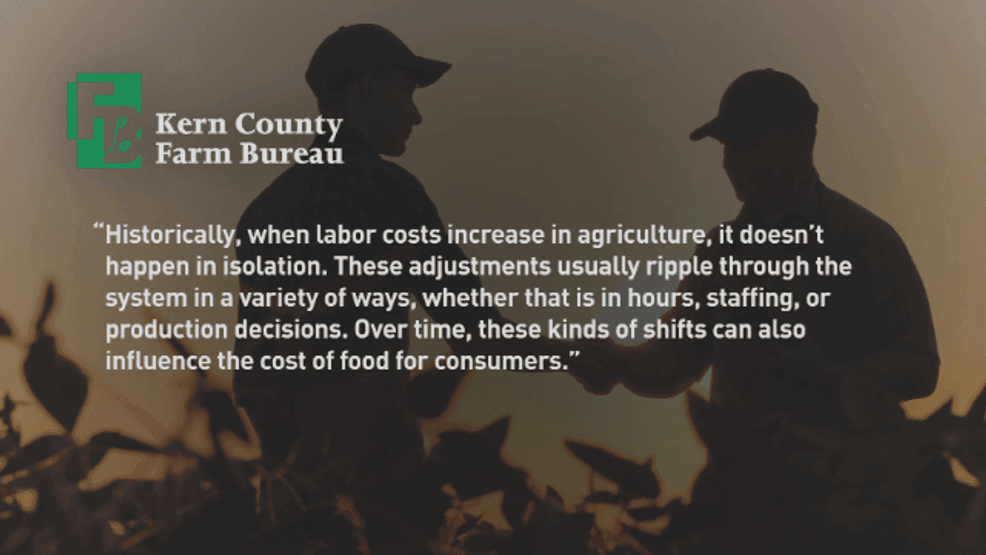
Kern County Farm Bureau’s statement regarding CA AB2646.{ }
Gerhart said Kern County is expected to feel the impact more because of the region’s economic ties to agriculture and other blue-collar industries.
“We have a lot of vibrant industries that connect Northern and Southern California,” he said.
He said the biggest price increases would likely show up in products grown in California, including fresh fruits, vegetables, and tree nuts, while items such as dairy or wheat may see less of an impact.
Gerhart said consumers are already facing rising food costs.
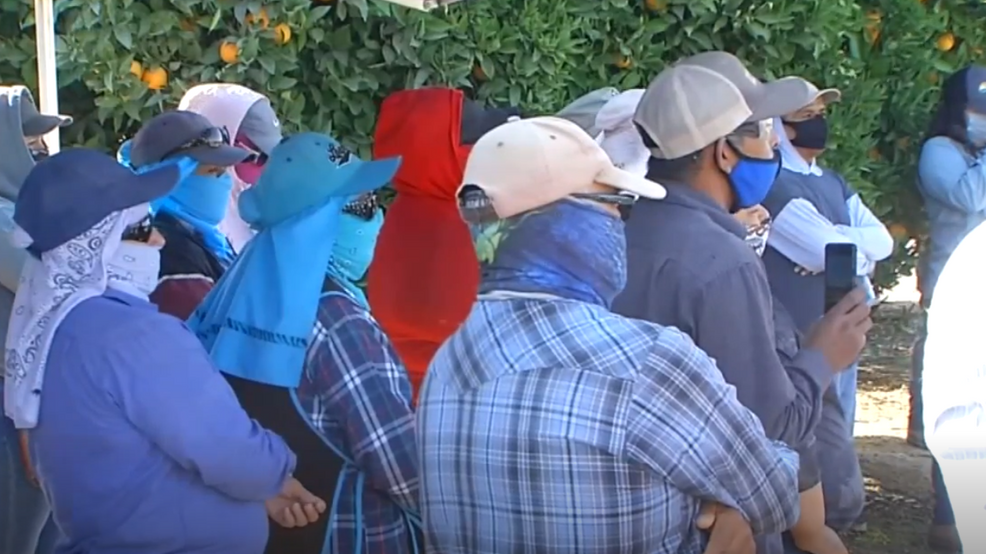
Agricultural Workers (Clip from video) High number of COVID cases among Latino communities are raising concerns that the virus could reach farmworkers.{ } (KBAK/KBFX)
“And so, you know, we’re already in an inflationary environment where food prices are increasing about 4% per year. So it’s not going to be a large increase, but it is going to be noticeable,” he said.
If AB 2646 is approved, the new wage would take effect Jan. 1, 2027.
The bill also calls for the $19.75 hourly wage to be adjusted each Jan. 1 after that by an amount equal to the cost-of-living adjustment for Social Security benefits, as published by the Social Security Administration.