
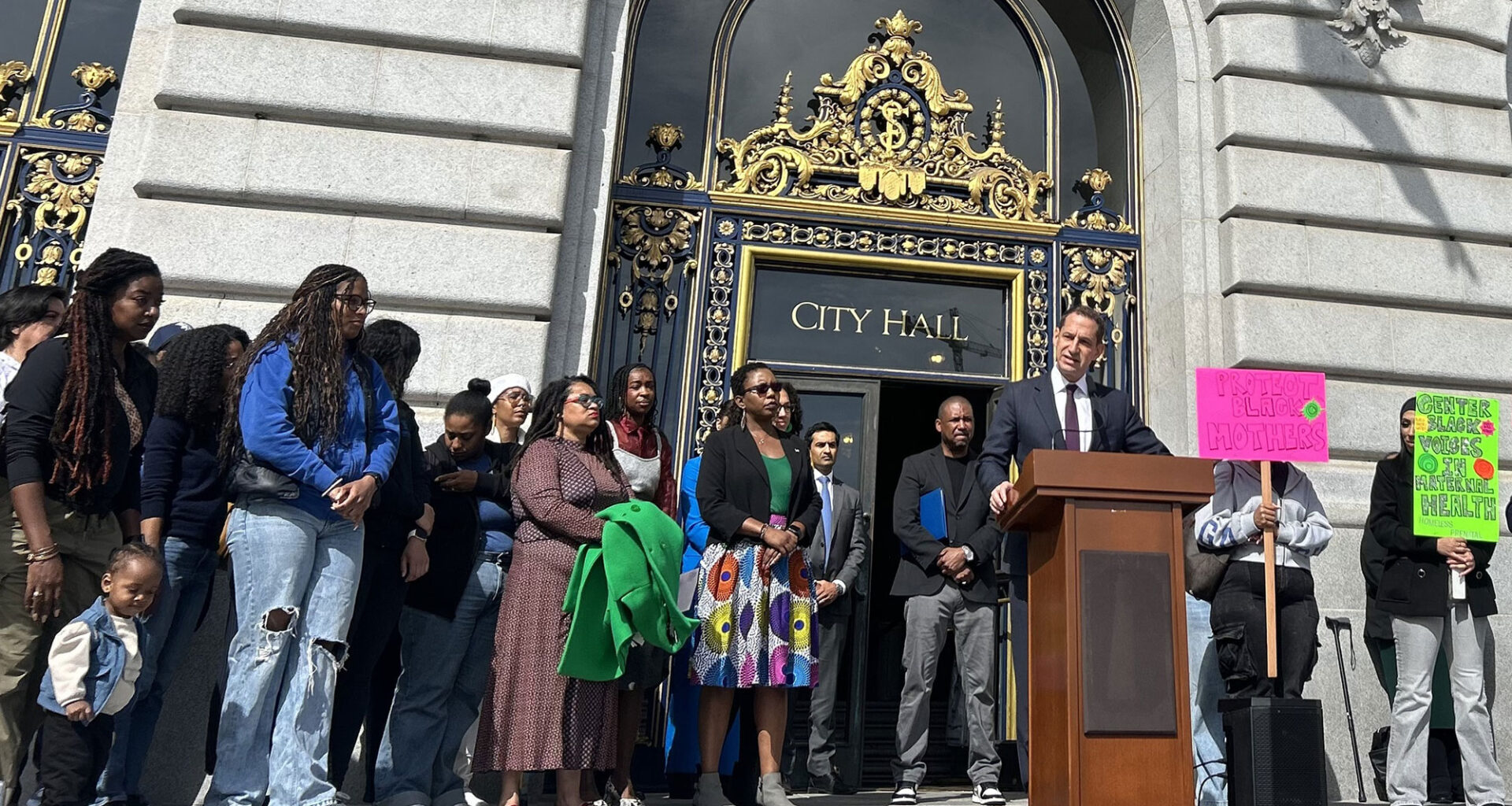
A large crowd of city and community leaders rallied on the steps of San Francisco City Hall to raise awareness over the city’s disparities in Black maternal and infant health.
San Francisco has one of the worst rates of Black maternal and infant mortality in the state, according to the city’s Department of Public Health.
 Supervisor Shamann Walton speaks at a rally for Black Maternal Health Week in San Francisco on Wednesday, April 15, 2026. San Francisco has the highest Black infant mortality rate in the state, according to Walton. (Alise Maripuu/Bay City News)
“It is highly unacceptable that San Francisco has the highest rate of infant mortality for Black women in the state of California,” Supervisor Shamann Walton said in a speech at the Wednesday rally. “We have the resources, we have the people power to make sure that we change those outcomes, and that’s why we are here this morning.”
For example, Black infants represent only 4% of births in San Francisco yet make up 20% of all infant deaths in the city, said Mayor Daniel Lurie at the rally. Additionally, of the 10 documented maternal deaths in recent years in the city, half were Black mothers.
“That is a damn shame,” said Supervisor Myrna Melgar. “A damn shame in a city that has universal health care and has as many resources as we do.”
The rally was a part of Black Maternal Health Week, an annual campaign across the country dedicated to bringing attention and action in improving Black maternal health. Several community organizations helped put on the rally, such as SisterWeb, a group that provides doulas at no cost to Black pregnant women in the city.
Many factors behind disparities
The origins of these disparities, speakers said, are intersectional and cannot be pointed to one reason. Factors like systemic racism, from redlining to food deserts in Black communities, have impacted the health outcomes of Black pregnant women and their infants.
“We are fighting for the right to give birth free from the fear of facing violence, trauma and death in the process,” said Dr. Katie Brown, and obstetrician and gynecologist at UCSF. “That means assuring that families have the opportunities to thrive, have access to healthy foods, have access to safe and affordable housing, and can live in communities that are safe.”
After the rally, the group of Black community leaders gathered inside City Hall for a panel discussion on identifying solutions to the disparities.
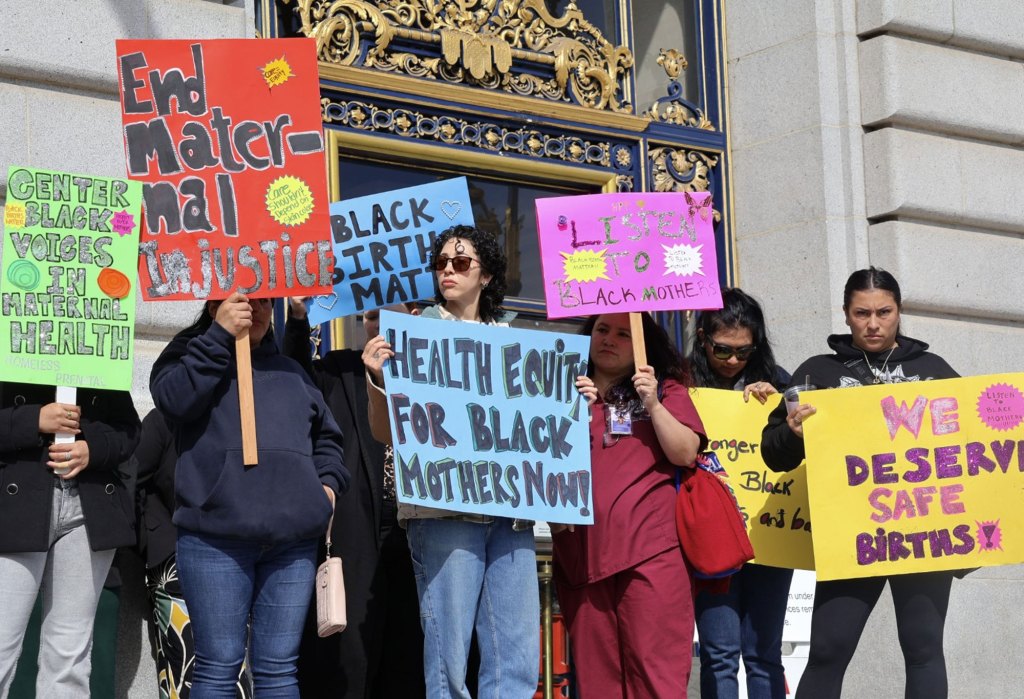 Activists hold signs on the steps of City Hall at a rally for Black Maternal Health Week in San Francisco on Wednesday, April 15, 2026. (Alise Maripuu/Bay City News)
They emphasized the importance of sufficient funding to support nonprofits doing the work to provide services for Black mothers, building community and more safe spaces for Black women who are expecting, and growing relationships between nonprofits and the government.
“Right now, we need an alignment,” said Marlee-I Mystic, co-executive director of SisterWeb. “Alignment between community leaders and city policy, alignment between health care systems and community-based care, and alignment between awareness and real investments in the solutions that we know are working.”
As a city, San Francisco invests over $20 million toward maternal and infant health each year. But those investments have not reduced the racial disparities in maternal and infant health, Lurie said.
“Now we know that in San Francisco, far too many black families experience disparities in maternal and infant health that are preventable,” he said at the rally.
Efforts to improve maternal care
Lurie recently launched the Strong Starts initiative aimed at improving maternal health outcomes through bringing together city departments to align on programs and strategies that work toward reducing the disparities.
“This is a coordinated citywide effort, bringing together departments, health systems and providers, and grounding the work in the lived experience of Black moms to every family, every advocate, every midwife, doula and nurse doing this work,” he said.
“Now we know that in San Francisco, far too many black families experience disparities in maternal and infant health that are preventable.”
Mayor Daniel Lurie
While Black Maternal Health Week is formally designated during one week out of the year, advocates for improving Black maternal health hope that government leaders recognize that racial disparities in birth outcomes is an issue that requires consistent attention and investment.
“To our city leaders and policy makers who are here today, we thank you for being present,” Mystic said. “We invite you to continue to partner with community organizations to ensure that Black maternal health is not just recognized for one week, but supported through sustained commitment policy and investment, because when Black mothers are supported, heard and safe, our entire city becomes healthier and stronger.”