
Read Mission Local often?
Help grow our newsroom, joining the 3,250 readers who support us by giving below.
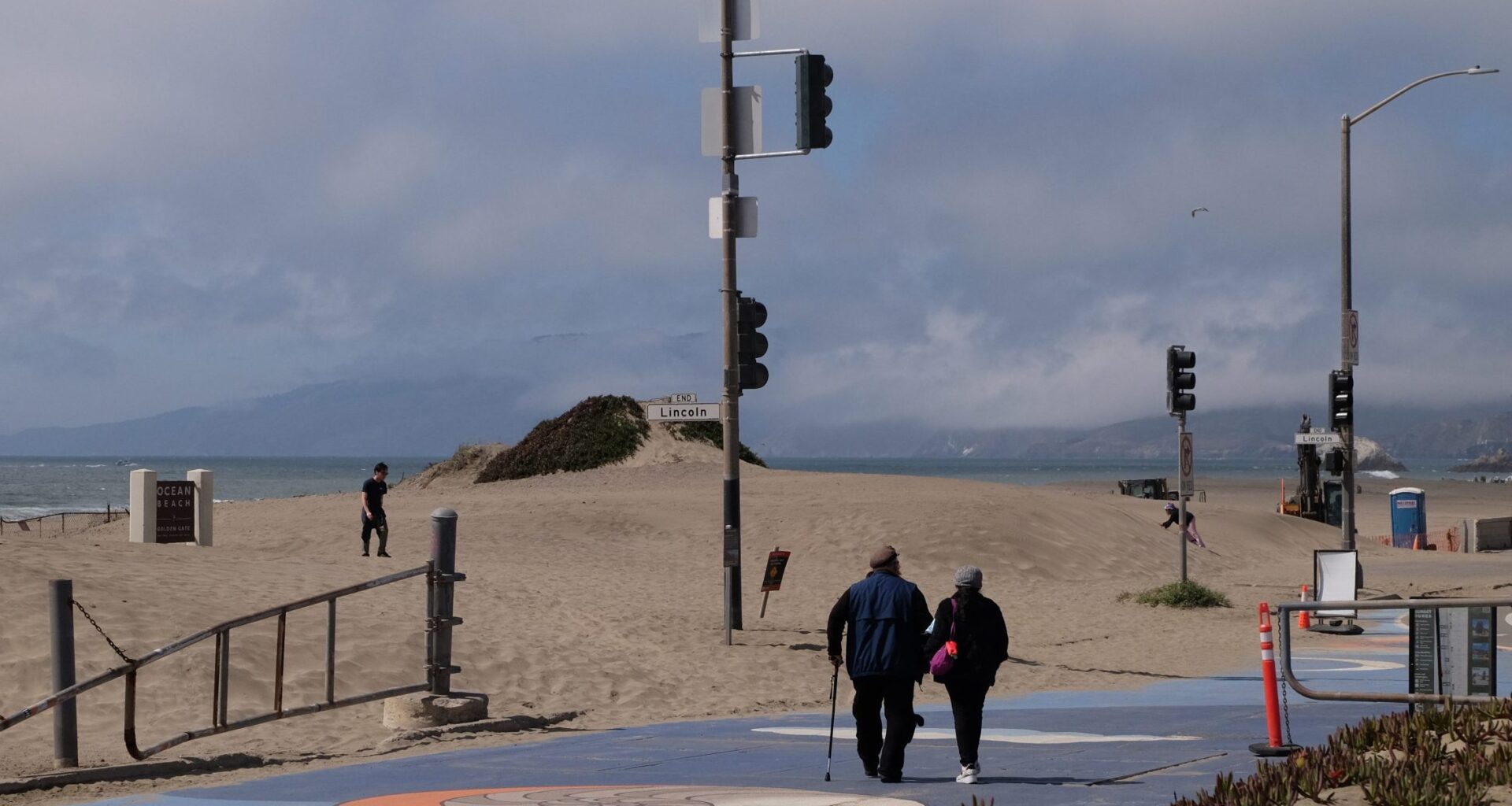
A group of lawyered-up Sunset residents are once again challenging a ballot measure that closed a two-mile stretch of the Great Highway to private vehicles in order to create a new city park.
On Tuesday, the group’s lawyer, Susan Brandt-Hawley, filed an appeal which seeks to overturn the January smackdown from San Francisco Superior Court Judge Jeffrey S. Ross, which tossed out all four arguments that the group put forward seeking to overturn the decision and reopen the Great Highway.
Brandt-Hawley specializes in CEQA, the California Environmental Quality Act, a state law that, since its passage in 1970, has been widely used in local land-use disputes in addition to more conventional environmental concerns.

Want the latest on the Mission and San Francisco? Sign up for our free daily newsletter below.
CEQA was cited repeatedly in the four arguments that were dismissed in January. At the time, Ross ruled that CEQA didn’t apply to Proposition K, because it wasn’t approved by “a public agency.” The measure was put on the ballot by a minority of city supervisors, who do not constitute an agency, Ross said.
This appeal considers a new permutation, Brandt-Hawley wrote, which is that those five supervisors were still legally obligated to require an environmental review process before placing the 2024 Prop. K on the ballot, which passed citywide with nearly 55 percent of the vote.
The appeal will proceed in the California Court of Appeal’s First Appellate District.
“When a public agency chooses to pursue an initiative that may have significant environmental impacts,” Brandt-Hawley wrote in a statement, “voters can fairly expect and rely on prior completion of California’s state-mandated environmental review process.”
But in 2024, the appellants argue, voters had to decide whether to close “a major public roadway” without knowing the environmental effects, co-appellant Matthew Boschetto wrote. Boschetto, who ran for District 7 supervisor in 2024, spent $269,000 to oppose the ballot measure.
“Traffic diversion into residential neighborhoods, increased congestion on already-burdened corridors, and resulting air quality impacts never received mandated public study or disclosure,” he wrote.
Jen Kwart, a spokesperson for the City Attorney’s office, wrote in a statement that “the trial court conducted a thorough examination of these issues and determined the city complied with CEQA and other state laws.”
Prop. K was submitted by five supervisors to be included in the November 2024 ballot on June 18, 2024. A week later, on June 24, 2024, it was referred to the Planning Department for an environmental determination.
The department determined in July that “CEQA does not apply to a measure submitted to the voters by the mayor or five supervisors,” according to court documents.
After Prop. K passed, the SFMTA proposed to make modifications to the road to make way for a coastal park. Then, the Planning Department determined again that the project was exempt from “environmental review” as “pedestrian and bicycle facilities that improve safety, access, or mobility … within the public right-of-way.”
The successful Prop. K created the coastal park, Sunset Dunes, which opened a year ago on April 12. But the former District 4 supervisor Joel Engardio’s support for the measure that some two-thirds of his constituents opposed, triggered a recall. In September 2025, a similar percentage of District 4 voters ousted him from office.
Apart from the lawsuit, opponents of the park are gathering signatures to place a measure on the November ballot, asking voters of San Francisco to weigh in again on the road closure. They need some 10,000 valid signatures citywide to achieve this goal. The deadline to submit the petitions is July 6.
3,300 readers keep Mission Local free. Will you join them?
There are no paywalls at Mission Local. We believe San Francisco deserves critical, high-impact reporting that belongs to all its residents, not just those who can afford it.
But free to read doesn’t mean free to produce. We’re a small, independent newsroom rooted in San Francisco’s communities that only exists because people like you invest in the reporting that our city relies on all year round.
Keep Mission Local free for all by becoming a donor today.