
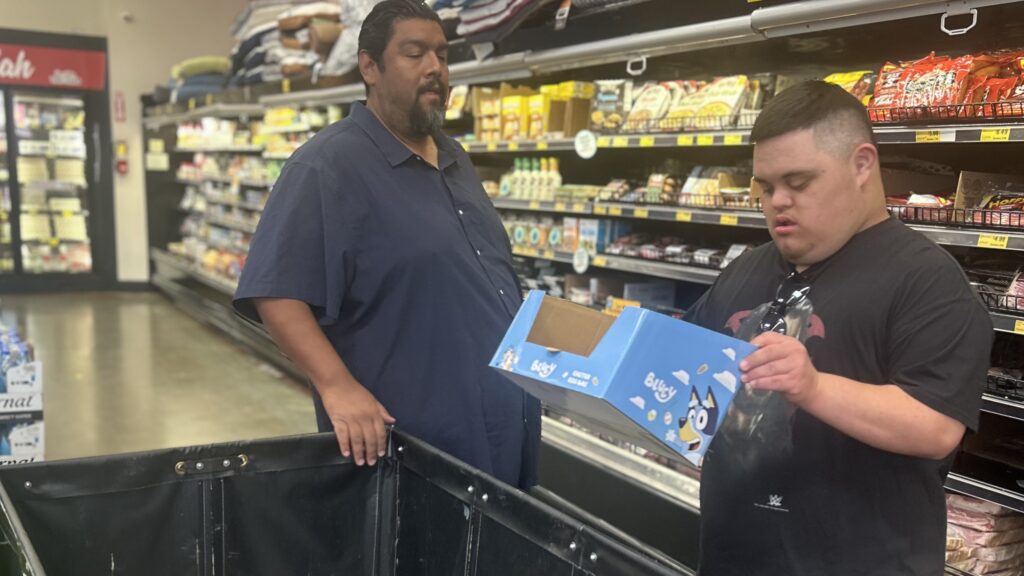
Fernando Herrera, 21, discards a box at Grocery Outlet during his shift in Fresno County’s work-based program for teens and young adults with disabilities. Mike Ruacho, a county education office paraeducator, accompanies student workers and offers guidance, depending on their level of independence.
Credit: Lasherica Thornton/ EdSource
Top Takeaways
Fresno County has restructured its vocational training model for students with disabilities.
Students now gain work experience across multiple industries.
The program even trains them to become teacher’s aides in special education classes.
After a recent morning rush at a Fresno Grocery Outlet, 22-year-old Elena Santos moved down each aisle to return misplaced food items to their proper places. She brought vitamins to the front of the shelves and neatly arranged hygiene products.
These tasks were once difficult for her because of a cognitive disability.
Santos struggles to process things, especially when overwhelmed. Knowing where to find items makes her life easier, which is what she has been doing for customers since she started gaining hands-on experience at the grocery store in October.
Santos is one of the dozens of teens and young adults with disabilities working in local businesses as employees and schools as teachers’ aides through a Fresno County program that is rethinking how vocational education prepares students for the workforce.
Over the past two years, Fresno County Office of Education officials have overhauled their vocational training model for students with intellectual, emotional or cognitive disabilities. There are students with varying degrees of autism and also those who are deaf or hard of hearing. The focus now is on putting students in businesses, a move away from operating a modified workplace as was done in the past. The goal of the county’s Career Adventure Program is to prepare students for competitive employment and change the perception of individuals with disabilities, officials say.
“Now they’re placed in community businesses where they’re employees alongside everybody else,” said Liza Stack, who oversees the program. “They’re building skills and contributing to the team.”
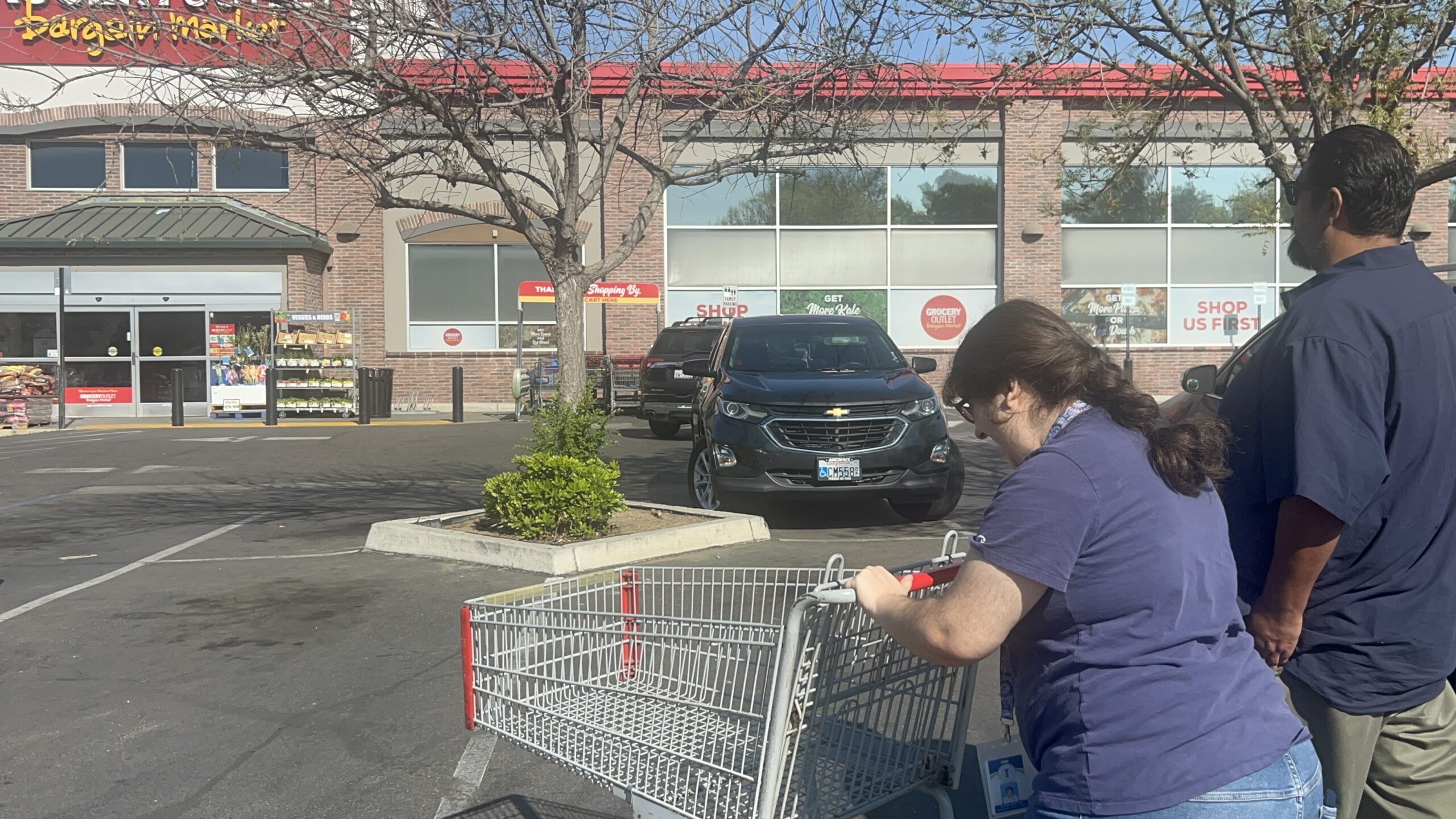
Elena Santos, 22, scans a Fresno Grocery Outlet parking lot, watches for parked vehicles and retrieves a cart to return it to the corral at the store’s entrance on March 25, 2026. Credit: Lasherica Thornton/ EdSource
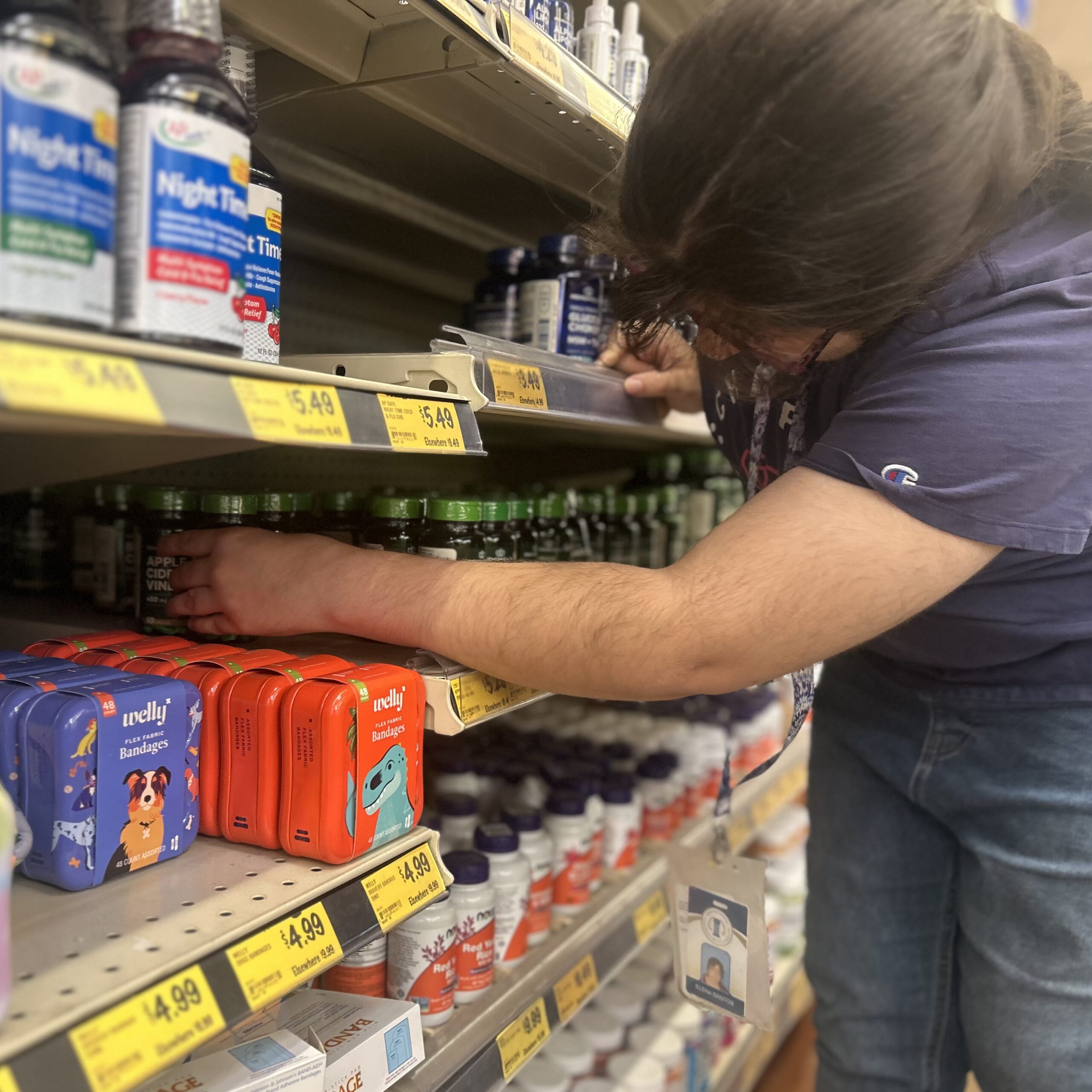
Elena Santos brings over-the-counter medications to the front of a shelf at Grocery Outlet, where she works as part of the Career Adventure Program for students with disabilities. Credit: Lasherica Thornton/ EdSource
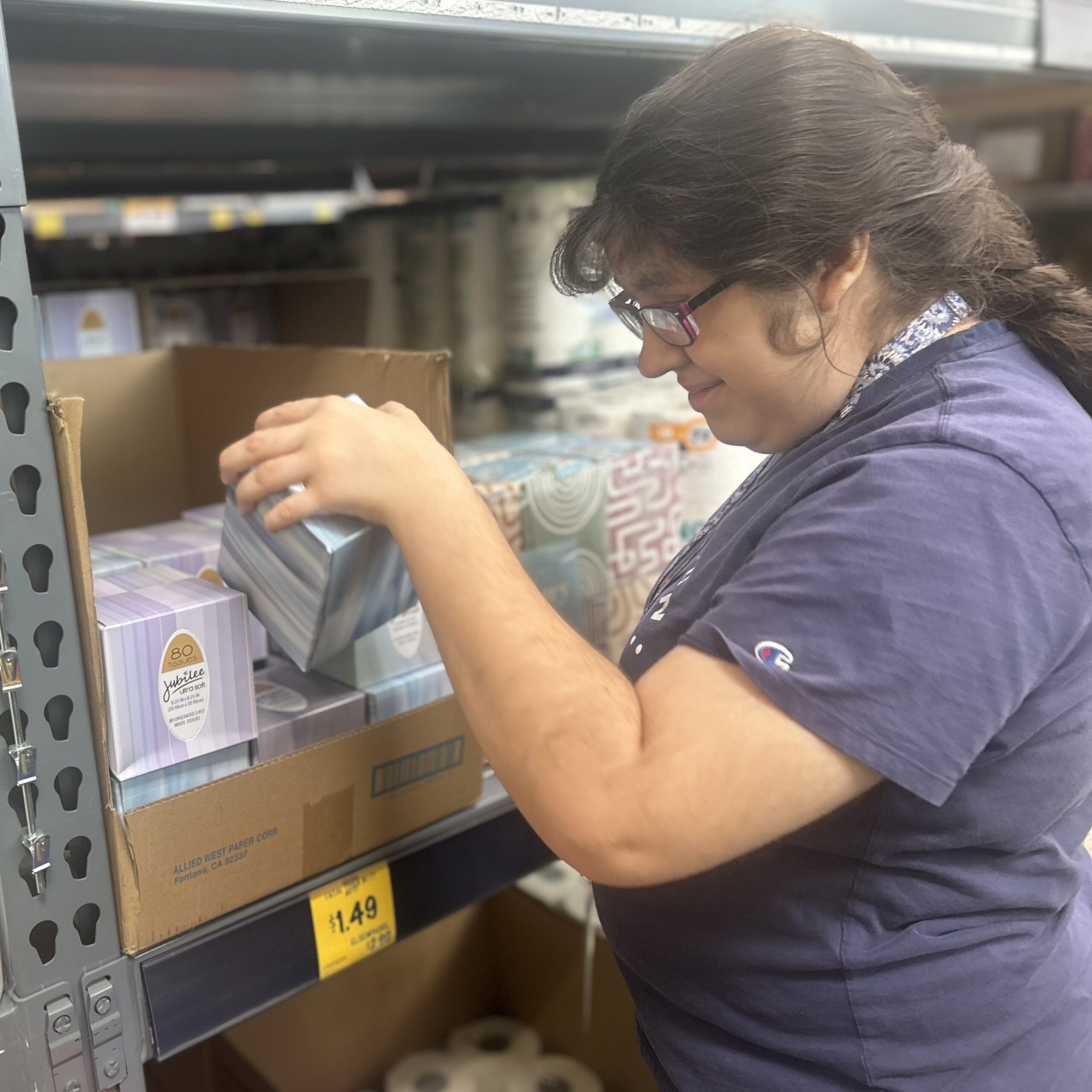
Elena Santos remains focused on organizing tissue boxes at a Grocery Outlet.Credit: Lasherica Thornton/ EdSource
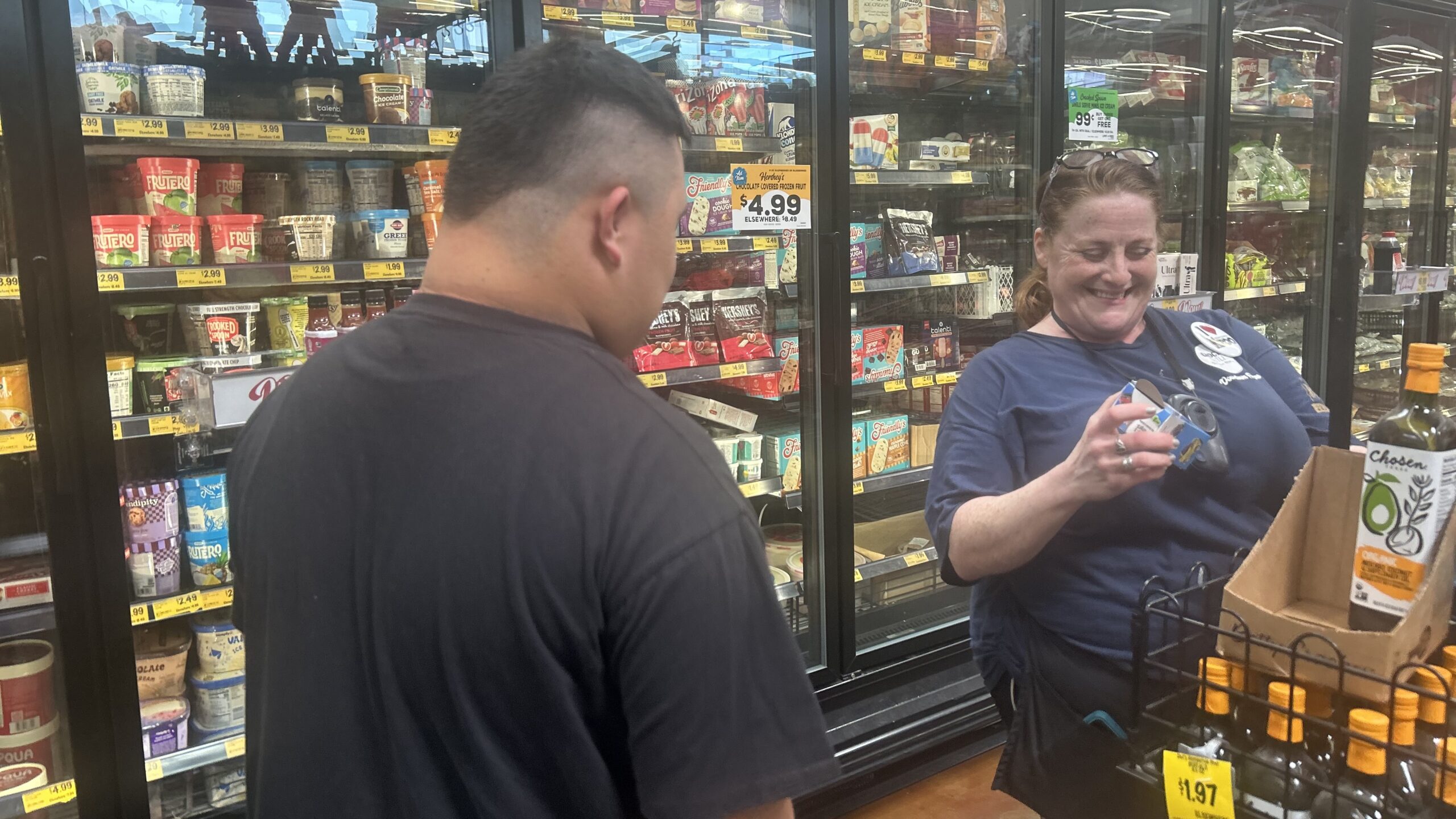
Working at a Fresno Grocery Outlet, Fernando Herrera, who has Down syndrome, informs an employee of an opened item he found during his two-hour shift on March 25, 2026.Credit: Lasherica Thornton/ EdSource
Previous model wasn’t preparing them for a workplace without modifications
This is a shift from job training at Kids Café, a restaurant where students with disabilities work in an environment adjusted to their needs. There, students used visual task cards with pictures, color-coded towels for specific cleaning tasks and a modified register in which “4C” signaled four slices of cheese, for example.
Over time, county officials realized that the program didn’t help students transition to a workplace without modifications, Stack said.
“At the Kids Café, there was no outcome for hire,” she said. Integrating students into existing businesses “increases the likelihood that maybe a business would actually hire them.”
Kids Café closed in 2024. It had high operating costs, at times incurring a $300,000 deficit, and requiring the county to transport students across the region.
The education office began to partner with more local businesses to expand vocational training opportunities.
Now the county places students at 26 different worksites. Under the program, the county office trains and hires the students. At businesses, employees and students work side by side until they learn the job. For the two- and three-hour shifts during the week, the county pays the students.
For students with severe disabilities, there are five school-based work experiences, including coffee bars, snack shacks and a produce stand, said Christina Borges, the executive director of special education for the county office.
Fresno County students, ages 16 to 22, who experience intellectual, developmental, emotional or cognitive disabilities or are deaf or hard of hearing are placed in local businesses or schools and receive training for the workplace under the restructured Career Adventure Program.
Job placements
Students work at businesses throughout the county or at schools as teacher’s aides, janitorial workers and concession stand employees for paid work experience
Costs: Over $72,000, reimbursed by the Department of Rehabilitation, went to student workers last school year
Partnerships: 26 businesses across Fresno County and five campus worksites
Number of students: 71 in 2024-25, up from four in 2021-22 with initial partnerships
Paraeducator pathway
Students participate in six training sessions focused on skills to help them be successful educators. They complete a paid internship and take their paraeducator exam.
Costs: A part of the job placement reimbursement
Partnerships: Four classrooms this school year
Number of students: Currently five either in training or in the classrooms
Workforce readiness
Students explore career and post-secondary education options and receive workplace readiness training.
Costs: Teachers provide $200,000 worth of time that the Department of Rehabilitation, in turn, grants over $350,000 in funding
Partnerships: Department of Rehabilitation
Number of students: Currently 108
Different work experiences teach different skills
Vocational programs for students with disabilities have traditionally focused on the restaurant industry. The Fresno County program includes restaurants but has expanded beyond that, offering opportunities for an array of businesses.
Some students stock and sort goods at the Garcia Supermarket and CVS Pharmacy. Others assist custodial staff at the Fresno Chaffee Zoo and care for plants at Lotus Gardens. Some tag products at Ace Hardware and enter weather data for the United States Geological Survey.
The county provides workforce-readiness training to students, focusing on soft skills such as communication, interviewing and self-advocacy.
Those classes have been key for students learning to become teacher’s aides.
‘A sense of purpose’
The Career Adventure Program offers a paraeducator pathway to train students with disabilities to work in the county’s special education classrooms.
Alex Navarro, 17, who has an emotional disability, said she hadn’t considered becoming a paraeducator before joining the program. The training and hands-on experience have taught her the skills she needs in any classroom, she says, including her position working with students with severe needs.
In March, during an extensive support-needs class at Ramacher Development Center, Navarro guided a student’s hand to glue pictures to match words. She sat with another student on a mat on the floor to repeat the same exercise. Even though the students couldn’t respond verbally, Navarro offered encouragement, saying, “Good job.”
 For a climate lesson on March 25, 2026, Alex Navarro, 17, tells a student that she likes foggy weather. Credit: Lasherica Thornton/ EdSource
 Trained as a teacher’s aide, Alex Navarro and another paraeducator provide hands-on help with an activity. Credit: Lasherica Thornton/ EdSource
“She’s not afraid to work with the kids,” said Matthew Elliott, who teaches in the special education classroom where Navarro assists. “She just jumps right in. Even if she’s having a hard day in her class, when she comes in here, she’s able to reset and just work with the kids with a smile.”
Navarro passed the paraprofessional exam and can become a teacher’s aide when she graduates from high school this year.
“It gave me a sense of purpose,” she said. “I’m getting set up to have a really good career doing something that I love.”
Changing perceptions
There are other examples of vocational training that put people with disabilities in workplaces to increase their visibility. Starting in 2022, Merced County’s education office placed students in the housekeeping field. In the same year, the state Department of Rehabilitation created a pilot to employ people with disabilities in allied health care, clerical and manufacturing jobs. The program, in partnership with the Institute for Workplace Skills & Innovation America, launched statewide late last year.
Such programs show employers that workers with disabilities can do the job, said Nicholas Wyman, president of the institute, a national workforce development organization that specializes in skills-based work. Lately, however, he said businesses are not prioritizing employing these people, who are able to work, even if it requires additional steps to achieve the same result.
In Fresno, Ferdinand Gonzalez, co-owner of the downtown Grocery Outlet, said he is contemplating hiring workers with disabilities, especially during peak hours. “It would be worth it,” he said.
A program graduate was recently promoted to a supervisor role at a local business, a sign that the experience can lead to employment and fast-track advancement, said Stack with the Fresno County program.
As students with disabilities work in schools, stores and offices, the community sees what they can contribute.
“It’s that experience,” she said, “that really changes perception.”